
Last updated: February 23, 2026
Key Takeaways
• Breathing problems affect over 60% of French Bulldogs due to their flat faces, with a 479% higher risk of respiratory disease than other breeds
• Allergies are the #1 reported health issue, affecting 36.7% of Frenchies and causing more emergency reactions than any other breed
• Eye diseases occur at 467% higher rates, including corneal ulcers, dry eye, and cherry eye requiring immediate veterinary care
• Spinal problems like IVDD affect 19% of French Bulldogs due to their body structure and can cause permanent paralysis
• Heat stroke risk is 533% higher than other breeds, making temperature management critical for Frenchie safety
• Hip dysplasia affects approximately 1 in 3 French Bulldogs, leading to mobility issues and arthritis
• Skin fold infections are common due to facial wrinkles and require daily cleaning to prevent bacterial growth
Quick Answer
The 7 most common French Bulldog health problems are breathing difficulties (BOAS), allergies, eye diseases, spinal issues (IVDD), heat intolerance, hip dysplasia, and skin fold infections. French Bulldogs face significantly higher health risks than most breeds, with respiratory disease risk being 479% higher and eye disease risk 467% higher than non-flat-faced dogs. Early recognition and preventive care are essential for managing these breed-specific conditions.
What Makes French Bulldogs Prone to Health Issues?
French Bulldogs are genetically predisposed to multiple health problems due to their brachycephalic (flat-faced) structure and selective breeding history. Their compressed facial features, shortened airways, and compact body structure create a perfect storm of health vulnerabilities that affect nearly every major body system.
The breed’s popularity has unfortunately led to some irresponsible breeding practices that prioritize appearance over health. Choose breeders who health test their dogs and provide genetic screening results for common Frenchie conditions.
Common structural issues include:
• Compressed nasal passages and elongated soft palates
• Shortened spine with increased disc pressure
• Prominent eyes with reduced protective socket depth
• Deep skin folds that trap moisture and bacteria
• Narrow hip joints prone to dysplasia
For first-time Frenchie owners, understanding these predispositions helps you recognize early warning signs and budget for potential veterinary costs. Pet insurance specifically designed for French Bulldogs can help manage the financial impact of these breed-specific conditions.
Breathing Problems (BOAS) – The Most Serious Concern
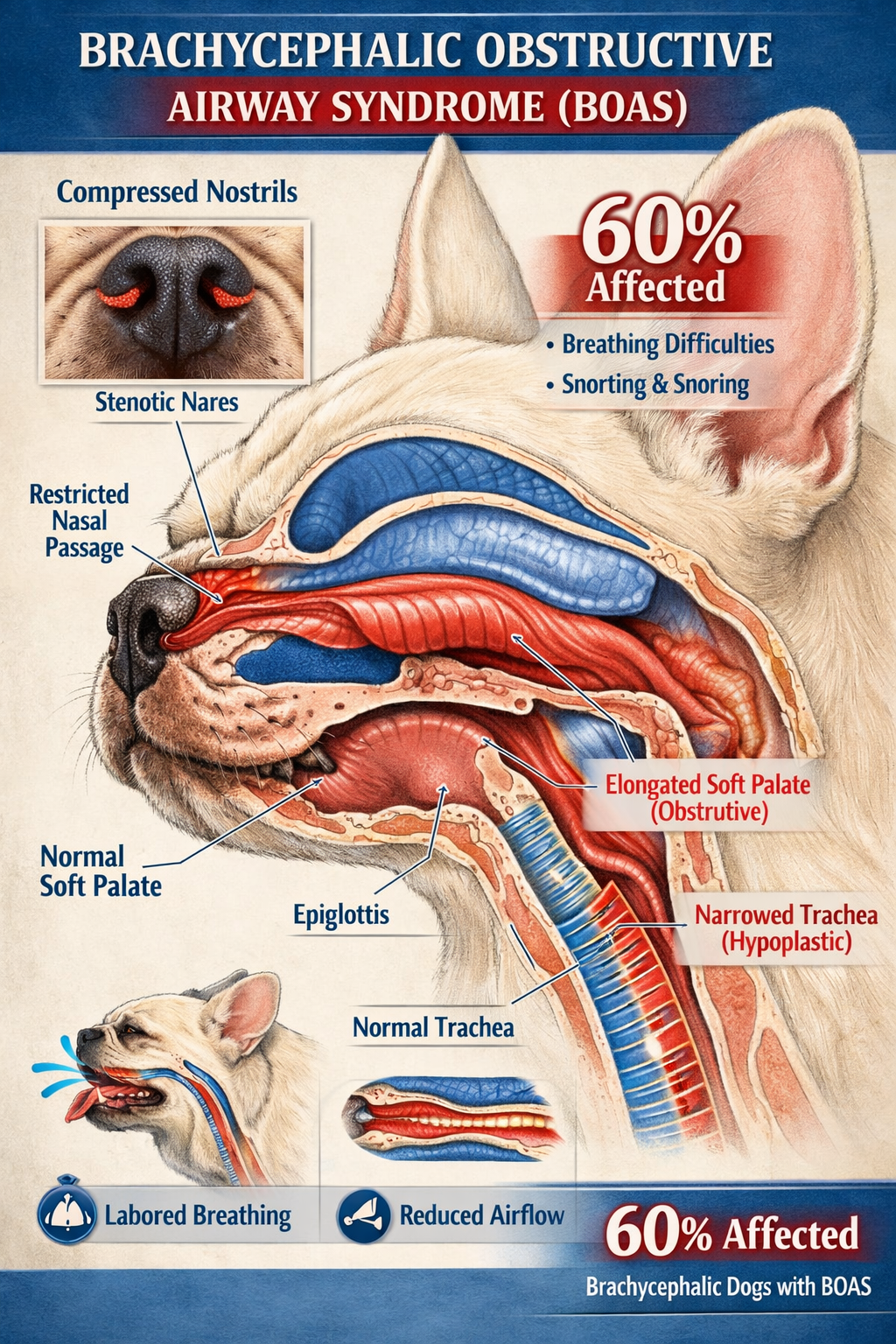
Brachycephalic Obstructive Airway Syndrome (BOAS) affects over 60% of French Bulldogs and represents their most life-threatening health risk. This condition occurs when compressed facial structures obstruct normal airflow, making breathing difficult during exercise, stress, or hot weather.
Primary BOAS symptoms include:
• Loud snoring and noisy breathing (stertor)
• Gagging or retching, especially after eating
• Exercise intolerance and quick fatigue
• Blue-tinged gums during exertion
• Difficulty breathing through the nose
The condition results from multiple anatomical abnormalities working together: stenotic (narrow) nostrils, elongated soft palate, collapsed larynx, and hypoplastic (underdeveloped) trachea. French Bulldogs have a 479% higher risk of respiratory disease compared to dogs with normal facial structure.
Management strategies:
• Maintain ideal body weight to reduce breathing strain
• Use harnesses instead of collars to avoid neck pressure
• Limit exercise during hot or humid weather
• Provide constant access to fresh water and shade
• Consider surgical correction for severe cases
Emergency warning signs requiring immediate veterinary care include persistent open-mouth breathing at rest, collapse after minimal activity, or any breathing distress. Learn more about recognizing breathing emergencies in our detailed respiratory guide.
Allergies – The #1 Reported Health Problem
Allergies affect 36.7% of French Bulldog owners as their primary health concern, making it the most commonly reported issue for the breed. Frenchies demonstrate higher claim submission rates for allergic reactions and anaphylactic shock than any other dog breed, with a 276% higher risk of severe allergic reactions.
Three main allergy types affect French Bulldogs:
Food allergies typically develop between 6 months and 3 years of age. Common triggers include chicken, beef, dairy, wheat, and soy. Symptoms include chronic diarrhea, vomiting, skin itching, and ear infections.
Environmental allergies cause seasonal or year-round symptoms from pollen, dust mites, mold, or cleaning products. Signs include excessive scratching, red inflamed skin, watery eyes, and frequent paw licking.
Contact allergies result from direct skin contact with irritants like certain fabrics, shampoos, or lawn chemicals. These cause localized skin reactions, bumps, or rashes at contact points.
Effective allergy management includes:
• Elimination diets to identify food triggers
• Regular bathing with hypoallergenic shampoos
• Air purifiers and frequent cleaning to reduce environmental allergens
• Prescription antihistamines or immunotherapy for severe cases
FYI: Some links may be affiliate links, which means I may earn a small commission at no extra cost to you.
Emergency alert: French Bulldogs can experience anaphylactic shock from severe allergic reactions. Watch for facial swelling, difficulty breathing, vomiting, or collapse after exposure to potential allergens. This requires immediate emergency veterinary care.
Eye Diseases – 467% Higher Risk Than Other Breeds
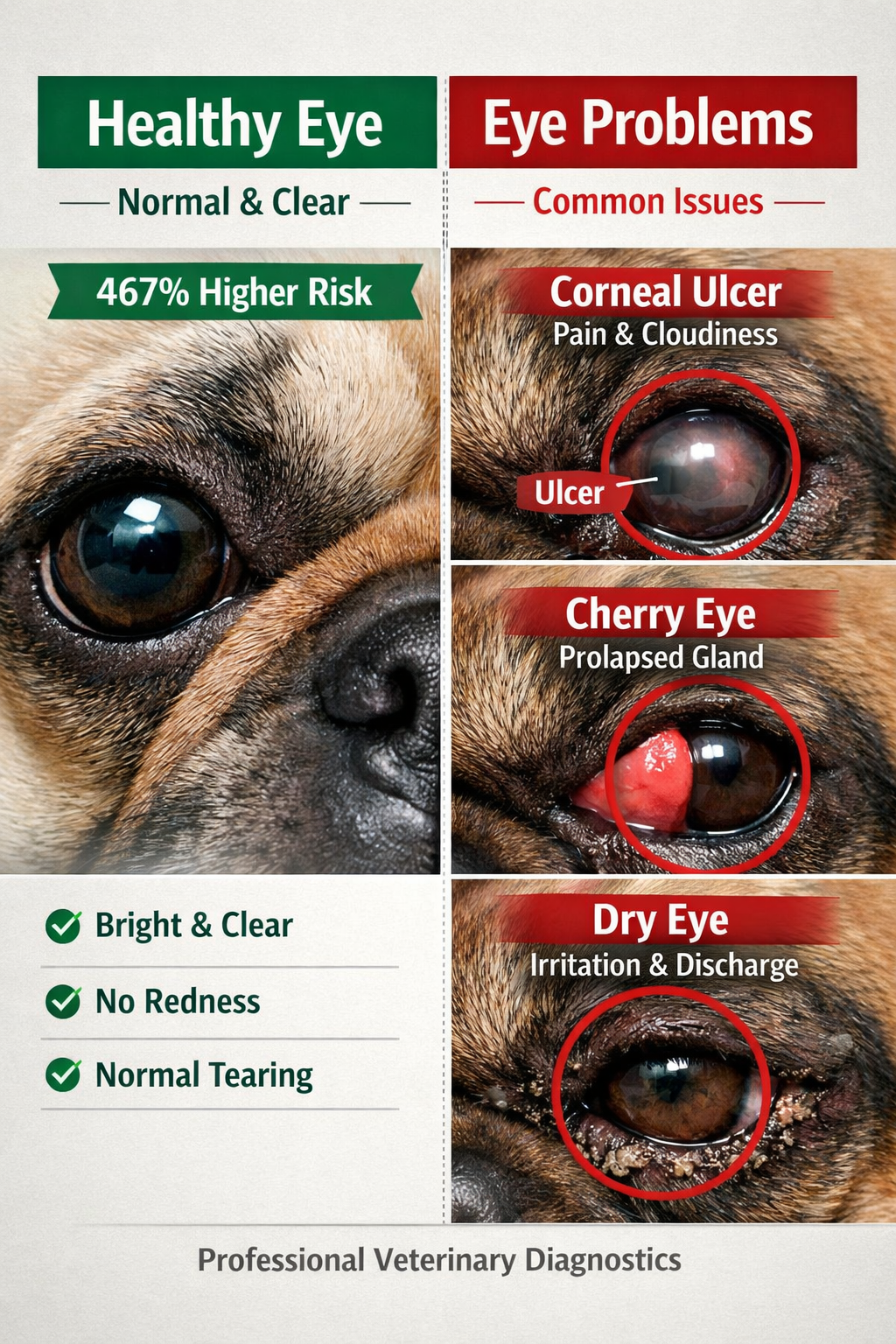
French Bulldogs face exceptional eye health challenges due to their prominent, bulging eyes that receive less protection from their shallow eye sockets. The breed shows a 467% higher risk of ocular disease compared to non-brachycephalic dogs.
Most common eye conditions include:
Corneal ulcers occur when the clear front surface of the eye becomes scratched or damaged. Symptoms include squinting, excessive tearing, cloudiness, and pawing at the eye. Without treatment, ulcers can perforate and cause permanent vision loss.
Dry eye (keratoconjunctivitis sicca) happens when tear production decreases, leaving eyes vulnerable to infection and irritation. Signs include thick, sticky discharge, red inflamed eyes, and frequent blinking.
Cherry eye appears as a red, swollen mass in the corner of the eye when the third eyelid gland prolapses. While not immediately dangerous, it requires surgical correction to prevent chronic irritation.
Entropion causes eyelids to roll inward, allowing eyelashes to constantly scratch the cornea. This painful condition requires surgical correction to prevent permanent damage.
Daily eye care routine:
• Gently clean around eyes with damp, soft cloth
• Remove discharge buildup to prevent bacterial growth
• Check for redness, cloudiness, or unusual discharge
• Protect eyes from wind, dust, and debris during walks
Seek immediate veterinary care for sudden vision changes, severe pain (indicated by pawing or rubbing), cloudy or blue-tinged eyes, or any eye injury. Early intervention prevents complications that could lead to permanent vision loss.
Spinal Problems (IVDD) – 19% of Frenchies Affected
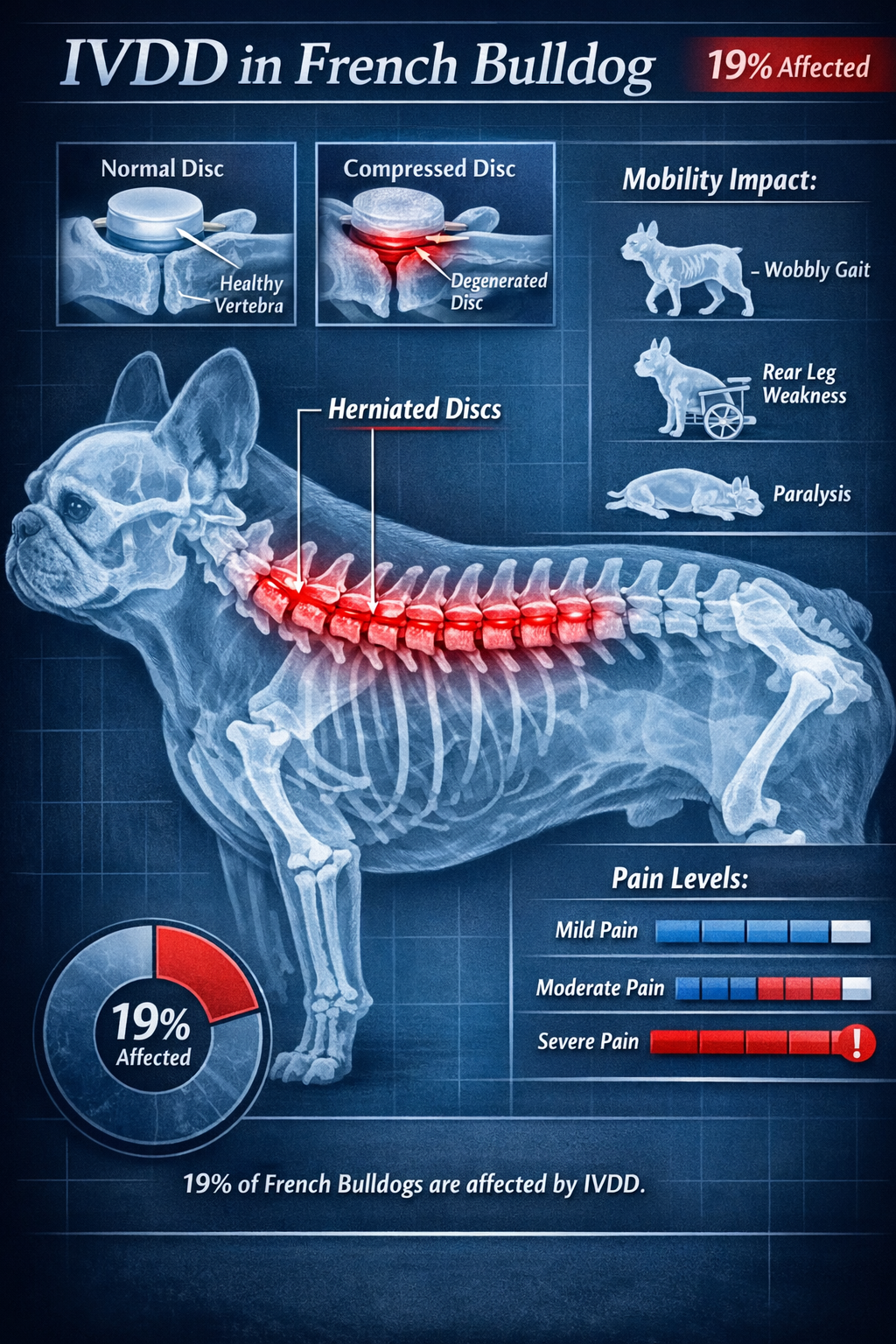
Intervertebral Disc Disease (IVDD) affects 19% of French Bulldog owners as a significant health concern. The breed’s short legs and relatively long spine create increased pressure on spinal discs, making them prone to herniation or rupture.
IVDD occurs in two main forms:
Type I IVDD involves sudden disc rupture, typically affecting younger dogs (2-7 years). Symptoms appear rapidly and include severe back pain, reluctance to move, hunched posture, and potential paralysis.
Type II IVDD develops gradually through chronic disc degeneration, usually affecting older dogs. Signs include mild back pain, difficulty jumping, weakness in rear legs, and gradual mobility loss.
Early warning signs:
• Reluctance to jump on furniture or climb stairs
• Hunched or rigid back posture
• Crying out when picked up or touched
• Weakness or dragging of rear legs
• Loss of bladder or bowel control
Prevention strategies:
• Maintain healthy body weight to reduce spinal pressure
• Use ramps instead of allowing jumping from heights
• Support the chest and rear when lifting your Frenchie
• Provide orthopedic bedding for proper spinal alignment
• Encourage controlled, low-impact exercise like walking
Treatment options range from strict crate rest and anti-inflammatory medications for mild cases to emergency surgery for severe disc herniations. Time is critical – paralysis can become permanent without prompt treatment.
If your French Bulldog shows sudden mobility changes or back pain, restrict movement immediately and seek emergency veterinary care. Understanding the signs of an unhealthy Frenchie can help you catch problems early.
Heat Intolerance – 533% Higher Risk of Overheating
French Bulldogs have a 533% higher risk of hyperthermia compared to non-brachycephalic dogs and overheat twice as fast as long-nosed breeds. Their compromised breathing ability severely limits their capacity to cool themselves through panting.
Why Frenchies overheat so easily:
• Compressed airways reduce efficient panting
• Thick, muscular build retains body heat
• Dark coat colors absorb more heat from sunlight
• Reduced surface area for heat dissipation
Dangerous temperature thresholds:
• 75°F and above: Limit outdoor activity to early morning or evening
• 80°F and above: Avoid outdoor exercise completely
• 85°F and above: Keep indoors with air conditioning
Heat stroke symptoms progress rapidly:
• Early signs: Heavy panting, drooling, restlessness
• Moderate: Bright red gums, vomiting, weakness
• Severe: Collapse, seizures, loss of consciousness
Immediate heat stroke treatment:
- Move to air-conditioned space immediately
- Apply cool (not ice-cold) water to paw pads and belly
- Offer small amounts of cool water if conscious
- Transport to emergency vet while cooling continues
Summer safety essentials:
• Walk only during cooler morning and evening hours
• Carry water and take frequent shade breaks
• Use cooling mats, vests, or bandanas
• Never leave in cars, even with windows cracked
• Consider doggy boots to protect paws from hot pavement
Pro tip: Test pavement temperature with your hand – if it’s too hot for you to hold for 5 seconds, it’s too hot for your Frenchie’s paws.
Hip Dysplasia – Affecting 1 in 3 French Bulldogs
Hip dysplasia affects approximately 32.6% of French Bulldogs, ranking them 23rd out of 204 breeds for this condition. This genetic disorder occurs when the hip joint develops abnormally, causing the ball and socket to fit poorly together.
How hip dysplasia develops:
The condition results from a combination of genetic predisposition and environmental factors. In affected dogs, the hip socket (acetabulum) is too shallow or the femoral head (ball) is malformed, creating joint instability and eventual arthritis.
Symptoms vary by severity and age:
• Puppies (4-9 months): Difficulty rising, reluctance to play, bunny-hopping gait
• Young adults: Decreased activity, stiffness after rest, difficulty with stairs
• Mature dogs: Chronic pain, muscle atrophy in rear legs, severe mobility limitations
Diagnosis and grading:
Veterinarians use X-rays to evaluate hip joint structure and assign grades from normal to severe dysplasia. The Orthopedic Foundation for Animals (OFA) provides standardized scoring that helps breeders make informed breeding decisions.
Management approaches:
• Weight management: Maintain lean body condition to reduce joint stress
• Controlled exercise: Swimming and leash walks without high-impact activities
• Joint supplements: Glucosamine, chondroitin, and omega-3 fatty acids
• Physical therapy: Range-of-motion exercises and muscle strengthening
• Pain management: NSAIDs or other medications as prescribed
Surgical options for severe cases include femoral head ostectomy (FHO) or total hip replacement. Early intervention provides better long-term outcomes and quality of life.
Prevention starts with responsible breeding. Choose breeders who provide OFA hip scoring for both parent dogs and avoid breeding lines with poor hip scores.
Skin Fold Infections – Daily Prevention Required
French Bulldogs’ characteristic facial wrinkles and body folds create warm, moist environments perfect for bacterial and yeast growth. Without proper daily care, these areas quickly develop painful infections that can spread to surrounding tissue.
Most problematic areas include:
• Facial folds: Deep wrinkles around the nose and mouth
• Tail pocket: Fold above a screw tail (if present)
• Neck rolls: Skin folds around the neck area
• Body folds: Wrinkles on the chest or between legs
Common infection types:
Bacterial dermatitis appears as red, inflamed skin with a foul odor. The area may feel warm to touch and produce yellow or green discharge.
Yeast infections create a sweet, musty smell with brown or black discharge. The skin appears red and may feel greasy or sticky.
Intertrigo occurs when skin surfaces rub together constantly, causing raw, painful areas that easily become infected.
Daily cleaning routine:
- Inspect folds during morning and evening routines
- Clean gently with unscented baby wipes or damp cloth
- Dry thoroughly using soft towel or cotton balls
- Apply protective barrier like cornstarch or specialized fold powder
- Monitor for changes in smell, color, or your dog’s comfort
Warning signs requiring veterinary care:
• Strong, unpleasant odor that persists after cleaning
• Thick, colored discharge (yellow, green, or brown)
• Red, inflamed skin that feels hot to touch
• Your Frenchie pawing at or avoiding touch to the area
• Signs of pain when cleaning or examining folds
Prevention tips:
• Keep your Frenchie at a healthy weight to reduce fold depth
• Use a dehumidifier in humid climates
• Choose breathable, natural fiber bedding
• Avoid over-bathing, which can strip protective skin oils
Regular fold maintenance takes just a few minutes daily but prevents painful infections that can require weeks of antibiotic treatment.
Managing Multiple Health Conditions
Many French Bulldogs develop several of these health problems simultaneously, requiring coordinated care and careful monitoring. The interconnected nature of these conditions means that managing one often helps prevent or improve others.
Common condition combinations:
• BOAS + Heat intolerance: Breathing problems worsen in hot weather
• Allergies + Skin infections: Scratching damages skin barriers
• IVDD + Hip dysplasia: Multiple mobility limitations
• Eye problems + Allergies: Environmental triggers affect sensitive eyes
Integrated management strategies:
Weight management benefits nearly every condition. Excess weight worsens breathing problems, increases spinal pressure, stresses dysplastic hips, and deepens skin folds. Maintain your Frenchie at an ideal body condition score of 4-5 out of 9.
Environmental controls help multiple conditions simultaneously. Air purifiers reduce allergens while maintaining comfortable temperature and humidity levels. This helps breathing, reduces allergy triggers, and prevents skin fold moisture buildup.
Regular veterinary monitoring allows early intervention before conditions worsen. Schedule wellness exams every 6 months for adult Frenchies and quarterly for seniors or dogs with existing health problems.
Helpful Resource
Frenchies face costly breed-specific risks like breathing issues, IVDD, and skin fold infections. Compare vet-trusted insurers offering guaranteed lowest rates + fastest claims—so you’re never forced to choose between your wallet and your pup’s wellbeing.
👉 Get a Free Frenchie Insurance Quote
When to Seek Emergency Veterinary Care
Certain symptoms in French Bulldogs require immediate emergency treatment due to the breed’s unique vulnerabilities. Don’t wait for these warning signs to worsen.
Breathing emergencies:
• Open-mouth breathing at rest
• Blue or gray gums and tongue
• Collapse or fainting during minimal activity
• Inability to bark or make normal sounds
Neurological emergencies:
• Sudden paralysis or inability to use legs
• Loss of bladder or bowel control
• Severe back pain with crying or aggression
• Seizures or loss of consciousness
Heat-related emergencies:
• Body temperature above 104°F
• Excessive drooling with thick, ropy saliva
• Vomiting or diarrhea with weakness
• Unresponsiveness or disorientation
Eye emergencies:
• Sudden vision loss or bumping into objects
• Obvious eye injury or foreign object
• Severe pain with constant pawing at eye
• Rapid onset of cloudiness or color changes
Have an emergency plan that includes your regular veterinarian’s after-hours number, the nearest 24-hour emergency clinic location, and transportation arrangements. Understanding comprehensive health problems helps you make informed decisions during emergencies.
Frequently Asked Questions
What is the most serious health problem in French Bulldogs?
Breathing problems (BOAS) represent the most serious health risk, affecting over 60% of French Bulldogs and carrying a 479% higher risk of respiratory disease compared to other breeds. This condition can be life-threatening during hot weather or strenuous activity.
How much do French Bulldog health problems cost to treat?
Treatment costs vary widely depending on the condition and severity. BOAS surgery ranges from $3,000-$6,000, IVDD surgery can cost $5,000-$8,000, and ongoing management of chronic conditions like allergies may cost $100-$300 monthly for medications and special diets.
Can French Bulldog health problems be prevented?
While genetic predisposition can’t be eliminated, many problems can be prevented or minimized through proper breeding selection, weight management, environmental controls, and early intervention. Choose health-tested breeding lines and maintain preventive care routines.
At what age do French Bulldogs start developing health problems?
Some conditions appear early (allergies by 6 months, IVDD as young as 2 years), while others develop gradually (hip dysplasia symptoms by 4-9 months, eye problems throughout life). Regular veterinary monitoring from puppyhood helps catch problems early.
Are there any French Bulldogs without health problems?
While some individual French Bulldogs may avoid major health issues, the breed’s structure makes them inherently prone to certain conditions. Responsible breeding and excellent care can minimize risks but cannot eliminate all breed-related vulnerabilities.
How can I find a healthy French Bulldog puppy?
Choose breeders who provide health testing results for both parents, including hip scoring, eye clearances, and genetic testing for common conditions. Avoid puppy mills and ensure puppies are raised in clean, socialized environments with proper veterinary care.
What should I budget annually for French Bulldog health care?
Budget $2,000-$4,000 annually for routine care, emergency fund, and management of breed-specific conditions. This includes regular veterinary visits, preventive medications, special diets, and potential emergency treatments.
Is pet insurance worth it for French Bulldogs?
Yes, pet insurance is particularly valuable for French Bulldogs due to their high risk of expensive health problems. Choose policies that cover breed-specific conditions and avoid those with exclusions for brachycephalic-related issues.
Can French Bulldogs live normal, happy lives with health problems?
Absolutely. With proper management, many French Bulldogs with health conditions live full, comfortable lives. The key is early recognition, appropriate treatment, lifestyle modifications, and working closely with your veterinarian.
What’s the life expectancy of French Bulldogs with health problems?
French Bulldogs with extreme brachycephalic features average 8.6 years compared to 12.7 years for other breeds. However, dogs with mild symptoms and excellent management can live 10-12 years with good quality of life.
Should I avoid getting a French Bulldog because of health problems?
Only consider a French Bulldog if you’re prepared for potential health challenges and associated costs. They require dedicated owners willing to provide specialized care, but they can be wonderful companions with proper management.
How often should French Bulldogs see the veterinarian?
Adult French Bulldogs should have wellness exams every 6 months due to their health predispositions. Puppies, seniors, or dogs with existing conditions may need quarterly visits or more frequent monitoring as recommended by your veterinarian.
Conclusion
Understanding the 7 most common French Bulldog health problems empowers you to provide the best possible care for your Frenchie. While this breed faces significant health challenges, including breathing difficulties, allergies, eye diseases, spinal problems, heat intolerance, hip dysplasia, and skin fold infections, proactive management makes a tremendous difference in their quality of life.
Your next steps:
- Establish baseline health with a comprehensive veterinary examination that includes breathing assessment, eye examination, and discussion of preventive care strategies.
- Create daily routines for skin fold cleaning, weight monitoring, and environmental management that address multiple conditions simultaneously.
- Build your support team with a veterinarian experienced in brachycephalic breeds and consider specialists for ongoing conditions.
- Prepare financially by researching pet insurance options and establishing an emergency fund for unexpected health costs.
- Stay informed about breed-specific health research and connect with other French Bulldog owners for support and advice.
Remember that while French Bulldogs require more health management than many breeds, they can live happy, fulfilling lives with dedicated care. Early recognition of health problems and prompt intervention provide the best outcomes for your beloved companion.
The investment in understanding and managing these health challenges pays off in years of companionship with your loyal, affectionate Frenchie. With proper care, many French Bulldogs thrive despite their genetic predispositions, bringing joy and love to their families every day.
References
[1] French Bulldogs 1 Dog Breed In America At Higher Risk Of Health Concerns – https://www.gradyvet.com/blog/french-bulldogs-1-dog-breed-in-america-at-higher-risk-of-health-concerns/
[2] Health – https://frenchbulldogclub.org/health/
[3] Full – https://www.frontiersin.org/journals/veterinary-science/articles/10.3389/fvets.2025.1605505/full
[4] Frenchie Health Issues 2025 1771173110 – https://web.ecreee.org/fresh-field/frenchie-health-issues-2025-1771173110
[5] Pug And French Bulldog Health – https://www.humaneworld.org/en/resources/pug-and-french-bulldog-health
[6] French Bulldog Health Issues – https://southerncrossvet.com.au/french-bulldog-health-issues/
[7] French Bulldog Spine Health Data Insights Innovative Research – https://frenchbulldogfoundationofamerica.org/f/french-bulldog-spine-health-data-insights-innovative-research