
Last updated: January 15, 2026
Key Takeaways
• Front-clip harnesses are essential for French Bulldogs – they redirect pulling force to the chest instead of straining the delicate throat area
• The Stop-and-Go method works fastest: freeze when the leash tightens, reward when it loosens, and resume walking to teach that pulling stops progress
• Short, focused training sessions of 3-10 minutes work better than long walks when establishing proper leash manners
• Pre-exercise your Frenchie before training – tired dogs with pent-up energy are nearly impossible to train effectively
• Consistency from all family members is crucial – mixed signals will confuse your French Bulldog and slow progress significantly
Quick Answer
The most effective leash pulling solution for French Bulldogs combines a Y-shaped front-clip harness with the Stop-and-Go training method. When your Frenchie pulls, stop walking completely and wait silently until the leash loosens, then reward and continue. This teaches that pulling stops forward progress while loose leash walking gets them where they want to go.
Why Do French Bulldogs Pull on the Leash?
French Bulldogs pull because the behavior gets them what they want – forward movement toward interesting sights, sounds, and smells. Every time pulling successfully moves them closer to their goal, the behavior becomes stronger.
Common pulling triggers include:
- Excitement about walks and outdoor exploration
- Desire to investigate other dogs, people, or interesting scents
- Feeling restrained or frustrated by the leash
- Lack of proper leash training from puppyhood
- Using equipment that doesn’t discourage pulling
French Bulldogs are naturally curious and social dogs, which makes them prone to pulling toward stimulating environments. Their compact build also gives them a low center of gravity, making it easier for them to lean into the harness and drag their owners forward.
Choose immediate training if your Frenchie is under 6 months old – puppies learn fastest during this critical period. Wait for structured training if your dog shows signs of respiratory distress, as French Bulldogs can have breathing issues that need veterinary attention first.
What Equipment Do You Need for Effective Leash Training?
The right equipment makes leash training significantly easier and protects your French Bulldog’s delicate throat and breathing passages.
Essential Equipment Checklist
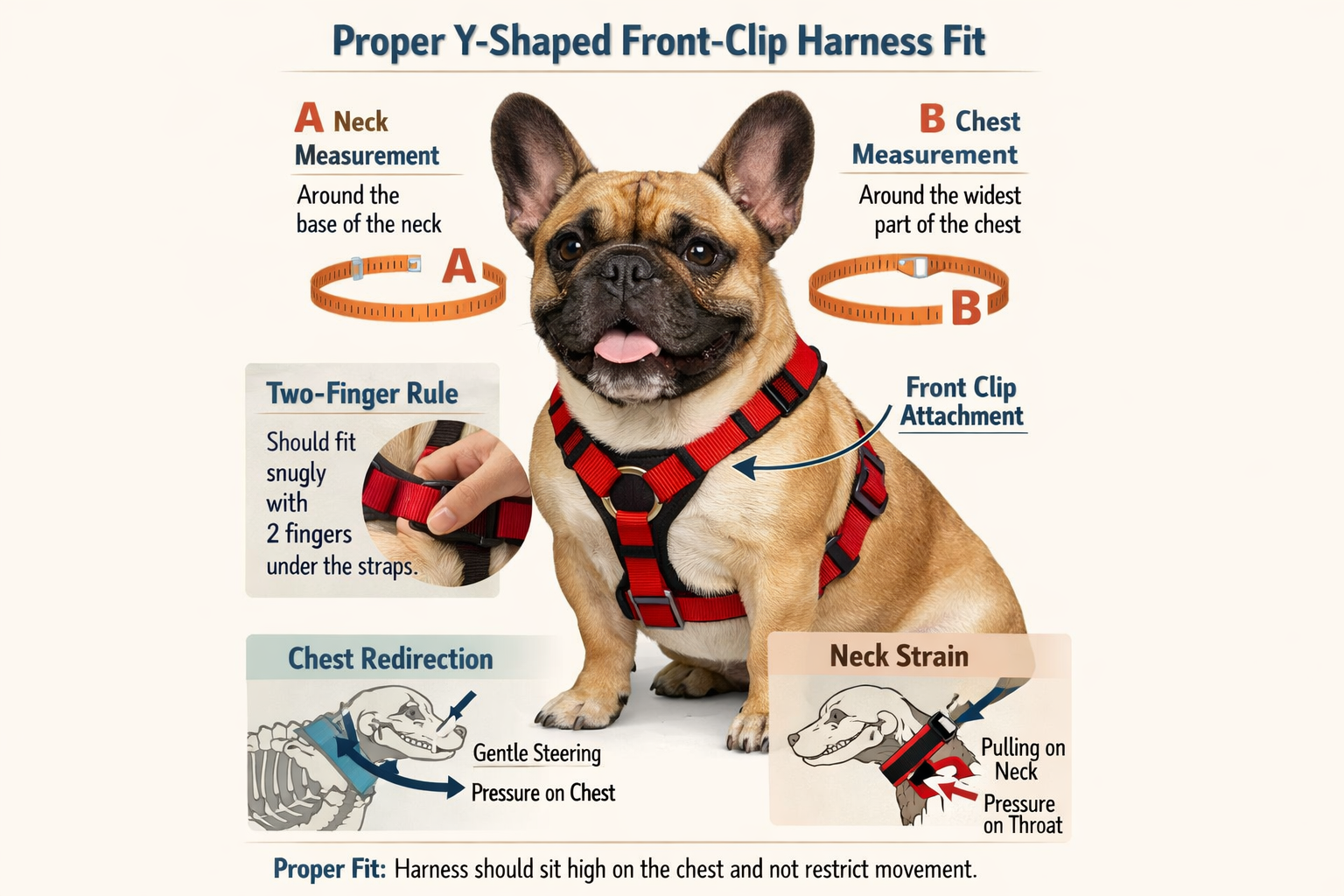
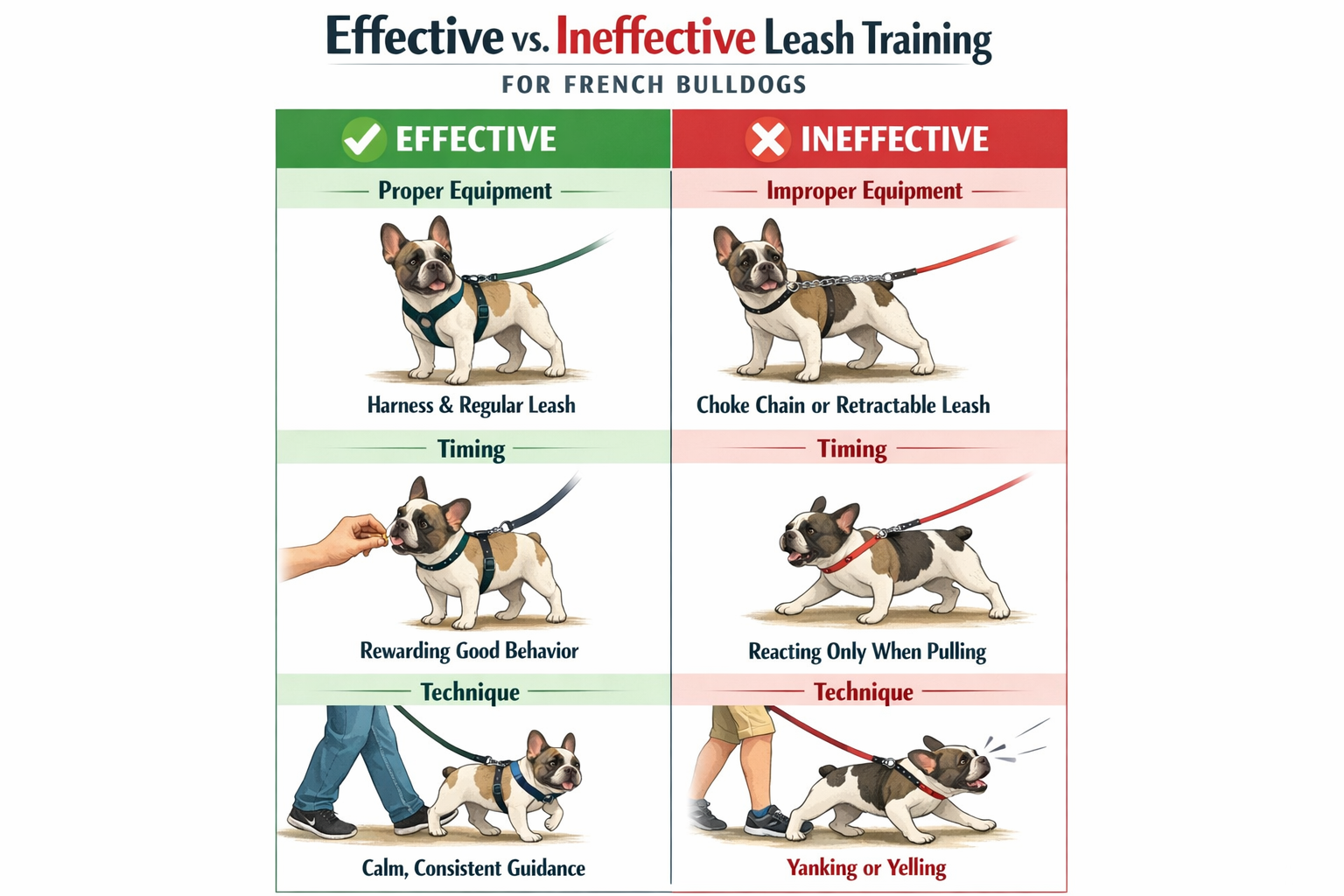
Y-shaped front-clip harness – This redirects pulling force to the chest, automatically turning your dog back toward you when they pull forward. Avoid back-clip harnesses, which actually encourage pulling by allowing dogs to lean into the pressure.
4-6 foot flat leash – Provides optimal control during training sessions. Never use retractable leashes, as they inadvertently teach dogs that pulling extends their range.
High-value training treats – Small, soft rewards that your Frenchie finds irresistible. Choose treats specifically designed for training to maintain motivation during sessions.
Proper Harness Fitting Guidelines
- Two-finger rule: You should be able to slide two fingers underneath all harness straps without them being loose
- Width specifications: 5/8 inch for puppies, 3/4 to 1 inch for adult French Bulldogs
- Armpit check: Ensure straps don’t rub or chafe in the armpit area during movement
- Chest positioning: The front clip should sit at the center of your dog’s chest for maximum redirection effect
Common mistake: Many owners choose harnesses that are too loose, thinking it’s more comfortable. Loose harnesses can actually cause chafing and reduce training effectiveness.
How to Use the Stop-and-Go Method for Leash Training
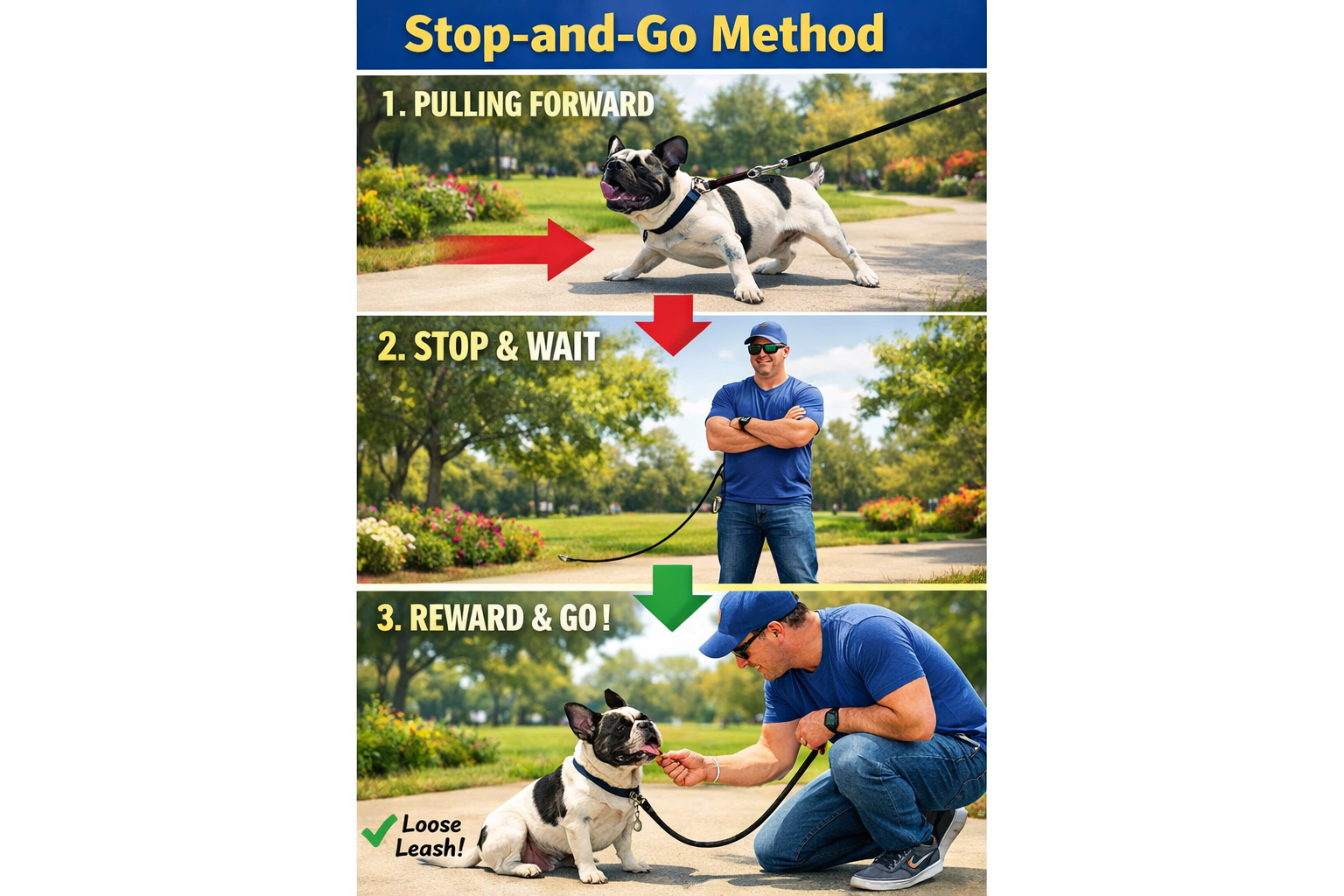
The Stop-and-Go method is the most effective leash pulling solution for French Bulldogs because it clearly communicates that pulling stops progress while loose leash walking enables forward movement.
Step-by-Step Training Process
Step 1: Start walking normally with your Frenchie on a 4-6 foot leash. Keep treats readily accessible in your pocket or treat pouch.
Step 2: The moment the leash tightens, stop walking completely and stand like a statue. Don’t pull back, don’t say anything, just freeze in place.
Step 3: Wait silently until your dog creates slack in the leash by stepping back, sitting, or simply relaxing the tension.
Step 4: The instant the leash loosens, mark the behavior with “Good!” or a clicker and give a treat. Then immediately resume walking.
Step 5: Repeat this process every single time the leash tightens during your training session.
Training Session Guidelines
- Duration: Start with 3-5 minute sessions for puppies, 5-10 minutes for adult dogs
- Frequency: 2-3 dedicated training sessions per day, separate from regular walks
- Location: Begin in low-distraction areas like your driveway or quiet street
- Progression: Gradually increase duration and move to more stimulating environments
Choose this method if you want the fastest results with the least physical strain on your Frenchie. Avoid this method if you’re in a hurry or can’t commit to consistent timing – mixed signals will confuse your dog.
FYI: Some links may be affiliate links, which means I may earn a small commission at no extra cost to you.
If you’re looking for a more structured approach to addressing pulling along with other reactive behaviors like barking or lunging, there’s a gentle training solution designed specifically for dogs who struggle with focus during walks. This step-by-step method uses force-free techniques to help reactive dogs become calmer and more confident in distracting environments, creating more peaceful daily walks with your Frenchie.
Advanced Techniques for Stubborn Pullers
Some French Bulldogs need additional strategies beyond the basic Stop-and-Go method, especially if they’ve been practicing pulling behavior for months or years.
Direction Change Training
The unpredictability method keeps your Frenchie focused on you instead of environmental distractions. Change direction every few meters during training sessions, turning left, right, or doing complete about-faces without warning.
Implementation steps:
- Walk forward 3-5 steps, then turn 90 degrees left
- Continue 3-5 steps, then turn right
- Occasionally do complete 180-degree turns
- Reward your dog with treats and praise when they follow your direction changes
- Gradually increase the distance between direction changes as your dog improves
The Statue Tactic for Extreme Pullers
For French Bulldogs who ignore the basic Stop-and-Go method, the statue tactic involves complete stillness until they make the choice to create slack.
Advanced statue technique:
- When pulling occurs, plant your feet and cross your arms
- Look away from your dog (don’t make eye contact)
- Remain completely silent – no commands or corrections
- Wait as long as necessary for your dog to create slack
- The moment tension releases, immediately reward and continue
This works because it removes all attention and forward progress, making pulling completely unrewarding. Most dogs will try various behaviors before giving up the pulling strategy.
Pre-Training Exercise Requirements
French Bulldogs with pent-up energy are significantly harder to train. Exercise your Frenchie for 10-15 minutes before training sessions through indoor play or a brief backyard romp.
Effective pre-training activities:
- Tug-of-war games
- Fetch in a hallway or yard
- Interactive puzzle toys
- Basic obedience commands with treats
Warning: Avoid intense exercise that could cause breathing difficulties. French Bulldogs overheat easily and need special consideration for their respiratory health.
Common Mistakes That Sabotage Your Training Progress
Even well-intentioned owners can inadvertently reinforce pulling behavior through these common errors.
Timing Mistakes
Delayed reactions are the biggest training killer. If you wait 3-5 seconds after the leash tightens before stopping, your dog gets several steps of “successful” pulling before consequences arrive.
Solution: Practice the Stop-and-Go method without your dog first. The moment you feel any forward pressure on the leash, your feet should stop moving.
Equipment Errors
Using regular collars puts dangerous pressure on your French Bulldog’s throat and trachea, which are already compromised in flat-faced breeds. This can worsen breathing problems and make training less effective.
Retractable leash problems include:
- Teaching dogs that pulling extends their range
- Inconsistent pressure signals
- Difficulty controlling timing during training
- Safety hazards in busy environments
Family Consistency Issues
Mixed signals from family members will confuse your Frenchie and slow progress dramatically. If one person allows pulling while another enforces rules, your dog learns that persistence eventually pays off.
Establish household rules:
- Everyone uses the same commands and techniques
- All family members understand the Stop-and-Go method
- No exceptions for “quick” walks or bathroom breaks during training phase
- Regular family meetings to discuss training progress and challenges
Choose immediate correction if you catch yourself or family members making these mistakes. Accept slower progress if you can’t get complete household consistency – some progress is better than none.
How Long Does It Take to See Results?
Most French Bulldogs show initial improvement within 3-7 days of consistent training, with significant progress visible after 2-3 weeks of daily practice.
Realistic Timeline Expectations
Week 1: Your Frenchie begins to understand that pulling stops forward progress. Expect frequent stops and starts during training sessions.
Week 2-3: Noticeable reduction in pulling frequency. Your dog starts checking in with you more often during walks.
Week 4-6: Consistent loose leash walking in familiar, low-distraction environments. Ready to practice in more challenging locations.
Month 2-3: Reliable leash manners in most situations, with occasional refresher training needed in highly stimulating environments.
Factors That Affect Training Speed
Age considerations:
- Puppies under 6 months: Fastest learners, often showing results in 1-2 weeks
- Adult dogs (1-5 years): Moderate progress, 2-4 weeks for significant improvement
- Senior dogs (6+ years): Slower but steady progress, 4-6 weeks typical
Previous training history:
- Dogs with no leash experience: Clean slate, often easier to train
- Dogs with established pulling habits: Require patience and consistency to overcome learned behaviors
- Dogs with mixed training experiences: May need longer to trust new methods
For comprehensive guidance on training timelines and expectations, check out our detailed guide on how long it takes to train a French Bulldog.
Choose intensive daily training if you want fastest results and have the time commitment. Accept slower progress if you can only manage 2-3 sessions per week – consistency matters more than frequency.
Troubleshooting Specific Pulling Scenarios
Different situations require modified approaches to the basic leash pulling solution for French Bulldogs.
Pulling Toward Other Dogs
The problem: French Bulldogs are naturally social and often pull frantically toward other dogs, making walks stressful for everyone involved.
Modified approach:
- Practice the “Look at That” game – reward your dog for noticing other dogs calmly
- Increase distance from other dogs during training (use the other side of the street)
- Carry extra high-value treats for these challenging moments
- Consider basic obedience commands like “wait” or “leave it”
Pulling Due to Excitement at Walk Time
The scenario: Your Frenchie goes crazy with excitement the moment they see the leash, making it impossible to even get out the door calmly.
Solution strategy:
- Practice putting the harness on without going for a walk
- Require calm behavior before the leash goes on
- Use the “Nothing in Life is Free” approach – sitting earns the privilege of walk preparation
- Don’t leave for the walk until your dog is calm and focused
Pulling When Returning Home
The challenge: Many French Bulldogs pull harder when they recognize the route home, either from excitement or anxiety about the walk ending.
Training modifications:
- Practice the Stop-and-Go method more frequently near home
- Take varied routes so your dog can’t predict when walks end
- End walks with positive activities like training sessions or play time
- Gradually increase the time spent near home without going inside
Choose environmental management if your dog’s pulling is triggered by specific situations you can avoid temporarily. Use direct training if you need to address pulling in unavoidable scenarios.
Helpful Resource for Reactive Dogs
If your French Bulldog’s pulling is accompanied by barking, lunging, or other reactive behaviors during walks, you might benefit from a more comprehensive training approach. There’s a gentle, structured training solution designed specifically for reactive dogs that addresses not just pulling, but helps build overall calmness and confidence in distracting environments.
👉 Discover the Calm, Reactivity-Free Training Method for Happier Walks With Your French Bulldog
This step-by-step webinar uses force-free, practical techniques trusted by many dog owners to create more peaceful, enjoyable daily walks. It’s particularly helpful if your Frenchie struggles with multiple walk-related issues beyond just pulling.
Frequently Asked Questions
Q: Can I use a regular collar instead of a harness for leash training?
A: No, regular collars put dangerous pressure on French Bulldogs’ already compromised airways. Always use a front-clip harness to protect their breathing and make training more effective.
Q: How do I stop my French Bulldog from pulling when they see other dogs?
A: Increase distance from other dogs, use higher-value treats, and practice the “Look at That” game to reward calm acknowledgment of other dogs rather than frantic pulling toward them.
Q: Should I use treats every time my dog walks nicely?
A: Yes, during the initial training phase. Gradually reduce treat frequency once good leash manners are established, but continue intermittent rewards to maintain the behavior.
Q: What if my French Bulldog sits down and refuses to move during training?
A: This is often a sign of overstimulation or fatigue. Take a break, ensure your dog isn’t overheated, and resume training in a less distracting environment with shorter sessions.
Q: How do I get my family members to use the same training methods?
A: Hold a family meeting to demonstrate the Stop-and-Go method, write down the key steps, and establish that everyone must use the same approach for training to be effective.
Q: Is it normal for my French Bulldog to pant heavily during leash training?
A: Some panting is normal, but excessive panting could indicate overheating or breathing difficulties. Take frequent breaks and train during cooler parts of the day.
Q: Can I train an older French Bulldog who has been pulling for years?
A: Yes, but expect slower progress. Older dogs with established habits need more patience and consistency, but they can definitely learn new behaviors with proper training.
Q: What’s the difference between a front-clip and back-clip harness?
A: Front-clip harnesses redirect pulling dogs back toward the handler, while back-clip harnesses actually make pulling easier by allowing dogs to lean into the pressure.
Q: How do I know if the harness fits properly?
A: You should be able to slide two fingers under all straps without them being loose, and there should be no rubbing in the armpit area. The chest clip should sit at the center of your dog’s chest.
Q: Should I use a retractable leash for training?
A: Never. Retractable leashes teach dogs that pulling extends their range and make it impossible to provide consistent timing during training sessions.
Q: What if my French Bulldog only pulls in certain locations?
A: This is normal. Start training in easy environments and gradually work up to more challenging locations. Some places may always require extra attention and higher-value rewards.
Q: How often should I practice leash training?
A: Aim for 2-3 dedicated training sessions per day, lasting 3-10 minutes each. Short, frequent sessions are more effective than long, infrequent ones.
Key Takeaways
• Front-clip harnesses are non-negotiable for French Bulldogs – they protect delicate airways while providing training leverage that regular collars and back-clip harnesses cannot offer
• The Stop-and-Go method works fastest when applied consistently – freeze the moment the leash tightens, reward when it loosens, and resume walking to clearly communicate that pulling stops progress
• Pre-exercise your Frenchie for 10-15 minutes before training sessions through indoor play or brief outdoor activity to ensure they can focus during training
• Short, frequent training sessions of 3-10 minutes work better than long walks for establishing new habits – aim for 2-3 dedicated sessions daily
• Family consistency is crucial – mixed signals from different household members will confuse your dog and significantly slow training progress
• Realistic timelines matter – expect initial improvement within 3-7 days, significant progress after 2-3 weeks, and reliable results after 1-2 months of consistent practice
• Environmental factors affect success – start training in low-distraction areas and gradually progress to more challenging environments as skills improve
• Troubleshoot specific scenarios like pulling toward other dogs or excitement-based pulling with modified techniques rather than abandoning the core training method
• Equipment quality impacts results – invest in a properly fitted Y-shaped front-clip harness and 4-6 foot flat leash for optimal training conditions
• Age and history influence progress – puppies learn fastest, while older dogs with established pulling habits need extra patience but can still achieve excellent results
Conclusion
The most effective leash pulling solution for French Bulldogs combines proper equipment with consistent training techniques that work with your dog’s natural learning patterns. By using a front-clip harness and implementing the Stop-and-Go method, you’re teaching your Frenchie that pulling stops forward progress while loose leash walking gets them where they want to go.
Remember that success depends on consistency from all family members, realistic timeline expectations, and adapting your approach to your individual dog’s needs. Most French Bulldogs show significant improvement within 2-3 weeks of daily practice, but some may need additional time depending on their age and previous experiences.
Your next steps:
- Get the right equipment – Purchase a properly fitted Y-shaped front-clip harness and 4-6 foot flat leash
- Start with short sessions – Begin with 3-5 minute training sessions in low-distraction environments
- Practice the Stop-and-Go method consistently, freezing the moment the leash tightens and rewarding when it loosens
- Ensure family consistency by teaching all household members the same techniques
- Track your progress and adjust your approach based on your Frenchie’s individual response to training
With patience, consistency, and the right approach, you’ll soon enjoy peaceful, controlled walks with your French Bulldog instead of being dragged down the street. The investment in proper training now will pay dividends in years of enjoyable walks together.
For additional support with your French Bulldog’s overall training journey, explore our comprehensive guides on puppy training fundamentals and essential training supplies to set your Frenchie up for lifelong success.
References
[1] French Bulldog Leash Training Tips How To Stop Pulling And Enjoy Calm Walks – https://frenchieinsights.com/french-bulldog-leash-training-tips-how-to-stop-pulling-and-enjoy-calm-walks/
[2] Stop French Bulldog Pulling On Leash – https://frenchbulldogowner.com/stop-french-bulldog-pulling-on-leash/
[4] French Bulldog Training Behavior 2026 – https://www.pawvortex.com/blogs/behavior-training/french-bulldog-training-behavior-2026
[5] Expert Tips Dog Leash Issues – https://www.akc.org/expert-advice/training/expert-tips-dog-leash-issues/
[7] Behavior Problems Leash Issues – https://positively.com/dog-training/article/behavior-problems-leash-issues
[9] Walking Nicely Training – https://www.dogstrust.org.uk/dog-advice/training/outdoors/walking-nicely-training