
How to Train French Bulldog Not to Jump: A Complete Guide for Calm, Well-Behaved Frenchies
Picture this: You come home after a long day, and your adorable French Bulldog launches himself at you like a furry cannonball, leaving muddy paw prints on your work clothes. While this enthusiastic greeting might seem cute at first, jumping can quickly become a problematic behavior that affects your daily life and social interactions. Learning how to train French Bulldog not to jump is essential for creating a peaceful, well-mannered companion that both you and your guests will appreciate.
French Bulldogs are naturally affectionate, people-focused dogs that crave attention and connection with their families. This loving nature, combined with their compact size and apartment-friendly temperament, makes them perfect for busy professionals, first-time dog owners, and small families. However, their enthusiasm for human interaction can manifest as jumping behavior that needs proper guidance and training.
Key Takeaways
• Turn away and ignore jumping behavior while rewarding calm sitting with treats and praise
• Use positive reinforcement consistently – French Bulldogs respond best to rewards rather than punishment
• Keep training sessions short (5-10 minutes) due to their limited attention span
• Train all family members and visitors to use the same approach for consistent results
• Start early with impulse control to prevent jumping from becoming an attention-seeking habit
Understanding Why French Bulldogs Jump
The Psychology Behind Jumping Behavior
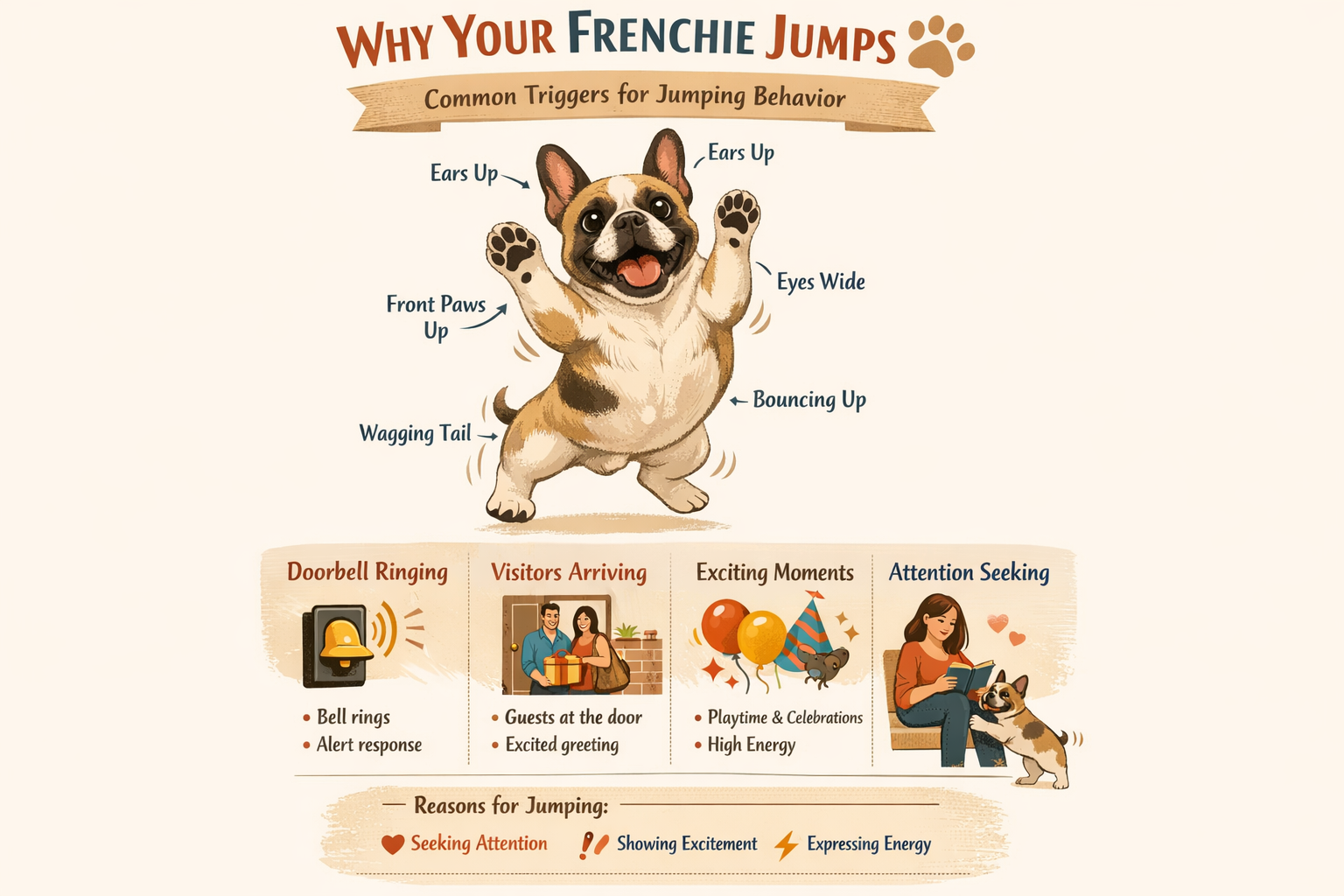
French Bulldogs don’t jump to be naughty or dominant – they jump because it works. When your Frenchie jumps and receives any form of attention (even negative attention like being pushed away), they learn that jumping gets them what they want: your focus and interaction.
This behavior typically stems from several key triggers:
🔹 Excitement and Enthusiasm
French Bulldogs are naturally exuberant dogs who express joy through physical movement. When they see their favorite people, their excitement overflows into jumping behavior.
🔹 Attention-Seeking
These companion-focused dogs have learned that jumping reliably gets human attention. Even if you push them down or say “no,” you’re still giving them the interaction they crave.
🔹 Greeting Instincts
In the dog world, face-to-face greetings are natural. Jumping brings them closer to human faces, mimicking normal canine social behavior.
🔹 Lack of Impulse Control
Young French Bulldogs and those without proper training haven’t learned to control their immediate impulses when excited.
Breed-Specific Considerations
French Bulldogs have unique characteristics that influence their jumping behavior and training needs. Their people-oriented temperament means they’re highly motivated by human attention, making both the problem and solution more intense than with independent breeds.
Their short attention spans require modified training approaches. Unlike working breeds that can focus for extended periods, Frenchies need brief, frequent training sessions to stay engaged[3].
Additionally, their compact build means their jumping, while not as physically overwhelming as larger breeds, can still be problematic for children, elderly family members, or guests wearing nice clothing.
Understanding these breed-specific traits helps you approach training with realistic expectations and appropriate methods. For comprehensive guidance on French Bulldog behavior and training fundamentals, check out our French Bulldog training tips for beginners.
Step-by-Step Training Methods: How to Train French Bulldog Not to Jump
The Turn-Away Method
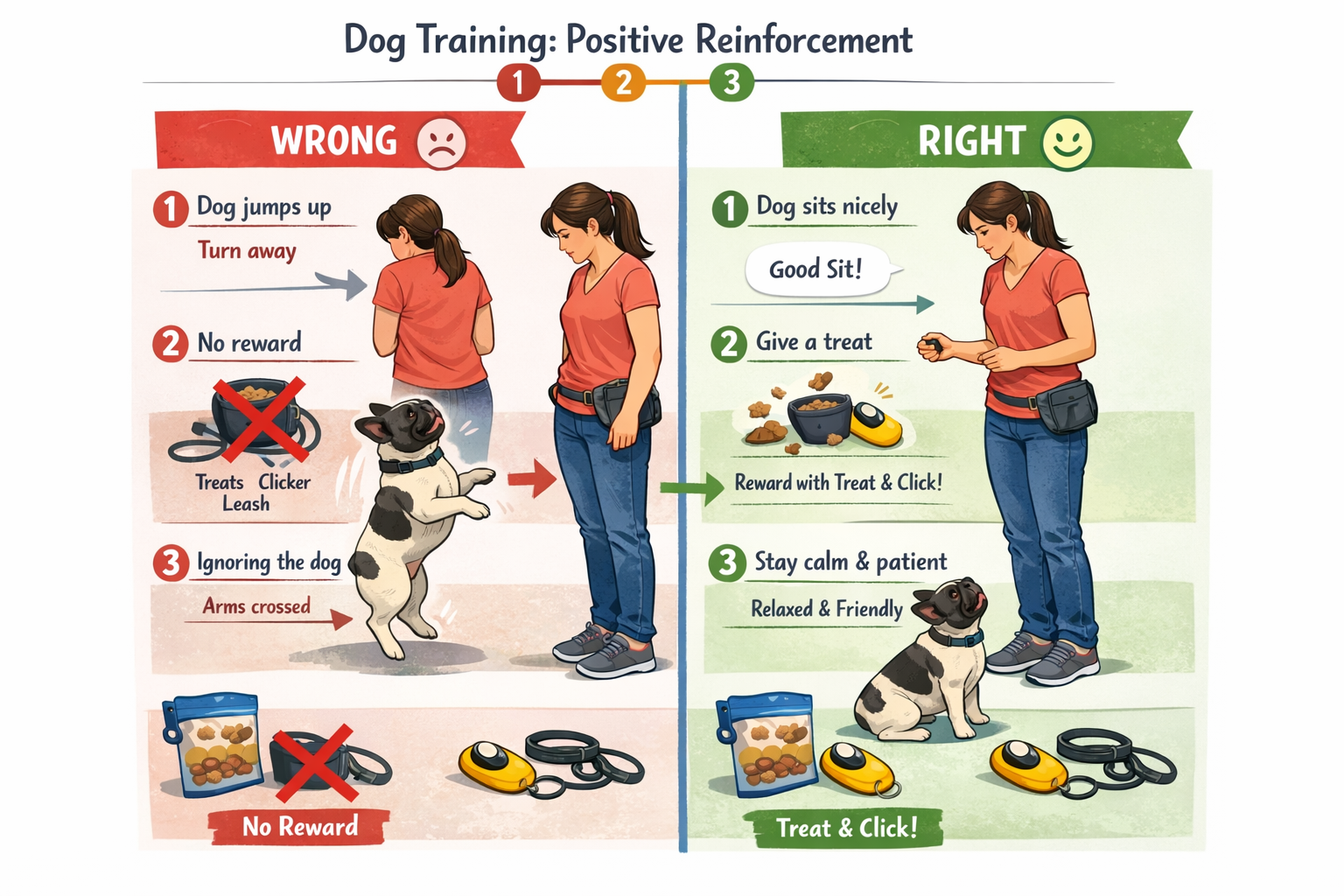
The most effective technique for stopping jumping behavior involves removing the reward (your attention) when jumping occurs. Here’s how to implement this method:
Step 1: Prepare Your Response
When your French Bulldog approaches and begins to jump, immediately turn your back to them. Cross your arms and avoid all eye contact, verbal interaction, or physical touch.
Step 2: Use a Firm Command
Say “off” in a calm, firm voice once. Don’t repeat the command multiple times or raise your voice, as this creates excitement that encourages more jumping.
Step 3: Maintain the Turn-Away
Keep your back turned until your Frenchie stops jumping and places all four paws on the ground. This may take 30 seconds to several minutes initially.
Step 4: Reward Immediately
The moment your dog stops jumping and sits or stands calmly, turn around and provide enthusiastic praise, treats, or gentle petting.
Positive Reinforcement Training
French Bulldogs respond exceptionally well to positive reinforcement methods. Punishment-based training can cause them to shut down or become defensive, making progress much slower.
Essential Rewards for Success:
- High-value treats: Small, soft treats your Frenchie loves
- Enthusiastic praise: “Good sit!” in a happy, excited voice
- Physical affection: Gentle petting and scratching
- Favorite toys: Special toys reserved for training rewards
Training the “Sit” Alternative:
Instead of just stopping jumping, teach your Frenchie what TO do instead:
- Practice “sit” in calm moments throughout the day
- Ask for a sit before any positive interaction (feeding, petting, going outside)
- Reward sitting behavior generously with treats and praise
- Make sitting more rewarding than jumping by being consistent
FYI: Some links may be affiliate links, which means I may earn a small commission at no extra cost to you.
If you’re looking for a structured approach to address jumping along with other reactive behaviors, this gentle training solution uses force-free methods to help dogs become calmer and more focused. It’s particularly helpful for Frenchies who get overly excited during greetings and need to learn better impulse control.
Managing Entry Points and Visitors
One of the biggest challenges occurs when visitors arrive at your home. French Bulldogs often become extremely excited by doorbell sounds and new people entering their territory.
Pre-Visit Preparation:
- Practice the “sit-stay” command at the front door during calm periods
- Use baby gates to create physical barriers if needed
- Prepare high-value treats near the entrance
- Brief visitors on your training protocol
During Visitor Arrivals:
- Ask your Frenchie to sit before opening the door
- Open the door slowly while maintaining the sit command
- Reward calm behavior immediately with treats
- Instruct visitors to ignore jumping and only pet when sitting
- Practice short sessions with willing friends and family
For more comprehensive training strategies that work specifically with the French Bulldog temperament, explore our guide on how to train a French Bulldog puppy.
Advanced Techniques and Troubleshooting
Relationship-Based Training Approach
French Bulldogs thrive when they feel they’re working with you rather than for you. This collaborative approach builds stronger bonds and faster learning.
Building Partnership:
- Make training feel like play rather than work
- Use your Frenchie’s natural desire to please as motivation
- Celebrate small victories enthusiastically
- Keep sessions positive and fun to maintain engagement
Distraction and Redirection Techniques
When you see jumping behavior starting, redirect that energy into appropriate activities:
Effective Distractions:
- Offer a favorite toy as you enter the room
- Ask for a different behavior like “touch” or “shake”
- Use puzzle toys to engage their mind during exciting moments
- Practice basic commands to refocus their attention
Timing and Consistency Requirements
Success with French Bulldog training depends heavily on timing and consistency across all interactions.
Critical Timing Elements:
- Reward within 2-3 seconds of the desired behavior
- Be consistent with commands – use the same word every time
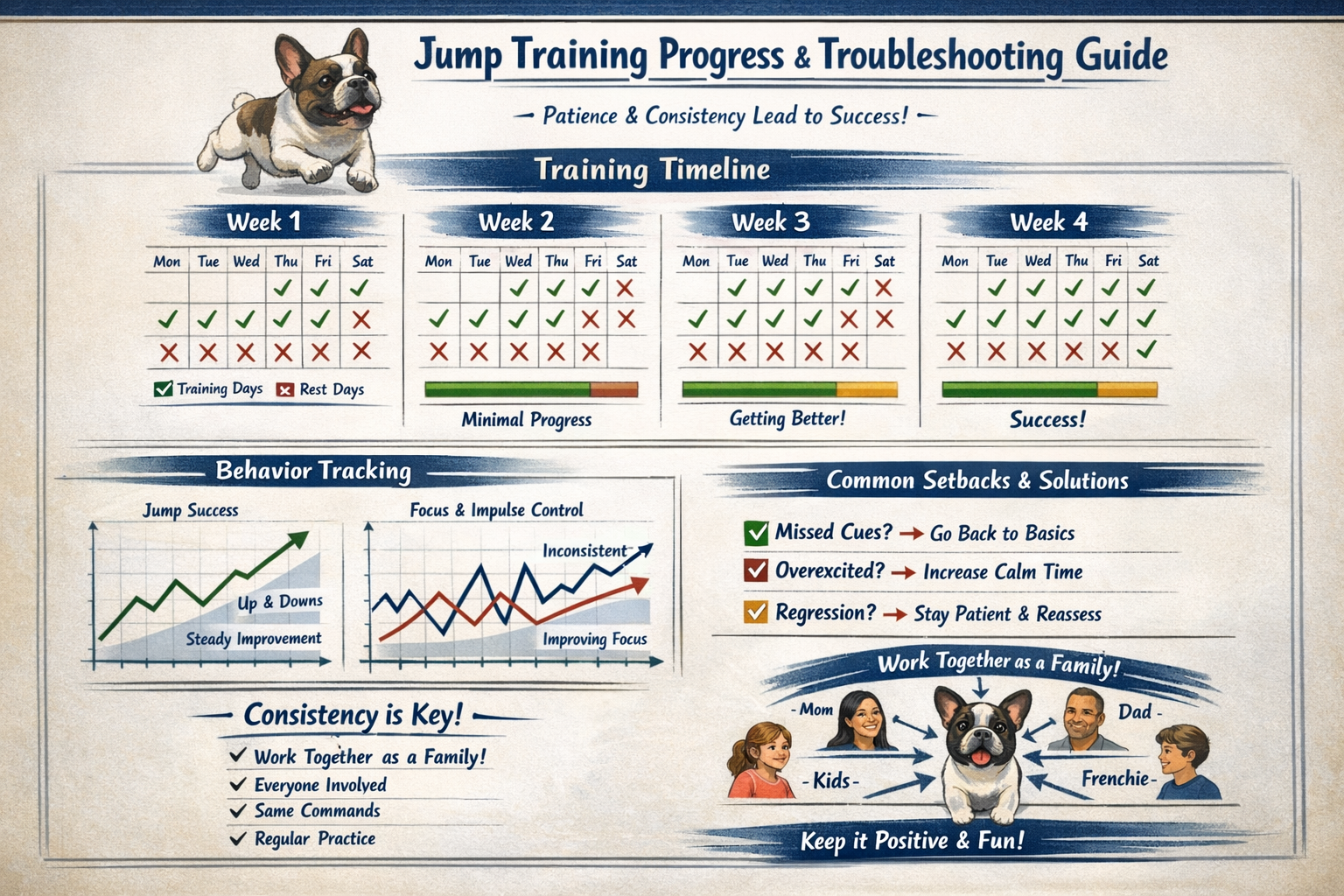
- Train multiple times daily in short 5-10 minute sessions
- Involve all family members in the same training approach
Common Timing Mistakes:
- Rewarding after the dog has already started jumping again
- Waiting too long to give the “off” command
- Inconsistent responses from different family members
- Training only when convenient rather than consistently
Addressing Persistent Jumping Issues
Some French Bulldogs may continue jumping despite consistent training. Here are advanced troubleshooting strategies:
For Attention-Seeking Jumpers:
- Increase daily exercise to reduce excess energy
- Provide more mental stimulation through puzzle toys
- Schedule regular training sessions to give positive attention
- Ensure all family members follow the same protocol
For Anxiety-Related Jumping:
- Work on general confidence building through positive experiences
- Consider whether the jumping stems from stress or overexcitement
- Create calm environments during training sessions
- Consult with a professional trainer if anxiety seems severe
For Stubborn Cases:
- Extend the duration of the turn-away method
- Increase the value of rewards for calm behavior
- Practice in more varied situations and locations
- Consider whether medical issues might affect behavior
If your Frenchie’s jumping is part of broader behavioral challenges, you might benefit from addressing multiple training issues simultaneously. Our guides on stopping French Bulldog biting and leash training tips can help create a comprehensive training plan.
Creating Long-Term Success
Environmental Management:
- Set up your home to support good behavior
- Remove triggers that cause excessive excitement
- Create designated calm spaces for your Frenchie
- Use visual cues like mats to indicate where sitting should occur
Ongoing Maintenance:
- Continue practicing even after jumping stops
- Refresh training during adolescent phases (6-18 months)
- Maintain consistency during stressful periods
- Celebrate progress rather than expecting perfection
Building a Comprehensive Training Plan
Weekly Training Schedule
Creating a structured approach helps ensure consistent progress in teaching your French Bulldog not to jump.
Daily Training Framework:
- Morning session (5 minutes): Practice “sit” before breakfast
- Afternoon session (5 minutes): Work on door greeting protocols
- Evening session (5 minutes): Reinforce calm behavior during family time
- Throughout the day: Apply training principles during natural interactions
Integration with Other Training Goals
Jump training works best when integrated with overall obedience and behavior management. Consider combining this training with other essential skills:
Complementary Training Areas:
- Basic obedience commands (sit, stay, come, down)
- Impulse control exercises (wait for food, door manners)
- Socialization with people and other dogs
- Crate training for calm settling periods
For French Bulldog owners dealing with multiple training challenges, our crate training guide provides excellent foundation skills that support jump training success.
Measuring Progress and Adjusting Methods
Signs of Training Success:
- Decreased frequency of jumping incidents
- Faster response to the “off” command
- Voluntary sitting when greeting people
- Calmer overall demeanor during exciting events
- Improved focus during training sessions
When to Adjust Your Approach:
- No improvement after 2-3 weeks of consistent training
- Increased anxiety or stress in your Frenchie
- Family members struggling to maintain consistency
- Jumping behavior worsening despite training efforts
Age-Specific Considerations
Puppy Training (8-16 weeks):
- Focus on preventing jumping from becoming established
- Use gentle redirection and lots of positive reinforcement
- Keep sessions very short (3-5 minutes)
- Emphasize socialization alongside jump prevention
Adolescent Training (4-18 months):
- Expect some regression during hormonal changes
- Increase exercise to manage excess energy
- Maintain consistency despite challenging phases
- Consider professional training support if needed
Adult Dog Training (18+ months):
- May require longer to change established patterns
- Focus on patience and consistency
- Address any underlying anxiety or behavioral issues
- Celebrate small improvements consistently
Helpful Resources for Comprehensive Training
If you’re looking for a structured, step-by-step approach to address jumping behavior along with other common French Bulldog training challenges, consider exploring professional training resources that use positive, force-free methods.
A comprehensive training program can be particularly valuable for:
- First-time French Bulldog owners who want to establish good habits early
- Busy professionals who need efficient, proven training methods
- Families with children who need consistent, safe training approaches
- Apartment dwellers who require well-behaved dogs in close quarters
This gentle training method focuses on building calm, focused behavior through positive reinforcement techniques specifically designed for reactive and excitable dogs. It’s not required for success, but many French Bulldog owners find structured guidance helpful for faster, more consistent results.
Remember that every French Bulldog is unique, and what works perfectly for one dog may need modification for another. The key is maintaining patience, consistency, and a positive attitude throughout the training process.
Conclusion
Learning how to train French Bulldog not to jump requires patience, consistency, and the right approach for your Frenchie’s unique personality. The combination of turning away from jumping behavior, rewarding calm sitting, and maintaining consistent responses from all family members creates the foundation for success.
Remember that French Bulldogs are naturally affectionate, people-focused dogs who simply need guidance on appropriate ways to express their enthusiasm. By using positive reinforcement methods, keeping training sessions short and engaging, and addressing the root causes of jumping behavior, you can transform your excitable Frenchie into a well-mannered companion.
Your next steps:
- Start today with the turn-away method during your next interaction
- Practice “sit” training in calm moments throughout the day
- Involve all family members in consistent training approaches
- Track your progress and celebrate small improvements
- Stay patient and positive – most French Bulldogs show improvement within 2-4 weeks
The journey to a non-jumping French Bulldog is absolutely achievable with the right methods and mindset. Your efforts will be rewarded with a calmer, more enjoyable companion who greets everyone appropriately and makes you proud in any social situation.
For additional support with French Bulldog training challenges, explore our comprehensive guides on puppy training fundamentals and general training tips for beginners.
References
[1] How To Stop French Bulldog From Jumping Up – https://frenchbulldogowner.com/how-to-stop-french-bulldog-from-jumping-up/
[2] Training French Bulldogs What Every Owner Needs To Know – https://www.thetrainingofdogs.com/post/training-french-bulldogs-what-every-owner-needs-to-know
[3] Are French Bulldogs Easy To Train – https://www.woofz.com/blog/are-french-bulldogs-easy-to-train/
[6] Training Tips For A Well Behaved Frenchie – https://frenchieboxes.com/blogs/news/training-tips-for-a-well-behaved-frenchie
[8] Training Your French Bulldog – https://frenchiestore.com/blogs/frenchie-blog/training-your-french-bulldog