
How to Train French Bulldog Not to Chew: A Complete Guide for Success
Last updated: February 21, 2026
Key Takeaways
• Start anti-chewing training as early as 8 weeks old when French Bulldogs are most receptive to learning new behaviors
• Use positive reinforcement with high-value treats and redirection rather than punishment for effective results
• Keep training sessions to 5-10 minutes maximum to match your Frenchie’s short attention span
• Provide appropriate chew toys and puppy-proof your home to prevent destructive chewing habits
• Combine consistent training with adequate exercise and mental stimulation for long-term success
Quick Answer
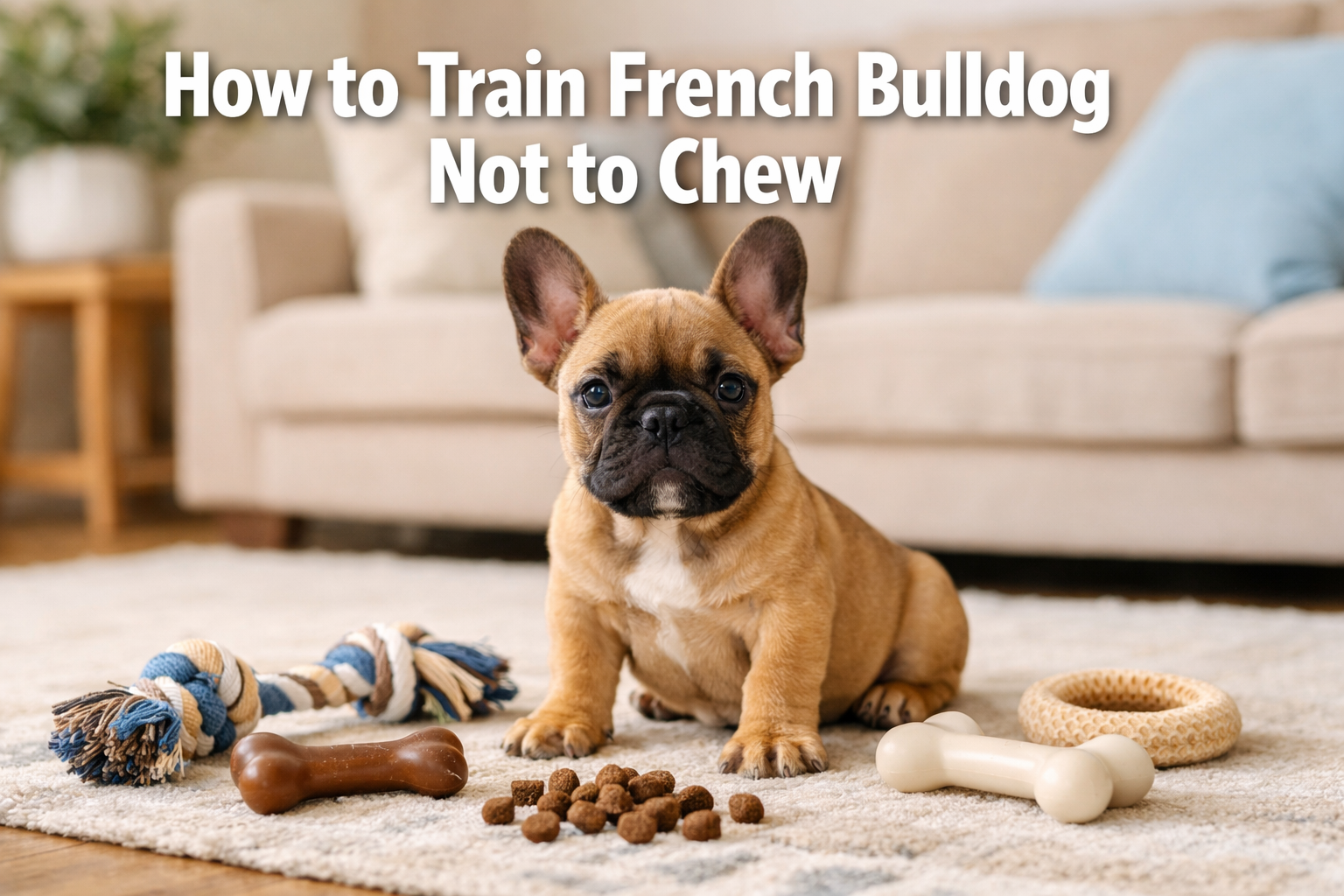
How to train French Bulldog not to chew involves using positive reinforcement, redirection to appropriate toys, and consistent supervision. Start training at 8 weeks old with 5-10 minute sessions, immediately redirect unwanted chewing to approved toys, and reward good behavior with high-value treats. Most French Bulldogs respond well to gentle correction combined with environmental management and adequate mental stimulation.
Why Do French Bulldogs Chew Everything?
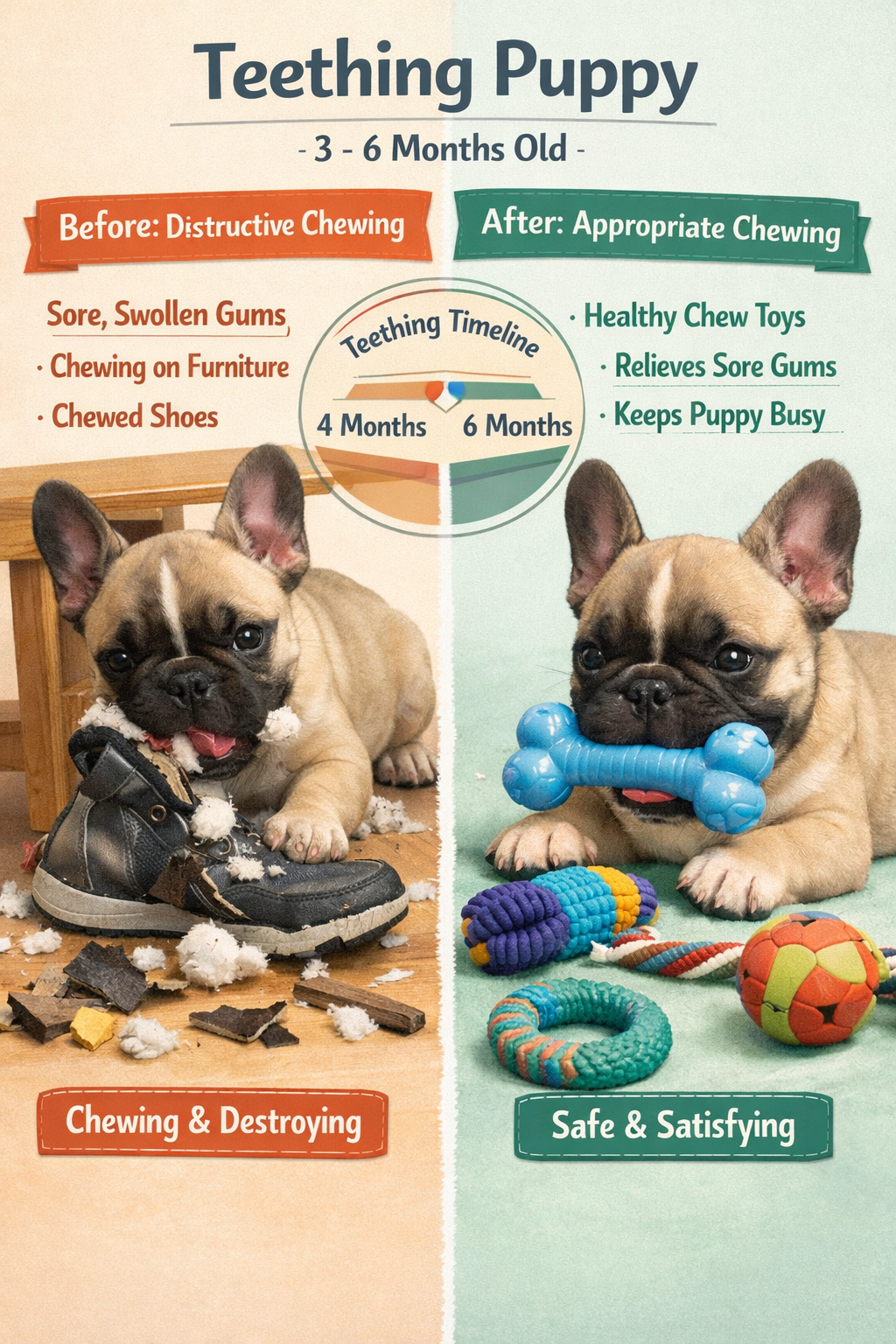
French Bulldogs chew for several natural and behavioral reasons that every owner should understand before starting training. Teething is the primary cause in puppies aged 3-7 months, as their adult teeth push through tender gums, creating discomfort that chewing helps relieve. Adult French Bulldogs continue chewing due to boredom, anxiety, or simply because it’s an instinctual behavior that feels rewarding.
Common triggers for destructive chewing include:
• Teething discomfort in puppies under 8 months old
• Boredom from insufficient mental stimulation or exercise
• Separation anxiety when left alone for extended periods
• Attention-seeking behavior when they’ve learned chewing gets a reaction
• Natural exploration of their environment through mouth and teeth
French Bulldogs are particularly prone to boredom-related chewing because they’re intelligent dogs with relatively low exercise needs. When their minds aren’t engaged, they’ll find their own entertainment—often at the expense of your furniture or shoes. Understanding that chewing serves a purpose for your Frenchie helps you address the root cause rather than just the symptoms.
Choose immediate intervention if you catch your French Bulldog chewing inappropriate items, as timing is crucial for effective training. The longer destructive chewing habits continue, the more difficult they become to break.
When Should You Start Training Your French Bulldog Not to Chew?
Start anti-chewing training immediately at 8 weeks old when French Bulldogs are most receptive to learning routines and behavioral boundaries. Early intervention prevents destructive habits from forming and takes advantage of your puppy’s natural eagerness to please and learn.
Optimal training timeline:
• 8-12 weeks: Begin basic redirection and “leave it” commands
• 3-4 months: Intensify training as teething begins and chewing increases
• 4-7 months: Maintain consistent training through peak teething period
• 8+ months: Focus on reinforcing good habits as adult teeth settle
Training becomes more challenging after 6 months because destructive chewing patterns become ingrained habits rather than exploratory behavior. However, adult French Bulldogs can still learn appropriate chewing boundaries with patience and consistency.
Key success factors for timing:
• Start before problems develop rather than waiting for destructive behavior
• Increase training frequency during teething phases when chewing urges peak
• Maintain consistent rules from day one to avoid confusion
• Begin French Bulldog puppy training early for best results across all behaviors
Common mistake: Waiting until your Frenchie has already destroyed valuable items before beginning training. Prevention is always easier than correction.
How to Train French Bulldog Not to Chew Using Positive Reinforcement
Positive reinforcement with treats and praise is significantly more effective than punishment for French Bulldogs, who are highly emotional and can become sad or stubborn when scolded. This approach builds trust while teaching your Frenchie what you want them to do instead of just what to avoid.
Step-by-step positive reinforcement process:
- Catch good behavior immediately – Praise and treat when you see your Frenchie chewing appropriate toys
- Use high-value rewards – Small pieces of chicken, cheese, or premium training treats increase motivation
- Add verbal praise – Say “good chew” or “yes” in an excited voice while giving treats
- Time rewards perfectly – Reward within 3 seconds of the desired behavior for clear association
- Practice regularly – Set up multiple daily opportunities to reward appropriate chewing
Redirection technique that works:
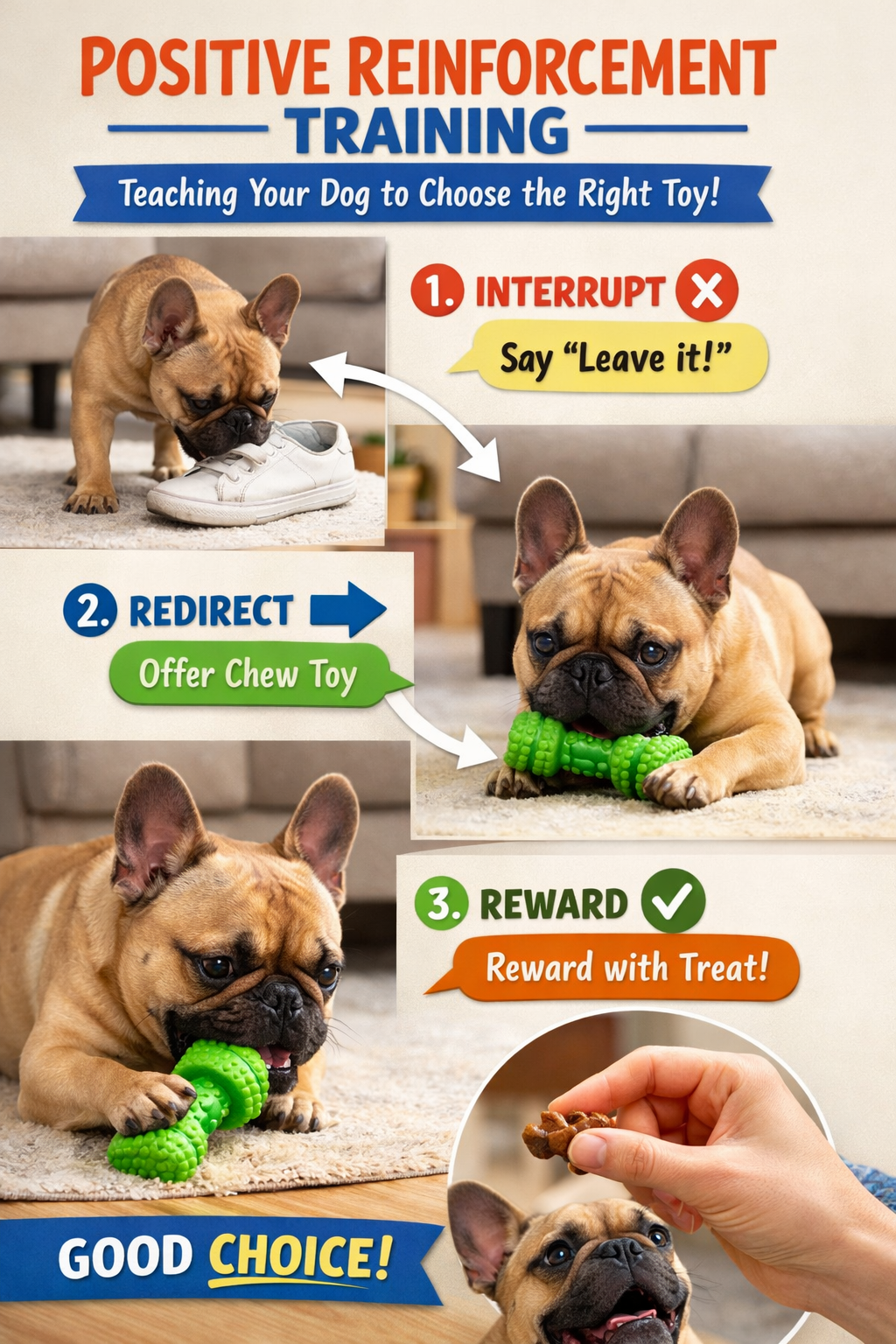
When your French Bulldog chews something inappropriate, calmly say “no” and immediately offer an approved chew toy. The moment they take the toy, praise enthusiastically and give a high-value treat. This teaches them that switching to appropriate items brings rewards.
Training session structure (5-10 minutes maximum):
• Minutes 1-2: Review basic commands like “leave it”
• Minutes 3-5: Practice redirection with supervised chewing opportunities
• Minutes 6-8: Reward any natural appropriate chewing you observe
• Minutes 9-10: End with success and plenty of praise
FYI: Some links may be affiliate links, which means I may earn a small commission at no extra cost to you.
For French Bulldogs who struggle with focus or reactivity during training, a structured approach can make a significant difference. If you want something designed specifically for building calm, focused behavior, this gentle training method uses force-free techniques that many Frenchie owners find helpful for creating more peaceful training sessions.
Choose this method if your Frenchie gets overly excited, distracted, or reactive during training sessions, as it focuses on building calm confidence first.
What Chew Toys Work Best for French Bulldogs?
Provide durable, size-appropriate chew toys that satisfy your French Bulldog’s natural chewing instincts while protecting your belongings. The right toys prevent boredom-related destruction and give your Frenchie an acceptable outlet for their chewing needs.
Best chew toy categories for French Bulldogs:
Teething puppies (3-7 months):
• Frozen Kong toys filled with treats or peanut butter for soothing relief
• Soft rubber teething rings that massage sore gums gently
• Rope toys for texture variety and gentle chewing
• Puppy-specific chew toys designed for developing teeth
Adult French Bulldogs (8+ months):
• Puzzle toys that dispense treats to provide mental stimulation
• Antler chews for long-lasting, natural chewing (supervise closely)
• Benebone or Nylabone products sized appropriately for flat-faced breeds
• Interactive treat balls that combine play with chewing satisfaction
Safety considerations for flat-faced breeds:
• Choose toys large enough that they can’t be swallowed whole
• Avoid extremely hard materials that could damage teeth
• Select toys with good airflow design to prevent breathing obstruction
• Replace worn toys before they become choking hazards
Rotation strategy: Keep 3-4 toys available at once and rotate weekly to maintain novelty and interest. Store others away so they feel “new” when reintroduced.
Common mistake: Giving your Frenchie old shoes or socks as chew toys, which teaches them that these items are acceptable to chew anywhere in the house.
How to Puppy-Proof Your Home to Prevent Destructive Chewing
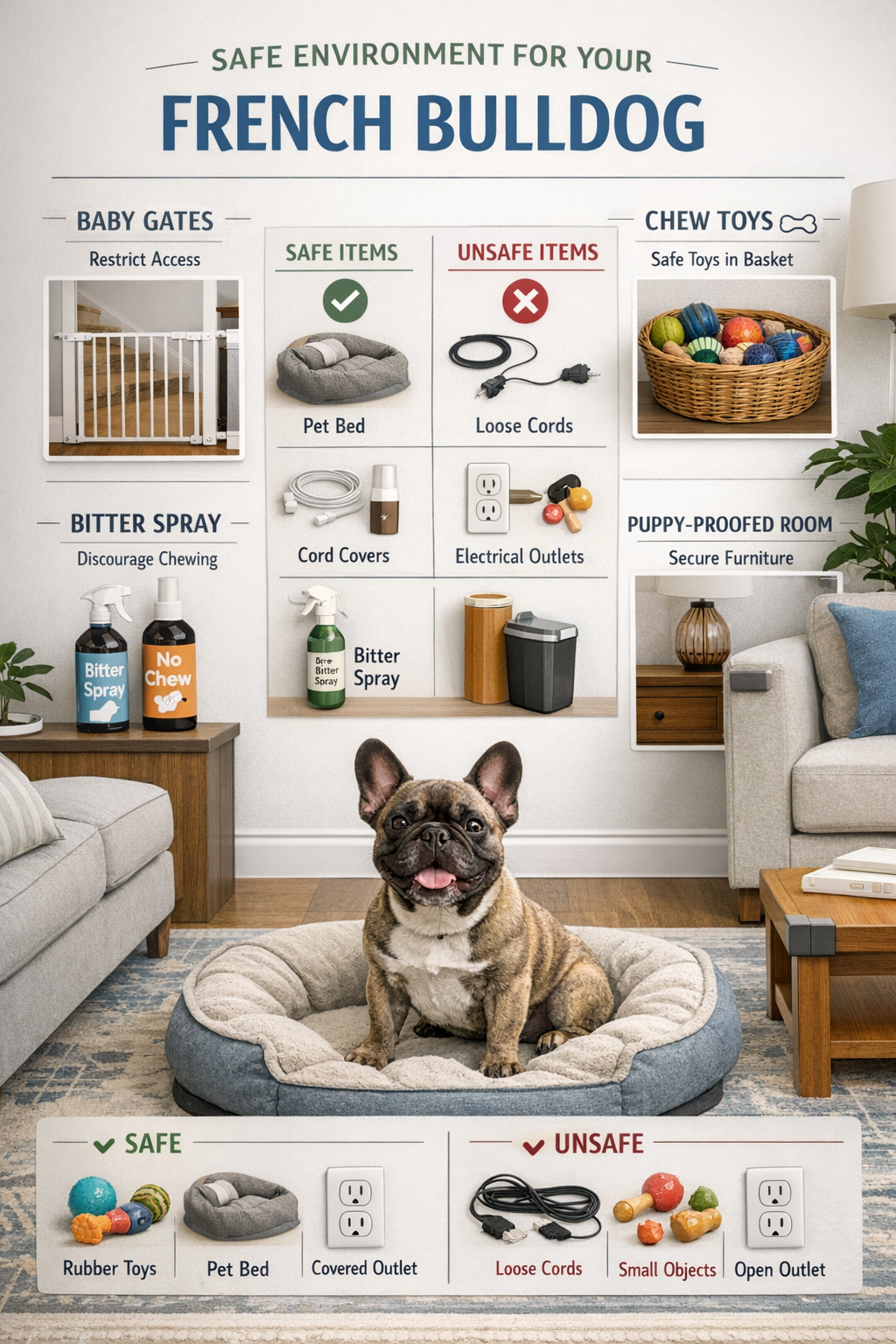
Environmental management prevents 80% of destructive chewing problems by removing temptation and setting your French Bulldog up for success. A properly puppy-proofed home makes training easier and protects your belongings while your Frenchie learns appropriate boundaries.
Room-by-room puppy-proofing checklist:
Living areas:
• Secure electrical cords with cord protectors or tape them out of reach
• Remove or elevate shoes, remote controls, and small decorative items
• Use bitter apple spray on furniture legs and baseboards as deterrents
• Install baby gates to limit access to off-limits areas
• Store books and magazines in closed cabinets or high shelves
Kitchen and dining areas:
• Lock cabinets containing cleaning supplies or food
• Secure trash cans with tight-fitting lids or store in cabinets
• Remove kitchen towels, oven mitts, and cloth napkins from reach
• Store small appliances and their cords in closed areas
Bedrooms and bathrooms:
• Close doors or use baby gates to restrict access
• Store clothing in hampers with lids or closed closets
• Remove personal items like glasses, jewelry, and medications
• Secure toilet paper and bathroom linens
Supervision strategy: Never leave your French Bulldog unsupervised in non-puppy-proofed areas until they’ve consistently demonstrated good chewing habits for at least 3 months.
Gradual freedom approach: Start with one fully puppy-proofed room, then slowly expand their access as they prove trustworthy. This builds confidence while preventing setbacks.
For comprehensive guidance on establishing good habits from the start, check out our complete French Bulldog training guide for beginners.
How to Use the “Leave It” Command to Stop Chewing
The “leave it” command is your most powerful tool for preventing destructive chewing before it starts. This command teaches your French Bulldog to immediately stop what they’re doing and look to you for direction, creating a reliable way to interrupt unwanted behavior.
Step-by-step “leave it” training:
Week 1: Foundation training
- Hold a treat in your closed fist near your Frenchie’s nose
- Wait silently until they stop pawing and sniffing your hand
- Say “leave it” the moment they back away or look at you
- Immediately reward with a different treat from your other hand
- Practice 5-10 repetitions per session, twice daily
Week 2: Adding distance and objects
- Place a treat on the floor while your Frenchie is on leash
- Say “leave it” if they move toward the treat
- Gently redirect with the leash if needed (no pulling or jerking)
- Reward immediately when they look away from the treat
- Gradually increase the difficulty with more tempting items
Week 3: Real-world application
- Practice with actual problem items like shoes or remote controls
- Set up controlled scenarios where you can supervise and correct
- Use “leave it” the moment they show interest in inappropriate items
- Follow with redirection to an appropriate chew toy
- Reward heavily for choosing the correct item
Advanced training tips:
• Practice during different energy levels – when calm, excited, and moderately stimulated
• Use varying rewards to maintain high motivation and interest
• Train in different locations to ensure the command works everywhere
• Involve family members so your Frenchie responds to everyone consistently
Troubleshooting common issues: If your Frenchie ignores the command, you may be progressing too quickly or the distractions are too tempting. Return to easier exercises and build up gradually.
What to Do When You Catch Your French Bulldog Chewing
Immediate, calm intervention is crucial when you catch your French Bulldog chewing inappropriate items. Your response in these moments shapes their future behavior, so consistency and timing matter more than the intensity of your correction.
Effective intervention sequence:
Step 1: Interrupt calmly
• Say “no” in a firm but not harsh voice to get their attention
• Avoid yelling or dramatic reactions that might reinforce attention-seeking behavior
• Move toward them slowly to avoid triggering play or chase responses
Step 2: Remove and redirect immediately
• Gently take the inappropriate item without engaging in a tug-of-war
• Offer an appropriate chew toy within 5 seconds of removal
• Use an excited, happy voice when presenting the correct option
Step 3: Reward the switch
• Praise enthusiastically the moment they take the appropriate toy
• Give a high-value treat to reinforce the good choice
• Stay nearby briefly to ensure they continue with the appropriate item
What NOT to do:
• Don’t chase your Frenchie if they run away with the item
• Don’t engage in pulling contests that can seem like play
• Don’t punish after the fact if you discover chewed items later
• Don’t give attention for negative behavior, even negative attention
Prevention through supervision: The best intervention is preventing the behavior entirely through proper supervision and environmental management. Never leave your French Bulldog unsupervised with access to inappropriate chewing options until they’re fully trained.
Building positive associations: Over time, your Frenchie should learn that giving up inappropriate items leads to better rewards, making them more likely to drop things willingly or even bring them to you.
This approach aligns with positive reinforcement training methods that work best for French Bulldogs’ sensitive temperaments.
How Long Does It Take to Train a French Bulldog Not to Chew?
Most French Bulldogs show significant improvement within 4-8 weeks of consistent training, though complete reliability may take 3-6 months depending on the dog’s age, consistency of training, and severity of the chewing problem[5]. Puppies often progress faster than adult dogs with established habits.
Realistic timeline expectations:
Weeks 1-2: Foundation building
• Basic command recognition for “leave it” and “no”
• Initial redirection success with immediate supervision
• 50-60% compliance when you’re present and actively training
Weeks 3-4: Habit formation
• Improved response time to commands and redirection
• Beginning of self-regulation when appropriate toys are available
• 70-80% success rate during supervised periods
Weeks 5-8: Reliability development
• Consistent appropriate chewing when supervised
• Reduced interest in inappropriate items
• 85-90% compliance with established rules
Months 3-6: Independence
• Trustworthy behavior during short unsupervised periods
• Self-correction when they start to chew inappropriate items
• 95%+ reliability in most situations
Factors that affect training speed:
• Age at start: Puppies under 4 months learn fastest
• Consistency: Daily training sessions accelerate progress
• Environmental management: Proper puppy-proofing prevents setbacks
• Individual temperament: Some Frenchies are naturally more compliant
Signs of progress to watch for:
• Choosing appropriate toys without prompting
• Looking to you for guidance when uncertain about an item
• Dropping inappropriate items more quickly when asked
• Reduced interest in previously tempting objects
For a comprehensive understanding of French Bulldog training timelines, see our detailed guide on how long it takes to train a French Bulldog.
Common setback: Expecting too much too soon and becoming frustrated when progress isn’t linear. French Bulldogs learn best with patient, consistent reinforcement over time.
Helpful Resource for Structured Training
If you’re looking for a more structured approach to building calm, focused behavior in your French Bulldog, especially if they get reactive or overly excited during training sessions, this gentle training method offers step-by-step techniques specifically designed for creating peaceful, productive training environments.
This force-free approach can be particularly helpful for French Bulldogs who struggle with impulse control or become too stimulated during traditional training sessions. While not required for basic chewing training, many owners find that building overall calmness and focus first makes all other training more effective.
The method focuses on reducing reactivity and building confidence, which often translates to better self-control around tempting items and more successful redirection training overall.
FAQ
How do I stop my French Bulldog puppy from chewing everything?
Start with immediate redirection to appropriate toys, use positive reinforcement when they chew correctly, and puppy-proof your home to remove tempting items. Keep training sessions to 5-10 minutes and be consistent with your responses.
What age do French Bulldogs stop destructive chewing?
Most French Bulldogs significantly reduce destructive chewing by 8-12 months when teething ends, but some continue the behavior if it becomes habitual. Proper training usually resolves issues within 4-8 weeks regardless of age.
Can I use bitter apple spray on furniture?
Yes, bitter apple spray is safe for most furniture and acts as an effective deterrent. Test on a hidden area first and reapply regularly as the scent fades. Combine with positive training for best results.
Why does my French Bulldog only chew when I’m gone?
This indicates separation anxiety or boredom. Provide puzzle toys, ensure adequate exercise before leaving, and consider crate training. Gradually increase alone time and never punish after-the-fact discoveries.
Should I give my French Bulldog rawhide chews?
Avoid traditional rawhide for French Bulldogs due to choking risks and digestive issues. Choose safer alternatives like bully sticks, antler chews, or rubber toys designed for flat-faced breeds.
How do I know if my French Bulldog is teething?
Signs include excessive chewing, drooling, swollen or red gums, loose baby teeth, and increased mouthing behavior. Teething typically occurs between 3-7 months old.
What’s the best way to exercise a French Bulldog to reduce chewing?
Provide 30-60 minutes of daily activity through short walks, indoor play, and mental stimulation games. Avoid overexertion due to breathing issues, and focus on puzzle toys for mental exercise.
Can adult French Bulldogs learn to stop destructive chewing?
Yes, adult French Bulldogs can learn new habits with consistent training, though it may take longer than with puppies. Use the same positive reinforcement techniques and be patient with progress.
How many chew toys should I give my French Bulldog?
Keep 3-4 toys available at once and rotate weekly to maintain interest. Too many options can overwhelm, while too few leads to boredom. Store extras and reintroduce them as “new” toys.
What should I do if my French Bulldog swallows something they shouldn’t?
Contact your veterinarian immediately if you suspect your Frenchie has swallowed something dangerous. Monitor for signs of distress, difficulty breathing, or changes in eating/bathroom habits.
Is crate training helpful for preventing destructive chewing?
Yes, crate training provides a safe space where your Frenchie can’t access inappropriate items while unsupervised. Make the crate comfortable with appropriate chew toys and never use it as punishment.
How do I stop my French Bulldog from chewing their leash?
Use bitter apple spray on the leash, carry a small toy for redirection during walks, and practice “leave it” commands specifically with the leash. Consider a chain leash temporarily if chewing persists.
Key Takeaways
• Start training at 8 weeks old using positive reinforcement and redirection techniques for fastest results with your French Bulldog’s chewing habits
• Keep training sessions short at 5-10 minutes maximum to match your Frenchie’s attention span and prevent frustration for both of you
• Use high-value treats and immediate rewards when your French Bulldog chooses appropriate chew toys over household items to reinforce good behavior
• Puppy-proof your environment thoroughly by removing tempting items and using deterrents like bitter apple spray to prevent destructive chewing opportunities
• Master the “leave it” command as your primary tool for interrupting inappropriate chewing before it becomes a destructive habit
• Provide appropriate chew toys designed for French Bulldogs’ flat faces and rotate them weekly to maintain interest and prevent boredom
• Expect 4-8 weeks for significant improvement with consistent daily training, though complete reliability may take 3-6 months
• Address underlying causes like teething, boredom, or separation anxiety rather than just treating the chewing symptoms
• Never punish after discovering chewed items – only correct behavior you catch in the moment for effective learning
• Combine training with adequate mental stimulation through puzzle toys and appropriate exercise to reduce destructive chewing urges
Remember that learning how to train French Bulldog not to chew requires patience, consistency, and understanding of your Frenchie’s unique needs. With the right approach and commitment to positive reinforcement techniques, you can successfully redirect your French Bulldog’s natural chewing instincts toward appropriate outlets while preserving your belongings and strengthening your bond.
For additional support with related behavioral issues, explore our guides on stopping French Bulldog biting and training stubborn French Bulldogs to create a well-rounded training program for your beloved Frenchie.
References
[1] How Stop French Bulldog Chewing – https://frenchbulldogowner.com/how-stop-french-bulldog-chewing/
[2] How To Train A French Bulldog – https://queen-inas-kennel.com/blog/how-to-train-a-french-bulldog
[3] How To Train French Bulldog – https://shop.bullymax.com/blogs/news/how-to-train-french-bulldog
[4] Are French Bulldogs Easy To Train – https://www.woofz.com/blog/are-french-bulldogs-easy-to-train/
[5] Training Tips For A Well Behaved Frenchie – https://frenchieboxes.com/blogs/news/training-tips-for-a-well-behaved-frenchie
[6] Training Your French Bulldog – https://frenchiestore.com/blogs/frenchie-blog/training-your-french-bulldog