
Last updated: February 26, 2026
Key Takeaways
• Complete adoption applications thoroughly and prepare for home visits as part of the approval process
• Gather essential supplies including collar, leash, food bowls, high-quality food, bed, and grooming tools before bringing your Frenchie home
• Find a veterinarian experienced with brachycephalic breeds and their specific health needs
• French Bulldog-proof your home by securing hazards and creating temperature-controlled spaces
• Plan to take several days off work to help your new dog adjust to their environment
• Budget for ongoing costs including specialized food, regular vet care, and potential health issues
• Prepare for positive reinforcement training methods that work best with this breed’s sensitive nature
• Research reputable rescue organizations and understand their specific adoption requirements
Quick Answer
How to prepare for French Bulldog adoption involves completing thorough application paperwork, gathering essential supplies, finding a breed-experienced veterinarian, and creating a safe home environment. Most rescue organizations require home visits and veterinary references before approval. You’ll need basic supplies like food bowls, a collar, leash, and high-quality food, plus time off work to help your new Frenchie adjust to their new home.
What Does the French Bulldog Adoption Process Look Like?
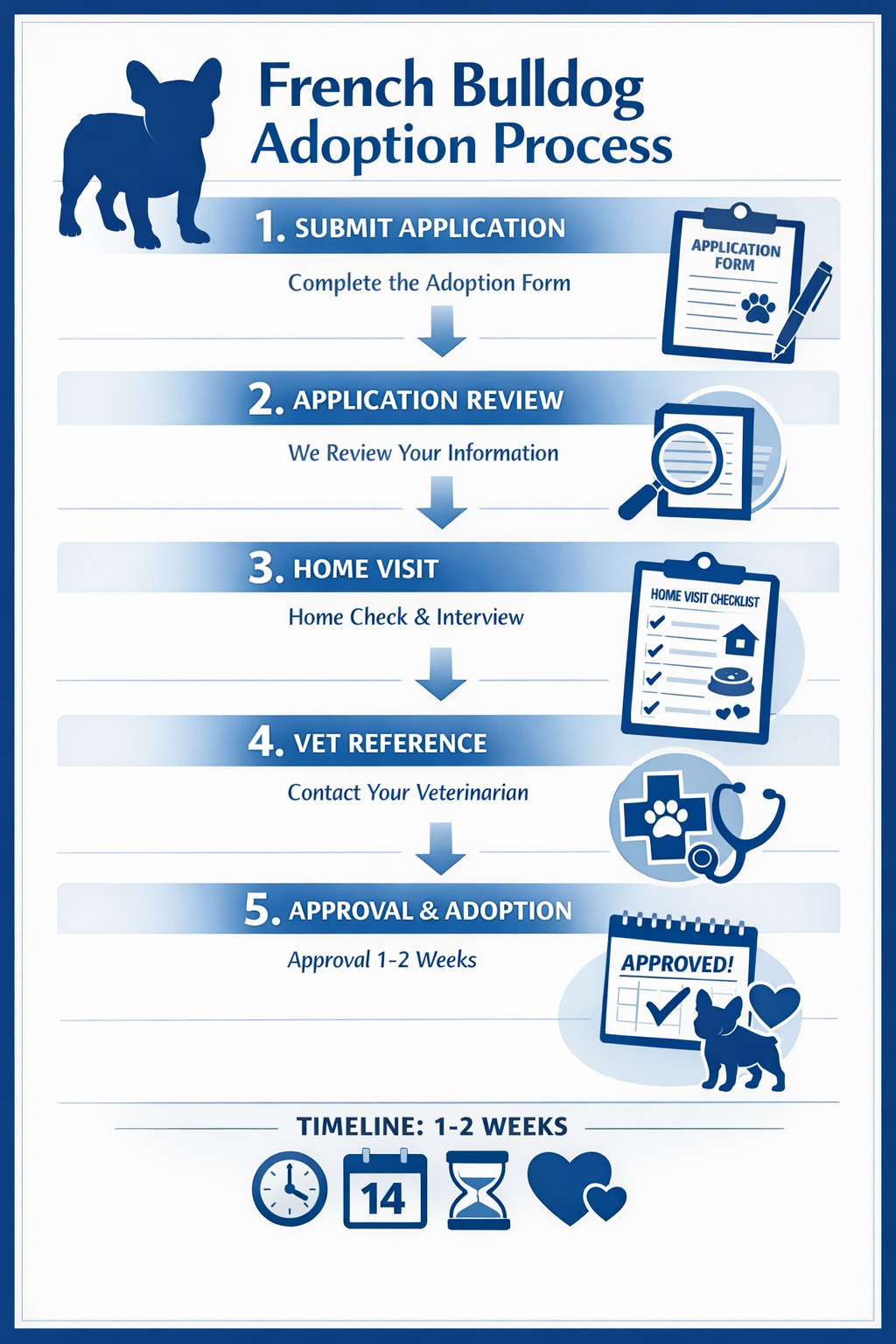
The French Bulldog adoption process requires completing detailed applications and passing approval requirements set by rescue organizations. Most rescues require application forms covering your living situation, work schedule, and lifestyle, followed by mandatory home visits to verify your environment is suitable for a Frenchie.
Application Requirements:
• Personal information and housing details (own vs. rent, yard size, living arrangements)
• Work schedule and daily routine questions
• Previous pet ownership experience and current pets
• Veterinary references from your current or previous vet
• Household member information and ages of children
• Lifestyle questions about exercise habits and time availability
Approval Process Steps:
- Submit completed application with all required information
- Veterinary reference check – rescues will call your vet to verify pet care history
- Home visit scheduling – this is mandatory, not optional
- Meet and greet with potential dogs
- Final approval and contract signing
The entire process typically takes 1-3 weeks depending on the organization’s schedule and your responsiveness. Some rescues may have waiting lists for French Bulldogs due to their popularity.
Common mistake: Assuming you can skip steps or rush the process. Rescue organizations prioritize finding the right match over speed, so patience during the vetting process shows you’re serious about responsible pet ownership.
For a detailed breakdown of the entire process, check out our French Bulldog adoption process guide.
What Essential Supplies Do You Need Before French Bulldog Adoption?
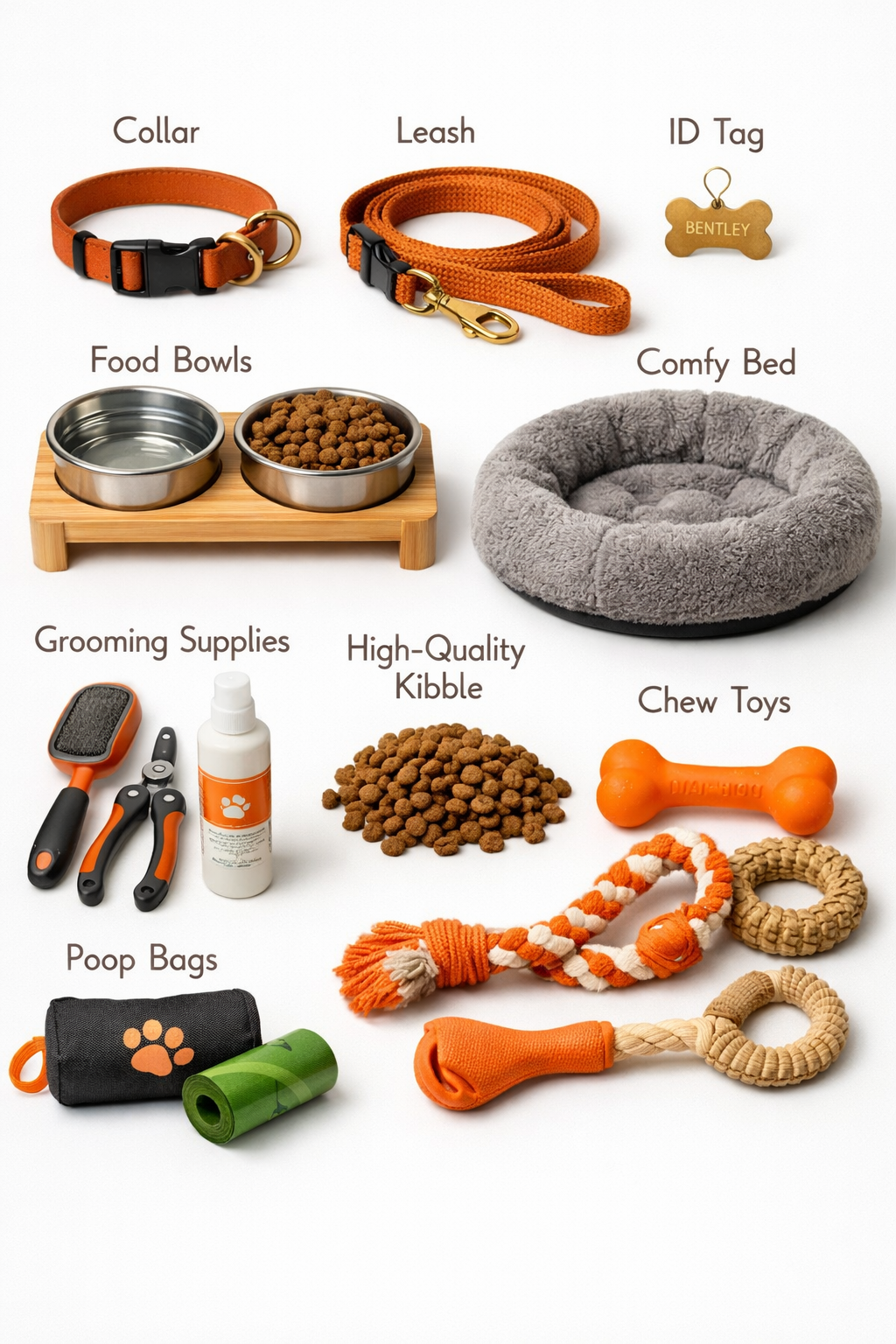
You need basic care supplies, feeding equipment, and comfort items ready before bringing your French Bulldog home. Essential items include a collar, leash, ID tag, food and water bowls, high-quality breed-appropriate food, comfortable bed, grooming supplies, chew toys, and waste bags.
Immediate Necessities:
• Collar and leash – properly fitted collar with ID tag containing your contact information
• Food and water bowls – stainless steel or ceramic (avoid plastic that can harbor bacteria)
• High-quality dog food – breed-appropriate formula, preferably what the rescue was feeding
• Comfortable bed – orthopedic support is beneficial for joint health
• Crate with adjustable insert – helps with house training and provides a safe space
Grooming and Health Supplies:
• Nail clippers designed for small to medium dogs
• Dog-safe toothbrush and toothpaste
• Gentle dog shampoo for sensitive skin
• Soft brush for regular coat maintenance
• Cleaning supplies for facial wrinkles (crucial for Frenchies)
Enrichment and Training:
• Appropriate-sized chew toys (avoid small pieces that could cause choking)
• Interactive puzzle toys for mental stimulation
• Training treats for positive reinforcement
• Waste bags for cleanup during walks
Budget consideration: Plan to spend $200-400 on initial supplies. Choose quality items that will last rather than cheap alternatives that need frequent replacement.
Pro tip: Buy food gradually and transition slowly from what the rescue was feeding to avoid digestive upset during an already stressful transition period.
Learn more about specific items your Frenchie will need in our guide to essential supplies for French Bulldog puppies.
How Should You Prepare Your Home for French Bulldog Adoption?
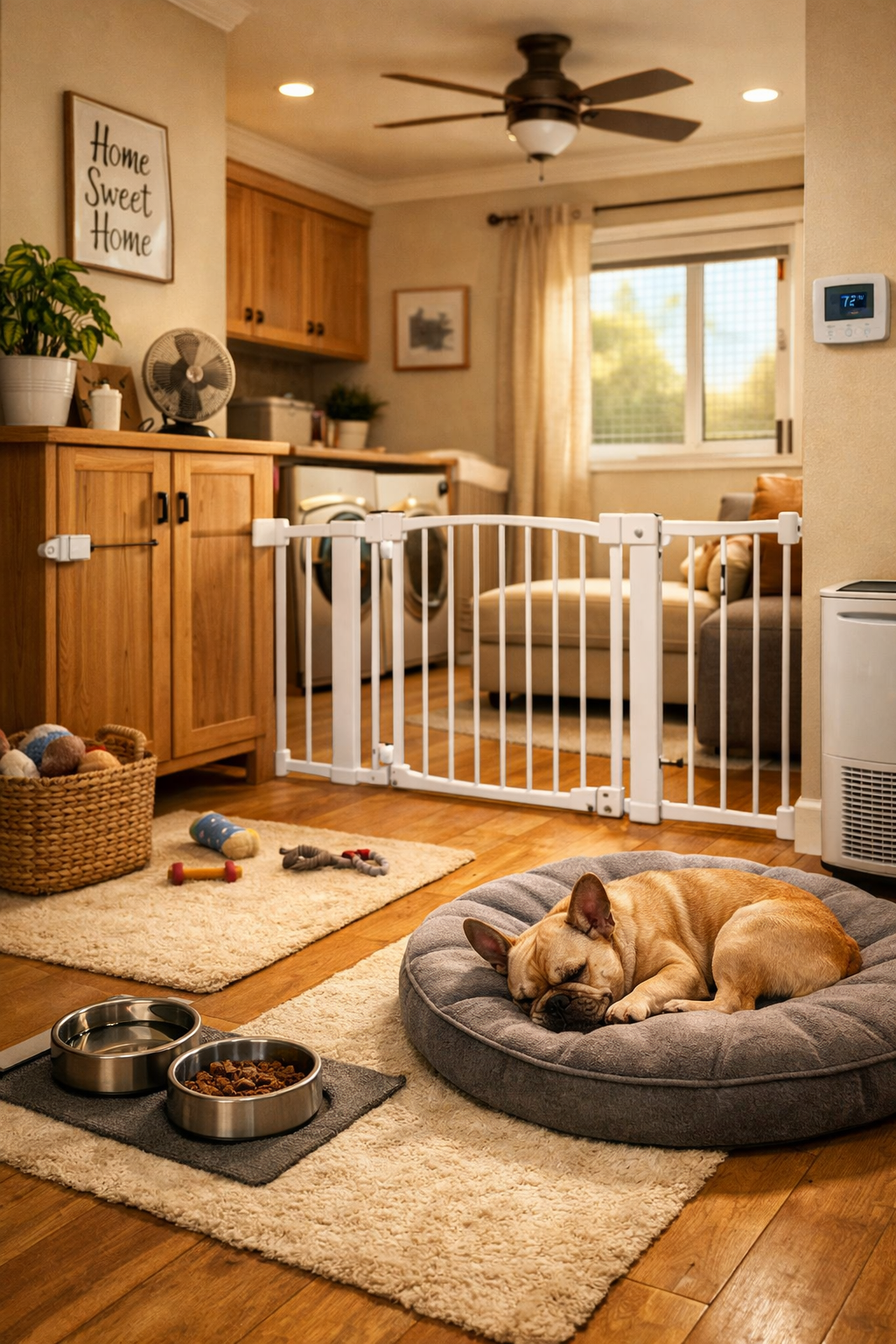
Your home needs to be French Bulldog-proofed with attention to temperature control, safety hazards, and creating designated spaces for eating, sleeping, and playing. French Bulldogs have brachycephalic (short-nosed) structures making them sensitive to temperature extremes and requiring specific environmental considerations.
Temperature and Air Quality:
• Ensure adequate air conditioning for hot weather (Frenchies overheat easily)
• Install fans or improve ventilation in sleeping and play areas
• Create cool, shaded spots throughout the house
• Remove or secure items that could block airways if chewed
Safety Hazards to Address:
• Secure cabinets containing cleaning supplies, medications, or toxic foods
• Remove small objects that could be choking hazards
• Install baby gates to restrict access to stairs or unsafe areas
• Secure electrical cords and remove poisonous plants
• Check for gaps in fencing if you have a yard
Designated Spaces:
• Feeding area – quiet spot away from foot traffic
• Sleep zone – comfortable, temperature-controlled area with their bed
• Play space – safe indoor area with appropriate toys
• Potty area – easy access to outside or designated indoor spot for emergencies
Special Considerations for Frenchies:
• Avoid homes with many stairs (breathing difficulties can make climbing challenging)
• Ensure swimming pools or water features are secured (French Bulldogs are poor swimmers)
• Create multiple rest spots throughout the house for frequent breaks
Common mistake: Underestimating how quickly French Bulldogs can overheat. Even mild temperature increases can cause breathing distress, so climate control isn’t optional—it’s essential for their health.
For more details on keeping your Frenchie safe from overheating, read about why French Bulldogs overheat easily.
How Do You Find the Right Veterinarian Before French Bulldog Adoption?
You should secure a veterinarian experienced with brachycephalic breeds and their specific health needs before bringing your French Bulldog home. French Bulldogs require specialized care due to their flat-faced structure and predisposition to certain health conditions.
What to Look for in a Frenchie Vet:
• Experience treating brachycephalic breeds (French Bulldogs, Pugs, Boston Terriers)
• Knowledge of breed-specific health issues like BOAS (Brachycephalic Obstructive Airway Syndrome)
• Emergency services or 24/7 availability
• Modern equipment for respiratory and cardiac monitoring
• Positive reviews from other French Bulldog owners
Questions to Ask Potential Vets:
• How many French Bulldogs do you currently treat?
• What’s your experience with brachycephalic airway surgery if needed?
• Do you offer preventive care packages for young dogs?
• What are your emergency protocols for breathing distress?
• Can you provide references from other Frenchie owners?
Initial Health Planning:
• Schedule a wellness exam within the first week of adoption
• Discuss vaccination schedules and parasite prevention
• Plan for spay/neuter if not already completed
• Review the dog’s medical history from the rescue
• Establish a relationship before any health emergencies arise
Insurance Considerations:
Research pet insurance options before your first vet visit. French Bulldogs are prone to expensive health issues, and many policies have waiting periods or exclude pre-existing conditions.
Red flag: Vets who dismiss breed-specific concerns or seem unfamiliar with brachycephalic health issues. Your Frenchie’s unique needs require knowledgeable, experienced care.
Budget planning: Initial vet visits typically cost $150-300, with ongoing annual care ranging $500-1,500 depending on your dog’s health needs.
For comprehensive information about French Bulldog health issues, check our guide to common health problems in French Bulldogs.
What Schedule Changes Should You Make for French Bulldog Adoption?
You need to clear your schedule for at least the first week after adoption, with many experts recommending taking several days off work to help your new French Bulldog adjust to their environment. The transition period is crucial for building trust and establishing routines.
Time Off Planning:
• Take 3-5 days off work immediately after adoption
• Arrange flexible schedules for the following 2 weeks
• Plan for frequent potty breaks every 2-3 hours initially
• Schedule time for multiple short training sessions daily
• Allow extra time for bonding and observation
Daily Routine Adjustments:
• Morning: 30-45 minutes for feeding, potty break, and brief exercise
• Midday: Quick potty break and check-in (consider dog walker if working)
• Evening: 60-90 minutes for feeding, exercise, training, and bonding time
• Bedtime: Final potty break and settling routine
First Week Priorities:
- Establish consistent feeding times (2-3 meals daily)
- Create predictable potty schedules
- Begin basic house rules and boundaries
- Introduce family members gradually
- Start gentle socialization with controlled experiences
Long-term Schedule Considerations:
• French Bulldogs need companionship and don’t do well alone for 8+ hours
• Plan for dog daycare, pet sitters, or dog walkers if you work full-time
• Build in time for regular grooming, especially facial wrinkle cleaning
• Schedule consistent short exercise sessions rather than long activities
Common mistake: Returning to full work schedules too quickly. French Bulldogs are companion dogs that thrive on routine and can develop separation anxiety if left alone too soon after adoption.
FYI: Some links may be affiliate links, which means I may earn a small commission at no extra cost to you.
If your French Bulldog struggles with being alone or shows signs of anxiety during the transition, a structured approach can help. If you want something structured to address behavioral concerns like separation anxiety or reactivity, a step-by-step training program focusing on calm, force-free methods can make a significant difference in helping your new Frenchie adjust.
For specific guidance on house training schedules, see our French Bulldog house training guide.
How Much Should You Budget for French Bulldog Adoption and Care?
French Bulldog adoption typically costs $300-800 from rescue organizations, but ongoing care expenses can reach $1,500-3,000 annually due to their specific health needs and requirements. Initial setup costs, veterinary care, and specialized needs make Frenchies more expensive than many other breeds.
Adoption and Initial Costs:
• Adoption fees: $300-800 (varies by rescue and location)
• Initial supplies: $200-400 (bed, crate, food, toys, grooming supplies)
• First vet visit: $150-300 (wellness exam, vaccinations, health check)
• Pet insurance: $30-80 monthly (highly recommended for this breed)
• Initial training: $100-300 (basic obedience classes or private sessions)
Annual Ongoing Expenses:
• Food: $300-600 (high-quality, breed-appropriate diet)
• Veterinary care: $500-1,500 (routine care, potential breed-specific issues)
• Grooming: $200-400 (professional grooming, nail trims, dental care)
• Pet insurance: $360-960 annually
• Toys and replacement supplies: $100-200
Potential Additional Costs:
• Emergency vet visits: $500-3,000+ (breathing issues, injuries)
• Specialized treatments: $1,000-5,000+ (airway surgery, joint issues)
• Dog walking/daycare: $1,000-3,000 annually if needed
• Travel arrangements: Pet sitting or boarding when you’re away
| Expense Category | First Year | Annual Average |
|---|---|---|
| Adoption & Setup | $800-1,500 | N/A |
| Food & Treats | $300-600 | $300-600 |
| Veterinary Care | $500-1,200 | $500-1,500 |
| Insurance | $360-960 | $360-960 |
| Supplies & Toys | $200-400 | $100-200 |
| Total | $2,160-4,660 | $1,260-3,260 |
Money-saving tips: Start with pet insurance early (before any health issues develop), invest in quality supplies that last longer, and maintain preventive care to avoid expensive emergency treatments.
Budget reality check: French Bulldogs are not budget-friendly dogs. Their brachycephalic structure and genetic predispositions mean higher veterinary costs compared to many other breeds.
For detailed insurance options, explore our guide to best pet insurance for French Bulldogs.
What Training Approach Works Best for French Bulldog Adoption Success?
French Bulldogs respond best to positive reinforcement training methods and are sensitive to harsh corrections, making gentle, consistent approaches essential for adoption success. Their eager-to-please nature combined with occasional stubbornness requires patience and the right motivational techniques.
Positive Reinforcement Basics:
• Use high-value treats, praise, and play as rewards
• Keep training sessions short (5-10 minutes) due to attention spans and breathing considerations
• Focus on consistency rather than intensity
• Avoid punishment-based methods that can damage trust
• Celebrate small wins to build confidence
Priority Training Areas:
• House training – establish consistent potty schedules and reward success
• Basic commands – sit, stay, come, down using positive methods
• Leash manners – gentle training to prevent pulling (important for breathing)
• Crate training – creating positive associations with their safe space
• Socialization – gradual exposure to new people, places, and experiences
Training Schedule for New Adoptees:
• Week 1: Focus on house rules, potty training, and basic settling
• Week 2-4: Introduce basic commands and leash training
• Month 2+: Continue building on basics and address any behavioral concerns
French Bulldog Training Considerations:
• Short exercise sessions prevent overheating during training
• Food motivation works well, but monitor treat intake to prevent weight gain
• They can be stubborn, so patience and persistence are key
• Early socialization helps prevent anxiety and reactivity issues
When to Seek Professional Help:
• If house training isn’t progressing after 4-6 weeks
• Signs of separation anxiety or excessive barking
• Leash reactivity or fear-based behaviors
• Aggression toward people or other pets
Helpful Resource:
If your French Bulldog struggles with barking or lunging on walks, a structured training program can make a big difference. One popular option is a step-by-step reactivity training webinar that focuses on calm, force-free methods.
👉 Click here to discover how calmer, happier walks with your Frenchie can start today.
Common mistake: Expecting immediate results or using intimidation-based training methods. French Bulldogs shut down when stressed, making positive approaches both more effective and more humane.
For comprehensive training guidance, see our French Bulldog obedience training guide.
How Do You Research Reputable French Bulldog Rescue Organizations?
Research reputable rescue organizations by verifying their nonprofit status, reading reviews from previous adopters, and ensuring they follow ethical practices like health screening and proper care protocols. Legitimate rescues prioritize dog welfare over profit and maintain transparent adoption processes.
Red Flags to Avoid:
• Organizations that don’t require applications or home visits
• Rescues that can’t provide medical records or vaccination history
• Groups that pressure quick decisions or demand immediate payment
• Organizations with no physical address or references
• Rescues that won’t let you meet the dog before adoption
Signs of Reputable Rescues:
• Detailed adoption applications and thorough screening processes
• Transparent about the dog’s history, health, and behavioral needs
• Provide medical records and vaccination documentation
• Offer post-adoption support and guidance
• Have positive reviews from previous adopters
• Maintain relationships with local veterinarians
Research Steps:
- Check nonprofit status – verify 501(c)(3) registration if claimed
- Read online reviews – Google, Facebook, and adoption websites
- Visit their facility – see how dogs are housed and cared for
- Ask for references – contact previous adopters if possible
- Review their contract – understand return policies and requirements
Questions to Ask Rescues:
• How long has the organization been operating?
• What health screening do you provide for dogs?
• Can you provide veterinary references?
• What support do you offer after adoption?
• What is your return policy if the adoption doesn’t work out?
Location-Specific Resources:
• Check state-specific rescue databases
• Contact local veterinarians for rescue recommendations
• Look for breed-specific French Bulldog rescue organizations
• Verify any national rescue affiliations or certifications
Contract Considerations:
Most legitimate rescues include clauses requiring you to return the dog to them if you can no longer care for it, rather than rehoming independently. This protects the dog and shows the rescue’s ongoing commitment.
For location-specific options, explore our guides for French Bulldog adoption in California or New York.
Frequently Asked Questions
How long does the French Bulldog adoption process take?
The adoption process typically takes 1-3 weeks from application submission to bringing your dog home. This includes application review, veterinary reference checks, mandatory home visits, and meet-and-greet sessions with potential dogs.
What age French Bulldog should I adopt?
Adult French Bulldogs (1-3 years) are often ideal for first-time owners since their personality is established and house training may be complete. Puppies require more intensive training and care. For detailed guidance, see our best age to adopt French Bulldog puppies guide.
Do I need a yard to adopt a French Bulldog?
No, French Bulldogs are well-suited for apartment living and don’t require yards. They need short daily walks and indoor play, making them ideal for urban environments with limited outdoor space.
How much exercise does an adopted French Bulldog need?
French Bulldogs need 20-30 minutes of gentle exercise daily, split into short sessions. Avoid intense exercise or hot weather activities due to their breathing limitations. Indoor play often meets most of their exercise needs.
What health problems should I expect with an adopted French Bulldog?
Common issues include breathing problems, joint issues, skin allergies, and eye conditions. Many rescue dogs come with known health histories, allowing you to prepare for ongoing care needs and costs.
Can French Bulldogs be left alone during work hours?
French Bulldogs don’t do well alone for 8+ hours daily. They’re companion dogs that can develop separation anxiety. Plan for dog daycare, pet sitters, or dog walkers if you work full-time.
What should I feed my newly adopted French Bulldog?
Continue feeding whatever the rescue was providing for the first week, then gradually transition to a high-quality, breed-appropriate food. French Bulldogs can have sensitive stomachs, so changes should be made slowly.
How do I help my adopted French Bulldog adjust to their new home?
Give them time to decompress, maintain consistent routines, provide a quiet safe space, and avoid overwhelming them with too many new experiences in the first few weeks. The “3-3-3 rule” suggests 3 days to decompress, 3 weeks to learn routines, and 3 months to fully settle.
Should I get pet insurance for my adopted French Bulldog?
Yes, pet insurance is highly recommended for French Bulldogs due to their predisposition to expensive health issues. Start coverage immediately after adoption, before any health problems develop.
What if the adoption doesn’t work out?
Reputable rescues typically require you to return the dog to them rather than rehoming independently. Most offer a trial period and post-adoption support to help address challenges before considering returns.
How do I prepare my current pets for a new French Bulldog?
Introduce pets gradually in neutral territory, maintain separate spaces initially, and supervise all interactions. Some rescues offer trial periods or foster-to-adopt programs to ensure compatibility.
What training should I start immediately after adoption?
Focus on house training, basic commands (sit, stay, come), crate training, and gentle leash walking. Keep sessions short and positive, and consider enrolling in puppy or basic obedience classes for socialization and structure.
Conclusion
Preparing for French Bulldog adoption requires thorough planning, from completing detailed applications and preparing your home to gathering essential supplies and finding the right veterinarian. The investment in time and preparation pays off with a smoother transition for both you and your new companion.
Your next steps:
- Start your research – identify reputable rescue organizations in your area
- Prepare your budget – plan for adoption fees, initial supplies, and ongoing care costs
- Get your home ready – French Bulldog-proof your space and ensure proper temperature control
- Find a veterinarian – locate a vet experienced with brachycephalic breeds
- Clear your schedule – plan time off work for the crucial first week
- Submit applications – begin the adoption process with your chosen rescue organizations
Remember that French Bulldogs are companion-focused dogs that thrive in stable, loving environments. Your preparation efforts will help ensure a successful adoption that brings years of joy and companionship. The time you invest now in proper preparation will make all the difference in helping your new Frenchie feel secure and loved in their forever home.
For additional guidance throughout your adoption journey, explore our complete French Bulldog adoption guide and connect with other French Bulldog owners who can share their experiences and advice.