
How to Potty Train a French Bulldog Puppy: Complete Guide for Apartment Dwellers
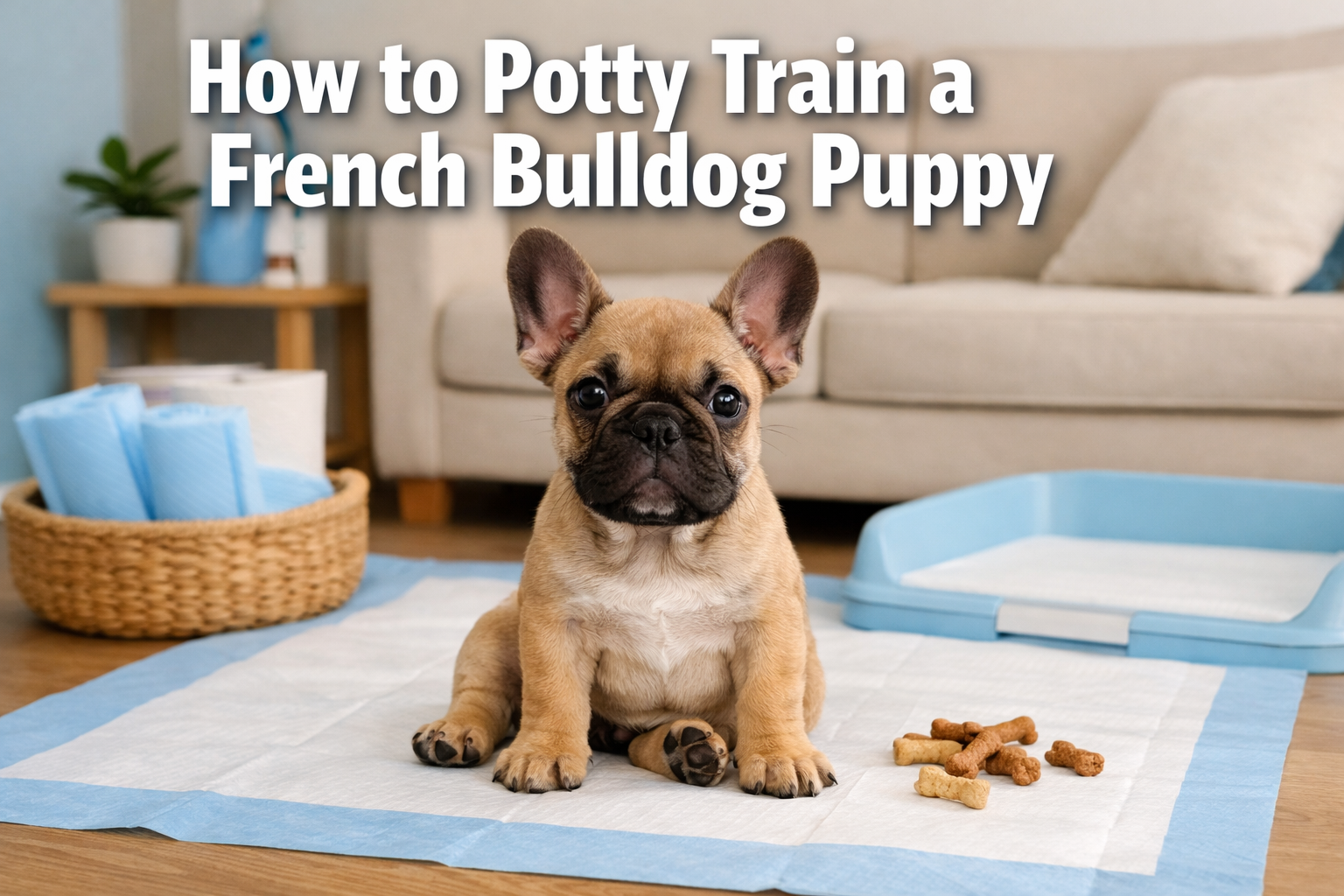
Last updated: February 20, 2026
Key Takeaways
• French Bulldog puppies typically take 4-6 months to fully potty train, with some requiring up to a year depending on consistency and temperament
• Start training as early as 8-12 weeks old during the critical learning window for best results
• Puppies under 12 weeks need potty breaks every 2 hours, with more frequent breaks after eating, sleeping, or playing
• Consistent routines, designated potty spots, and immediate positive reinforcement are essential for success
• Apartment dwellers can successfully potty train Frenchies using indoor training pads combined with outdoor bathroom breaks
Quick Answer
How to potty train a French Bulldog puppy requires establishing a consistent schedule with potty breaks every 2 hours for puppies under 12 weeks, using positive reinforcement immediately after successful bathroom trips, and designating specific potty locations both indoors and outdoors. Most French Bulldog puppies achieve reliable house training within 4-6 months when owners maintain consistent routines and patience throughout the process.
Why French Bulldogs Make Great Apartment Companions But Need Special Potty Training Attention
French Bulldogs excel as apartment pets because of their calm temperament and low exercise needs, but their compact size and stubborn personality can present unique potty training challenges. Unlike larger breeds, Frenchie puppies have smaller bladders that require more frequent bathroom breaks, especially during their first few months of life.
The breed’s intelligent but sometimes willful nature means they respond best to consistent, positive training methods rather than harsh corrections. Their people-focused personality actually works in your favor during house training because they genuinely want to please their owners once they understand the expectations.
Choose French Bulldogs for potty training if you can commit to frequent, consistent bathroom breaks and live in a space where you can quickly access outdoor areas or set up indoor alternatives. Their compact size makes them ideal for apartment living, but this same trait requires more attention to their bathroom schedule compared to larger breeds.
When to Start Potty Training Your French Bulldog Puppy
Begin potty training your French Bulldog puppy at 8-12 weeks old for the best results, as this represents the critical learning window when their brains are most receptive to new habits and routines.
Starting earlier than 8 weeks isn’t practical since puppies lack sufficient bladder control, but you can begin introducing basic concepts around 3-4 weeks if you’re working with a very young puppy. The key is understanding that it takes approximately 21 days to create a habit, so patience during the initial weeks is essential.
Age-Based Training Expectations
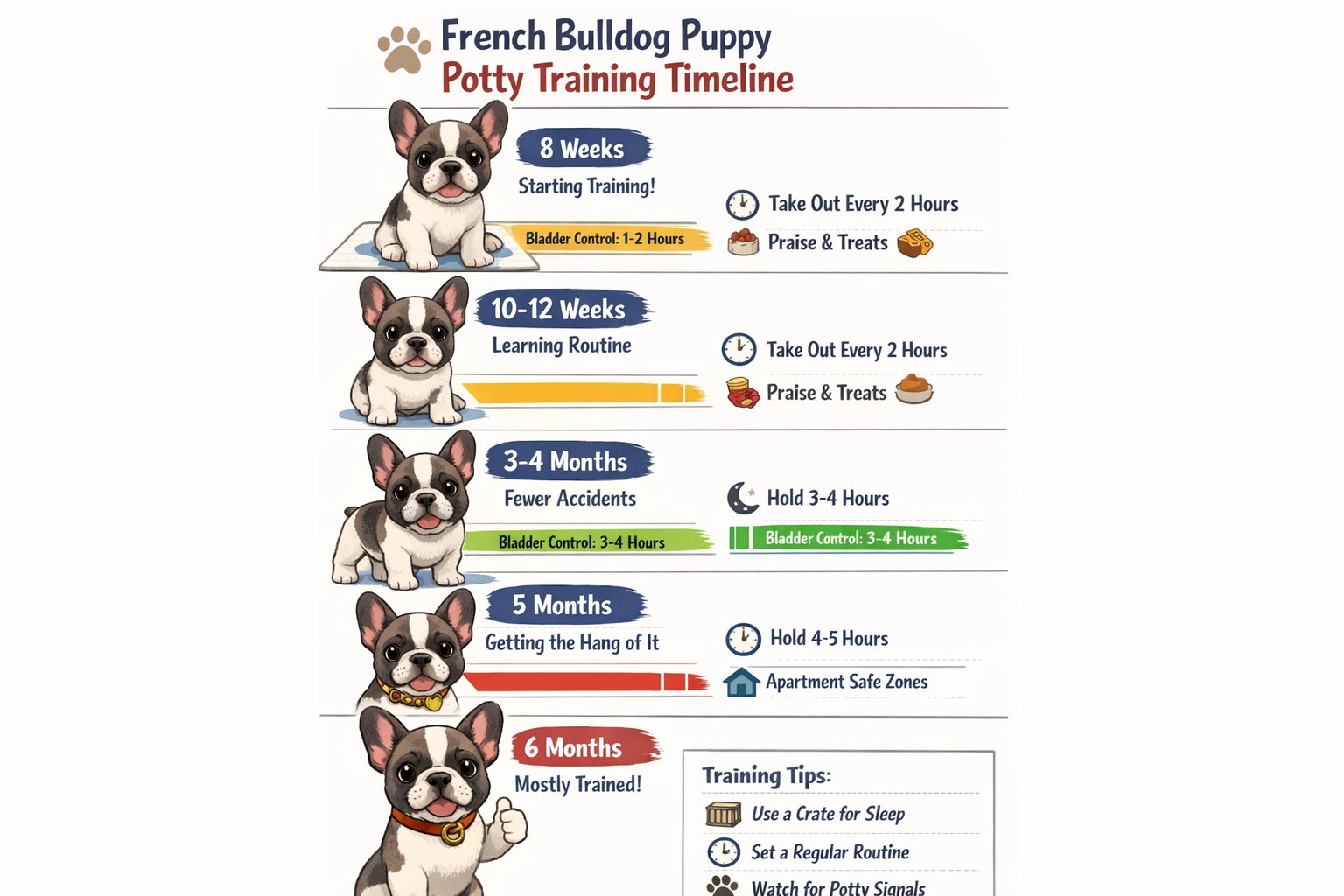
8-12 weeks: Prime training window with potty breaks needed every 2 hours
12-16 weeks: Gradual improvement in bladder control, breaks every 3-4 hours
4-6 months: Noticeable progress with longer periods between breaks
6+ months: Most puppies can hold their bladder for several hours with consistent training
Common mistake: Starting too late (after 16 weeks) makes training more challenging because puppies may have already developed bad habits. Edge case: Rescue puppies or those from poor breeding conditions may need extra time regardless of age due to lack of early socialization.
For comprehensive puppy care guidance beyond potty training, check out our complete guide to French Bulldog puppy training.
How Long Does It Take to Potty Train a French Bulldog Puppy
Most French Bulldog puppies achieve reliable house training within 4-6 months, though some may require up to a year depending on individual temperament and training consistency. The timeline varies significantly based on your commitment to maintaining consistent schedules and the puppy’s natural learning pace.
Realistic Timeline Breakdown
Weeks 1-4: Establishing basic routine and frequent accidents (expect 5-10 accidents daily)
Weeks 5-8: Noticeable improvement with fewer indoor accidents (2-5 accidents daily)
Weeks 9-16: Significant progress with occasional setbacks (1-2 accidents weekly)
Months 4-6: Near-complete reliability with rare accidents during excitement or illness
Factors that speed up training:
- Consistent daily schedule maintained by all family members
- Immediate positive reinforcement for successful outdoor bathroom trips
- Quick cleanup of accidents without punishment or scolding
- Proper crate training to encourage natural den instincts
Factors that slow down training:
- Inconsistent schedules or multiple caregivers with different approaches
- Punishment for accidents, which creates fear and confusion
- Free roaming without supervision during early training phases
- Medical issues like urinary tract infections or digestive problems
Choose faster training methods if you work from home or have flexible schedules that allow for consistent bathroom breaks. Expect longer timelines if you work long hours, live in a high-rise building with limited outdoor access, or have multiple pets that might interfere with training focus.
Step-by-Step Guide: How to Potty Train a French Bulldog Puppy
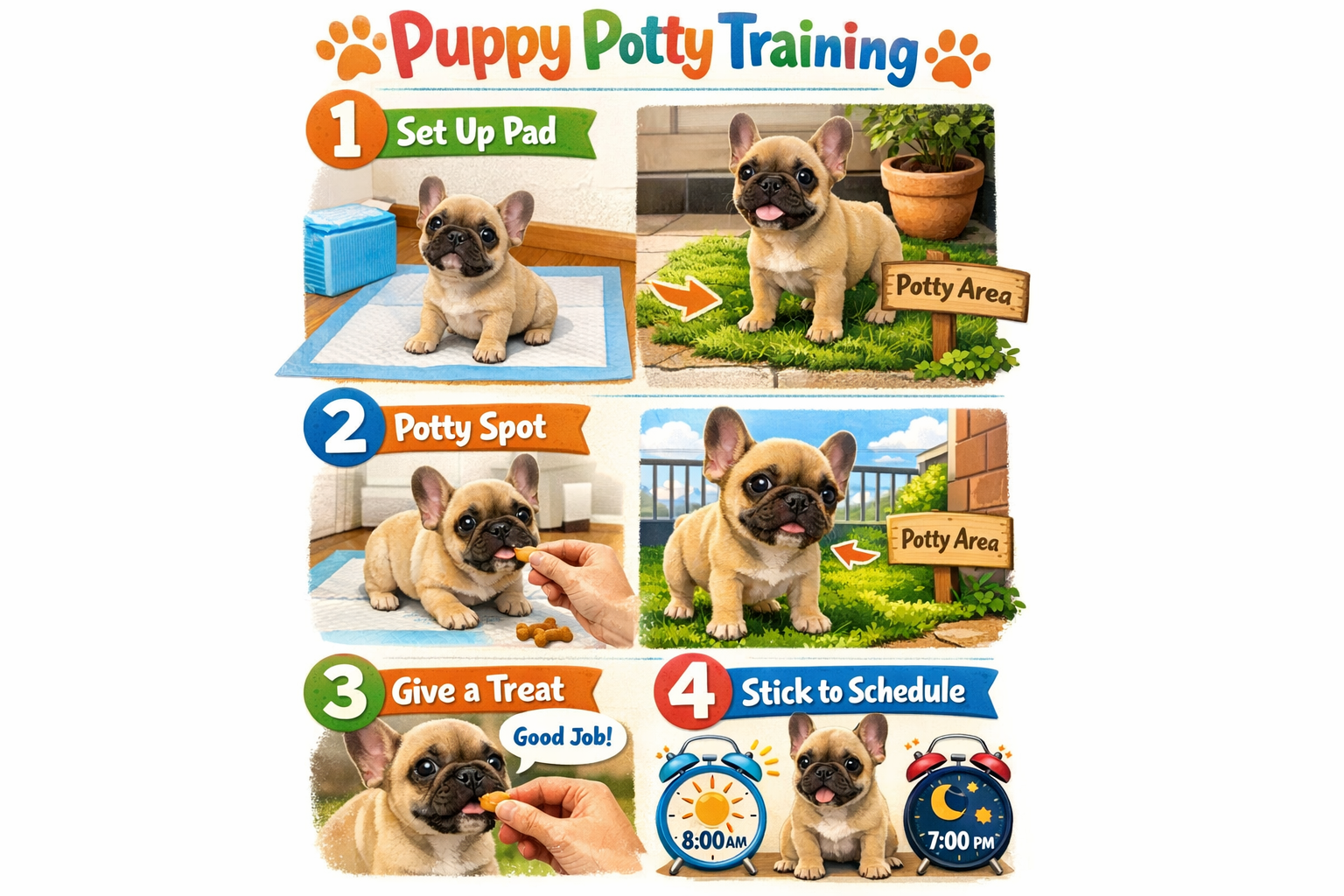
Successful French Bulldog puppy potty training follows a structured approach combining consistent schedules, designated bathroom areas, and immediate positive reinforcement to create lasting habits.
Phase 1: Establish the Foundation (Weeks 1-2)
Step 1: Create a consistent daily schedule with potty breaks every 2 hours for puppies under 12 weeks
Step 2: Designate specific potty locations both indoors (training pads) and outdoors (same spot each time)
Step 3: Choose a verbal cue like “Go potty” and use it consistently every bathroom trip
Step 4: Set up a properly sized crate for when you can’t supervise directly
Phase 2: Build the Routine (Weeks 3-8)
Step 5: Take your puppy outside immediately after waking, eating, drinking, playing, or every 30-60 minutes during active periods
Step 6: Stay outside for 5-10 minutes, using your verbal cue repeatedly until they go
Step 7: Reward successful bathroom trips immediately with verbal praise, treats, and affection
Step 8: Clean accidents thoroughly with enzyme cleaners to eliminate odor markers
Phase 3: Reinforce Independence (Weeks 9-16)
Step 9: Gradually extend time between bathroom breaks as bladder control improves
Step 10: Begin teaching your puppy to signal when they need to go out (scratching at door, ringing bells)
Step 11: Reduce treat rewards while maintaining verbal praise for successful trips
Step 12: Address any regression immediately by returning to more frequent bathroom breaks
Decision rule: Return to more frequent breaks if accidents increase, as this usually indicates you’re moving too fast through the phases. Common mistake: Skipping the verbal cue consistency, which makes it harder for puppies to understand what you want them to do.
FYI: Some links may be affiliate links, which means I may earn a small commission at no extra cost to you.
If your French Bulldog puppy seems particularly stubborn or reactive during training, you might find structured guidance helpful. There’s a gentle, force-free training approach that many Frenchie owners have used successfully to build better focus and reduce anxiety during the potty training process, especially for puppies who get overstimulated or distracted easily.
Setting Up Your Apartment for Successful Potty Training
Apartment potty training requires strategic setup to accommodate your French Bulldog puppy’s needs while protecting your living space and maintaining good relationships with neighbors.
Indoor Training Station Setup
Essential supplies for apartment training:
- High-quality training pads with attractant scents
- Waterproof floor covering or washable rugs
- Easy-access storage for cleaning supplies
- Baby gates to restrict access to carpeted areas
- Properly sized crate for overnight and unsupervised periods
Position training pads near your apartment entrance so puppies can easily access them when you’re unable to get outside quickly. This location also helps transition them toward asking to go outside rather than automatically using indoor options.
Outdoor Access Solutions
High-rise apartment strategies:
- Establish a consistent route to outdoor areas to build muscle memory
- Keep a leash by the door for quick bathroom trips
- Consider balcony setups with appropriate drainage and safety measures
- Build relationships with neighbors who might help during emergencies
Ground-floor apartment advantages:
- Direct access to outdoor potty spots reduces accident likelihood
- Easier to maintain consistent timing for bathroom breaks
- Ability to hear your puppy’s signals from inside
Choose apartment training if you live above the third floor or lack immediate outdoor access. Prioritize outdoor-only training if you have direct yard access and want to avoid any indoor bathroom habits.
Common mistake: Setting up too many indoor potty locations, which confuses puppies about where they should go. Edge case: Puppies with mobility issues or extreme weather conditions may need permanent indoor solutions combined with outdoor training.
Learn more about essential supplies every French Bulldog puppy needs for successful apartment living.
Troubleshooting Common French Bulldog Potty Training Challenges
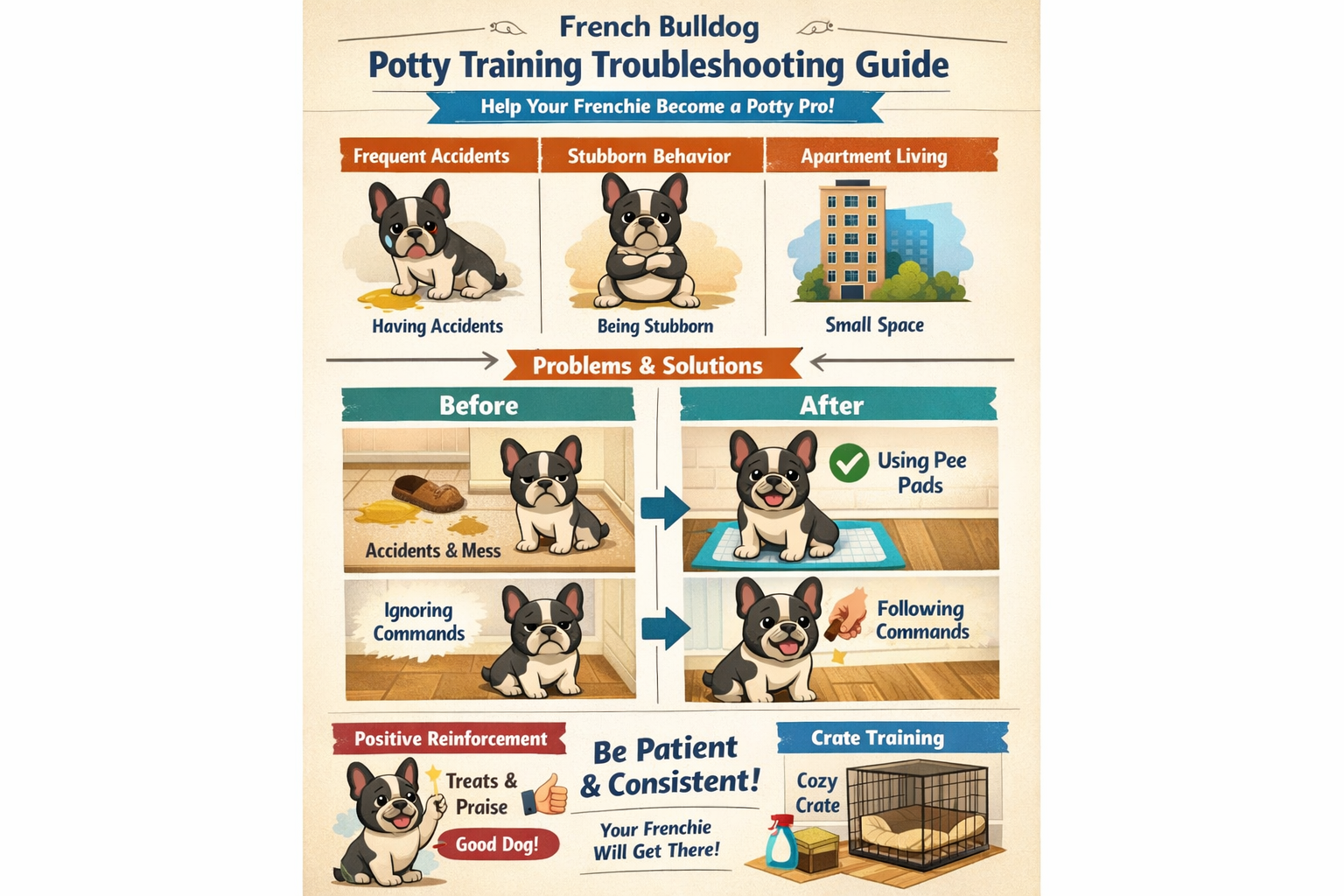
French Bulldog puppies present unique challenges including stubbornness, small bladder capacity, and sensitivity to weather conditions that can complicate standard potty training approaches.
Addressing Stubborn Behavior
Signs of stubborn resistance:
- Ignoring verbal cues even when they clearly understand them
- Refusing to go outside in certain weather conditions
- Having accidents immediately after successful outdoor trips
- Showing preference for specific indoor locations despite training efforts
Solutions for stubborn French Bulldogs:
- Increase treat value using high-reward options like small pieces of chicken or cheese
- Extend outdoor time to 10-15 minutes, allowing more opportunity for success
- Add gentle movement or play to encourage natural bathroom urges
- Maintain calm, patient energy to avoid creating negative associations
Managing Small Bladder Limitations
French Bulldog puppies under 4 months have exceptionally small bladders that require more frequent breaks than larger breed puppies. Adjust expectations accordingly by increasing bathroom break frequency during growth periods, illness, or excitement.
Practical accommodations:
- Set phone alarms for consistent 90-minute intervals during active periods
- Watch for subtle signals like sniffing, circling, or moving toward doors
- Provide immediate outdoor access when signals appear
- Accept that accidents will happen more frequently than with larger breeds
Weather-Related Training Issues
French Bulldogs are sensitive to extreme temperatures due to their flat faces and compact builds, making outdoor bathroom trips challenging during very hot or cold weather.
Hot weather solutions:
- Schedule bathroom breaks during cooler morning and evening hours
- Provide shade and water during outdoor trips
- Consider booties to protect paws from hot pavement
- Keep outdoor sessions brief but frequent
Cold weather solutions:
- Invest in appropriate puppy clothing for warmth
- Clear snow from designated potty areas
- Warm up your puppy with gentle play before going outside
- Have backup indoor options during extreme weather events
Decision rule: Use indoor backup options when outdoor temperatures exceed your puppy’s comfort zone, but return to outdoor training as soon as conditions improve. Common mistake: Giving up on outdoor training entirely during challenging weather, which can create long-term indoor bathroom preferences.
For more guidance on handling challenging behaviors, see our guide to training stubborn French Bulldogs.
Using Positive Reinforcement and Treats Effectively
Immediate positive reinforcement is crucial for French Bulldog potty training success because the breed responds much better to encouragement than correction or punishment.
Timing and Technique
Reward within 3 seconds of successful bathroom completion to create clear associations between the behavior and positive outcomes. This immediate timing helps your puppy understand exactly what earned the reward.
Effective reward combinations:
- Verbal praise using excited, happy tones (“Good potty! Yes!”)
- High-value treats that your puppy only gets for bathroom success
- Physical affection like gentle petting or brief play sessions
- Immediate return indoors if your puppy prefers being inside
Choosing the Right Training Treats
High-value treats for potty training should be:
- Small enough to eat quickly (pea-sized portions)
- Soft texture for easy chewing and swallowing
- Irresistible flavor that motivates your specific puppy
- Reserved exclusively for bathroom training success
Avoid using regular meal kibble as training treats since most puppies don’t find their daily food exciting enough to motivate behavior change. Choose special treats like small pieces of cooked chicken, freeze-dried liver, or commercial training treats designed for puppies.
Avoiding Common Reinforcement Mistakes
Never punish accidents by scolding, rubbing noses in messes, or showing anger, as this creates fear and confusion rather than understanding. Instead, quietly clean accidents with enzyme cleaners while redirecting your puppy to appropriate bathroom locations.
Inconsistent reward timing confuses puppies about which specific behavior earned the positive response. Make sure all family members understand the 3-second rule and use identical verbal cues and reward systems.
Decision rule: If your puppy seems uninterested in treats, try different flavors or textures, or use play and affection as primary rewards instead. Edge case: Puppies with food sensitivities may need special treats approved by your veterinarian.
For detailed information about the best training treats for French Bulldogs, check out our complete guide to training treats.
Creating a Consistent Daily Schedule
A predictable daily routine is essential for French Bulldog puppy potty training success because it helps regulate their biological functions and creates clear expectations for bathroom timing.
Sample Daily Schedule for 8-16 Week Old Puppies
6:00 AM: Wake up, immediate potty break outside
6:15 AM: Breakfast, followed by 15-minute wait, then potty break
8:00 AM: Potty break after morning play session
10:00 AM: Mid-morning potty break
12:00 PM: Lunch, wait 15 minutes, then potty break
2:00 PM: Afternoon potty break
4:00 PM: Pre-dinner potty break
5:00 PM: Dinner, wait 15 minutes, then potty break
7:00 PM: Evening potty break
9:00 PM: Final potty break before bedtime
Adjusting for Your Work Schedule
Modify timing to match your lifestyle while maintaining consistent intervals between bathroom breaks. The key is regularity rather than specific clock times, so shift the entire schedule earlier or later based on your daily routine.
Working from home advantages:
- Ability to maintain ideal 2-hour intervals
- Immediate response to puppy signals and needs
- Consistent reinforcement throughout the day
Traditional work schedule adaptations:
- Longer morning routine to ensure thorough bathroom break
- Midday dog walker or pet sitter for bathroom breaks
- Extended evening routine to compensate for daytime limitations
- Weekend intensive training to reinforce weekday progress
Managing Schedule Disruptions
Plan for inevitable schedule changes due to appointments, social events, or work demands by having backup strategies that maintain training progress.
Backup options include:
- Trusted neighbors or friends who understand your training routine
- Professional dog walkers familiar with puppy potty training
- Safe indoor potty options for emergency situations
- Flexible timing that accommodates 30-60 minute variations
Decision rule: Maintain core morning and evening routines even when midday schedules change, as consistency during these key times prevents most regression. Common mistake: Abandoning the entire routine during busy periods instead of adapting specific elements while keeping the foundation intact.
Combining potty training with proper crate training can significantly improve your schedule consistency and success rate.
Helpful Resource for Reactive or Anxious Puppies
If your French Bulldog puppy becomes overstimulated, anxious, or reactive during potty training sessions—especially when encountering other dogs, people, or distracting environments—structured guidance can make a significant difference. Many Frenchie owners have found success with gentle, force-free training approaches that help puppies stay calmer and more focused during bathroom breaks.
This type of structured training can be particularly helpful for apartment dwellers who need to navigate busy hallways, elevators, or crowded outdoor spaces during potty breaks. The techniques focus on building confidence and reducing reactivity, which naturally makes the entire potty training process smoother and less stressful for both you and your puppy.
👉 Discover the Calm, Reactivity-Free Training Method for Happier Walks With Your French Bulldog
FAQ: How to Potty Train a French Bulldog Puppy
How often should I take my French Bulldog puppy outside?
Puppies under 12 weeks need potty breaks every 2 hours, with additional breaks immediately after eating, sleeping, drinking, or playing. Older puppies can gradually extend to 3-4 hour intervals.
What if my French Bulldog puppy won’t go outside in bad weather?
Use indoor training pads as backup during extreme weather, but return to outdoor training as soon as conditions improve. Consider puppy clothing for warmth and booties for paw protection.
How do I clean accidents properly?
Use enzyme cleaners specifically designed for pet accidents to completely eliminate odor markers. Avoid ammonia-based cleaners, which can actually attract puppies back to the same spot.
Should I punish my puppy for accidents?
Never punish accidents. Clean quietly without showing anger or frustration, then redirect your puppy to the appropriate bathroom location. Punishment creates fear and confusion.
When can my French Bulldog puppy hold it through the night?
Most puppies can sleep through the night (6-8 hours) by 4-5 months old, though some achieve this earlier. Remove water 2-3 hours before bedtime to help with overnight success.
What if my puppy has accidents right after going outside?
This usually indicates insufficient outdoor time or distractions preventing focus. Extend outdoor sessions to 10-15 minutes and minimize distractions during bathroom breaks.
How do I know if my puppy is ready for fewer bathroom breaks?
Reduce break frequency gradually when your puppy consistently stays dry for longer periods and shows clear signals when they need to go outside.
Can I use puppy pads permanently instead of outdoor training?
While possible, outdoor training is generally preferred for long-term success. Puppy pads work best as temporary solutions or backup options during challenging weather.
What treats work best for potty training rewards?
Use small, soft, high-value treats that your puppy only gets for bathroom success. Cooked chicken, freeze-dried liver, or premium training treats work well for most French Bulldogs.
How long should I wait outside for my puppy to go?
Wait 5-10 minutes for young puppies, extending to 10-15 minutes if they seem close to going or show signs of needing to eliminate.
What if my French Bulldog is afraid of going outside?
Start with very brief outdoor exposure, use high-value treats, and gradually increase time outside. Some puppies need socialization help before successful outdoor potty training.
Should I wake my puppy up for nighttime bathroom breaks?
Puppies under 12 weeks may need one nighttime break. Set an alarm for 4-5 hours after bedtime, but don’t wake them if they’re sleeping peacefully and staying dry.
Key Takeaways
• Start potty training between 8-12 weeks old during the critical learning window when French Bulldog puppies are most receptive to new routines and habits
• Maintain consistent schedules with bathroom breaks every 2 hours for puppies under 12 weeks, extending gradually as bladder control improves over 4-6 months
• Use immediate positive reinforcement within 3 seconds of successful bathroom trips, including verbal praise, high-value treats, and affection to create clear behavior associations
• Establish designated potty locations both indoors and outdoors, using consistent verbal cues like “Go potty” to help your puppy understand expectations
• Prepare for apartment-specific challenges by setting up strategic indoor training stations near entrances while working toward outdoor bathroom preferences
• Never punish accidents – clean quietly with enzyme cleaners and redirect to appropriate locations, as punishment creates fear and confusion rather than learning
• Expect 4-6 months for complete reliability in most French Bulldog puppies, with some requiring up to a year depending on individual temperament and training consistency
• Plan for weather sensitivity by having backup indoor options during extreme temperatures while maintaining outdoor training as the primary goal
• Watch for subtle signals like sniffing, circling, or moving toward doors, as French Bulldogs may show less obvious signs than larger breeds
• Combine potty training with crate training to encourage natural den instincts and provide structure during unsupervised periods for faster, more reliable results
References
[1] How To Potty Train A French Bulldog A Step By Step Guide – https://happytailpuppies.com/blogs/news/how-to-potty-train-a-french-bulldog-a-step-by-step-guide
[2] How To Potty Train Your French Bulldog Puppy Tips Tricks – https://waggstoriches.com/how-to-potty-train-your-french-bulldog-puppy-tips-tricks/
[3] Pottytraining – https://www.nwfrenchies.com/blog/2018/10/14/pottytraining
[4] Watch – https://www.youtube.com/watch?v=KOSlKwpW-Qk