
How to Find Ethical French Bulldog Breeders: Your Complete 2026 Guide

Picture this: You’re scrolling through adorable French Bulldog photos online, dreaming of bringing home that perfect wrinkly companion. But behind those cute faces lies a shocking reality—over 80% of French Bulldog litters are delivered by C-section, and 99% are bred outside traditional club frameworks.[1][2] This means finding truly ethical breeders requires more detective work than ever before.
Learning how to find ethical French Bulldog breeders isn’t just about avoiding puppy mills—it’s about ensuring your future furry family member lives a healthy, happy life. With French Bulldogs ranking as one of America’s most popular breeds, the demand has unfortunately created a breeding landscape filled with both dedicated professionals and profit-driven operations that prioritize quick sales over dog welfare.
Key Takeaways
• Ethical breeders limit breeding to one litter per year per female with 12-18 months recovery time and retirement at 5-6 years old
• Verifiable health testing is non-negotiable—look for public OFA certifications for hips, patellas, cardiac, and eye screenings
• The French Bulldog Foundation of America (FBDFA) maintains a verified breeder list that independently vets breeders meeting strict health and transparency criteria
• Red flags include multiple litters available year-round, unwillingness to show breeding facilities, and lack of health documentation
• Expect to invest $2,000-$4,000+ from reputable breeders—significantly lower prices often indicate corner-cutting on health testing and care
Why Finding Ethical French Bulldog Breeders Matters More Than Ever
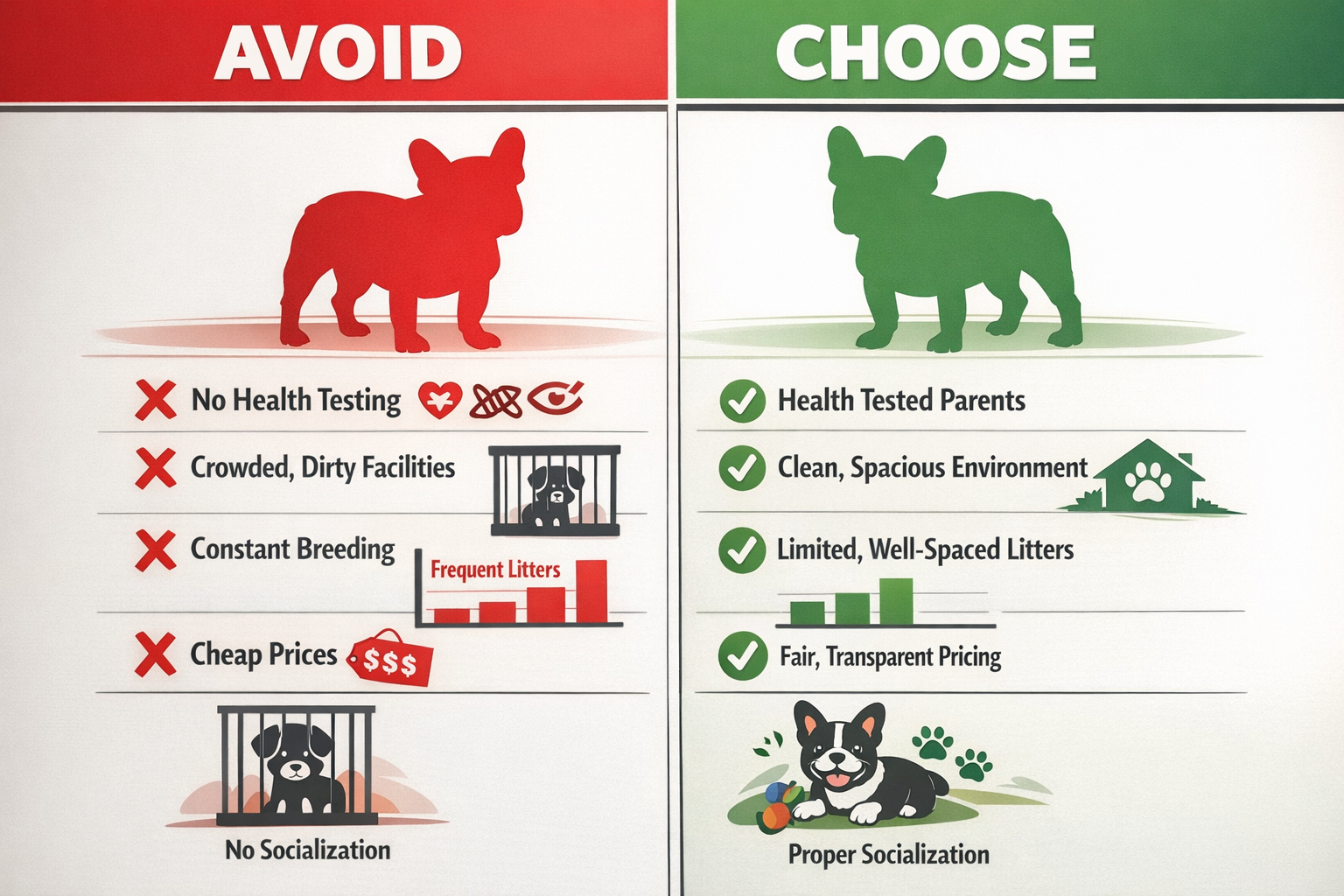
The French Bulldog’s rise to popularity has created a perfect storm in the breeding world. These adorable companions face unique health challenges due to their flat faces, compact bodies, and specific genetic makeup. PETA has even filed lawsuits against the American Kennel Club, challenging breeding standards that they claim create “deformed, unhealthy dogs with oversized heads and other exaggerated features.”
The Hidden Costs of Unethical Breeding
When you choose an unethical breeder, you’re not just risking your wallet—you’re potentially signing up for:
- Chronic health issues requiring expensive lifelong treatment
- Behavioral problems from poor early socialization
- Shortened lifespan due to genetic health complications
- Emotional heartbreak watching your beloved pet suffer
Responsible breeding practices directly impact your Frenchie’s quality of life. Ethical breeders invest thousands of dollars in health testing, proper nutrition, veterinary care, and socialization before their puppies ever leave home.
Understanding the Breeding Complexity
French Bulldogs require specialized breeding knowledge. Natural mating is uncommon, making artificial insemination standard practice to reduce injury risks. Additionally, the breed’s physical characteristics mean over 80% of litters require C-section delivery.
This complexity means ethical French Bulldog breeding is expensive, time-consuming, and requires genuine expertise. Breeders cutting corners on these essential aspects are putting both mother and puppies at serious risk.
Red Flags: How to Spot Unethical French Bulldog Breeders
Before we dive into finding the good ones, let’s identify the warning signs that should send you running in the opposite direction.
🚩 Major Warning Signs
Multiple Breeds and Constant Availability
- Breeding 3+ different breeds simultaneously
- Always having puppies available year-round
- Advertising “rare” colors like blue, merle, or lilac
- Offering multiple litters from the same female per year
Lack of Health Documentation
- No verifiable health testing certificates
- Refusing to provide OFA registration numbers
- Making vague claims about “vet-checked” parents
- No genetic testing results available
Poor Communication and Transparency
- Unwilling to let you visit their facility
- Won’t introduce you to puppy’s parents
- Pressuring immediate decisions or deposits
- Meeting only in parking lots or public places
Questionable Business Practices
- Accepting payment only through cash or wire transfers
- No written contracts or health guarantees
- Prices significantly below market average ($1,000 or less)
- Selling puppies under 8 weeks old
The Puppy Mill Reality Check
Commercial puppy mills often disguise themselves as legitimate breeders online. They typically:
- Focus on quantity over quality with dozens of breeding females
- Minimize veterinary expenses by skipping essential health testing
- House dogs in substandard conditions with inadequate socialization
- Prioritize profit margins over puppy welfare
FYI: Some links may be affiliate links, which means I may earn a small commission at no extra cost to you.
If you’re planning to welcome a new Frenchie into your home, understanding their specific needs from day one is crucial. Many first-time French Bulldog owners find structured guidance helpful for navigating breed-specific challenges. Kingdom of Pets offers comprehensive training and health guidance specifically designed for flat-faced breeds, helping you decode those adorable snorts and manage that famously “stubborn” personality with calm consistency.
Essential Criteria for Ethical French Bulldog Breeders
Now that you know what to avoid, let’s focus on the positive indicators that signal a truly ethical breeder who prioritizes health, temperament, and breed improvement.
Health Testing Requirements
Verifiable OFA Certifications
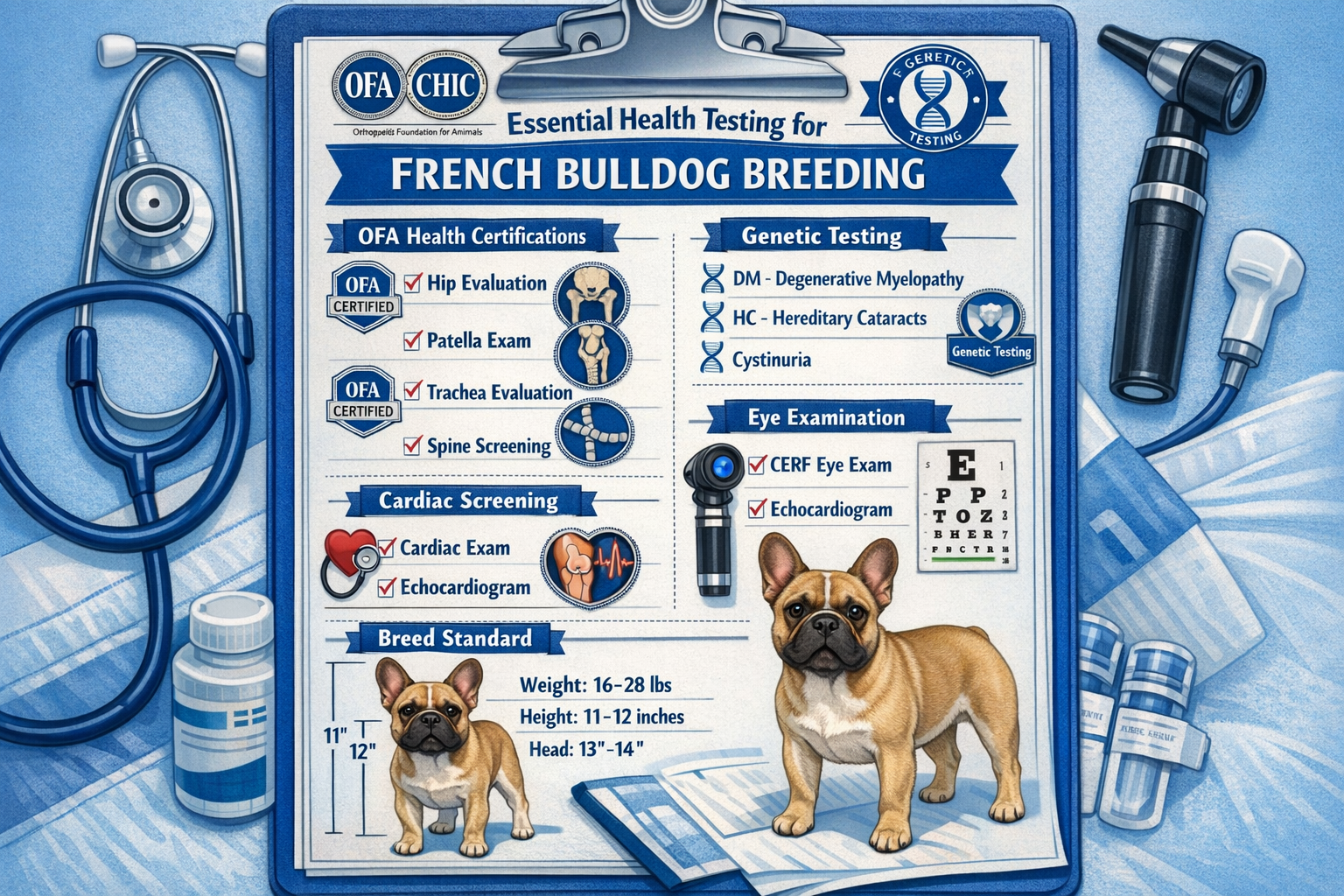
Ethical breeders provide public OFA (Orthopedic Foundation for Animals) certification numbers for:
- Hip Dysplasia Screening – Evaluates hip joint formation
- Patella Luxation Testing – Checks for kneecap dislocation issues
- Cardiac Evaluation – Screens for heart abnormalities
- Eye Examinations – Identifies hereditary eye conditions
Genetic Testing Panel
Responsible breeders conduct comprehensive genetic testing for:
- Degenerative Myelopathy (DM)
- Hyperuricosuria (HUU)
- Juvenile Hereditary Cataracts (JHC)
- Curly Coat/Ichthyosis
Breeding Practices and Ethics
Limited Breeding Frequency
Ethical breeders follow strict guidelines:
- Maximum one litter per year per breeding female
- 12-18 months recovery time between pregnancies
- Retirement at 5-6 years old with typically 3-4 lifetime litters maximum
- Genetic matching based on health, temperament, and conformation[1]
Transparent Record Keeping
Quality breeders maintain detailed records including:
- Complete pedigrees with health information
- Vaccination and deworming schedules
- Early socialization activities
- Individual puppy development notes
Facility and Socialization Standards
Home-Based Environment
Most ethical French Bulldog breeders operate from their homes, providing:
- Climate-controlled living spaces (essential for this heat-sensitive breed)
- Daily human interaction and socialization
- Clean, spacious areas for exercise and play
- Proper nutrition with high-quality food
Early Development Focus
Responsible breeders invest in:
- Neurological stimulation exercises (days 3-16)
- Exposure to various sounds, textures, and experiences
- Basic handling for grooming and veterinary care
- Temperament evaluation around 7-8 weeks
The FBDCA Code of Ethics
The French Bulldog Club of America (FBDCA) Code of Ethics was most recently updated on August 25, 2025, establishing official standards for member breeders. Key requirements include:
- Commitment to breed improvement over profit
- Mandatory health testing before breeding
- Proper care and socialization of all dogs
- Lifetime support for puppy buyers
- Agreement to take back dogs if owners cannot care for them
How to Research and Verify French Bulldog Breeders
Finding ethical French Bulldog breeders requires thorough research and verification. Here’s your step-by-step investigation process.
Start with Reputable Sources
French Bulldog Foundation of America (FBDFA)
The FBDFA maintains a verified breeder list that independently vets breeders meeting strict criteria for health testing and transparency. This organization specifically addresses the gap left by traditional club frameworks, since 99% of French Bulldog breeding happens outside these systems.
American Kennel Club (AKC) Marketplace
While not all AKC-listed breeders are automatically ethical, the platform provides:
- Basic breeder contact information
- Health testing indicators
- Customer review systems
- Breeding rights specifications
Regional French Bulldog Clubs
Local breed clubs often maintain referral lists and can provide insights about breeders in your area. They also host events where you can meet breeders and their dogs in person.
Digital Investigation Techniques
Social Media Deep Dive
Ethical breeders typically maintain active social media presence showing:
- Regular posts featuring their adult dogs (not just puppies)
- Behind-the-scenes glimpses of daily care routines
- Health testing updates and certifications
- Previous puppy updates from satisfied families
Website Red Flags vs. Green Flags
| 🚩 Red Flags | ✅ Green Flags |
|---|---|
| Multiple breeds advertised | Single breed focus |
| Always available puppies | Waiting lists or limited availability |
| No health testing mentioned | Detailed health testing information |
| Stock photos only | Personal photos of their dogs |
| Immediate pickup available | Planned breeding schedule |
Online Reviews and References
Search for breeder names across multiple platforms:
- Google Reviews and Better Business Bureau
- Facebook groups and breed-specific forums
- Veterinary clinic recommendations
- Previous puppy buyer testimonials
Verification Process
Health Testing Confirmation
- Request OFA registration numbers and verify them directly on the OFA website
- Ask for genetic testing results from reputable laboratories like Embark or Wisdom Panel
- Confirm testing dates are recent (within 2 years for most tests)
Reference Checking
Ethical breeders readily provide references from:
- Previous puppy buyers (at least 2-3 contacts)
- Their veterinarian
- Professional colleagues or mentors
- Local breed club members
Documentation Review
Before visiting, request to see:
- Health certificates for breeding dogs
- Sample puppy contract and health guarantee
- Feeding and care instructions
- Vaccination and deworming protocols
Questions to Ask Potential French Bulldog Breeders
Your conversations with breeders reveal as much about their ethics as their facilities do. Here are the essential questions that separate responsible breeders from the rest.
Health and Genetic Testing Questions
“Can you provide OFA certification numbers for both parents?”
Ethical breeders will immediately provide these numbers and encourage you to verify them independently. They should have certifications for hips, elbows, cardiac, and eyes at minimum.
“What genetic testing have you completed, and can I see the results?”
Look for comprehensive panels testing for breed-specific conditions. Responsible breeders test for degenerative myelopathy, hyperuricosuria, juvenile hereditary cataracts, and other French Bulldog genetic concerns.
“How do you select breeding pairs?”
The answer should focus on genetic matching based on health, temperament, and conformation while avoiding inbreeding.[1] Breeders prioritizing rare colors over health are major red flags.
Breeding Practices and Experience
“How many litters do you produce per year?”
Ethical operations typically produce 1-3 litters annually maximum. Be wary of breeders with constant puppy availability or multiple litters from the same female.
“How long have you been breeding French Bulldogs, and what’s your experience?”
Look for breeders with several years of experience who can discuss the breed’s specific challenges, health concerns, and temperament traits knowledgeably.
“What happens if I can no longer care for my puppy?”
Responsible breeders always agree to take back dogs if owners cannot care for them, regardless of age or circumstances. This lifetime commitment indicates genuine concern for their puppies’ welfare.
Puppy Care and Socialization
“How do you socialize your puppies?”
Expect detailed descriptions of early neurological stimulation, exposure to household sounds, handling exercises, and interaction with different people and experiences.
“What health guarantee do you provide?”
Ethical breeders offer comprehensive health guarantees covering genetic conditions for at least 2-3 years. They should also provide clear protocols for addressing health issues.
“Can you tell me about this puppy’s parents’ temperaments?”
Breeders should know their adult dogs intimately and match puppies to appropriate families based on energy levels, personality traits, and lifestyle compatibility.
Facility and Care Standards
“May I visit your facility and meet the puppy’s parents?”
This should always be “yes.” Ethical breeders welcome visits and are proud to show their facilities and introduce their breeding dogs.
“What do you feed your dogs, and what will you send home with the puppy?”
Look for high-quality nutrition programs and transition plans. Many ethical breeders provide starter food supplies and detailed feeding instructions.
When you’re preparing for your new French Bulldog’s arrival, having the right supplies ready makes the transition smoother for everyone. Check out our guide to essential supplies every French Bulldog owner needs to ensure you’re fully prepared.
Contract and Support Questions
“What’s included in your puppy contract?”
Comprehensive contracts should cover health guarantees, spay/neuter requirements, return policies, and ongoing support commitments.
“What support do you provide after I take my puppy home?”
Ethical breeders offer lifetime support, including training advice, health guidance, and availability for questions or concerns.
Visiting and Evaluating French Bulldog Breeding Facilities
The facility visit is your most important opportunity to assess a breeder’s ethics and practices firsthand. Here’s what to look for and how to evaluate what you see.
Scheduling and Initial Impressions
Appointment Flexibility
Ethical breeders typically schedule visits during normal business hours and are flexible about timing. They understand that choosing a puppy is a major decision requiring careful consideration.
Location and Accessibility
Most reputable French Bulldog breeders operate from their homes rather than commercial facilities. The location should be:
- Clean and well-maintained residential property
- Climate-controlled environments (crucial for heat-sensitive Frenchies)
- Easy access for visitors without secretive directions
Facility Evaluation Checklist
Living Conditions Assessment
✅ Adult dogs appear healthy, well-groomed, and social
✅ Clean living spaces with appropriate bedding and toys
✅ Fresh water available at all times
✅ Appropriate exercise areas for the breed’s needs
✅ Climate control systems for temperature regulation
Health and Safety Standards
✅ Vaccination certificates visible or readily available
✅ Clean food and water bowls in good condition
✅ Proper waste management systems in place
✅ Safe fencing and containment areas
✅ Emergency veterinary contact information posted
Meeting the Parent Dogs
Temperament Evaluation
Both parents should demonstrate:
- Friendly, confident personalities around strangers
- Proper socialization without fear or aggression
- Healthy breathing patterns (no excessive panting or distress)
- Good body condition with appropriate weight
Physical Assessment
Look for signs of good health in breeding dogs:
- Clear, bright eyes without discharge
- Clean ears free from odor or excessive wax
- Healthy skin and coat condition
- Proper movement without limping or difficulty
Breeder-Dog Relationship
Observe the interaction between breeder and dogs:
- Dogs should be comfortable and affectionate with the breeder
- Responsive to commands indicating proper training
- Relaxed body language suggesting good treatment
- Individual attention showing personal relationships
Puppy Assessment
Age and Development
Puppies should be:
- At least 8 weeks old before leaving their mother
- Appropriately sized for their age
- Active and playful during awake periods
- Clean and well-groomed with proper nail trimming
Health Indicators
Healthy French Bulldog puppies display:
- Clear eyes without discharge or cloudiness
- Pink gums indicating good circulation
- Clean ears free from odor
- Proper breathing without excessive noise or distress
- Good appetite and normal elimination
Socialization Evidence
Well-socialized puppies should:
- Approach visitors with curiosity rather than fear
- Tolerate handling of paws, ears, and mouth
- Recover quickly from startling sounds
- Interact appropriately with littermates
Documentation Review
Health Records Verification
During your visit, review:
- Vaccination schedules with veterinary signatures
- Deworming protocols and dates
- Health examination records from licensed veterinarians
- Genetic testing certificates with official laboratory seals
Breeding Documentation
Ethical breeders provide:
- Complete pedigrees for both parents
- OFA certification numbers you can verify independently
- Breeding contracts outlining responsibilities
- Health guarantee terms and conditions
The Online Dog Trainer program can be incredibly valuable for new French Bulldog owners who want to establish good habits from day one. Their calm-energy method works particularly well with Frenchies, who respond better to patient, consistent training than forceful techniques.
Making Your Final Decision: How to Choose Your Ethical French Bulldog Breeder
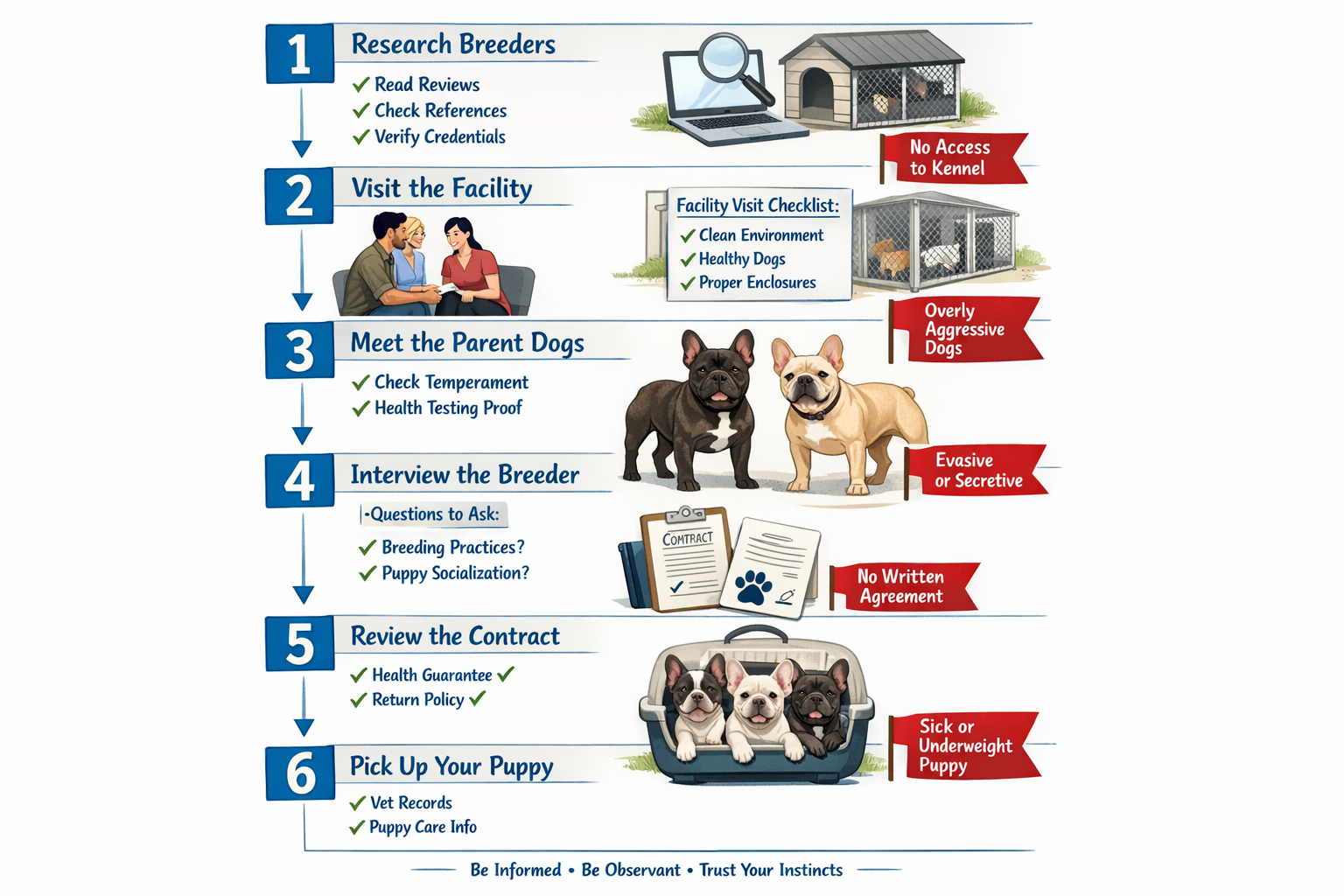
After researching, visiting, and evaluating multiple breeders, it’s time to make your final decision. This choice will impact your family for the next 10-14 years, so take time to consider all factors carefully.
Comparing Your Options
Create a Breeder Evaluation Matrix
| Criteria | Breeder A | Breeder B | Breeder C |
|---|---|---|---|
| Health Testing Complete | ✅/❌ | ✅/❌ | ✅/❌ |
| Facility Conditions | 1-5 Rating | 1-5 Rating | 1-5 Rating |
| Parent Dog Health | 1-5 Rating | 1-5 Rating | 1-5 Rating |
| Communication Quality | 1-5 Rating | 1-5 Rating | 1-5 Rating |
| Contract Terms | Fair/Unfair | Fair/Unfair | Fair/Unfair |
| Support Offered | 1-5 Rating | 1-5 Rating | 1-5 Rating |
| Overall Impression | 1-5 Rating | 1-5 Rating | 1-5 Rating |
Trust Your Instincts
Gut Feeling Assessment
Beyond the checklist items, consider:
- Did you feel comfortable asking questions?
- Were your concerns addressed thoroughly and patiently?
- Do you trust this person to support you long-term?
- Would you recommend this breeder to a friend?
Communication Style Compatibility
Choose a breeder whose communication style matches your needs:
- Responsive to questions within reasonable timeframes
- Educational approach rather than sales-focused
- Honest about challenges and breed-specific issues
- Enthusiastic about their dogs without being pushy
Understanding the Investment
Financial Considerations
Ethical French Bulldog breeders typically charge:
- $2,000-$4,000+ for pet-quality puppies
- $3,000-$6,000+ for show-quality dogs
- Additional costs for shipping if not local
Value Beyond Price
Remember that higher prices often reflect:
- Comprehensive health testing ($1,000+ per breeding dog)
- Quality nutrition and veterinary care throughout development
- Proper socialization and early development programs
- Lifetime breeder support and guidance
Contract Negotiation and Terms
Essential Contract Elements
Your puppy contract should include:
- Health guarantee specifics with clear timelines
- Return policy if you cannot keep the dog
- Spay/neuter requirements and timing
- Registration papers and breeding rights (if applicable)
- Breeder support commitments and contact information
Red Flag Contract Terms
Avoid contracts with:
- Unreasonable return policies or restocking fees
- Vague health guarantee language without specific coverage
- Excessive breeding restrictions on pet-quality dogs
- No recourse options for genetic health issues
Preparing for Your New Puppy
Timeline Planning
Once you’ve chosen your breeder:
- Confirm pickup date and logistics
- Prepare your home with necessary supplies
- Schedule veterinary appointment within 48-72 hours
- Arrange time off work for bonding and training
Supply Preparation
Essential items to have ready:
- High-quality puppy food (same brand breeder uses initially)
- Appropriately sized crate for house training
- Puppy-safe toys for mental stimulation
- Collar, leash, and ID tags for safety
For comprehensive guidance on preparing for your new arrival, check out our detailed guide on how to care for a French Bulldog puppy, which covers everything from the first 24 hours to establishing routines.
Ongoing Relationship Building
Maintaining Breeder Contact
Ethical breeders appreciate updates and photos of their puppies. Consider:
- Regular photo sharing via email or social media
- Health update communications for their breeding records
- Training milestone celebrations to share successes
- Annual check-ins to maintain the relationship
Community Involvement
Many ethical breeders encourage involvement in:
- Local French Bulldog meetups and events
- Breed-specific training classes and activities
- Health research participation to benefit the breed
- Referral opportunities to help other families find ethical breeders
Helpful Resources for New French Bulldog Owners
As you embark on your journey with your new French Bulldog, having access to quality resources makes all the difference. Many new Frenchie parents find that structured guidance helps them navigate breed-specific challenges more confidently.
Comprehensive Training and Health Support
If you want something structured to help you understand your Frenchie’s unique personality and health needs, Kingdom of Pets offers an excellent all-in-one training and health guidance program specifically designed for flat-faced breeds. Their approach helps you decode those adorable snorts, manage that famously “stubborn” streak with calm consistency, and build a joyful lifelong bond—all without force or frustration. You can start with their free 6-day Frenchie course to see if their methods work well for your family.
Additional Preparation Resources
- Learn about the best age to adopt a French Bulldog puppy to time your adoption perfectly
- Understand French Bulldog puppy growth patterns to monitor healthy development
- Discover proper feeding schedules for optimal nutrition
Conclusion
Finding ethical French Bulldog breeders requires patience, research, and dedication, but the investment pays dividends in your dog’s health, temperament, and longevity. Remember that over 80% of French Bulldog litters require C-sections and 99% are bred outside traditional club frameworks, making your careful selection process even more critical.
The key indicators of ethical breeding include verifiable health testing through OFA certifications, limited breeding frequency with proper recovery time, transparent facility visits, and lifetime breeder support. Avoid the temptation of lower prices or immediate availability—these often signal corners cut on essential health testing and care.
Your next steps should be:
- Start with reputable sources like the French Bulldog Foundation of America’s verified breeder list
- Verify all health testing claims through independent databases like OFA
- Schedule facility visits with your top 2-3 breeder candidates
- Ask detailed questions about breeding practices, health guarantees, and ongoing support
- Trust your instincts about the breeder’s ethics and communication style
- Prepare thoroughly for your puppy’s arrival with proper supplies and veterinary care
The French Bulldog you bring home should be a healthy, well-socialized companion who enriches your life for many years to come. By choosing an ethical breeder who prioritizes health, temperament, and breed improvement over profit, you’re not just getting a pet—you’re gaining a family member and supporting responsible breeding practices that benefit the entire breed.
Take your time, do your research, and don’t compromise on the standards that matter. Your future Frenchie is worth the extra effort to find a truly ethical breeder who shares your commitment to canine welfare and breed preservation.
References
[1] Ethical French Bulldog Breeding Standards Buyer Guide – https://www.thefrenchiefocus.com/p/ethical-french-bulldog-breeding-standards-buyer-guide
[2] frenchbulldogfoundationofamerica – https://frenchbulldogfoundationofamerica.org
[3] abc7chicago – https://abc7chicago.com/post/peta-sues-american-kennel-club-breeding-standards-french-bulldogs-other-breeds/17038437/
[4] Breeding The Frenchie – https://frenchiestore.com/blogs/frenchie-blog/breeding-the-frenchie
[5] Fbdca Code Of Ethics Updated Aug 25 2025 – https://frenchbulldogclub.org/wp-content/uploads/2026/01/FBDCA-Code-of-Ethics-Updated-Aug-25-2025.pdf
[6] Choosing The Right French Bulldog Breeder A Comprehensive Guide – https://bengalsandbullies.com/f/choosing-the-right-french-bulldog-breeder-a-comprehensive-guide