
Last updated: February 24, 2026
Key Takeaways
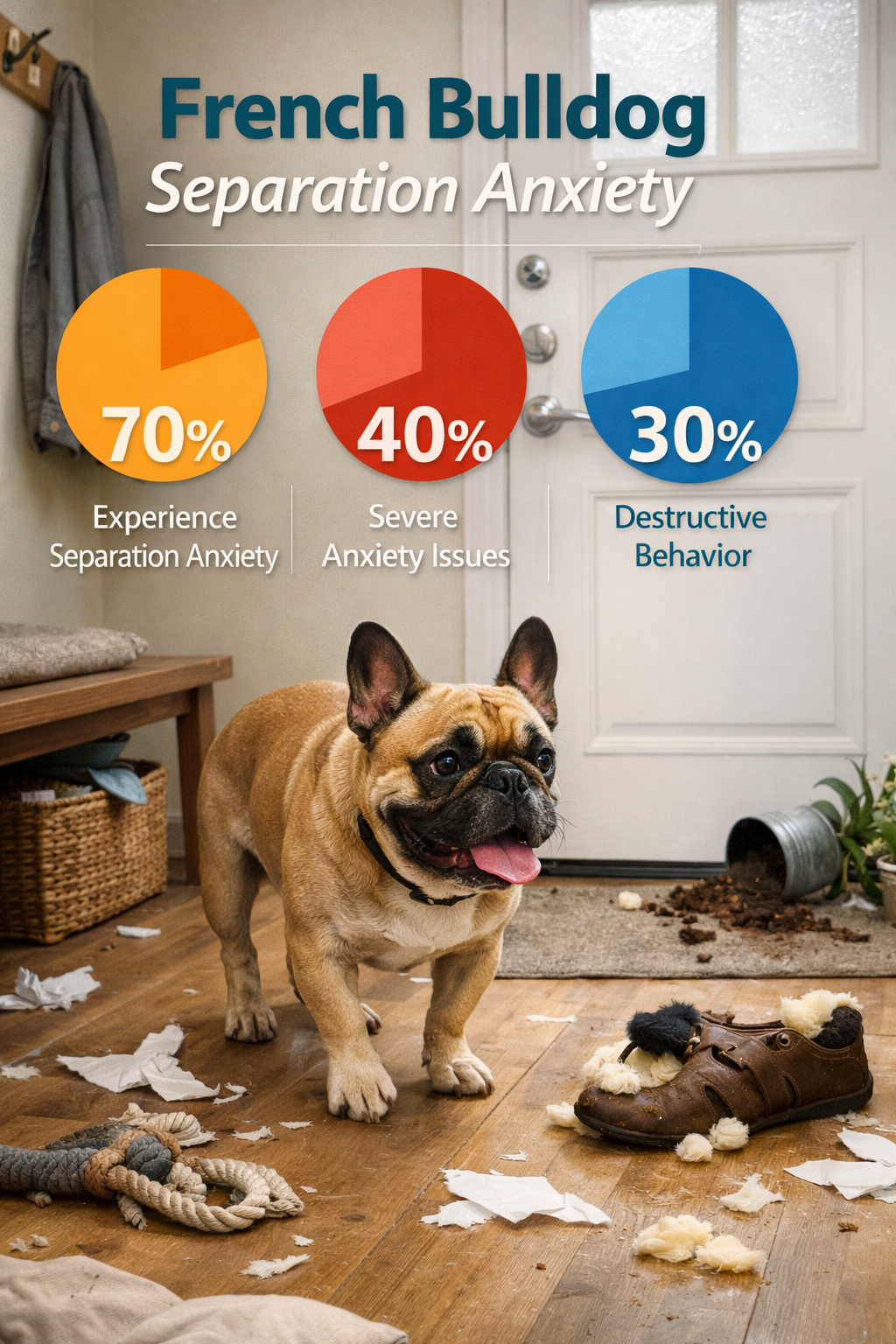
• French Bulldogs are 2.8 times more likely to develop separation anxiety compared to mixed breeds due to their “velcro dog” personality
• The micro-exit method is the gold standard training approach, starting with 1-5 second departures and gradually increasing duration
• 68% of French Bulldogs show at least one sign of separation anxiety, but 73% improve within 60 days using structured training
• Environmental modifications like calming beds, puzzle toys, and background music significantly enhance training success
• Puppies under 12 months respond faster to training than adult dogs with established anxiety patterns
• Consistent daily practice for 6-12 weeks typically yields significant behavioral improvements
• Professional help may be needed for severe cases involving self-injury or extreme destructive behavior
Quick Answer
French Bulldog separation anxiety training requires a gradual desensitization approach called the micro-exit method, where you practice extremely short departures (starting at 1-5 seconds) and slowly increase duration over 21 days. This breed-specific training works because it respects the French Bulldog’s natural attachment tendencies while building confidence through positive experiences. Most owners see noticeable improvement within 60 days when combining structured training with environmental modifications like puzzle toys and calming spaces.
What Is French Bulldog Separation Anxiety and Why Does It Happen?
French Bulldog separation anxiety is a behavioral condition where your Frenchie experiences extreme distress when left alone, leading to destructive behaviors, excessive barking, or physical symptoms like panting and drooling. French Bulldogs are 2.8 times more likely to develop separation anxiety compared to mixed-breed dogs, making this a breed-specific concern that requires targeted training approaches.
The condition stems from your Frenchie’s natural “velcro dog” personality—their genetic predisposition to form intense bonds with their owners. Unlike working breeds that were developed for independence, French Bulldogs were bred specifically as companion animals, creating an inherent need for constant human contact.
Common triggers include:
• Sudden changes in routine or living situations
• Lack of early independence training during puppyhood
• Traumatic experiences when left alone
• Moving to a new home or family changes
• Insufficient mental stimulation when alone
Physical factors also play a role. French Bulldogs’ brachycephalic (flat-faced) respiratory traits make them more sensitive to stress responses, causing anxiety symptoms to manifest more intensely than in other breeds. This means your Frenchie may experience genuine physical discomfort during anxious episodes, not just emotional distress.
Choose immediate intervention if your French Bulldog shows multiple anxiety signs consistently, as early training prevents the behavior from becoming deeply ingrained. Puppies under 12 months respond significantly faster to training than adults with established anxiety patterns.
How Do I Recognize Separation Anxiety Signs in My French Bulldog?
Separation anxiety in French Bulldogs manifests through specific behavioral and physical signs that occur exclusively or primarily when you’re absent. The key distinction is that these behaviors happen during departures or alone time, not during your normal daily interactions.
Behavioral signs include:
• Destructive behavior focused on doors, windows, or your personal items
• Excessive barking or whining that neighbors report lasting hours
• House soiling despite being fully potty-trained
• Escape attempts like scratching at doors or digging at carpets
• Following you obsessively and showing distress when you pick up keys or put on shoes
Physical symptoms to watch for:
• Heavy panting when no exercise or heat is involved
• Excessive drooling, especially around departure times
• Loss of appetite when left alone
• Trembling or shaking during pre-departure routines
• Self-injury from scratching, chewing, or escape attempts
The “departure routine test” helps confirm separation anxiety. Pick up your keys, put on shoes, or grab your jacket without actually leaving. If your French Bulldog immediately shows stress signs, this indicates anxiety triggered by departure cues rather than boredom or other issues.
Approximately 68% of French Bulldogs display at least one clinical sign of separation anxiety during their lifetime, with 52% receiving formal diagnoses. However, many owners mistake normal puppy behavior or boredom for separation anxiety, making professional assessment valuable for severe cases.
Avoid the common mistake of assuming all destructive behavior equals separation anxiety. True separation anxiety occurs specifically during absences and involves genuine distress, not playful mischief or attention-seeking when you’re home.
What Is the Micro-Exit Training Method for French Bulldog Separation Anxiety?
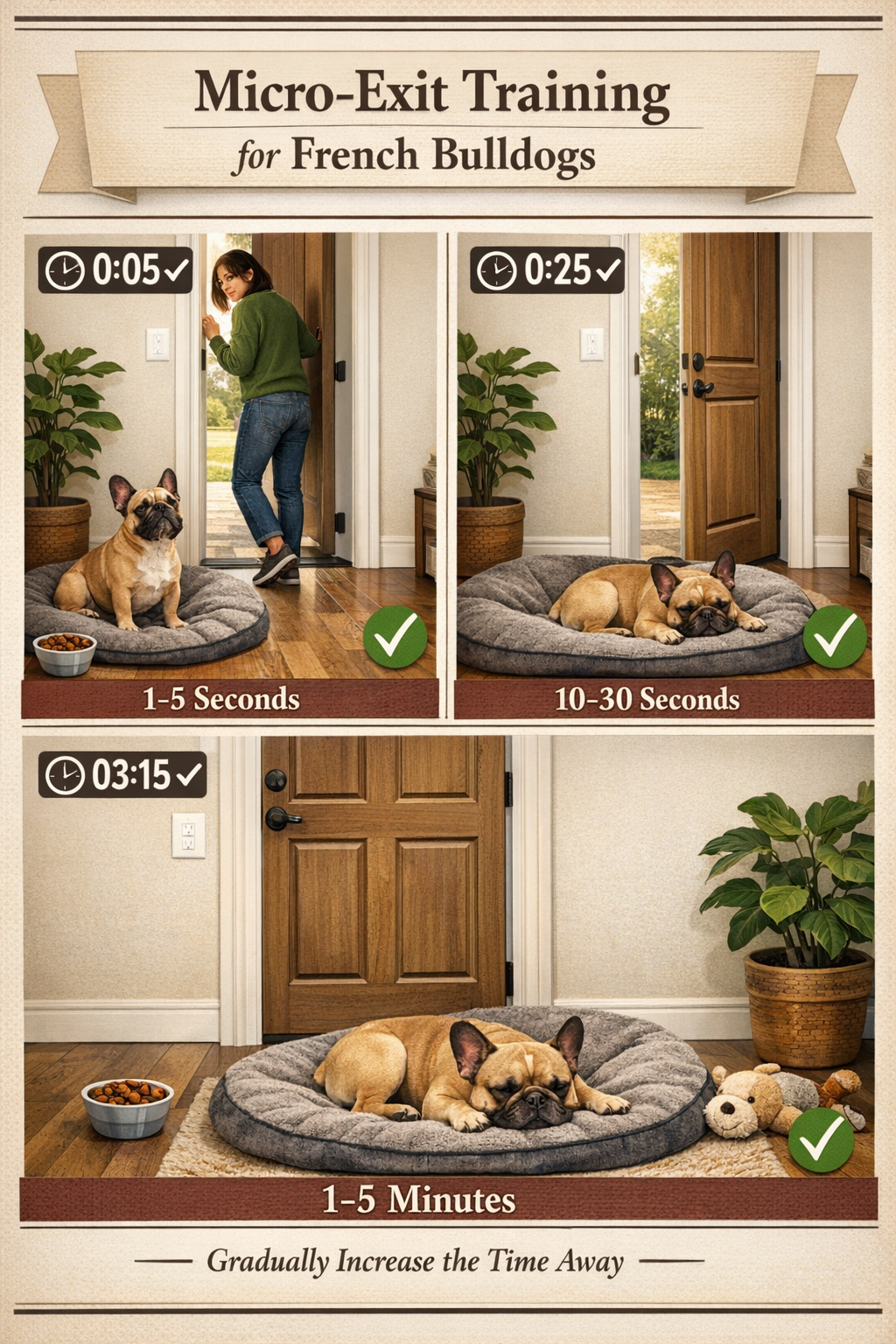
The micro-exit method is the gold standard for French Bulldog separation anxiety training because it builds tolerance through extremely gradual exposure that never triggers panic responses. This approach works by practicing departures so brief that your Frenchie remains calm, then slowly increasing duration as confidence builds.
The method follows a structured 21-day protocol:
Phase 1 (Days 1-4): 1-5 Second Exits
• Step outside your door for 1-2 seconds, then immediately return
• Ignore your dog during departures and returns—no emotional greetings
• Practice 10-15 repetitions daily at random times
• Only progress when your Frenchie shows no stress signs
Phase 2 (Days 5-9): 10-30 Second Exits
• Gradually extend time to 10, 15, then 30 seconds
• Vary departure duration to prevent pattern prediction
• Continue practicing multiple times daily
• Return before any anxiety behaviors begin
Phase 3 (Days 10-15): 1-5 Minute Exits
• Increase departures to 1-2 minutes, then 3-5 minutes
• Add departure cues like picking up keys or putting on shoes
• Practice leaving through different doors if possible
• Monitor for any regression and slow down if needed
Phase 4 (Days 16-21): 10-30 Minute Exits
• Build up to longer departures only after mastering shorter ones
• Include actual errands like checking mail or brief store trips
• Maintain calm, neutral energy during all departures and returns
The average French Bulldog requires 47 repetitions of micro-exits before tolerating door closure without stress responses. This number varies significantly based on your dog’s age, previous experiences, and consistency of training.
Critical success factors:
• Never return during anxious behavior—this reinforces the anxiety
• Practice when your dog is calm, not when you actually need to leave
• Keep departures boring—no dramatic goodbyes or excited returns
• Stay consistent with timing—rushing the process often creates setbacks
For more comprehensive training approaches, our French Bulldog obedience training guide provides additional techniques that complement separation anxiety work.
How Can I Create the Right Environment for French Bulldog Separation Anxiety Training?
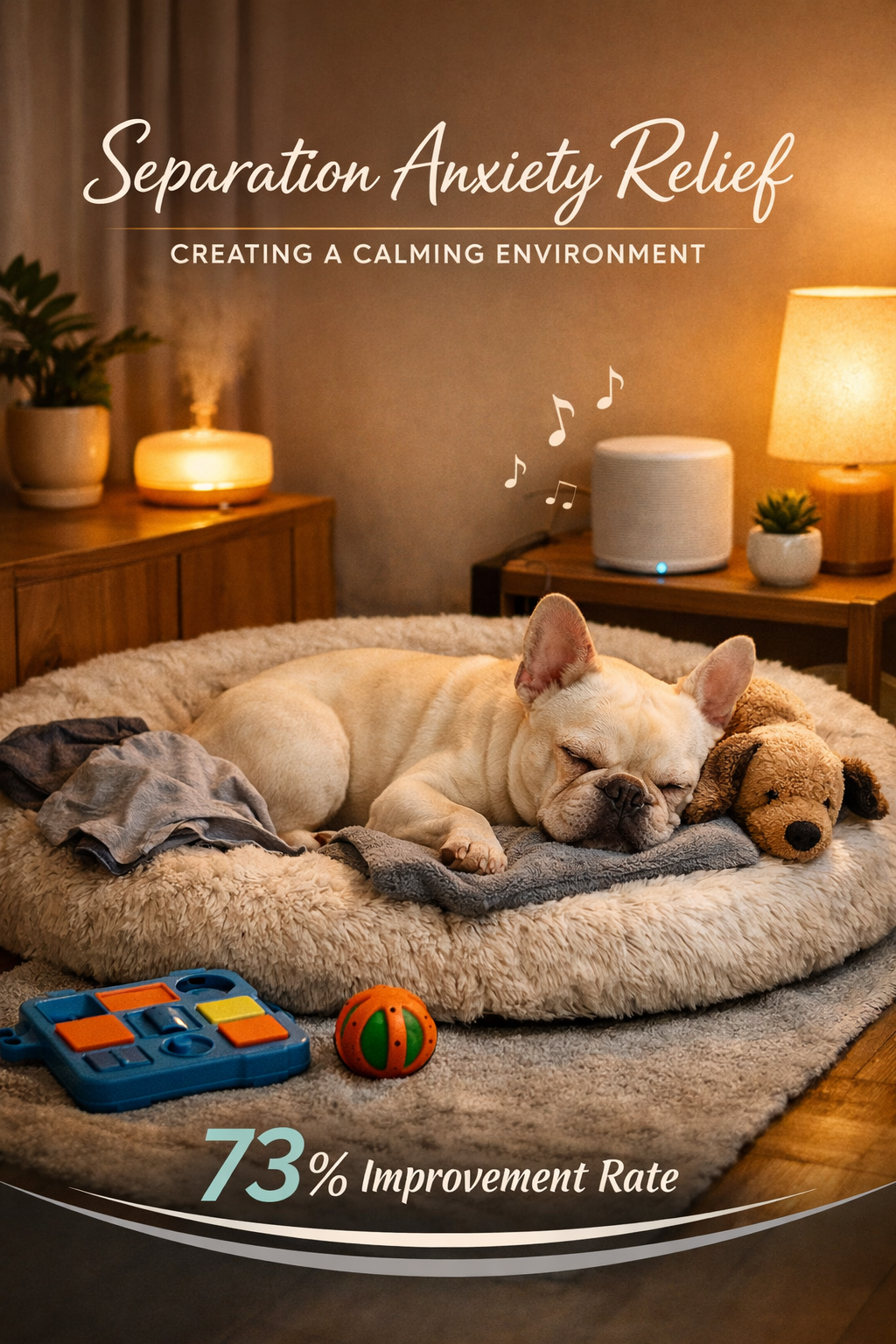
Environmental modifications provide the foundation for successful separation anxiety training by creating a calm, secure space that reduces your French Bulldog’s stress levels during alone time. These changes work alongside training to address both the emotional and physical aspects of anxiety.
Essential environmental setup:
Designated Safe Space
• Choose one room or area where your Frenchie feels most comfortable
• Include their favorite bed, blankets with your scent, and comfort items
• Ensure proper temperature control—French Bulldogs overheat easily during stress
• Block visual access to departure triggers like driveways or front walkways
Mental Stimulation Tools
• Puzzle toys and treat-dispensing games keep minds occupied during departures
• Rotate toys weekly to maintain novelty and interest
• Kong toys stuffed with frozen treats provide 20-30 minutes of focused activity
• Avoid toys that could become choking hazards for flat-faced breeds
Calming Audio Environment
• Classical music or white noise masks outside triggers like car doors or footsteps
• Dog-specific playlists designed for anxiety relief show measurable benefits
• Keep volume moderate—French Bulldogs have sensitive hearing
• Start playing music 10 minutes before departures to create positive associations
Scent and Comfort Elements
• Leave recently worn clothing items that smell like you
• Use calming pheromone diffusers (Adaptil) in the designated area
• Ensure fresh water is always available in multiple locations
• Consider calming supplements after consulting your veterinarian
73% of owners reported noticeable improvement within 60 days when using a multi-modal approach combining calming beds, toys, and desensitization training. This statistic highlights how environmental changes amplify training effectiveness rather than serving as standalone solutions.
Common environmental mistakes to avoid:
• Leaving too many options—overwhelming choices increase anxiety
• Using punishment-based deterrents like shock mats or citronella sprays
• Forgetting temperature control—anxious French Bulldogs overheat quickly
• Placing the safe space near high-traffic areas where outside noises trigger stress
The right environment makes your French Bulldog feel secure enough to practice being alone successfully. For additional behavioral training techniques, explore our guide on positive reinforcement training methods.
What Training Tools and Techniques Work Best for French Bulldog Separation Anxiety?
Effective French Bulldog separation anxiety training combines specific tools with proven techniques that address this breed’s unique needs and learning style. The most successful approaches use positive reinforcement while respecting French Bulldogs’ sensitive nature and physical limitations.
Essential Training Tools:
High-Value Treats
• Use small, soft treats that won’t cause choking in flat-faced breeds
• Reserve special treats exclusively for separation training sessions
• Choose options your Frenchie can consume quickly during short training windows
• Our complete guide to training treats covers breed-specific safety considerations
Crate Training Equipment
• Wire crates with proper ventilation prevent overheating during anxiety
• Size appropriately—large enough to stand and turn, not so large they feel insecure
• Include familiar bedding and a favorite toy for comfort
• Proper crate training techniques create positive associations with alone time
Monitoring Technology
• Pet cameras allow you to observe behavior without being present
• Two-way audio features help you assess if your voice provides comfort or increases anxiety
• Motion alerts show when destructive behaviors begin, helping you time returns appropriately
Core Training Techniques:
Desensitization Protocol
• Practice departure cues (keys, shoes, coat) without actually leaving
• Repeat these actions randomly throughout the day until they become meaningless
• Start with the least triggering cue and gradually add more obvious departure signals
• This technique reduces anticipatory anxiety before you even begin micro-exits
Counter-Conditioning
• Pair departure cues with positive experiences like treat puzzles or special toys
• Give your Frenchie something wonderful that only appears when you leave
• Remove these special items immediately upon return to maintain their value
• This creates positive associations with your departures rather than dread
Graduated Independence Training
• Practice brief separations while you’re still home (different rooms, closed doors)
• Gradually increase physical distance before attempting actual departures
• Teach a “settle” command that your Frenchie can perform in their designated safe space
• Build confidence through successful alone experiences in low-stress situations
FYI: Some links may be affiliate links, which means I may earn a small commission at no extra cost to you.
If your French Bulldog shows reactive behaviors like barking or lunging during training sessions, a structured approach can make a significant difference. One helpful option is a step-by-step reactivity training program that focuses on calm, force-free methods specifically designed for sensitive breeds.
Timing and Frequency Guidelines:
• Practice micro-exits 3-5 times daily during calm periods
• Keep training sessions short (5-10 minutes) to prevent overwhelming your Frenchie
• Allow 2-3 hours between sessions for mental processing
• Avoid training when you actually need to leave—this creates pressure and rushed timing
Choose professional help if your French Bulldog shows self-injurious behaviors, extreme panic responses, or no improvement after 4-6 weeks of consistent training. Some cases require medication alongside behavioral modification for successful outcomes.
How Long Does French Bulldog Separation Anxiety Training Take?
Most French Bulldogs show significant improvement in separation anxiety within 6 to 12 weeks of consistent training, with many owners noticing positive changes within the first 2-3 weeks. However, training duration varies significantly based on your dog’s age, severity of anxiety, and consistency of your training approach.
Timeline expectations by severity level:
Mild Anxiety (occasional whining, minor restlessness)
• 2-4 weeks for noticeable improvement
• 6-8 weeks for reliable comfort with 2-3 hour departures
• Responds well to basic micro-exit training and environmental modifications
Moderate Anxiety (destructive behavior, excessive barking)
• 4-8 weeks for significant progress
• 8-12 weeks for full-day departure tolerance
• Requires consistent daily training plus environmental management
Severe Anxiety (self-injury, extreme panic, house soiling)
• 8-16 weeks or longer for substantial improvement
• May require professional behavioral consultation and possible medication
• Success depends on addressing underlying triggers and medical factors
Factors that accelerate training success:
• Puppy age advantage: Dogs under 12 months respond faster than adults with established patterns
• Consistent daily practice: Training 3-5 times daily vs. sporadic sessions
• Owner calm energy: Your stress levels directly impact your Frenchie’s progress
• Proper environmental setup: Calming spaces and mental stimulation tools
Factors that slow progress:
• Inconsistent training schedule or multiple family members using different approaches
• Rushing the micro-exit progression before your dog masters each phase
• Underlying health issues like respiratory problems that worsen during stress
• Major life changes during training periods (moves, new family members, schedule changes)
Weekly progress markers to track:
• Week 1-2: Reduced anxiety during departure cues (keys, shoes)
• Week 3-4: Calm behavior during 30-second to 2-minute departures
• Week 5-8: Comfortable with 15-30 minute absences
• Week 9-12: Relaxed during typical daily departures (2-4 hours)
Common timeline mistakes include expecting linear progress. French Bulldogs often show improvement in waves, with some regression during stressful periods or schedule changes. This is normal and doesn’t indicate training failure.
For comprehensive timelines covering various training aspects, see our detailed guide on how long French Bulldog training takes.
Plan for maintenance training even after success. Most French Bulldogs benefit from occasional practice sessions and environmental consistency throughout their lives to prevent anxiety from returning during stressful periods.
When Should I Seek Professional Help for My French Bulldog’s Separation Anxiety?
Seek professional help immediately if your French Bulldog shows self-injurious behaviors, extreme panic responses that last hours, or no improvement after 6-8 weeks of consistent training. Some separation anxiety cases require veterinary intervention, medication, or specialized behavioral modification that goes beyond standard training approaches.
Red flag symptoms requiring immediate professional consultation:
• Self-injury from excessive scratching, chewing, or escape attempts
• Severe respiratory distress beyond normal French Bulldog breathing patterns
• Complete loss of house training despite being fully trained when you’re home
• Destructive behavior that damages property or creates safety hazards
• Refusal to eat or drink for extended periods when left alone
• Extreme panic lasting 3+ hours with no reduction in intensity
Types of professionals who can help:
Veterinary Behaviorists
• Board-certified specialists in animal behavior and psychology
• Can prescribe anti-anxiety medications when appropriate
• Best for severe cases requiring medical intervention
• Typically require referral from your regular veterinarian
Certified Dog Trainers (CCPDT, KPA-CTP)
• Specialize in positive reinforcement training methods
• Experienced with breed-specific behavioral issues
• Offer in-home consultations for personalized training plans
• Good for moderate anxiety cases needing structured guidance
Your Regular Veterinarian
• Rules out underlying medical conditions contributing to anxiety
• Can prescribe short-term anti-anxiety medications if needed
• Provides health clearance before beginning intensive training
• Essential first stop for French Bulldogs due to breed-specific health considerations
What to expect during professional consultation:
• Detailed behavioral history and trigger identification
• Assessment of your current training methods and environment
• Customized training plan based on your Frenchie’s specific needs
• Follow-up appointments to monitor progress and adjust approaches
Medication considerations for French Bulldogs:
Anti-anxiety medications can be helpful for severe cases but require careful monitoring due to this breed’s respiratory sensitivities. Common options include fluoxetine (Prozac), sertraline (Zoloft), or short-term benzodiazepines for acute situations. Never attempt to medicate your French Bulldog without veterinary supervision—their flat-faced anatomy creates unique considerations for drug metabolism and side effects.
Cost expectations:
• Initial veterinary behaviorist consultation: $300-600
• Certified trainer sessions: $75-150 per hour
• Anti-anxiety medications: $20-80 monthly
• Follow-up appointments: $100-200 each
Choose professional help if you feel overwhelmed, your family relationships are suffering due to the dog’s anxiety, or you’re considering rehoming due to behavioral issues. Early professional intervention often prevents more serious problems and reduces overall training time.
Many professionals now offer virtual consultations, making expert help more accessible for French Bulldog owners in areas without local specialists.
Helpful Resources for French Bulldog Separation Anxiety Training
If your French Bulldog struggles with reactive behaviors during separation anxiety training—like barking or lunging when stressed—having a structured approach can make all the difference. One valuable resource is a comprehensive reactivity training program that uses calm, force-free methods specifically designed for sensitive breeds like French Bulldogs.
👉 Click here to discover how calmer, happier training sessions with your Frenchie can start today.
This type of structured program can be particularly helpful if your Frenchie shows signs of reactivity alongside separation anxiety, as the two issues often compound each other. The program focuses on building confidence and reducing overall stress levels, which directly supports separation anxiety recovery.
Additional training resources:
• French Bulldog crate training guide for creating positive alone-time associations
• Positive reinforcement techniques that work specifically with French Bulldog temperament
• Professional behaviorist directories through the Animal Behavior Management Alliance
• Local French Bulldog meetup groups for socialization and owner support
Remember, every French Bulldog is unique, and what works for one may need adjustment for another. The key is finding the right combination of training methods, environmental modifications, and professional support that fits your specific situation.
Frequently Asked Questions
How quickly can I expect to see results from separation anxiety training?
Most French Bulldog owners notice initial improvements within 2-3 weeks of consistent micro-exit training, with significant progress typically occurring within 6-12 weeks. Puppies under 12 months often respond faster than adult dogs with established anxiety patterns.
Can I use a crate to help with my French Bulldog’s separation anxiety?
Yes, but only if your Frenchie already has positive crate associations. Never use crate training as punishment for anxiety behaviors. Properly introduced crates can provide security and prevent destructive behavior, but forced crating can worsen anxiety in some dogs.
Should I get another dog to keep my French Bulldog company?
Adding a second dog rarely solves separation anxiety and often creates additional training challenges. Your French Bulldog’s anxiety stems from attachment to humans, not loneliness for other dogs. Focus on independence training before considering a companion animal.
Is it okay to use calming supplements during training?
Natural calming supplements can support training efforts but shouldn’t replace behavioral modification. Consult your veterinarian before using any supplements, especially with French Bulldogs who may have respiratory or other health sensitivities.
What’s the difference between separation anxiety and boredom-related destruction?
Separation anxiety occurs specifically when you leave and involves genuine distress signs like panting, drooling, or panic. Boredom-related destruction happens randomly and stops when the dog finds something interesting. True separation anxiety requires specialized training approaches.
Can older French Bulldogs learn to overcome separation anxiety?
Yes, though it typically takes longer than with younger dogs. Senior French Bulldogs can successfully learn new coping behaviors with patient, consistent training. Consider underlying health issues that might worsen anxiety in older dogs.
How do I handle setbacks during training?
Setbacks are normal, especially during stressful periods or routine changes. Return to shorter departure durations where your Frenchie was successful and rebuild gradually. Don’t abandon training—consistency through setbacks is crucial for long-term success.
Should I ignore my French Bulldog when I come home?
Yes, keep returns calm and neutral for the first 5-10 minutes. Excited greetings reinforce the emotional intensity around departures and returns. Wait until your Frenchie is calm before giving attention and affection.
Can medication help with severe separation anxiety?
Anti-anxiety medications can be helpful for severe cases when combined with behavioral training. French Bulldogs require careful medication monitoring due to their respiratory anatomy. Always work with a veterinarian experienced with brachycephalic breeds.
What if my neighbors complain about barking during training?
Inform neighbors about your training timeline and consider soundproofing measures like white noise or closing windows. Most micro-exit training shouldn’t trigger excessive barking if done correctly. If barking persists, you may be progressing too quickly.
How do I practice departures if I work from home?
Practice micro-exits during breaks, lunch hours, or while working in different rooms. You can also practice departure cues without actually leaving. Working from home can actually accelerate training since you can practice more frequently.
Is separation anxiety more common in French Bulldogs than other breeds?
Yes, French Bulldogs are 2.8 times more likely to develop separation anxiety compared to mixed breeds due to their companion-focused breeding and “velcro dog” personality traits. This makes breed-specific training approaches particularly important.
Conclusion
French Bulldog separation anxiety training requires patience, consistency, and understanding of your Frenchie’s unique emotional needs. The micro-exit method, combined with proper environmental modifications, provides the most effective approach for helping your companion dog develop confidence during alone time.
Your next steps:
- Assess your French Bulldog’s current anxiety level using the behavioral signs outlined in this guide
- Set up a calming environment with designated safe spaces, mental stimulation tools, and comfort items
- Begin micro-exit training starting with 1-5 second departures and gradually building duration
- Track progress weekly and adjust your approach based on your Frenchie’s responses
- Seek professional help if you notice severe symptoms or no improvement after 6-8 weeks
Remember that 73% of French Bulldog owners see significant improvement within 60 days when using structured training approaches. Your Frenchie’s natural desire to please and bond with you becomes an asset in overcoming separation anxiety when channeled through proper training techniques.
Success comes from understanding that your French Bulldog’s attachment isn’t a flaw to eliminate—it’s a breed characteristic to work with thoughtfully. With consistent effort and the right approach, your Frenchie can learn to feel secure and comfortable during necessary alone time while maintaining the close bond that makes this breed so special.