
French Bulldog Puppy Sleep Schedule: Complete Guide for Healthy Rest

Last updated: February 20, 2026
Key Takeaways
- French Bulldog puppies need 18-20 hours of sleep daily during their first 12 weeks
- Sleep requirements gradually decrease to 14-16 hours by 6-12 months of age
- Consistent bedtime routines help establish healthy sleep patterns
- Brachycephalic features make Frenchies tire more easily than other breeds
- Proper sleep supports immune development and healthy growth
Quick Answer
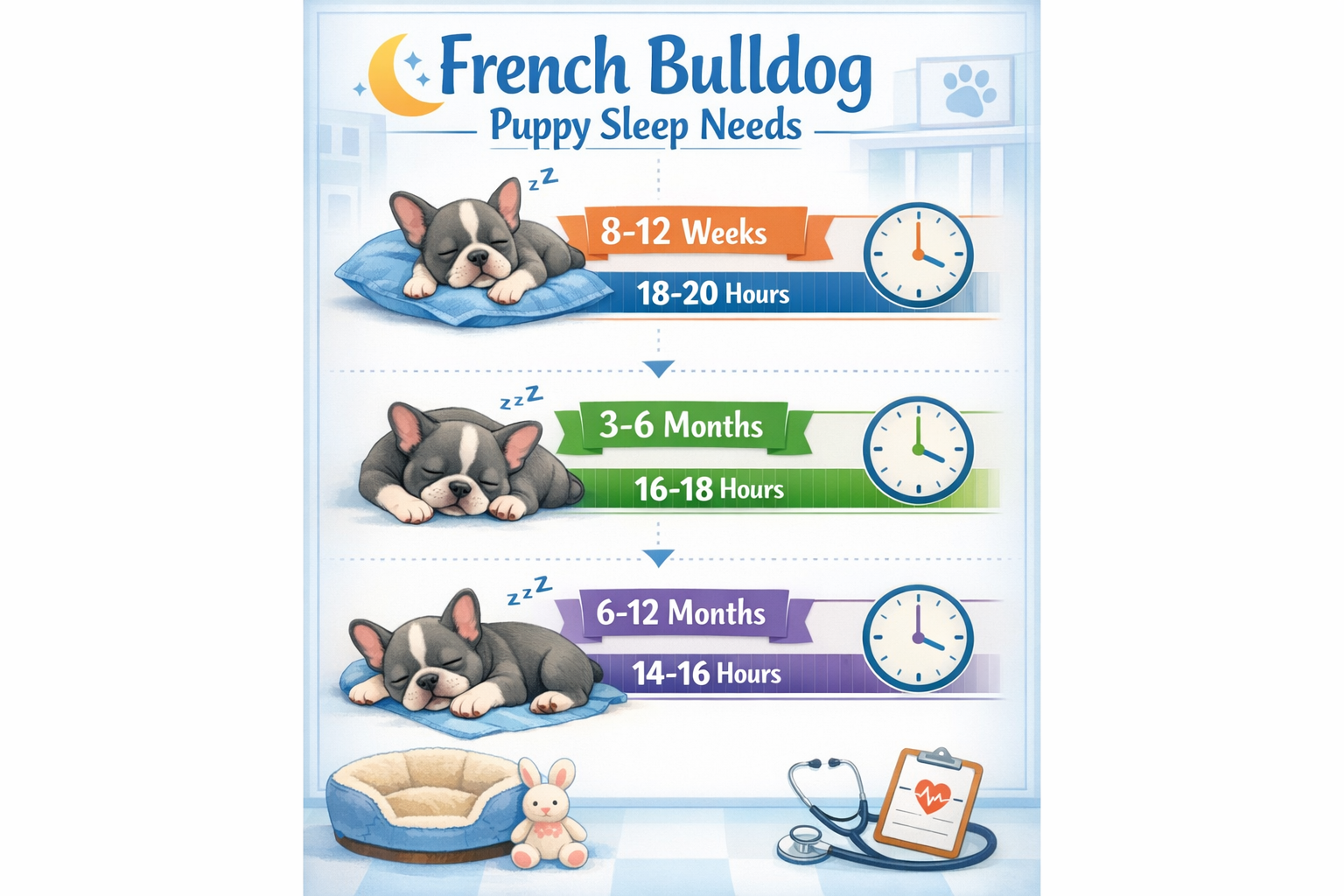
French Bulldog puppies require 18-20 hours of sleep per day during their first 12 weeks, gradually decreasing to 14-16 hours by 6-12 months of age. Their brachycephalic (flat-faced) features make them tire more easily than other breeds, requiring structured nap schedules throughout the day. Establishing consistent bedtime routines with 30-60 minute play sessions followed by 1-2 hour naps helps regulate their natural sleep cycles.
How Much Sleep Do French Bulldog Puppies Need by Age?
French Bulldog puppies have dramatically different sleep requirements compared to adult dogs, with needs changing significantly as they mature.
8-12 weeks old: Your Frenchie puppy needs 18-20 hours of sleep daily. During this critical development phase, their bodies and brains are growing rapidly, making extensive rest essential for proper immune system function and healthy growth.
3-6 months old: Sleep requirements decrease to 16-18 hours per day. Puppies become more active and alert during wake periods but still need frequent naps to support continued development.
6-12 months old: Sleep needs transition toward adult patterns, requiring 14-16 hours daily. By six months, most French Bulldog puppies begin sleeping more like adult dogs, averaging 10-14 hours per day.
Individual variations: Some puppies may need less than these averages depending on their personality, exercise levels, and individual energy patterns. However, if your Frenchie puppy sleeps significantly less than 14 hours daily after 6 months, consult your veterinarian.
Brachycephalic considerations: French Bulldogs’ shortened airways and flat faces cause them to tire more easily than other breeds. This means your Frenchie puppy may need more recovery time after play sessions compared to breeds with longer snouts.
Understanding these age-specific needs helps you create appropriate schedules and avoid over-stimulating your developing puppy. For comprehensive guidance on raising a healthy Frenchie, check out our complete guide on how to take care of French Bulldog puppies.
What Does a Healthy French Bulldog Puppy Sleep Schedule Look Like?
A well-structured daily routine balances active play periods with adequate rest to support your puppy’s development and prevent overtiredness.
Morning routine (6:00-8:00 AM):
- Wake up and immediate potty break
- 15-20 minute feeding session
- 30-45 minute gentle play or short walk
- First nap: 1-2 hours
Mid-morning (10:00 AM-12:00 PM):
- Wake for potty break
- 20-30 minute training or interactive play
- Second nap: 1.5-2 hours
Afternoon schedule (2:00-6:00 PM):
- Lunch feeding and potty break
- 45-60 minute active play session
- Afternoon nap: 1-2 hours
- Light evening activity before dinner
Evening wind-down (6:00-10:00 PM):
- Dinner and final potty breaks
- Calm indoor play or gentle training
- Bedtime routine starting around 9:00 PM
Nighttime sleep: 10-12 hours of uninterrupted rest in a comfortable, quiet space.
Key scheduling principles:
- Never exceed 60 minutes of continuous activity for puppies under 4 months
- Watch for signs of tiredness: excessive panting, slowing down, or seeking quiet spots
- Adjust nap timing based on your puppy’s individual energy patterns
- Maintain consistent wake and sleep times to establish circadian rhythms
If your puppy seems restless during scheduled nap times, they may need more physical or mental stimulation before rest periods. Our French Bulldog puppy training guide offers excellent activities for burning energy constructively.
How to Create the Perfect Sleep Environment for Your French Bulldog Puppy

The right sleeping environment significantly impacts your puppy’s sleep quality and helps establish healthy long-term habits.
Temperature control: French Bulldogs are sensitive to temperature extremes due to their brachycephalic features. Maintain room temperature between 65-70°F (18-21°C) for optimal comfort. Avoid placing beds near heating vents or in direct sunlight.
Comfortable bedding: Choose supportive, washable beds with raised edges that provide security. Memory foam or orthopedic options help support developing joints. Avoid beds that are too large initially, as smaller spaces feel more secure to young puppies.
Location considerations:
- Quiet area away from high-traffic zones
- Easily accessible for nighttime potty breaks
- Near your bedroom for the first few weeks to reduce anxiety
- Gradually transition to permanent sleeping location
Lighting and noise: Use blackout curtains or dim lighting during nap times to signal rest periods. White noise machines or soft classical music can mask household sounds that might disturb sleep.
Safety essentials:
- Remove small objects that could be swallowed
- Ensure electrical cords are out of reach
- Provide adequate ventilation
- Keep the area clean and free of allergens
Crate training benefits: A properly sized crate becomes a safe den where your puppy can retreat for uninterrupted rest. The crate should be large enough for your puppy to stand, turn around, and lie down comfortably but not so large they can eliminate in one corner.
Common mistakes to avoid:
- Placing beds in busy areas where family activity disrupts rest
- Using beds with loose stuffing that could be ingested
- Inconsistent sleeping locations that create confusion
For detailed crate training techniques, see our French Bulldog crate training guide.
What Sleep Problems Do French Bulldog Puppies Face?
French Bulldog puppies experience unique sleep challenges related to their breed characteristics and developmental needs.
Breathing difficulties: Brachycephalic Obstructive Airway Syndrome (BOAS) can cause snoring, restless sleep, and frequent position changes during rest. Puppies may sleep with their necks extended or prefer elevated sleeping positions to improve airflow.
Temperature regulation issues: Frenchies struggle to cool themselves effectively, leading to restless sleep in warm conditions. They may pant excessively or seek cool surfaces during sleep, disrupting rest cycles.
Separation anxiety: Young puppies often experience anxiety when separated from littermates or owners, resulting in:
- Whining or crying during initial sleep periods
- Difficulty settling in new environments
- Frequent waking throughout the night
- Resistance to crate or independent sleeping
Overtiredness symptoms:
- Hyperactivity or “zoomies” when exhausted
- Difficulty settling despite obvious fatigue
- Increased nipping or mouthy behavior
- Resistance to normal calming techniques
Sleep regression periods: Puppies may experience temporary sleep disruptions during:
- Growth spurts (typically around 4-6 months)
- Teething phases (3-7 months)
- Major environmental changes or stress
Solutions for common problems:
- Elevate sleeping areas slightly to improve breathing
- Use cooling mats or fans during warm weather
- Implement gradual separation training
- Establish consistent pre-sleep routines
- Consult veterinarians for persistent breathing issues
When to seek professional help: Contact your veterinarian if your puppy shows severe breathing difficulties, refuses to sleep for extended periods, or exhibits sudden changes in sleep patterns.
FYI: Some links may be affiliate links, which means I may earn a small commission at no extra cost to you.
If your Frenchie puppy shows signs of anxiety or restlessness that affect their sleep, consider structured training approaches. This gentle, reactivity-free training method can help build confidence and calmness, leading to better rest patterns for anxious puppies.
How to Establish Healthy Bedtime Routines for French Bulldog Puppies
Consistent bedtime routines signal to your puppy that sleep time is approaching and help regulate their internal clock.
Pre-bedtime routine (30-45 minutes before sleep):
- Final potty break: Take your puppy outside for their last elimination opportunity
- Gentle activity: Light indoor play or basic training commands (avoid high-energy games)
- Feeding cutoff: Stop food 2-3 hours before bedtime to prevent nighttime accidents
- Calming activities: Gentle brushing, quiet petting, or soft music
Bedtime sequence (15-20 minutes):
- Settle command: Guide your puppy to their sleeping area with a consistent verbal cue
- Comfort items: Provide a favorite toy or blanket with familiar scents
- Dim lighting: Gradually reduce room lighting to signal sleep time
- Quiet presence: Stay nearby briefly until your puppy settles, then gradually reduce your presence
Consistency factors:
- Same bedtime every night (within 30 minutes)
- Identical sequence of pre-sleep activities
- Same sleeping location and setup
- Consistent wake-up time, even on weekends
Age-appropriate adjustments:
- 8-12 weeks: May need comfort and reassurance during initial nights
- 3-4 months: Can handle longer periods alone but still need routine structure
- 5+ months: Should be comfortable with independent sleeping and established routines
Troubleshooting routine resistance:
- Ensure adequate daytime exercise and mental stimulation
- Check for medical issues if sudden routine changes occur
- Gradually adjust timing rather than making dramatic changes
- Reward calm behavior during routine with gentle praise
Environmental cues that support routines:
- Dimming house lights 1 hour before puppy bedtime
- Reducing household noise and activity levels
- Using consistent verbal cues like “bedtime” or “settle”
- Playing the same calming music or white noise
Successful routines typically take 1-2 weeks to establish fully. Be patient and consistent, as French Bulldog puppies respond well to predictable patterns. For additional training techniques that support good sleep habits, explore our comprehensive French Bulldog training tips for beginners.
When Do French Bulldog Puppies Sleep Through the Night?
Most French Bulldog puppies begin sleeping through the night consistently between 4-6 months of age, though individual timelines vary based on development and training.
8-12 weeks: Puppies typically wake 1-3 times per night for potty breaks. Their small bladders can’t hold urine for more than 3-4 hours, making nighttime interruptions normal and necessary.
3-4 months: Wake-ups decrease to 0-1 times per night as bladder capacity increases. Some puppies may sleep 6-7 hours continuously during this phase.
4-6 months: Most French Bulldog puppies achieve 8-10 hour sleep stretches consistently. This coincides with improved bladder control and established routines.
6+ months: Should sleep through the night regularly, typically 10-12 hours without interruption.
Factors affecting timeline:
- Individual bladder development: Some puppies gain control faster than others
- Consistency of training: Regular schedules accelerate progress
- Health status: Urinary tract infections or other issues can delay progress
- Environmental stress: Changes in routine or environment may cause temporary setbacks
Signs your puppy is ready for longer sleep periods:
- Staying dry in crate for 4+ hours during the day
- Waking up dry from naps consistently
- Showing less interest in middle-of-night potty breaks
- Settling back to sleep quickly after brief wake-ups
Strategies to encourage full-night sleep:
- Gradually extend time between nighttime potty breaks
- Ensure adequate daytime exercise and mental stimulation
- Maintain consistent bedtime and wake-up times
- Avoid giving attention for non-emergency nighttime waking
Common setbacks and solutions:
- Growth spurts: May temporarily increase nighttime waking due to increased metabolism
- Teething discomfort: Provide appropriate chew toys and consider vet-approved pain relief
- Schedule changes: Maintain routines as much as possible during transitions
- Illness: Consult veterinarian for persistent sleep disruptions
Remember that French Bulldogs’ brachycephalic features may cause occasional sleep position changes or brief wake-ups due to breathing adjustments. This is typically normal unless accompanied by severe respiratory distress.
Helpful Resources for Better Sleep Training

If you’re looking for structured support in building confidence and reducing anxiety in your French Bulldog puppy, consider professional training resources. This gentle training approach for reactive and anxious dogs uses force-free methods that many Frenchie owners find helpful for creating calmer, more confident puppies who sleep better.
Additionally, protecting your growing puppy’s health with proper insurance coverage ensures you can address any sleep-related health concerns without financial stress. These trusted pet insurance options for French Bulldogs provide coverage for breed-specific issues like breathing disorders and other conditions that might affect your puppy’s rest quality.
FAQ
Q: How long should French Bulldog puppies nap during the day?
A: French Bulldog puppies should take 3-5 naps daily, lasting 1-2 hours each. Young puppies (8-12 weeks) need longer, more frequent naps, while older puppies (4-6 months) can handle slightly longer wake periods between naps.
Q: Is it normal for French Bulldog puppies to snore?
A: Yes, snoring is common in French Bulldog puppies due to their brachycephalic (flat-faced) structure. Light snoring is typically normal, but loud, labored breathing or gasping during sleep should be evaluated by a veterinarian.
Q: Should I wake my French Bulldog puppy from naps?
A: Generally, let sleeping puppies sleep unless they need scheduled feeding or potty breaks. However, if late afternoon naps extend past 4-5 PM, gentle waking may help maintain nighttime sleep schedules.
Q: Can French Bulldog puppies sleep in my bed?
A: While tempting, it’s better to establish independent sleeping habits early. French Bulldogs can develop separation anxiety, and bed-sharing may reinforce over-dependence. Start with a crate or bed near yours, then gradually transition to their permanent sleeping area.
Q: Why does my French Bulldog puppy get hyperactive when tired?
A: Overtired puppies often display hyperactivity or “zoomies” instead of settling down. This is normal puppy behavior. When you notice this pattern, guide them to their sleeping area and implement calming routines rather than more stimulation.
Q: How do I know if my puppy is getting enough sleep?
A: Well-rested French Bulldog puppies are alert during wake periods, have good appetites, show normal playfulness, and settle easily for naps. Signs of insufficient sleep include constant crankiness, difficulty focusing during training, or excessive mouthing behavior.
Q: Should I use a nightlight for my French Bulldog puppy?
A: A dim nightlight can help during initial weeks for easier nighttime potty breaks, but gradually transition to darkness to promote deeper sleep. French Bulldogs sleep better in darker environments once they’re comfortable with their surroundings.
Q: What if my French Bulldog puppy won’t sleep in their crate?
A: Start with short, positive crate experiences during the day. Make the crate comfortable with soft bedding and familiar scents. Feed meals in the crate and provide special toys only during crate time to create positive associations.
Q: How does teething affect French Bulldog puppy sleep?
A: Teething (3-7 months) can cause sleep disruptions due to discomfort. Provide appropriate chew toys, consider frozen treats for sore gums, and maintain consistent routines. Most sleep disruptions resolve once adult teeth fully emerge.
Q: When should I be concerned about my puppy’s sleep patterns?
A: Consult your veterinarian if your puppy shows sudden changes in sleep patterns, difficulty breathing during sleep, refuses to sleep for extended periods, or seems excessively lethargic even when awake.
Q: Can I give my French Bulldog puppy melatonin for sleep?
A: Never give human sleep aids or supplements to puppies without veterinary approval. French Bulldog puppies have different metabolisms and medication sensitivities. If sleep issues persist, discuss safe options with your veterinarian.
Q: How do I transition my puppy from multiple naps to fewer, longer sleep periods?
A: This transition happens naturally as puppies mature. Gradually extend wake periods by 15-30 minutes every few weeks, ensuring adequate mental and physical stimulation during active times. Most puppies naturally consolidate sleep as they approach 6 months of age.
Key Takeaways
- French Bulldog puppies need 18-20 hours of sleep daily during weeks 8-12, gradually decreasing to 14-16 hours by 6-12 months
- Brachycephalic features make Frenchies tire more easily and may cause breathing-related sleep adjustments
- Consistent daily schedules with 30-60 minute play sessions followed by 1-2 hour naps support healthy development
- Most French Bulldog puppies sleep through the night consistently by 4-6 months of age
- Proper sleep environment includes comfortable temperature (65-70°F), supportive bedding, and quiet location
- Bedtime routines should be consistent and calming, implemented 30-45 minutes before sleep
- Common sleep challenges include breathing difficulties, temperature sensitivity, and separation anxiety
- Overtired puppies may display hyperactivity rather than settling behavior
- Professional veterinary consultation is recommended for persistent breathing issues or sudden sleep pattern changes
- Patience and consistency are essential, as healthy sleep habits typically establish within 1-2 weeks of routine implementation
Conclusion
Establishing a proper French Bulldog puppy sleep schedule is fundamental to your Frenchie’s healthy development and your family’s well-being. By understanding their unique needs—from the 18-20 hours of daily sleep required in early weeks to the gradual transition toward adult patterns—you can create an environment that supports optimal growth and behavior.
Remember that French Bulldogs’ brachycephalic features make them special cases requiring extra attention to breathing comfort and temperature control during rest. The investment you make in consistent routines, appropriate sleeping environments, and patient training during these early months will pay dividends in the form of a well-adjusted, healthy adult dog.
Start implementing these strategies today by assessing your current setup and making necessary adjustments to your puppy’s sleeping area. Focus on consistency in timing, environment, and routines while remaining flexible enough to adapt to your individual puppy’s needs. For comprehensive support in all aspects of French Bulldog puppy care, explore our complete guide to French Bulldog puppy essentials and remember that professional guidance is always available when questions arise.
References
[1] French Bulldog Sleeping Guide How Much Rest Do They Really Need – https://www.fitwarm.com/blogs/news/french-bulldog-sleeping-guide-how-much-rest-do-they-really-need
[2] How Much Do French Bulldogs Sleep – https://frenchiecomplex.com/blogs/news/how-much-do-french-bulldogs-sleep
[3] French Bulldog Sleeping – https://tomkingskennel.com/french-bulldog-sleeping/
[4] How Long Do Puppies Sleep – https://petcube.com/blog/how-long-do-puppies-sleep/
[5] Puppy Sleep Schedule Perfect Routine – https://newportvetrh.com/puppy-sleep-schedule-perfect-routine/
[6] How Much Do Puppies Sleep – https://www.akc.org/expert-advice/health/how-much-do-puppies-sleep/