

Last updated: January 15, 2026
Picture this: you’re settling into your apartment after a long day when your French Bulldog decides to stage a dramatic protest about bedtime, complete with stubborn sitting and selective hearing. If you’re nodding along, you’re not alone. French Bulldog obedience training at home can feel like negotiating with a charming but determined toddler who happens to have four legs and an impressive ability to ignore commands.
Key Takeaways
- Start early and keep sessions short: Begin training at 8 weeks old with 5-10 minute sessions multiple times daily to match your Frenchie’s attention span
- Positive reinforcement is non-negotiable: Use high-value treats, praise, and playtime rather than punishment to motivate your stubborn but sensitive French Bulldog
- Focus on essential commands first: Prioritize sit, stay, come, leave it, and down before moving to advanced behaviors
- Consistency beats intensity: Daily practice with the same commands and gestures across different settings reinforces learning better than long, infrequent sessions
- Patience is your secret weapon: French Bulldogs are naturally stubborn and may “plant their feet” during training, requiring extra motivation and understanding
Quick Answer
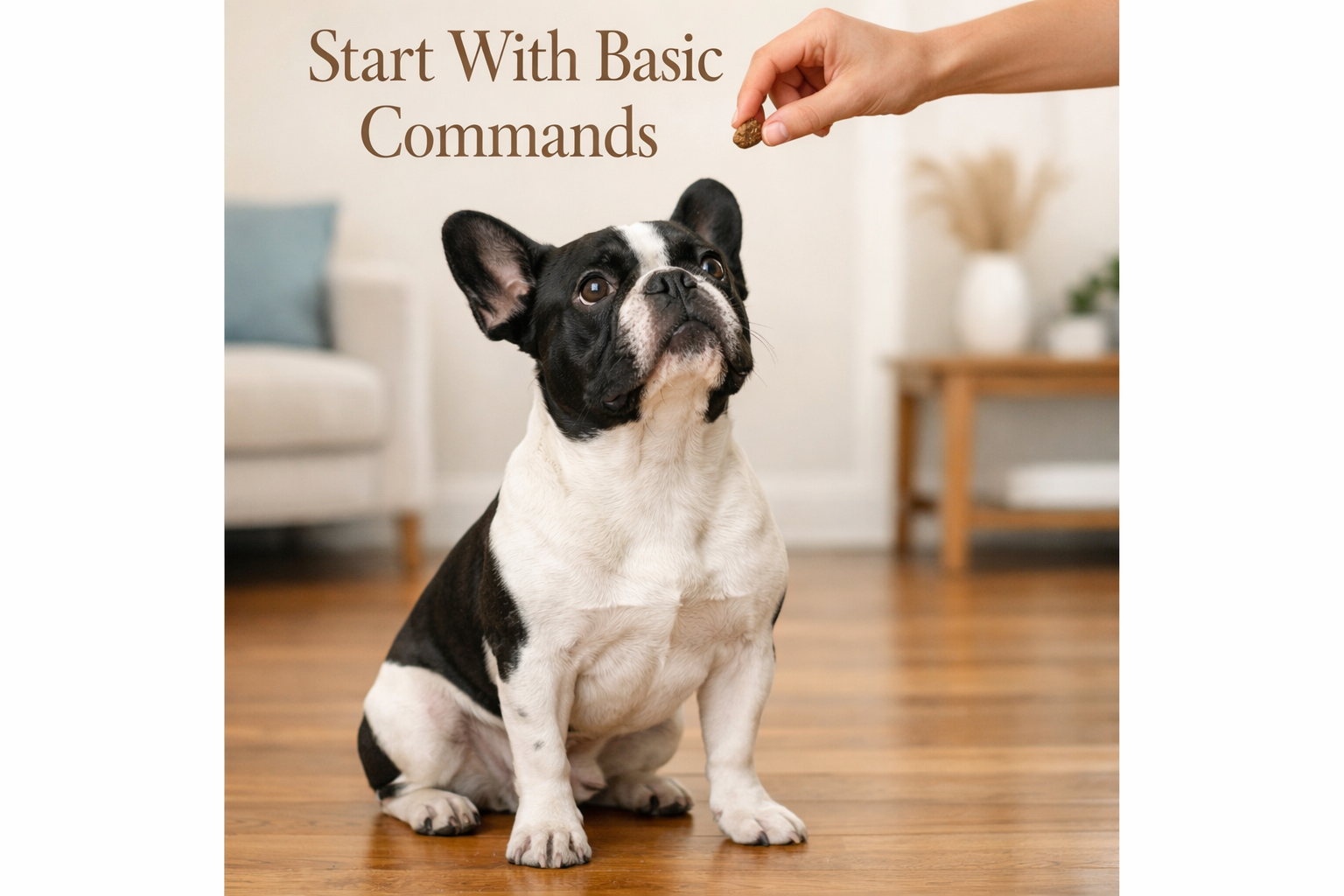
French Bulldog obedience training at home succeeds through short, positive sessions starting at 8 weeks old. Focus on basic commands (sit, stay, come) using high-value treats and consistent daily practice. Keep sessions to 5-10 minutes due to their short attention spans, and always use positive reinforcement rather than punishment with this sensitive but stubborn breed.
Why French Bulldogs Need Special Training Considerations
French Bulldogs aren’t your typical eager-to-please breed. These compact companions come with unique personality traits that directly impact how they learn and respond to training commands.
Stubbornness is their superpower. French Bulldogs have earned a reputation for selective hearing and an impressive ability to “plant their feet” when they don’t want to cooperate. This isn’t defiance for the sake of being difficult—it’s simply how their independent minds work.
Short attention spans require adapted methods. Unlike breeds that can focus for extended periods, Frenchies get bored quickly and lose interest in repetitive tasks. This means traditional long training sessions often backfire.
Breathing issues affect exercise tolerance. Their flat faces (brachycephalic structure) mean they tire more easily and can overheat quickly, especially during active training sessions. You’ll need to watch for signs of labored breathing and take frequent breaks.
Sensitivity to tone and environment. Despite their stubborn streak, French Bulldogs are surprisingly sensitive to harsh corrections or negative reinforcement. They respond much better to encouragement and positive motivation.
Choose French Bulldog-specific training methods if you want faster results and less frustration. Generic dog training approaches often fail because they don’t account for these breed-specific traits.
Essential Commands for French Bulldog Obedience Training at Home
Start with five fundamental commands that form the foundation of all future training. These commands address the most common behavioral issues French Bulldog owners face in home environments.
The “Big Five” Commands Every Frenchie Must Know
Sit – Your gateway command that teaches impulse control and attention. French Bulldogs naturally want to jump up for attention, making this command essential for apartment living.
Stay – Critical for safety and household management. This command prevents your Frenchie from bolting out doors or getting underfoot during meal preparation.
Come – Your safety net command that could save your dog’s life. French Bulldogs can be surprisingly fast when they spot something interesting.
Leave it – Essential for preventing resource guarding and protecting your belongings. Frenchies are notorious for grabbing items they shouldn’t have.
Down – Teaches relaxation and helps manage excitement levels. This command is particularly useful for calming an overstimulated French Bulldog.
Teaching the “Sit” Command
Hold a high-value treat (small pieces of chicken or cheese work best) close to your Frenchie’s nose. Slowly lift the treat over their head—their bottom should naturally touch the ground as they follow the treat. The moment they sit, say “Sit,” give the treat, and offer enthusiastic praise.
Common mistake: Saying the command before your dog performs the action. Let them sit first, then attach the word to the behavior.
Practice schedule: 3-5 repetitions, 3 times daily. French Bulldogs learn through consistent repetition rather than marathon sessions.
For more comprehensive guidance on basic commands, check out our French Bulldog commands guide that covers additional essential behaviors.
Setting Up Your Home Training Environment
Your apartment or home setup directly impacts training success. French Bulldogs learn best in familiar, comfortable environments with minimal distractions.
Designate a training zone. Choose a quiet area with enough space for your Frenchie to move around—about 6×6 feet works well. Remove toys, food bowls, and other distractions during training sessions.
Gather essential supplies:
- High-value training treats (cut into pea-sized pieces)
- A comfortable mat or rug for “place” training
- A clicker if you choose to use clicker training
- Water bowl for breaks
- Timer to keep sessions short
Control environmental factors. Turn off TVs, ask family members to avoid the area during training, and ensure the temperature is comfortable. French Bulldogs overheat easily, so good ventilation is important.
Create positive associations. Use the same training area consistently so your Frenchie learns this is a special space for focused interaction with you.
Safety considerations for apartments: Ensure you have enough space for your Frenchie to lie down comfortably and that the flooring provides good traction. Hardwood or tile floors can be slippery for dogs learning new positions.
Choose a training time when your Frenchie is alert but not overly excited—typically 30 minutes before meal times works well as they’re motivated by food rewards.
French Bulldog Obedience Training at Home: Step-by-Step Method
Successful home training follows a structured approach that respects your French Bulldog’s learning style and physical limitations. This method builds confidence while establishing clear communication between you and your Frenchie.
Week 1-2: Foundation Building
Start with name recognition. Say your dog’s name in a happy voice and reward with treats when they look at you. Practice this 10-15 times daily during regular interactions.
Introduce the “Sit” command. Use the luring method described earlier, practicing 3-5 repetitions during each of three daily sessions. Keep sessions to 5 minutes maximum.
Establish a routine. Train at the same times daily—many owners find success with morning, afternoon, and evening sessions. Consistency helps French Bulldogs understand expectations.
Week 3-4: Adding Complexity
Introduce “Stay” once “Sit” is reliable. Start with your Frenchie in the sit position, hold your hand up in a stop gesture, take one small step back, and immediately return to reward. Gradually increase distance and duration.
Begin “Come” training indoors. Start in a hallway or small room where your Frenchie can’t get too far away. Sit on the floor, call their name followed by “Come,” and reward enthusiastically when they approach.
Practice in different rooms. Once your Frenchie responds reliably in your training area, practice commands in other parts of your home to generalize the behaviors.
Week 5-8: Refinement and Reliability
Add distractions gradually. Practice commands while family members are present, during meal preparation, or with mild background noise. This teaches your Frenchie to focus despite distractions.
Extend duration and distance. Increase how long your dog holds positions and how far away you can be while they maintain commands.
Introduce “Leave it” and “Down” commands. These take longer to master, so be patient and celebrate small improvements.
FYI: Some links may be affiliate links, which means I may earn a small commission at no extra cost to you.
If you’re dealing with reactivity issues like excessive barking or lunging during training, consider a structured approach that addresses these specific challenges. A gentle, force-free training method can help create calmer, more focused training sessions—especially important for French Bulldogs who can become overstimulated easily.
For comprehensive beginner guidance, our step-by-step French Bulldog training guide provides additional strategies for first-time owners.
Timing and Frequency: When to Train Your French Bulldog

French Bulldogs thrive on routine and respond best to multiple short training sessions rather than long, intensive sessions. Getting the timing right can make the difference between a cooperative student and a stubborn, disinterested pup.
Optimal session length: 5-10 minutes maximum per session. French Bulldogs have notoriously short attention spans and will lose focus quickly if sessions drag on. Watch for signs of mental fatigue like yawning, looking away, or lying down.
Daily frequency: 3-4 short sessions work better than 1-2 longer ones. Space sessions throughout the day to maintain engagement and prevent mental overload.
Best times to train:
- 30 minutes before meals when they’re motivated by food
- After short play sessions when they’re alert but not overly excited
- During natural calm periods, typically mid-morning or early evening
Times to avoid training:
- Immediately after meals (can cause digestive upset)
- During hot weather or when your Frenchie is panting heavily
- When they’re overly tired or just waking up
- During high-stress periods (visitors, loud noises, etc.)
Age-specific considerations: Puppies under 4 months need even shorter sessions (3-5 minutes) but can handle more frequent training throughout the day. Adult French Bulldogs can focus for the full 10 minutes but may need longer breaks between sessions.
Choose consistency over intensity. A 5-minute session every day beats a 30-minute session once a week. French Bulldogs learn through repetition and routine, not through marathon training efforts.
Positive Reinforcement Techniques That Work
French Bulldogs respond dramatically better to positive reinforcement than any form of punishment or correction. Their sensitive nature combined with natural stubbornness means harsh methods often backfire completely.
High-value treats are non-negotiable. Regular kibble won’t cut it for training. Use small pieces of cooked chicken, cheese, or commercial training treats that your Frenchie finds irresistible. Keep pieces pea-sized to prevent overfeeding.
Timing is everything. Reward the exact moment your dog performs the desired behavior. Even a 2-second delay can confuse what you’re rewarding. Use a marker word like “Yes!” or a clicker to mark the precise moment.
Vary your rewards. Mix treats with praise, petting, and brief play sessions. Some French Bulldogs are more motivated by attention than food, especially after they’ve had several treats.
Jackpot exceptional behavior. When your Frenchie performs a command perfectly or shows breakthrough progress, give multiple treats and extra enthusiastic praise. This creates strong positive associations.
Effective Reward Hierarchy
Level 1 (everyday rewards): Verbal praise, gentle petting
Level 2 (good performance): Single high-value treat plus praise
Level 3 (excellent performance): Multiple treats, enthusiastic praise, brief play
Level 4 (breakthrough moments): “Jackpot” of 5-6 treats, extended praise and attention
Common mistake: Using punishment when your Frenchie doesn’t respond. French Bulldogs often shut down or become more stubborn when corrected harshly. Instead, simply withhold the reward and try again.
Managing stubbornness: When your Frenchie “plants their feet” and refuses to cooperate, take a break rather than forcing the issue. Return to an easier command they know well to end on a positive note.
For detailed information on the best training treats for motivation, see our guide on best treats for training French Bulldogs.
Common Training Challenges and Solutions
French Bulldog owners face predictable training hurdles that stem from breed-specific traits. Understanding these challenges helps you prepare effective solutions rather than getting frustrated.
Challenge 1: Selective Hearing and Stubbornness
The problem: Your Frenchie knows the command but chooses to ignore it, especially when something more interesting is happening.
The solution: Increase your reward value and practice in low-distraction environments first. If your dog ignores “Come” when guests arrive, they need more practice in quiet settings before adding distractions.
Prevention strategy: Never give a command you can’t enforce. If you call your Frenchie and they don’t respond, don’t repeat the command multiple times—this teaches them they can ignore you.
Challenge 2: Short Attention Spans
The problem: Your Frenchie starts strong but loses focus after a few repetitions, looking around or lying down mid-session.
The solution: End sessions before they lose interest. If your dog typically focuses for 7 minutes, stop at 5 minutes while they’re still engaged.
Warning signs to watch for: Yawning, looking away from you, sniffing the ground, or moving slowly all indicate mental fatigue.
Challenge 3: Overheating During Training
The problem: French Bulldogs can overheat quickly due to their flat faces, leading to heavy panting and reduced ability to focus.
The solution: Train during cooler parts of the day, ensure good ventilation, and always have water available. Stop immediately if your Frenchie shows signs of overheating.
Red flags: Excessive panting, drooling, or reluctance to move indicate your dog needs a break.
Challenge 4: Inconsistent Family Training
The problem: Different family members use different commands or rules, confusing your Frenchie about expectations.
The solution: Create a family training plan where everyone uses the same words and gestures. Post a list of approved commands and rewards where everyone can see it.
Choose patience over pressure when facing these challenges. French Bulldogs often need more repetitions than other breeds but will eventually master commands with consistent, positive practice.
House Training and Crate Training Integration
Combining obedience training with house training creates a comprehensive approach that addresses multiple behavioral needs simultaneously. French Bulldogs benefit from structure, and integrating these training types reinforces good habits across all areas.
Crate training supports obedience. A properly introduced crate becomes your Frenchie’s safe space and helps with impulse control. Dogs who are comfortable in crates often show better focus during training sessions.
Use obedience commands during house training. Practice “Sit” before going outside, “Stay” while you open doors, and “Come” when returning inside. This reinforces commands in real-world situations.
House Training Schedule Integration
Morning routine: “Sit” before breakfast, “Stay” while you prepare food, immediate outside trip with “Come” command when ready.
Midday breaks: Practice “Come” when calling from the crate, “Sit” before going outside, “Good dog” praise for successful bathroom trips.
Evening routine: “Down” command for settling before bedtime, “Stay” while you prepare their sleeping area.
Accident management: Never punish accidents—simply clean thoroughly and return to the regular schedule. Use these moments to reinforce the correct location with extra praise.
Puppy considerations: French Bulldog puppies need outside trips every 1-2 hours initially, especially after eating, drinking, playing, or napping. Use each trip as a mini-training opportunity.
For detailed house training strategies, check our comprehensive French Bulldog potty training guide that covers troubleshooting common issues.
The key is making every interaction a learning opportunity while keeping individual training sessions short and focused.
Advanced Training: Building on Basic Commands
Once your French Bulldog masters the basic five commands reliably, you can introduce more complex behaviors that enhance daily life and strengthen your bond. Advanced training should only begin when basic commands work consistently in various environments.
Prerequisites for Advanced Training
Your Frenchie should respond to basic commands 80% of the time in different rooms of your home and with mild distractions present. If they’re still inconsistent with basics, continue foundation work rather than rushing ahead.
Useful Advanced Commands for Home Life
“Place” or “Go to bed”: Teaches your Frenchie to go to a specific spot and stay there. Invaluable for managing excitement when guests arrive or during meal preparation.
“Wait”: Different from “Stay”—this means pause briefly before proceeding. Useful for doorways, before meals, or when getting in/out of cars.
“Drop it”: More advanced than “Leave it,” this command asks your dog to release something they already have in their mouth.
“Quiet”: Helps manage barking, which can be important in apartment settings. Start by rewarding natural quiet moments before trying to stop barking in progress.
Teaching “Place” Command
Start with a comfortable mat or bed in your training area. Lead your Frenchie to the spot, say “Place,” and reward when all four paws are on the mat. Gradually add duration before rewarding, then practice sending them to the spot from increasing distances.
Progression timeline: Most French Bulldogs need 2-3 weeks to reliably go to their spot on command, and another 2-3 weeks to stay there with distractions present.
Common challenge: Frenchies may lie down but hang a paw or two off the designated spot. Be consistent about requiring all four paws on the mat before rewarding.
Managing Training Plateaus
French Bulldogs often hit learning plateaus where progress stalls. This is normal and doesn’t indicate failure—it means your dog needs more time to solidify current skills before advancing.
Signs of a plateau: Commands that worked yesterday suddenly don’t work, increased stubbornness, or seeming to “forget” previously learned behaviors.
Solutions: Return to easier versions of commands, increase reward value, or take a few days off from formal training while maintaining basic expectations.
Advanced training success depends on building slowly and celebrating incremental progress rather than rushing toward complex goals.
Helpful Resource for Reactive Behaviors

If your French Bulldog shows reactive behaviors during training—such as excessive barking, lunging, or becoming overly excited—you might benefit from a structured approach specifically designed for these challenges.
Here’s a gentle, structured training solution designed to help reactive dogs become calmer and more focused during training sessions—from reducing barking and overexcitement to building better impulse control and confidence in your home environment. This step-by-step approach uses force-free, practical techniques trusted by many dog owners to create more peaceful, enjoyable training experiences with their Frenchie.
This can be particularly helpful if your Frenchie becomes overstimulated easily or struggles with impulse control during training sessions. Not required, but useful for dogs who need extra support developing calm, focused behaviors.
Troubleshooting Common Setbacks
Even well-planned training encounters obstacles. French Bulldogs present specific challenges that can derail progress if you’re not prepared with effective solutions.
Regression in Previously Learned Commands
Why it happens: Stress, changes in routine, illness, or simply testing boundaries can cause temporary regression. French Bulldogs are particularly sensitive to environmental changes.
What to do: Return to basics without getting frustrated. Use higher-value treats temporarily and practice in easier environments. Most regression resolves within a few days of consistent practice.
When to worry: If regression lasts more than a week or is accompanied by other behavioral changes, consult your veterinarian to rule out health issues.
Motivation Loss and Food Refusal
The problem: Your Frenchie suddenly shows no interest in treats or training, even with previously irresistible rewards.
Possible causes: Overfeeding during training, illness, stress, or simply getting bored with the same rewards.
Solutions:
- Try completely different treats (if they usually get chicken, try cheese)
- Train before meals when they’re hungrier
- Add play or attention as rewards instead of just food
- Take a 2-3 day training break to reset motivation
Increased Stubbornness or “Shutdown”
Signs: Your Frenchie sits or lies down and refuses to move, looks away from you, or seems to “turn off” during training.
Causes: Training sessions too long, too much pressure, or negative associations with the training area.
Recovery strategy: Make training fun again by practicing only commands your dog knows well, using jackpot rewards for any cooperation, and keeping sessions very short (2-3 minutes) until enthusiasm returns.
Environmental Distractions Overwhelming Progress
The challenge: Commands that work perfectly in your quiet training room fall apart when there are normal household activities.
Solution: Add distractions very gradually. Start with someone walking past the training area, then progress to background TV, conversations, or cooking sounds. Don’t jump from quiet training to full household chaos.
Timeline: Most French Bulldogs need 2-3 weeks of gradual distraction training before they can focus during normal household activity.
Remember that setbacks are temporary and normal. French Bulldogs often take longer to generalize learning than other breeds, but they do get there with patience and consistency.
Long-Term Success and Maintenance
French Bulldog obedience training doesn’t end when your dog masters basic commands. Maintaining skills and continuing to challenge your Frenchie mentally keeps them engaged and well-behaved throughout their lives.
Maintaining Learned Behaviors
Practice schedule: Once commands are reliable, practice each one 2-3 times daily during normal interactions rather than formal training sessions. Ask for a “Sit” before meals, “Stay” before opening doors, and “Come” during regular play.
Avoid command erosion: If you stop practicing commands regularly, French Bulldogs will gradually become less reliable. Their independent nature means they need ongoing reinforcement of expectations.
Refresh training monthly: Dedicate one week each month to more focused practice sessions to sharpen responses and address any developing bad habits.
Adapting Training as Your Frenchie Ages
Puppy to adult transition (6 months – 2 years): Increase expectations gradually. Adult French Bulldogs can hold commands longer and work with more distractions than puppies.
Adult maintenance (2-7 years): Focus on real-world applications and adding useful commands that improve daily life. This is the prime time for advanced training.
Senior considerations (7+ years): Adjust for physical limitations and potential cognitive changes. Keep training positive and accommodating while maintaining mental stimulation.
Building on Success
Add practical skills: Teach commands that solve real problems in your home. If your Frenchie begs at the table, perfect the “Place” command. If they’re pushy at doors, work on “Wait.”
Mental enrichment: Use training games and puzzle toys to keep your Frenchie’s mind active. Bored French Bulldogs often develop behavioral problems.
Social training: Practice commands around other people and dogs (when appropriate) to maintain social skills and command reliability in public.
Creating Lifelong Good Habits
The goal isn’t perfect robotic obedience—it’s a well-mannered companion who understands household rules and responds reliably to important commands. French Bulldogs trained with patience and positive methods become more confident, better-behaved, and more enjoyable to live with.
Success markers: Your training is working when your Frenchie responds to commands without treats most of the time, shows good impulse control during exciting situations, and seems to enjoy training interactions with you.
Consistent, positive training creates a foundation for a harmonious relationship that lasts your French Bulldog’s entire lifetime.
Frequently Asked Questions
Q: How long does it take to train a French Bulldog?
A: Basic obedience typically takes 8-12 weeks with consistent daily practice. French Bulldogs learn slower than some breeds due to their independent nature, but they retain training well once established. Expect 2-3 weeks per basic command for reliable responses.
Q: Can you train a French Bulldog not to be stubborn?
A: You can’t eliminate their natural independence, but you can work with it effectively. Use high-value rewards, keep sessions short, and make training enjoyable rather than demanding. Stubbornness often decreases when dogs find training rewarding and engaging.
Q: What treats work best for French Bulldog training?
A: Small pieces of cooked chicken, cheese, or high-quality commercial training treats work well. Treats should be pea-sized to prevent overfeeding and irresistible enough to compete with distractions. Avoid hard treats that take time to chew during training.
Q: Should I use a clicker for French Bulldog training?
A: Clickers can be helpful for precise timing, but they’re not necessary. Many French Bulldog owners succeed with verbal markers like “Yes!” or “Good!” The key is consistent timing, not the specific marker you choose.
Q: How do I stop my French Bulldog from ignoring commands?
A: Never repeat ignored commands multiple times. Instead, move closer, use a higher-value treat, or return to an easier environment. Practice commands when your dog is likely to succeed, then gradually add challenges as reliability improves.
Q: Can French Bulldogs learn advanced tricks?
A: Yes, but focus on mastering basic obedience first. French Bulldogs can learn tricks like “shake,” “roll over,” or “play dead,” but their physical structure limits some activities. Avoid tricks that strain their breathing or joints.
Q: What’s the biggest mistake French Bulldog owners make in training?
A: Training sessions that are too long and expecting quick results. French Bulldogs need short, frequent sessions and more repetitions than many breeds. Patience and consistency matter more than intensity.
Q: How do I know if my French Bulldog is too tired to train?
A: Watch for heavy panting, excessive drooling, lying down frequently, or slow responses. French Bulldogs overheat easily, so always train in cool conditions with water available. Stop immediately if breathing becomes labored.
Q: Should all family members train the French Bulldog?
A: Yes, but everyone must use the same commands and methods. Create a family training plan with consistent words, gestures, and rewards. Mixed messages confuse dogs and slow progress significantly.
Q: When should I start training my French Bulldog puppy?
A: Begin basic training at 8 weeks old when puppies first come home. Start with name recognition and simple commands like “Sit.” Puppies have shorter attention spans but learn quickly when training is positive and consistent.
Q: How do I train my French Bulldog when they’re being reactive or overstimulated?
A: Remove them from the stimulating environment first, then practice calming exercises like “Sit” or “Down” in a quiet space. Never try to train an overstimulated dog—wait for them to settle before asking for any commands.
Q: Can older French Bulldogs learn new commands?
A: Absolutely. Adult and senior French Bulldogs can learn new behaviors, though they may need more repetitions than younger dogs. Adjust training intensity for physical limitations, but continue mental stimulation throughout their lives.
Key Takeaways
- Start training early with short sessions: Begin at 8 weeks old using 5-10 minute sessions multiple times daily to match your French Bulldog’s natural attention span and learning capacity
- Master the essential five commands first: Focus on sit, stay, come, leave it, and down before advancing to complex behaviors—these commands solve most daily management issues
- Use positive reinforcement exclusively: High-value treats, enthusiastic praise, and patience work far better than corrections with this sensitive but independent breed
- Consistency trumps intensity every time: Daily practice with the same commands and expectations creates reliable responses faster than sporadic long training sessions
- Expect and work with their stubborn nature: French Bulldogs may “plant their feet” and test boundaries—this is normal breed behavior, not defiance or failure
- Keep physical limitations in mind: Short training sessions prevent overheating, and comfortable environments help maintain focus and motivation
- Practice commands in real-life situations: Integrate training into daily routines like meals, walks, and bedtime to reinforce learning and create practical applications
- Maintain skills throughout their lifetime: Regular practice and monthly refresher sessions prevent command erosion and keep your Frenchie mentally engaged
- Address setbacks with patience: Regression, motivation loss, and training plateaus are normal—return to basics and rebuild confidence rather than increasing pressure
- Celebrate small victories consistently: French Bulldogs thrive on positive attention and respond better to encouragement than criticism throughout their training journey
Conclusion
French Bulldog obedience training at home requires understanding your Frenchie’s unique personality and working with their natural traits rather than against them. Success comes from keeping sessions short, using positive reinforcement consistently, and maintaining realistic expectations about their independent learning style.
The foundation commands—sit, stay, come, leave it, and down—will solve most daily management challenges while building a strong communication system between you and your French Bulldog. Remember that these charming, stubborn companions need more repetitions than some breeds but retain their training well once established.
Your next steps: Start with just one command this week, practice it for 5 minutes three times daily, and use treats your Frenchie finds irresistible. Focus on building success and positive associations rather than rushing through multiple commands.
Most importantly, enjoy the process. French Bulldogs trained with patience and positive methods become confident, well-mannered companions who enhance rather than complicate your daily life. The time you invest in training now pays dividends in years of harmonious living with your beloved Frenchie.
For additional guidance on specific training challenges, explore our related resources on puppy training fundamentals and positive reinforcement techniques to continue building your training knowledge and skills.
References
[1] How To Train French Bulldogs – https://americannaturalpremium.com/breed-guide/how-to-train-french-bulldogs/
[2] French Bulldog Puppy Training 101 Essential Tips – https://www.joiipetcare.com/blogs/advice/french-bulldog-puppy-training-101-essential-tips
[3] Are French Bulldogs Easy To Train – https://www.woofz.com/blog/are-french-bulldogs-easy-to-train/
[4] Training Tips For A Well Behaved Frenchie – https://frenchieboxes.com/blogs/news/training-tips-for-a-well-behaved-frenchie