
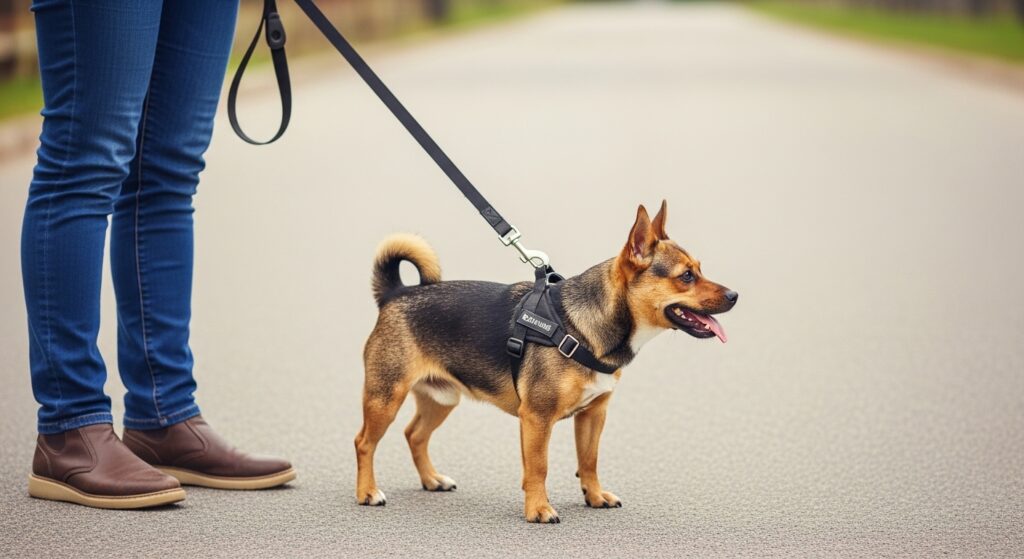
French Bulldog Leash Training Tips
Why good leash skills matter for your French Bulldog
A calm walk keeps your dog safe. It also keeps your arms safe. This sturdy breed is small but strong. A sudden pull can hurt the neck or back. Good leash habits prevent that. They also help your dog focus on you, not on cars, cats, or crowds.
These pups are short-nosed. Heat and stress can build fast. Smooth, steady walks keep breathing easy. With clear steps and kind rewards, you can teach great manners fast.
Set up the right gear
Harness over collar for a short-nosed dog
- Pick a soft, Y-shaped harness. It should not press on the throat.
- A front-clip point can cut pulling by turning the body back to you.
- A back-clip is fine if your dog already walks well.
- Make sure two fingers can slide under the straps. No rubbing in the armpits.
Leash length and style
- Use a 4–6 foot flat leash. It gives control without tangles.
- Skip retractable leashes while training. They teach pulling.
- Choose a comfy handle and a light clip. Keep it simple and safe.
Reward tools that work
- Tiny treats that your dog loves. Pea-sized or smaller.
- A treat pouch so you can pay fast.
- A clicker or a happy “Yes!” to mark good steps.
Seven-day starter plan
Short, fun work beats long drills. Train in calm spots first. Add harder places later.
| Day | Goal | Session length | Notes |
|---|---|---|---|
| 1 | Wear harness, take treats calmly | 3 x 3 minutes | Feed for standing by your left side |
| 2 | One step with you, then treat | 3 x 3 minutes | Mark each step at your side |
| 3 | Five steps in a row | 3 x 4 minutes | Feed after sets of steps |
| 4 | Loose leash in the yard | 3 x 5 minutes | Add turns; pay often |
| 5 | Walk past light sounds | 2 x 6 minutes | Start far from traffic |
| 6 | Short sidewalk walk | 2 x 8 minutes | Use front-clip if pulling starts |
| 7 | Mix cues and sniff breaks | 2 x 10 minutes | Pay for eye contact and nice turns |
Teach a steady walking spot
- Stand still. Hold a treat at your thigh. Let your dog come to your side.
- Mark and feed at your leg. Repeat. Name it “With me” if you like.
- Take one step. If the leash stays loose, mark and feed by your leg.
- Build to two steps, then five, then ten. Keep treats small and often.
- Turn left, right, and do slow stops. Pay for staying near your leg.
How to stop pulling
The stop-and-go method
- When the leash goes tight, freeze. Say nothing.
- Wait for slack. It may be one step back or a head turn.
- Mark the slack. Move forward again. Your dog learns, “Loose leash makes us go.”
The easy-turn reset
- If your dog leans hard, turn away in a smooth arc.
- Mark when they catch up at your side. Feed there.
- Do not jerk. Keep it calm and clear.
Use planned sniff breaks
- Say “Go sniff!” and give 20–30 seconds on a loose leash.
- Then say “Let’s go” and walk on. Pay for focus.
- Sniff time is a reward. Use it to earn more loose steps.
Breed-specific care while training
- Watch heat. Short-nosed dogs can overheat fast. Train in cool times. Bring water.
- Keep sessions short. Many small wins beat one long walk.
- Protect the neck. Use a harness to avoid throat pressure.
- Mind stairs and jumps. Joint strain can happen. Help with ramps when needed.
- Use gentle methods. No yanks, no prong, no choke. Pain can scare and harm breathing.
- Socialize with care. Start far from noise and dogs. Let your pup choose to look, then pay.
- Make it fun. These pups can be stubborn. Great treats and play spark effort.
Proof in real life
When to level up
- At least 10 loose steps in a quiet place? Add mild sounds.
- Can hold focus past a person? Try a calm dog at a distance.
- No pulling for two blocks? Try a new route.
Simple progress log
| Date | Place | Loose steps in a row | Pull count | Notes |
|---|---|---|---|---|
| ___ | Backyard | ___ | ___ | Add treats every 3 steps |
| ___ | Sidewalk | ___ | ___ | Front-clip helped a lot |
| ___ | Park path | ___ | ___ | More space from dogs |
Fix barking or lunging on walks
- See the trigger first. Step off the path to make space.
- Feed a stream of treats while the trigger is in view at a safe distance.
- When the trigger goes, treats stop. Your dog learns that calm watching pays.
- If your pup can’t take food, you are too close. Move back and try again.
Sample 20-minute city walk
Easy plan you can copy
- 2 minutes: Gear up check. Treat for standing by your side.
- 5 minutes: Quiet block. Pay every 3–5 steps.
- 2 minutes: Sniff break on cue.
- 5 minutes: Add two turns and a short stop-and-go drill.
- 3 minutes: Walk home, fewer treats, praise more.
- 3 minutes: Cool down inside. Water. Harness off. Gentle pet time.
Fast answers to common questions
- Best age to start? As soon as your puppy comes home. Keep it short and sweet.
- How long should a walk be? Many short walks, 10–20 minutes, are best for this breed.
- Front-clip or back-clip? Front-clip to reduce pulling. Back-clip for trained dogs.
- Night walks? Use a light or reflective gear. Pick lit routes.
- What if progress stalls? Go back to an easier place. Pay more often. Then try again.
Pro tips that boost results
- Train before meals. A slightly hungry dog works harder.
- Use high-value treats outdoors. Boiled chicken, cheese, or a special snack.
- Keep your hands low and close to your leg. This guides without pulling.
- Talk to your dog. A soft “Good” keeps them with you.
- End on a win. One clean loop around the block is better than a long, messy walk.
With kind steps, smart gear, and short sessions, your buddy can learn to walk well. Stay patient. Pay often. Breathe with your dog. Soon, you will enjoy quiet, happy walks together.
Choosing the Right Harness and Leash for French Bulldogs
French Bulldogs have big chests, short necks, and flat faces. The gear you pick must protect the airway and spread pressure across the body. The right harness and leash help your dog walk easy, learn fast, and stay safe in busy streets.
Fit comes first for a flat-faced body
- Keep pressure off the neck. A harness is safer than a collar on this breed.
- Use a Y-shaped front that sits low on the chest bone, not on the throat.
- Let the shoulders move free. Straps should not cross over the shoulder blades.
- Check for rub under the armpits. Short coats can chafe fast.
- Use the two-finger rule. Slide two fingers under each strap. It should be snug, not tight.
- Watch for cough, gag, or heavy pant. If you see it, stop and re-fit.
Measure in minutes
- Chest girth: Wrap a soft tape around the widest part behind the front legs.
- Neck base: Measure low at the base, not up by the jaw.
- Body length: From the base of the neck to the start of the tail (for vest style fits).
- Weight: Use only as a backup. Chest fit matters more.
Stand your dog on level ground when you measure. Take each measurement twice to be sure.
Harness styles that work well
| Type | Best for | Pros | Watch-outs |
|---|---|---|---|
| Y-front with front + back clip | Daily walks, pull control | Protects neck, guides chest, flexible training | Fit must avoid armpit rub |
| Step-in | Dogs who dislike gear over the head | Easy to put on, low fuss | Some sit too low and can rotate |
| Vest (breathable) | Small or sensitive skin | Even pressure, padded comfort | Can trap heat if fabric is not airy |
| Back-clip only | Calm walkers | Simple, less chance of strap tangles | Can fuel pulling in strong dogs |
| Head halter | Not advised for this breed | — | Can stress neck and face; avoid for flat faces |
Key features to look for
- Front and back D-rings for training options.
- Four or more adjust points for a custom fit.
- Padded straps at chest and belly.
- Breathable mesh or lined webbing to limit heat and rub.
- Quick-release buckles; metal hardware on stress points.
- Reflective trim for low light.
- Escape-resistant design with a belly strap behind the rib cage if your dog backs out.
Leash choices that help without strain
| Material/Type | Grip feel | Weather/Cleaning | Strength | Notes |
|---|---|---|---|---|
| Nylon (standard) | Light, easy | Dries fast | Good | Great starter choice |
| Biothane | Slick but secure | Wipes clean; waterproof | Very strong | Ideal for rain and mud |
| Leather | Soft with break-in | Needs care | High | Durable and comfy in hand |
| Rope (climbing style) | Solid, round | Easy care | High | Often includes a traffic handle |
| Retractable | Variable | N/A | Varies | Not ideal for training; can teach pulling |
Length and width
- Length: 4–6 ft for city walks and training. This keeps control and slack.
- Width: 5/8 in for puppies, 3/4–1 in for adults.
- A short “traffic handle” near the clip helps in crowds.
Clips and hardware
- Use a strong snap like a trigger or locking carabiner.
- Swivel at the clip stops twists.
- Check stitching and rivets often.
Simple fit test and adjustment
- Place the harness. Align the chest plate centered and low.
- Adjust each strap. Keep even tension left and right.
- Do the two-finger check on neck, chest, and belly.
- Clip to the front ring first if your dog pulls.
- Walk inside for two minutes. Watch stride and skin contact.
- After the first outdoor walk, check for red spots or hair wear.
Puppy and adult needs
Puppies
- Pick light gear with soft edges.
- Choose a harness with room to adjust for growth.
- Use a 6 ft leash to teach calm, close walking.
- Keep tags on a separate, loose collar.
Adults and strong pullers
- Choose a Y-front with a front clip to guide the chest.
- Use wider straps to spread force.
- A rope or leather leash offers steady grip when you need control.
Care, comfort, and safety
- Rinse salt, sand, and dirt after walks. Clean gear stops skin rub.
- Air-dry away from heat to protect padding.
- Check for wear weekly: frays, loose seams, bent buckles.
- Avoid heavy fabrics on hot days. Walk at cool times to protect a flat face.
- Use reflective trim or a clip-on light at dusk.
Gear that supports calm walking
Good gear makes teaching easier. Here are quick French Bulldog leash training tips that pair with your new setup:
- Keep sessions short. Five to ten minutes is great for focus and breath.
- Reward at your side. Mark and treat when the leash is loose near your knee.
- Stop when the leash goes tight. Wait, call back, reward calm, then move.
- Guide with the front clip. Do not yank. Use a gentle turn of the chest.
- Practice in low-distraction spots first, then add busy places.
Quick size guide (general)
| Chest girth (inches) | Approx. weight (lb) | Typical fit note |
|---|---|---|
| 16–20 | 12–18 | Young pups or petite frames |
| 20–24 | 18–28 | Most adult French Bulldogs |
| 24–28 | 28–35 | Stocky builds or wide chests |
Brand sizing varies. Always follow chest girth and adjust the harness to match your dog’s shape.
Final checks before you head out
- Front ring clipped for pull control? Back ring for relaxed walks? Choose based on the plan.
- Leash length right for your area? Use 4–6 ft for streets.
- ID tags on and readable? Microchip up to date?
- Treats and poop bags packed? You are ready.
With the right harness and leash, you protect the neck, reduce pull, and set up smooth, happy walks. Pair smart gear with steady rewards and simple French Bulldog leash training tips, and your dog will learn to stroll by your side with ease.
Step-by-Step Loose-Leash Walking Routine for Short-Nosed Breeds
French Bulldog Leash Training Tips for Calm, Loose Walks
Your dog can learn to stroll by your side without pulling. These French Bulldog Leash Training Tips keep the walk easy and safe for short-nosed dogs. You will use clear steps, simple cues, and smart gear. You will also protect your pup from heat and stress.
Know Your Dog’s Needs
- Short noses can make breathing hard during exercise. Watch your dog’s chest and tongue.
- Keep sessions short. Many quick reps beat one long walk.
- Choose cool times of day. Shade is your friend.
- Let your dog sniff. Sniff time lowers stress and keeps the leash loose.
Gear That Helps Short-Nosed Dogs
- Use a well-fitted Y-front harness. It keeps the airway clear and spreads pressure on the chest.
- Pick a 4–6 foot flat leash. Skip retractable leashes for training.
- Bring pea-size treats. Use soft, high-value food your dog loves.
- Add a treat pouch so you can pay fast when your dog walks by your side.
| Item | Why It Helps Short-Nosed Dogs | Quick Note |
|---|---|---|
| Y-front harness | Reduces neck pressure and supports easy breathing | Fit snug; two fingers under straps |
| Flat leash (4–6 ft) | Gives clear, steady feedback | Avoid retractables during training |
| Soft treats | Fast to eat; less panting | Pea-size pieces |
| Water + collapsible bowl | Prevents overheating | Offer sips often |
Marker, Cue, and Treat Placement
- Choose a marker word like “Yes!” Say it the instant the leash is slack.
- Hold treats at your seam line (by your hip). Pay at that spot so your dog learns the place to be.
- Pick a start cue like “Let’s go.” Use a release cue like “Free” for sniff breaks.
Start Indoors: Build the Loose-Leash Habit
- Stand still. When your dog looks at you or the leash is slack, say “Yes!” and feed at your side.
- Take one step. If the leash stays loose, mark and feed at your side.
- Add a few more steps. Keep the rate of pay high. Many easy wins keep your dog close.
- Turn left and right. Reward when your dog turns with you.
- Practice short sets: 3 sets of 30–60 seconds, 2–3 times a day.
Level Up in a Quiet Area
- Move to your yard, garage, or a calm sidewalk.
- Say “Let’s go,” take 3–5 steps, and mark every two steps at first.
- If the leash tightens, stop like a tree. Wait for slack, mark, and pay at your side. Then move again.
- Mix in easy turns and brief “Free” sniff breaks so your dog does not feel trapped.
Street-Ready Steps for Loose Leash
- Warm-up: 30 seconds of easy side walking in the driveway. Pay often.
- Go-time: Walk 6–10 steps. If the leash is slack, mark and pay. Repeat.
- Handle pulling: stop, breathe, and wait. When your dog turns back or the leash loosens, mark, pay at your side, and go.
- Turn trick: If your dog forges ahead, gently turn 90–180° and walk the other way. Mark when your dog catches up.
- Sprinkle sniff breaks: “Free” for 20–30 seconds near safe spots. Then “Let’s go.”
- Keep sessions short: 5–12 minutes, then rest in shade.
Heat and Safety for Short-Nosed Breeds
- Walk at dawn or dusk on warm days.
- Stick to cool ground. Test pavement with your hand.
- Watch for red flags: wide tongue, loud snoring breath, lagging, or glazed eyes.
- Stop at the first sign of stress. Offer water. Rest.
| Temp (°F) | Max Active Time | Safety Notes |
|---|---|---|
| Below 65 | 10–15 min sets | Light coat may be needed if windy |
| 65–75 | 8–12 min sets | Water every 5–7 min |
| 75–85 | 5–8 min sets | Seek shade; shorten pace |
| 85+ | Indoor training only | High risk for short-nosed dogs |
Fix Common Leash Problems
- Pulled to a smell: stop, wait for slack, then “Free” to sniff for 10–20 seconds. Your dog learns that loose leash earns sniff time.
- Lagging: lower the rate of pay gap; use higher-value treats; try a quicker, bouncy pace for 10–20 steps.
- Leash biting: swap the leash for a tug toy at home. Teach “Take it” then “Drop.” Outside, redirect to a sit and pay calmly.
- Excited at dogs or people: step off the main path, feed a treat scatter on the ground, and let the trigger pass while your dog sniffs.
Winning Routine You Can Follow
- Day 1–3: 3 indoor sets daily. 30–60 seconds each. Mark and pay often.
- Day 4–6: Quiet yard or hallway. Add turns and short “Free” breaks.
- Day 7–10: Calm street. Use stop-and-stand any time the leash tightens.
- After Day 10: New routes, new smells, same rules.
Reward Plan and Fading Treats
- Week 1: mark every 1–2 steps.
- Week 2: mark every 3–5 steps plus for check-ins.
- Week 3: random rewards. Keep a high rate near big distractions.
- Always pay well for tough moments (passing dogs, busy corners).
Pro-Level Tips for Short-Nosed Dogs
- Use a “Check-in” cue. Say the cue, tap your thigh, reward eye contact at your side.
- Practice in shade loops. Walk a short loop with built-in rest stops.
- Count your steps. Build to 10 calm steps, then 20, then 30.
- Keep your arm by your side. Move with your hips, not with pulling.
Why These French Bulldog Leash Training Tips Work
Clear cues, good timing, and safe gear make learning fast. Short sessions protect your dog’s airway and joints. You build focus with fair rewards. Your dog learns that a loose leash makes the world open up. These French Bulldog Leash Training Tips help you enjoy calm walks today and for years to come.
Solving Pulling, Lunging, and Stubborn Moments on Walks
French Bulldog Leash Training Tips that make every walk easier
You love your Frenchie. You want calm, happy walks. The good news: you can get there. These French Bulldog Leash Training Tips show you how to guide your dog, even when things get busy or loud. Use short steps. Keep it fun. Reward the good. You will see change fast.
Set up for success before you step outside
French Bulldogs are stocky and strong. A collar pulls on the neck and can be risky. A well-fit harness is safer. Pick calm routes at first. Keep sessions short. Five to ten minutes is great for day one.
🐾 Top French Bulldog Resources I Trust
🐶 Here are my go-to tools for raising a happy, healthy Frenchie—from managing breed-specific health risks to unlocking that famously “stubborn” personality with patience and understanding. These vetted partners have helped me (and thousands of Frenchie parents) save money, reduce stress, and build a joyful bond with our wrinkly companions!
If your French bulldog struggles with barking or lunging on walks, a structured training program can make a big difference. One popular option is a step-by-step reactivity training webinar that focuses on calm, force-free methods.
👉 Click here to discover how calmer, happier walks with your Frenchie can start today.
Best Pet Insurance
Frenchies face costly breed-specific risks like breathing issues, IVDD, and skin fold infections. Compare vet-trusted insurers offering guaranteed lowest rates + fastest claims—so you’re never forced to choose between your wallet and your pup’s wellbeing.
👉 Get a Free Frenchie Insurance Quote
Disclosure: This page contains affiliate links. As an affiliate, I may earn a small commission from qualifying purchases at no extra cost to you. I only recommend programs I’ve researched thoroughly and believe will genuinely help French Bulldog owners.
| Gear | Why it helps Frenchies | Trainer note |
|---|---|---|
| Y-front harness (no-pull style) | Takes pressure off the neck and shoulders | Attach leash to front ring to reduce tugging |
| 4–6 ft flat leash | Gives room to move but keeps control | Avoid retractable leashes when training |
| Soft, smelly treats | Frenchies work hard for food | Pea-size bits; keep them handy at your hip |
| Clicker or marker word | Marks the exact moment your dog gets it right | Say “Yes!” if you don’t use a clicker |
| Treat pouch | Fast pay builds fast learning | Speed matters when your dog looks at you |
End tugging with simple, clear steps
This plan stops the habit before it grows. It also builds loose-leash walking as your dog’s new default.
- Start in a quiet space. Clip the leash to the front ring of the harness.
- Hold treats at your hip. Take one step. If the leash stays loose, mark and feed by your leg.
- If your dog forges ahead and the leash goes tight, stop. Plant your feet. Say nothing. Wait for slack.
- When the leash softens, mark and feed by your leg. Then move again.
- Build to two steps, then three, then five. Keep wins easy and quick.
Pro tip: Reward where you want your dog to be. Pay at your left or right thigh. Your dog will stick to that spot.
Help your dog choose calm over darting at triggers
Many Frenchies get excited by dogs, scooters, or birds. Teach choice skills. These give your dog something better to do than jump or surge.
- “Find it” scatter: Spot a trigger far away. Toss 5–7 treats on the ground. Say “Find it!” Nose work lowers arousal.
- “Look at that”: When your dog glances at the trigger from a safe distance, mark and treat. Looking calmly earns pay.
- Easy U-turn: Teach “This way!” at home. On walks, turn before your dog winds up. Reinforce after the turn.
- Use space: Cross the street or step behind a car. Distance turns a hard moment into a teachable one.
Short practice plan for calm choices
- Day 1–2: 5 reps of “Find it” in your yard or hall.
- Day 3–4: “Look at that” with a low-level trigger at a distance.
- Day 5–7: Add “This way!” turns on quiet blocks.
Unlock movement when your dog freezes or refuses
What looks “stubborn” is often stress, confusion, or fatigue. It can also be pain. Help your dog feel safe and clear.
- Check comfort: Heat, cold, or tight gear can stop a Frenchie in place. Fix the cause first.
- Use a hand target: Hold your palm low. When your dog touches it with their nose, mark and treat. Take one step. Repeat.
- Reward tiny tries: One step earns pay. Two steps earn more. Little wins stack up.
- Offer choice: Add planned sniff breaks. Cue “Go sniff,” then “Let’s go” to move on.
Handle power without stress
- Hold with two hands: One hand near the clip, one at your belly. This stance absorbs a sudden burst.
- Keep slack shaped like a “J”: Tight lines create more pulling.
- Skip harsh tools: No prongs or choke chains. French Bulldog necks are short and sensitive.
Motivation that fits a Frenchie
Make rewards high value. Use them often at first. Then fade slowly as your dog learns.
- Food: Use soft treats like chicken, cheese, or a tube of dog-safe paste.
- Life rewards: Sniffing, greeting a friend, or reaching a tree can be the prize for a loose leash.
- Play: A short tug with a soft toy can reset focus.
These French Bulldog Leash Training Tips work best when you pay fast for calm choices and walking by your side.
Weekly roadmap you can follow
| Day | Focus | Reps/Time | Goal |
|---|---|---|---|
| Mon | Loose-leash steps indoors | 2–3 sessions, 5 min each | 3–5 calm steps for pay |
| Tue | Loose-leash in the yard | 2 sessions, 8 min each | 5–7 calm steps |
| Wed | “Find it” + easy U-turns | 2 walks, 10 min each | Turn before arousal spikes |
| Thu | “Look at that” at distance | 1–2 short strolls | Calm glance earns rewards |
| Fri | Mix skills on a quiet block | 12–15 min | Loose leash 60% of steps |
| Sat | New route, low distractions | 15 min | Loose leash 70% of steps |
| Sun | Rest or sniff walk only | 10–20 min | Decompress and keep joy |
Common mistakes to avoid
- Walking too long too soon. Short and sweet wins.
- Paying late. Mark and reward the moment the leash is loose.
- Pushing into triggers. Use space and plan exits.
- Only using food. Mix in sniff time and play.
- Skipping rest. Frenchies tire fast; keep breaks often.
Keep walks joyful and safe
Stay calm. Breathe. Practice a little every day. These French Bulldog Leash Training Tips give you a clear plan. With the right gear, smart rewards, and simple steps, your dog will walk with you, not against you. You will both enjoy the path ahead.
Safety, Weather, and Health Considerations for Outdoor Walks
French Bulldog Leash Training Tips for Safe Outdoor Time
Your Frenchie loves a good stroll, but safety comes first. With the right plan, gear, and routine, you can protect your dog in every season. These French Bulldog leash training tips keep walks calm, fun, and safe while guarding against heat, cold, and health risks.
Choose the right gear
- Use a well-fitted, Y-shaped harness. It keeps pressure off the neck and lets your dog breathe easier.
- Pick a 4–6 ft leash for control. Skip retractable leashes on streets and busy parks.
- Add ID tags and a microchip. A bright collar or reflective trim helps at dawn and dusk.
- Carry a soft, collapsible water bowl. Bring high-value treats for training on the move.
- In low light, use a clip-on LED. You will see your dog, and drivers will see you.
Plan your route
- Choose shaded paths and quiet streets. Avoid long hills and long flights of stairs.
- Walk on grass or smooth paths when hot. Metal grates and blacktop can burn paws.
- Skip crowded dog areas if your dog is still learning. Space lowers stress and pulling.
- Map short loops near home. You can stop early if your dog tires or the weather shifts.
Weather rules for short-nosed dogs
Frenchies have a flat face. They overheat fast and lose heat slowly. Use this quick guide to plan safe walk times and length.
| Temp (°F/°C) | Risk | Best Time | Max Time | Tips |
|---|---|---|---|---|
| < 50°F / < 10°C | Cool | Midday | 20–30 min | Add a sweater if your dog shivers. Dry paws after. |
| 50–68°F / 10–20°C | Comfy | Morning or evening | 30–40 min | Normal pace. Offer water breaks. |
| 68–75°F / 20–24°C | Caution | Early AM or late PM | 15–20 min | Use shade. Watch breathing and tongue size. |
| 75–82°F / 24–28°C | High risk | Dawn only | 5–10 min | Stick to grass. Carry water. Keep it short. |
| > 82°F / > 28°C | Skip | Indoors | 0 | Do indoor games and training instead. |
Humidity matters. If humidity is over 60%, treat the day as one level hotter than the table shows.
- Winter tip: Salt and ice can hurt paws. Rinse and dry after walks. Use balm or booties if needed.
- Summer tip: Test the ground. If you cannot hold your hand on it for 7 seconds, it is too hot for paws.
Pace, duration, and rest
- Use short walk blocks. Try 3 minutes of slow walking, then a 30–60 second sniff break.
- Let your dog sniff. It lowers stress and reduces pulling.
- Keep a steady, easy pace. No jogs in warm weather for a French Bulldog.
- Add one or two minutes per week if your dog does well. Do not rush.
Health checks before, during, and after
- Pre-walk: Look at nostrils, eyes, paws, and nails. If breathing is noisy at rest, keep it very short.
- On the walk: Watch for hard panting, wide tongue, drool, wobble, or slowing down. These are early danger signs.
- Post-walk: Check paw pads for cracks or cuts. Note any cough, gag, or blue or very red gums.
If you see heat stress signs, act fast: move to shade, offer cool (not ice-cold) water, wet the chest, belly, and groin with cool water, and fan. Call your vet at once.
Training steps that boost safety
These French Bulldog leash training tips build control and keep your dog safe around roads, people, and other dogs.
- Fit check: Place two fingers under the harness straps. It should be snug, not tight.
- Calm start: Ask for a sit before you open the door. Reward calm. If your dog surges, close the door and reset.
- Name game: Say your dog’s name. When they glance at you, mark “Yes!” and treat. Do 5–10 reps indoors, then on the sidewalk.
- Loose-leash cue: Hold the leash short but soft. Treat near your thigh as you step. Feed low and at your side to shape a close walk.
- Stop-go rule: If your dog pulls, stop. Stand still. When the leash loosens, say “Let’s go,” then move and reward two steps later.
- Turn skills: Use “This way!” and make a smooth U-turn before tension builds. Reward when your dog follows.
- Leave it: Start with food in a closed hand. When your dog backs off, mark and pay with a better treat from the other hand. Use this for street food, trash, and dropped meds.
- Roadside pause: Before crossing, ask for a sit at the curb. Treat after you step off and your dog follows on a loose leash.
Practice in layers: first at home, then the yard, then a quiet street, then a busier block, and finally the park. Keep sessions short and upbeat.
Meeting people and other dogs
- Advocate for space. A smile and “We need room, thanks!” works well.
- No greetings on a tight leash. Tension can spark trouble.
- Teach a hand target (“Touch”). Ask your dog to touch your palm and follow you past distractions.
- Watch the tail, ears, and body. If your dog freezes, turns away, or licks lips a lot, give more distance.
Special health needs to keep in mind
- Flat face means less airflow. Avoid heat and hard runs.
- Neck care: Always use a harness, not a collar, for leash pressure.
- Back safety: Help your dog off high curbs and steps. No jumping in and out of cars.
- Allergies are common. Wipe paws and belly after grass to cut itch and sneezes.
Essential walking kit
- Fitted Y-harness and 4–6 ft leash
- Poop bags and a holder
- Water, bowl, and high-value treats
- Cooling cloth in warm months; sweater or vest in cold months
- Paw balm or booties if streets are rough or salted
- Phone with vet contact and a map app
- Small first-aid gear: gauze, tape, saline, and a tick remover
Quick emergency plan
- Overheating: Shade, water, cool wet cloths on chest and groin, fan air, call your vet now.
- Paw injury: Rinse with saline, wrap with gauze, keep weight off, head home.
- Collapse or trouble breathing: Keep the head and neck straight, cool the body, seek urgent care.
Putting it all together
Set clear walking rules. Use gentle gear. Follow weather limits. Reward good choices. These French Bulldog leash training tips protect your dog’s body and mind, so every walk stays safe, short, and sweet.
Conclusion
You now have a clear plan to make walks calm, safe, and fun. These French Bulldog Leash Training Tips keep your pup’s body and mind in mind. Choose a front-clip harness that fits snug, with soft straps, and a flat, 4–6 foot leash. Skip retractable leashes. Check fit with the two-finger rule, and watch for rubbing on the chest and armpits.
Use a simple, step-by-step loose-leash walking routine. Start in a quiet spot. Reward your dog for staying by your side. If the leash goes tight, stop. Be a tree. When the leash softens, move again. Add turns and short pauses. Keep sessions short for this flat-faced breed. End on a win.
For pulling, lunging, or stubborn moments, lower the bar. Create space from triggers. Use high-value treats and a clear cue like “Let’s go.” Teach “Watch me” and “Leave it.” Give sniff breaks as a reward for calm steps. Your dog is not being bad; they are telling you they need help. Meet that need with distance, timing, and rewards.
Put safety first. Walk in cool parts of the day. Heat and high humidity are risky for short-nosed dogs. Bring water. Skip hard runs, steep hills, and long stairs. Check paws and harness points after each walk. Use lights or reflective gear in low light. If you hear loud snoring or see blue gums, stop and call your vet.
Stay patient and keep records of your progress. Small wins stack up. With steady practice, your Frenchie will learn to walk with you, not pull against you. That builds trust, comfort, and joy on every outing.