
Last updated: January 15, 2026
Picture this: you’ve just brought home your adorable French Bulldog puppy, and within hours, you’re cleaning up the third accident of the day. Sound familiar? The good news is that with the right French Bulldog House Training Steps, your Frenchie can become a house training success story. French Bulldogs are intelligent, routine-loving dogs that respond well to consistent training methods, making house training achievable for any dedicated owner.
Key Takeaways
• Start house training your French Bulldog at 8 weeks old with a consistent daily schedule
• Take your Frenchie outside every 2 hours and immediately after meals, naps, and play sessions
• Use positive reinforcement exclusively—reward success immediately and never punish accidents
• Watch for pre-accident signals like sniffing, circling, and restlessness to prevent mishaps
• Expect the house training process to take 4-6 months with consistent effort and patience
Quick Answer
French Bulldog house training requires establishing a consistent schedule, taking your puppy outside every 2 hours (especially after meals and naps), using positive reinforcement for successful outdoor elimination, and maintaining patience throughout the 4-6 month process. Success depends on consistency, immediate rewards, and understanding your Frenchie’s unique behavioral cues.
When Should You Start French Bulldog House Training Steps?
Start house training your French Bulldog puppy at 8 weeks old, as this is when they can begin learning basic routines and developing bladder control. Puppies younger than 8 weeks lack the physical development and cognitive ability to understand house training concepts.
Optimal starting conditions include:
• Puppy is at least 8 weeks old
• You have 2-3 weeks of consistent schedule availability
• All family members understand the training approach
• You’ve puppy-proofed your home and designated potty areas
Age-specific expectations:
- 8-12 weeks: Accidents every 1-2 hours, need constant supervision
- 3-4 months: Can hold bladder for 3-4 hours during day
- 5-6 months: Most puppies achieve basic house training success
- Adult dogs: Can learn house training but may take longer to break established habits
Choose to start immediately after bringing your puppy home if you can maintain consistency. Waiting longer only allows bad habits to form, making the process more challenging.
What Daily Schedule Works Best for French Bulldog House Training Steps?
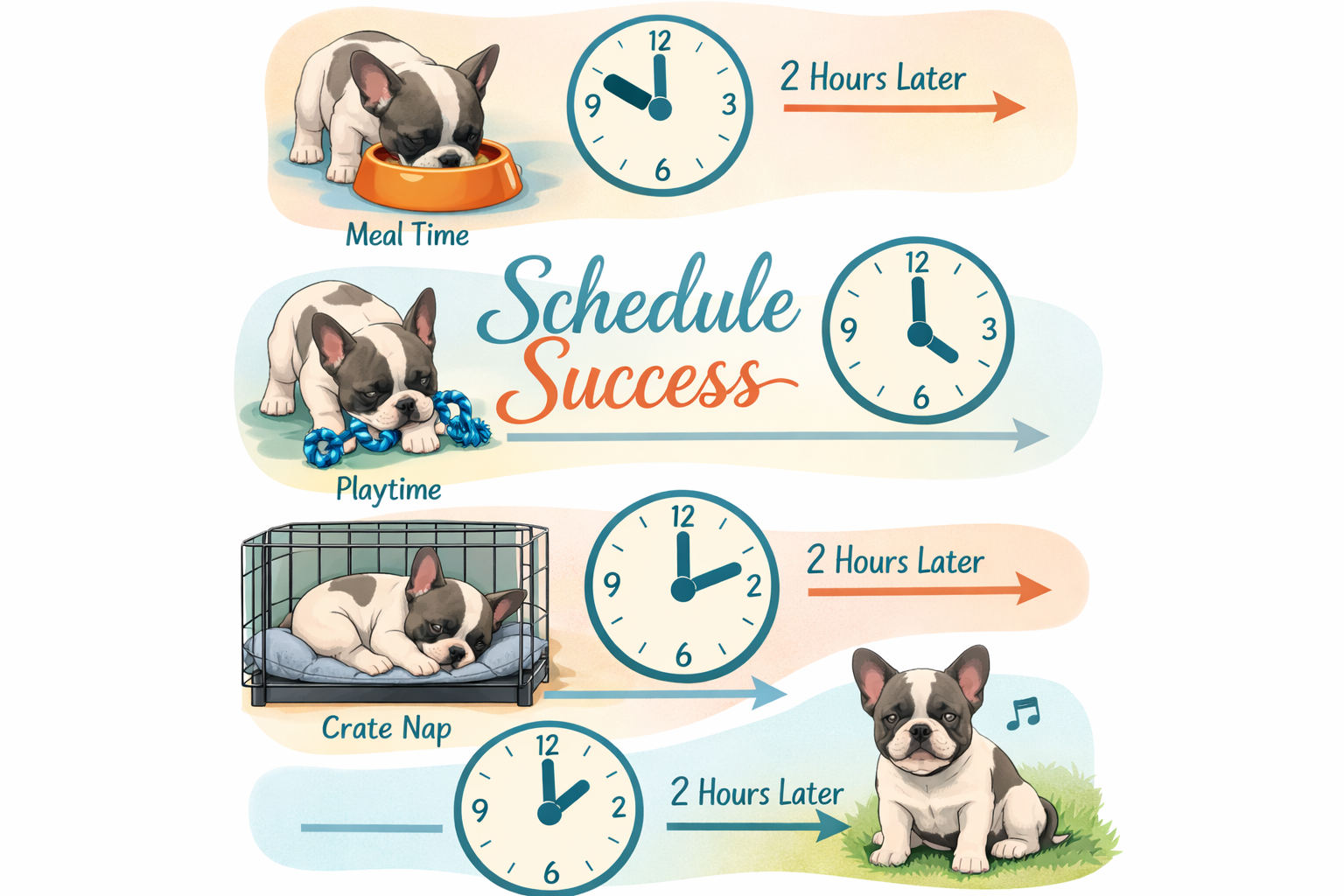
A structured daily routine is essential for French Bulldog house training success because Frenchies are creatures of habit who thrive on predictability. Your schedule should include potty breaks every 2 hours, with additional breaks after specific activities.
Sample daily schedule:
- 6:00 AM: Wake up, immediate potty break
- 6:30 AM: Breakfast, then outside within 15 minutes
- 8:00 AM: Potty break before work/activities
- 10:00 AM: Mid-morning potty break
- 12:00 PM: Lunch and immediate potty break
- 2:00 PM: Afternoon potty break
- 4:00 PM: Post-nap potty break
- 6:00 PM: Dinner and potty break
- 8:00 PM: Evening potty break
- 10:00 PM: Final potty break before bed
Key timing rules:
• Take puppy outside within 15 minutes after meals
• Always go out immediately after naps
• Schedule breaks after play sessions
• Limit water intake 2 hours before bedtime
Consistency matters more than perfection. If you miss a scheduled break, don’t abandon the routine—just resume at the next opportunity. For more comprehensive guidance on establishing routines, check out our French Bulldog training tips for beginners.
How Do You Recognize Pre-Accident Warning Signs?
Learning to read your French Bulldog’s body language prevents accidents and creates more training opportunities. Most puppies show clear behavioral cues 30-60 seconds before eliminating.
Primary warning signs:
• Sniffing the ground intensely while walking in circles
• Restlessness or pacing near doors or in specific areas
• Whining or barking while looking toward the door
• Sudden stopping during play to focus on sniffing
• Returning to previous accident spots with intent
Immediate action steps:
- Say “Outside!” in an upbeat voice
- Quickly but calmly guide puppy to the door
- Carry small puppies to prevent accidents en route
- Stay outside until elimination occurs
- Reward success immediately with praise and treats
Common mistake: Rushing or showing anxiety when you notice warning signs. Your puppy will pick up on your stress, which can inhibit their natural elimination process.
FYI: Some links in this article may be affiliate links, which means I may earn a small commission at no extra cost to you.
If your Frenchie tends to get anxious or reactive during training sessions, you might find it helpful to explore structured approaches that focus on building calm, focused behavior. This can be particularly useful for creating positive associations with outdoor time and reducing stress-related accidents.
What Are the Essential French Bulldog House Training Steps?

The core house training process follows a simple but strict sequence that must be repeated consistently for 4-6 months. Success depends on following each step without shortcuts or modifications.
Step 1: Establish the routine
• Set alarms for every 2-hour potty breaks
• Use the same door and route to the designated potty area
• Choose a specific outdoor spot for elimination
• Use a consistent command phrase like “Go potty”
Step 2: Supervise constantly
• Keep puppy in the same room as you
• Watch for warning signs continuously
• Use baby gates to limit access to other areas
• Never leave puppy unsupervised for more than 30 minutes
Step 3: Reward success immediately
• Praise enthusiastically the moment elimination begins
• Give high-value treats within 3 seconds of completion
• Use the same praise words each time (“Good potty!”)
• Stay outside until the puppy finishes completely
Step 4: Handle accidents properly
• Clean accidents immediately with enzymatic cleaner
• Never scold or punish—simply clean and move on
• Increase supervision if accidents become frequent
• Review your schedule for missed opportunities
Step 5: Gradually increase freedom
• Add 15 minutes between potty breaks each week after month 3
• Expand supervised area access slowly
• Maintain consistent routine even as intervals lengthen
For additional support with the foundational training approach, our complete guide to potty training French Bulldogs provides detailed troubleshooting strategies.
How Should You Use Positive Reinforcement in French Bulldog House Training Steps?
Positive reinforcement is the only effective method for house training French Bulldogs, as punishment creates anxiety and confusion that actually slows the learning process. Your reward system must be immediate, consistent, and valuable to your puppy.
Effective reward timing:
• Start praising during elimination, not after
• Give treats within 3 seconds of completion
• Use your happiest, most excited voice
• Continue praising for 10-15 seconds after success
High-value reward options:
• Tiny training treats (pea-sized pieces)
• Verbal praise in an excited, happy tone
• Brief play session with a favorite toy
• Gentle petting and attention for calm puppies
Reward consistency rules:
- Every successful outdoor elimination gets rewarded
- Use the same praise words each time
- Keep treats in your pocket during all potty breaks
- Never skip rewards, even for quick successes
What never to do:
• Don’t punish accidents—this creates fear and confusion
• Don’t reward indoor elimination, even on training pads
• Don’t delay rewards while cleaning up or talking
• Don’t use punishment-based methods like rubbing nose in accidents
Common mistake: Inconsistent reward timing. If you sometimes reward success and sometimes forget, your puppy won’t understand what behavior you want repeated.
For more detailed information on effective reward strategies, explore our guide on positive reinforcement training for French Bulldogs.
What Role Does Crate Training Play in French Bulldog House Training Steps?
Crate training serves as a valuable supplement to house training because dogs naturally avoid soiling their sleeping area. However, the crate must be properly sized and introduced gradually to be effective.
Proper crate setup:
• Size: Large enough to stand, turn around, and lie down comfortably
• Too large: Puppy may eliminate in one corner and sleep in another
• Location: Quiet area where family spends time, not isolated
• Comfort: Soft bedding, favorite toy, and water access
Crate training schedule integration:
- Use crate during unsupervised periods (maximum 3-4 hours for puppies)
- Always take puppy directly outside after crate time
- Never use crate as punishment for accidents
- Gradually increase crate time as puppy matures
Crate training timeline:
• Week 1-2: 30-minute intervals with door open
• Week 3-4: 1-2 hour periods with door closed
• Month 2-3: 3-4 hour periods during work/sleep
• Month 4+: Can handle longer periods as needed
Signs crate training isn’t working:
- Puppy eliminates in crate regularly
- Excessive whining or destructive behavior
- Crate is too large or too small
- Puppy hasn’t been properly introduced to crate space
Choose crate training if you need to leave your puppy unsupervised regularly. Skip it if someone is always home to provide direct supervision. For comprehensive crate training guidance, see our French Bulldog crate training guide.
What Common Mistakes Slow Down French Bulldog House Training Steps?
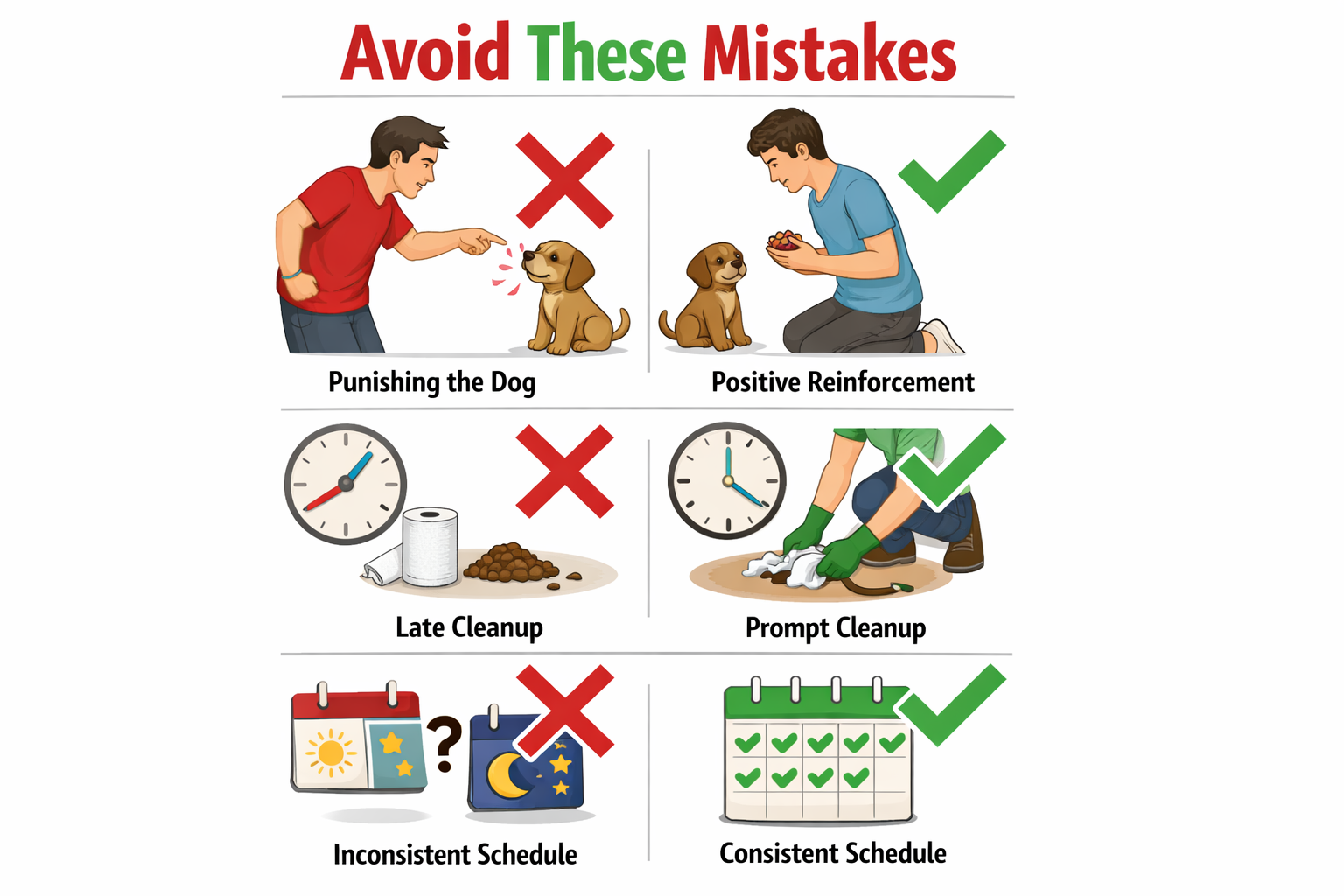
Several common mistakes can extend the house training process from 4-6 months to 8-12 months or longer. Avoiding these errors keeps your training on track and prevents frustration for both you and your puppy.
Timing mistakes:
• Inconsistent schedule: Missing regular potty breaks confuses your puppy’s developing routine
• Late rewards: Waiting more than 5 seconds to reward success reduces learning effectiveness
• Delayed cleanup: Leaving accident scents encourages repeat elimination in the same spot
Supervision errors:
• Too much freedom too soon: Allowing unsupervised access to multiple rooms before house training is complete
• Distracted supervision: Being in the same room but not actively watching for warning signs
• Inconsistent family approach: Different family members using different commands or rules
Punishment-related mistakes:
• Scolding accidents: Creates anxiety that actually increases accident frequency
• Rubbing nose in mess: Old-fashioned method that damages trust and slows learning
• Showing frustration: Puppies pick up on your emotions and become stressed
Environmental mistakes:
• Inadequate cleaning: Using regular cleaners instead of enzymatic cleaners leaves scent markers
• Multiple potty areas: Confusing puppy by changing outdoor elimination spots
• Indoor backup options: Using pee pads can slow outdoor house training progress
Schedule mistakes:
• Weekend inconsistency: Maintaining weekday schedule but relaxing rules on weekends
• Vacation disruption: Traveling without maintaining established routines
• Seasonal adjustments: Failing to adapt schedule for weather or daylight changes
Recovery strategy: If you’ve made these mistakes, don’t restart completely. Simply identify which errors you’re making and correct them moving forward. Consistency from this point matters more than past inconsistencies.
How Long Does French Bulldog House Training Take?
Most French Bulldogs achieve basic house training success within 4-6 months of consistent training, though individual timelines vary based on age, consistency, and individual personality. Understanding realistic expectations prevents frustration and helps you stay committed to the process.
Typical timeline milestones:
• Month 1: Learning routine, frequent accidents (every 1-2 hours)
• Month 2: Recognizing outdoor elimination spots, fewer accidents
• Month 3: Beginning to signal when they need to go out
• Month 4: Reliable during supervised periods
• Month 5-6: Achieving independence with minimal supervision
Factors that speed up training:
- Starting at 8 weeks old vs. older puppies
- Consistent daily schedule without exceptions
- Immediate reward timing for all successes
- Constant supervision during training period
- Single-family approach vs. multiple training styles
Factors that slow down training:
- Inconsistent schedule or multiple caregivers
- Punishment or negative reactions to accidents
- Medical issues affecting bladder control
- Previous bad habits from poor early training
- Stressful environment or major household changes
Age-specific expectations:
• 8-16 weeks: Expect accidents every 1-2 hours, need constant supervision
• 4-6 months: Most puppies achieve daytime reliability
• 6-12 months: Nighttime control and full independence
• Adult rescues: May take 6-8 months to unlearn previous habits
When to seek help: Contact a professional trainer if your puppy shows no improvement after 3 months of consistent training, has frequent accidents despite following the schedule, or develops anxiety around elimination. For guidance on professional training timelines, check our article on how long it takes to train a French Bulldog.
How Do You Handle Setbacks and Accidents?
Setbacks are normal parts of the house training process, and how you handle them determines whether they become temporary hiccups or permanent problems. Most puppies experience regression periods around 4-5 months old due to growth spurts and hormonal changes.
Immediate accident response:
- Stay calm: Don’t react with frustration or anger
- Clean immediately: Use enzymatic cleaner to eliminate scent markers
- Assess the cause: Was it a missed schedule, warning sign, or supervision lapse?
- Adjust accordingly: Increase supervision or shorten intervals between breaks
- Resume routine: Don’t change your entire approach based on one accident
Common setback triggers:
• Growth spurts: Rapid physical development can temporarily affect bladder control
• Schedule changes: Daylight saving time, work schedule shifts, or travel
• Stress factors: New pets, moving, visitors, or household changes
• Medical issues: Urinary tract infections, digestive upset, or medication side effects
• Weather changes: Reluctance to go outside in rain, snow, or extreme temperatures
Regression management strategies:
- Return to more frequent potty breaks temporarily
- Increase supervision level back to early training intensity
- Review and reinforce basic commands and routines
- Consider crate training if not already implemented
- Rule out medical causes with veterinary consultation
When setbacks indicate bigger problems:
• Accidents increase rather than decrease over time
• Puppy shows signs of pain or discomfort during elimination
• Complete loss of previously learned behaviors
• Anxiety or fear around outdoor elimination
• Accidents occur immediately after successful outdoor trips
Recovery timeline: Most setbacks resolve within 1-2 weeks of returning to stricter supervision and schedule adherence. Permanent behavior changes usually indicate underlying issues that need professional attention.
Helpful Resource for Reactive or Anxious French Bulldogs
If your French Bulldog becomes anxious, reactive, or overly excited during house training sessions, this can significantly impact their learning progress. Some Frenchies develop stress-related elimination issues or become fearful of outdoor experiences, which complicates the house training process.
👉 Discover the Calm, Reactivity-Free Training Method for Happier Walks With Your French Bulldog
This gentle, structured training approach helps reactive dogs become calmer and more focused during outdoor time—reducing anxiety-driven accidents and building better confidence in new environments. The force-free techniques can be particularly helpful for French Bulldogs who get overwhelmed during house training or show signs of stress around elimination routines.
While not specifically designed for house training, the calm-building methods can create a more relaxed learning environment that supports your overall house training efforts. This can be especially useful if your Frenchie shows signs of anxiety, fear, or overexcitement that interfere with their ability to focus on elimination training.
Frequently Asked Questions
How often should I take my French Bulldog puppy outside?
Take your puppy outside every 2 hours, plus immediately after meals, naps, and play sessions. Puppies under 4 months may need breaks every 1-2 hours during active periods.
Can I use pee pads during French Bulldog house training?
Pee pads can confuse the house training process by teaching indoor elimination. Focus exclusively on outdoor training for faster, clearer results.
What should I do if my French Bulldog has an accident indoors?
Clean immediately with enzymatic cleaner, don’t punish or scold, and assess whether you missed warning signs or need to adjust your schedule.
How do I know if my French Bulldog needs to go outside?
Watch for sniffing, circling, restlessness, whining near doors, or returning to previous accident spots. Learn your individual dog’s specific signals.
Should I wake up my puppy at night for potty breaks?
Puppies under 4 months typically need one nighttime break. Set an alarm for 4-5 hours after bedtime, then gradually extend the interval as they mature.
What treats work best for house training rewards?
Use tiny, high-value treats like small pieces of chicken, cheese, or commercial training treats. Keep them pea-sized and immediately accessible during potty breaks.
How do I house train an adult French Bulldog?
Use the same methods as puppy training but expect a longer timeline (6-8 months) to overcome established habits. Consistency and patience are crucial.
What if my French Bulldog won’t eliminate outside?
Stay outside longer (up to 15 minutes), try different locations, ensure they’re comfortable with the surface, and make outdoor time positive with treats and praise.
Can weather affect French Bulldog house training?
Yes, French Bulldogs may resist going outside in extreme weather. Use covered areas, protective clothing, or briefly adjust schedule during severe weather.
When should I contact a professional trainer?
Seek help if you see no improvement after 3 months of consistent training, if accidents increase rather than decrease, or if your dog shows anxiety around elimination.
How do I clean house training accidents properly?
Use enzymatic cleaners specifically designed for pet accidents. Regular household cleaners don’t eliminate scent markers that encourage repeat elimination.
Should all family members follow the same house training rules?
Yes, consistency across all family members is crucial. Everyone should use the same commands, schedule, and reward system to avoid confusing your puppy.
Conclusion
Successfully implementing French Bulldog House Training Steps requires patience, consistency, and understanding of your Frenchie’s unique needs and personality. The key elements—establishing a routine, constant supervision, immediate positive reinforcement, and proper accident management—work together to create a comprehensive training approach that typically achieves success within 4-6 months.
Remember that every French Bulldog learns at their own pace, and setbacks are normal parts of the process. Focus on maintaining consistency in your schedule and approach rather than rushing toward an arbitrary timeline. Your Frenchie’s intelligence and desire to please will work in your favor as long as you provide clear, positive guidance.
Your next steps:
- Start immediately with a consistent 2-hour potty break schedule
- Prepare your supplies: enzymatic cleaner, high-value treats, and designated outdoor area
- Commit to 4-6 months of consistent supervision and schedule adherence
- Track progress by noting successful outdoor eliminations and accident frequency
- Stay patient through inevitable setbacks and regression periods
For additional support with your French Bulldog’s overall training journey, explore our comprehensive puppy training guide and discover the best training treats to keep your Frenchie motivated throughout the house training process.
With dedication and the right approach, your French Bulldog will become the well-trained, house-reliable companion you’ve envisioned. The investment in proper house training creates a foundation for a lifetime of happy coexistence in your home.
References
[1] French Bulldog Puppy Training 101 Essential Tips – https://www.joiipetcare.com/blogs/advice/french-bulldog-puppy-training-101-essential-tips
[2] Are French Bulldogs Easy To Train – https://www.woofz.com/blog/are-french-bulldogs-easy-to-train/
[3] Training Tips For A Well Behaved Frenchie – https://frenchieboxes.com/blogs/news/training-tips-for-a-well-behaved-frenchie
[4] Expert Tips For Training A French Bulldog Puppy – https://www.family-puppies.com/expert-tips-for-training-a-french-bulldog-puppy/
[5] How To Potty Train A French Bulldog A Step By Step Guide – https://happytailpuppies.com/blogs/news/how-to-potty-train-a-french-bulldog-a-step-by-step-guide
[6] French Bulldog Puppy Training Timeline – https://www.akc.org/expert-advice/training/french-bulldog-puppy-training-timeline/
[7] House Train A French Bulldog – http://vincecincy.com/house-train-a-french-bulldog/
[8] French Bulldog Potty Training – https://southprairiefrenchies.com/2025/10/25/french-bulldog-potty-training/