
French Bulldog Crate Training Tips: A Complete Guide for Success
Last updated: January 15, 2026
Picture this: your adorable French Bulldog whining and scratching at their crate door while you’re trying to leave for work. Sound familiar? You’re not alone. Many Frenchie owners struggle with crate training, but the right French Bulldog crate training tips can transform this stressful experience into a peaceful routine that benefits both you and your beloved companion.
Key Takeaways
- Start with positive associations – Make the crate a happy place with treats, toys, and comfort items before any confinement
- Use gradual time increases – Begin with 5-10 minute sessions and slowly extend duration as your Frenchie becomes comfortable
- Never use the crate as punishment – This destroys trust and makes training significantly harder
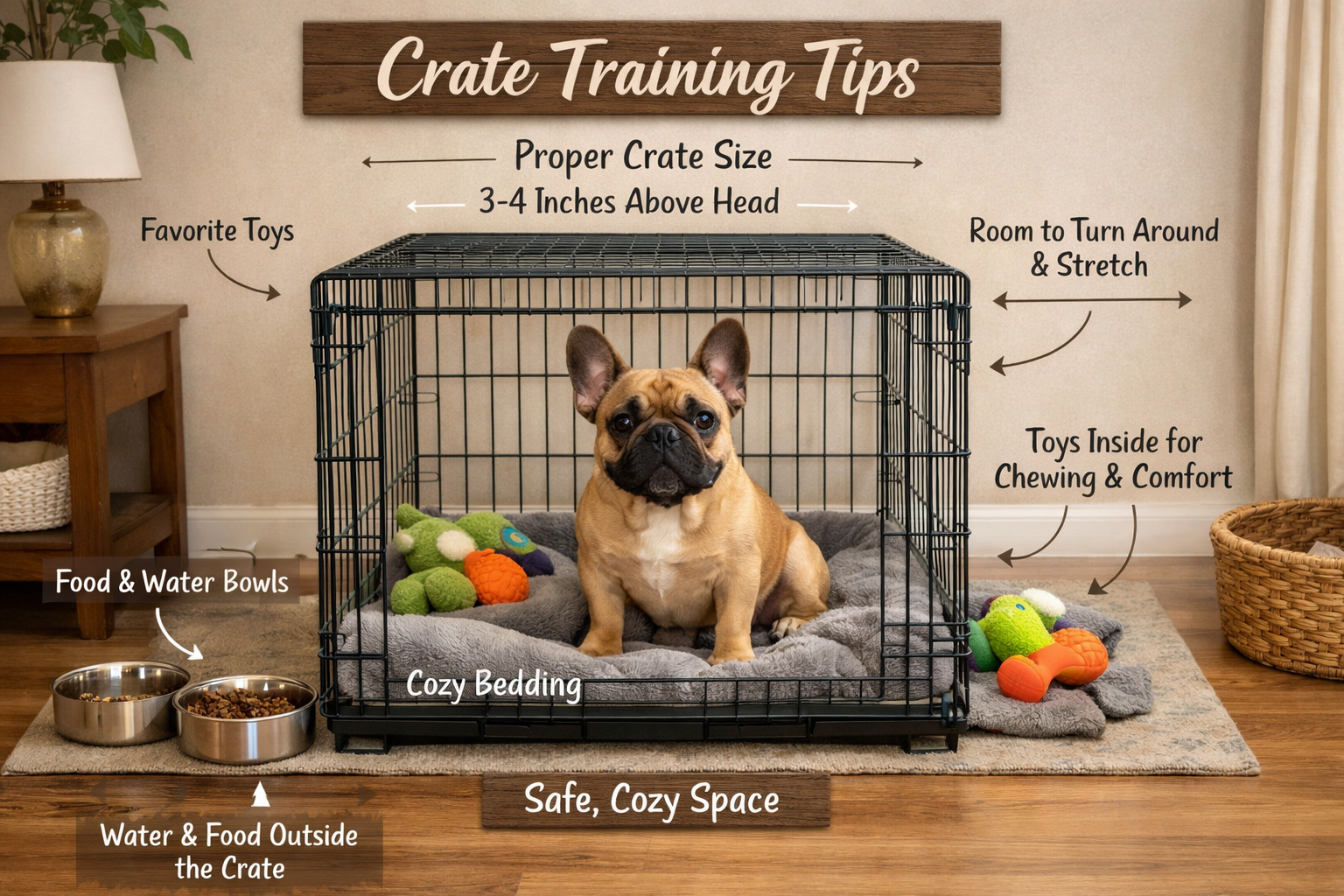
- Choose the right size – Your Frenchie should be able to stand, turn around, and lie down comfortably
- Be patient and consistent – Most French Bulldogs adapt to crate training within 2-4 weeks with daily practice
Quick Answer
French Bulldog crate training succeeds when you make the crate a positive space through gradual introduction, consistent positive reinforcement, and proper sizing. Start with short 5-10 minute sessions, use high-value treats and praise, and never force your Frenchie into the crate. Most Frenchies adapt within 2-4 weeks when owners remain patient and follow a structured approach.
Why Crate Training Works for French Bulldogs
Crate training taps into your French Bulldog’s natural den instinct, providing them with a secure space that feels like their own territory. French Bulldogs are particularly well-suited for crate training because they’re companion dogs who crave routine and security.
Benefits specific to French Bulldogs include:
- Prevents destructive behavior when you’re away from home
- Aids in housebreaking by teaching bladder control
- Provides safe transport for vet visits and travel
- Creates a calm space during overwhelming situations
- Supports medical recovery – Frenchies prone to spinal injuries often require strict crate rest
The key difference with French Bulldogs is their sensitive nature. Unlike more independent breeds, Frenchies form intense bonds with their families and can develop separation anxiety if crate training isn’t done thoughtfully. This makes the positive association phase even more critical for success.
Essential French Bulldog Crate Training Tips for Beginners
The foundation of successful crate training lies in making the crate irresistibly appealing before any confinement begins. Your Frenchie should view their crate as the best spot in the house, not a prison.
Step 1: Choose the Perfect Location
Place the crate in a frequently-used area like your family room or bedroom, not isolated in a basement or garage. French Bulldogs are social creatures who need to feel included in family activities, even while crated.
Step 2: Make It Irresistible
- Add soft, comfortable bedding that smells like you
- Place their favorite toys inside
- Feed meals near or inside the crate
- Toss high-value treats inside randomly throughout the day
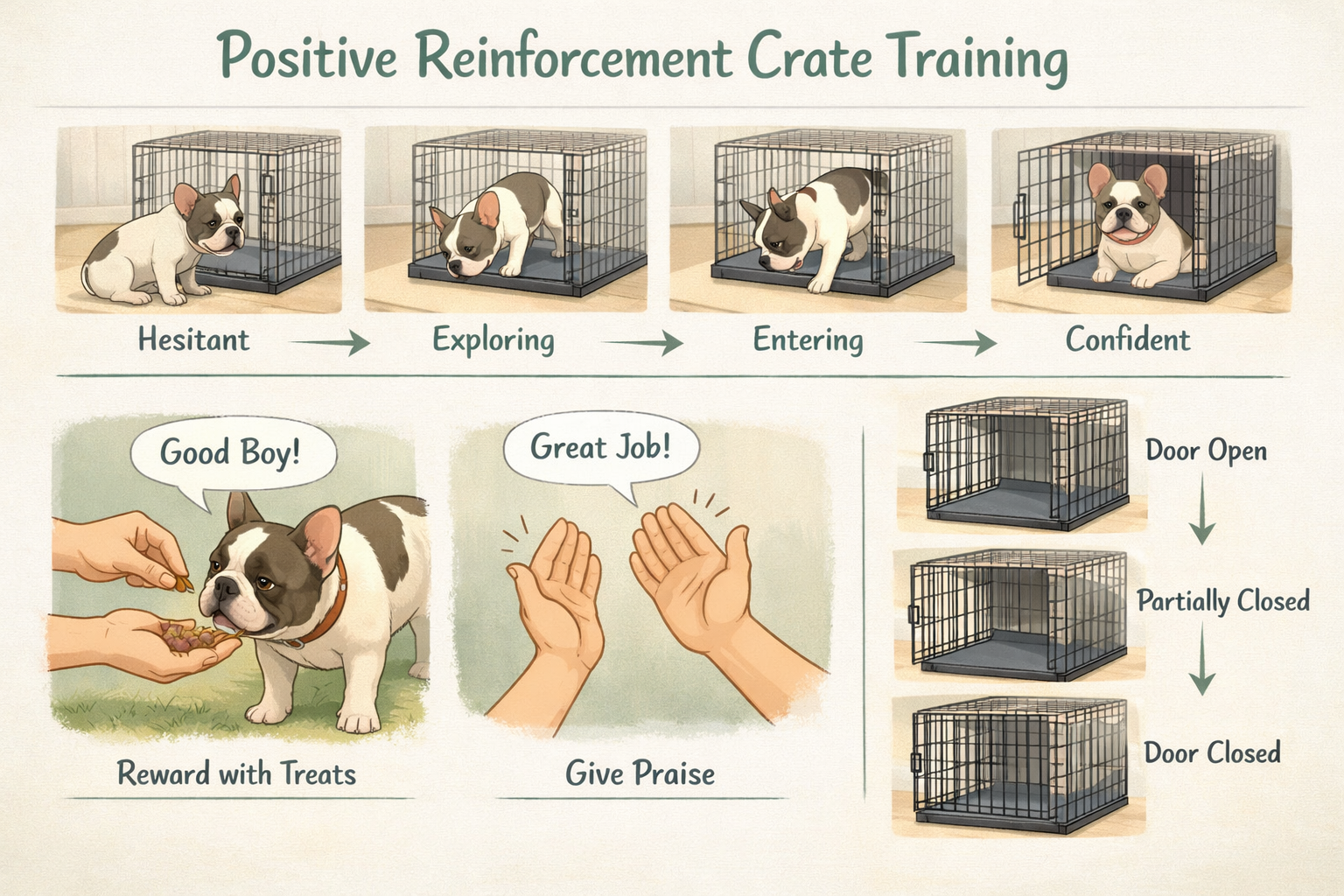
Step 3: Start with Open Door Exploration
Allow your Frenchie to explore the open crate at their own pace. Never force them inside. Some dogs need several days just to feel comfortable approaching the crate.
Step 4: Create Positive Meal Associations
Start feeding meals near the crate, gradually moving the food bowl inside. This creates powerful positive associations since mealtime is already exciting for your Frenchie.
Common Beginner Mistake: Rushing the process. If your Frenchie seems hesitant, slow down. It’s better to spend an extra week building positive associations than to create fear that takes months to overcome.
For comprehensive guidance on overall French Bulldog training fundamentals, check out our complete beginner’s guide to French Bulldog training.
How to Choose the Right Crate Size and Type
Proper crate sizing is crucial for French Bulldog comfort and training success. Your Frenchie should be able to stand up without hunching, turn around easily, and lie down with legs extended.
Size Guidelines by Age and Weight
| French Bulldog Weight | Crate Dimensions | Recommended Size |
|---|---|---|
| 8-15 lbs (puppy) | 24″ L x 18″ W x 19″ H | Small |
| 16-25 lbs (adult female) | 30″ L x 19″ W x 21″ H | Medium |
| 26-35 lbs (adult male) | 36″ L x 23″ W x 25″ H | Large |
Wire vs. Plastic Crates:
Wire crates work best for home training because they:
- Provide better ventilation (important for flat-faced Frenchies)
- Allow your dog to see their surroundings
- Often include divider panels for growing puppies
- Fold flat for storage
Plastic crates are ideal for:
- Air travel (airline-approved models)
- Dogs who prefer more enclosed, den-like spaces
- Outdoor use or camping
Pro Tip: Buy a crate sized for your adult Frenchie and use a divider panel while they’re growing. This saves money and maintains the proper “just big enough” feeling that encourages natural cleanliness habits.
Avoid This Mistake: Don’t buy a crate that’s too large thinking it’s more comfortable. Excess space can actually increase anxiety and makes house training harder since dogs won’t soil their sleeping area but will use extra space as a bathroom.
Step-by-Step French Bulldog Crate Training Tips
Now that your crate is set up and your Frenchie is comfortable exploring it, begin the actual training process. The American Kennel Club recommends multiple short sessions daily rather than single long training periods.
Phase 1: Voluntary Entry (Days 1-7)
Daily Training Sessions: 3-5 sessions, 5-10 minutes each
- Treat Tossing Game
- Toss treats into the crate while saying “crate” or “bed”
- Let your Frenchie go in and come out freely
- Praise enthusiastically when they enter: “Good crate!”
- Repeat 5-10 times per session
- Meal Training
- Feed all meals inside the crate with door open
- If your Frenchie won’t enter, place food just inside the doorway
- Gradually move the bowl deeper inside over several days
- Toy Motivation
- Place special toys or puzzle feeders only in the crate
- Use frozen KONG toys filled with peanut butter for extended positive association
Success Indicator: Your Frenchie enters the crate willingly when you toss treats or point to it.
Phase 2: Door Closing Practice (Days 8-14)
- Brief Door Closures
- Wait until your Frenchie is eating or playing in the crate
- Gently close the door for 30 seconds
- Open immediately and praise
- Gradually increase to 2-3 minutes
- Stay Nearby
- Remain visible during door-closed sessions
- Talk softly or read aloud to provide comfort
- Ignore any whining or scratching (don’t reward attention-seeking)
- Positive Exit Protocol
- Only open the door when your Frenchie is calm and quiet
- Wait for a moment of silence before releasing
- This prevents rewarding demanding behavior
FYI: Some links may be affiliate links, which means I may earn a small commission at no extra cost to you.
During this phase, maintaining your Frenchie’s overall health and digestive comfort can support their training success. If you’re looking for a natural way to support your dog’s gut health and overall vitality during training, Pawbiotix offers a gentle probiotic formula that many French Bulldog owners find helpful for maintaining digestive balance and energy levels during the adjustment period.
Phase 3: Extended Periods (Days 15-21)
- Gradual Time Increases
- Start with 10-15 minute periods
- Increase by 5-10 minutes every few days
- Work up to 1-2 hours maximum for adult dogs
- Leave the Room
- Begin stepping out of sight for short periods
- Return before any distress behaviors begin
- Gradually extend your absence
- Real-Life Practice
- Practice during normal daily activities
- Crate during short errands (30 minutes or less initially)
- Use the same calm, matter-of-fact approach each time
Important Timing Rule: Puppies under 6 months shouldn’t be crated longer than their age in months plus one hour. So a 3-month-old puppy should only be crated for 4 hours maximum.
For more detailed training techniques and timelines, see our comprehensive French Bulldog training guide.
Common Crate Training Mistakes to Avoid
Even well-intentioned French Bulldog owners can inadvertently sabotage their crate training efforts. Here are the most common mistakes and how to avoid them.
Mistake 1: Using the Crate as Punishment
Why it backfires: This destroys the positive association you’ve worked to build. Your Frenchie will begin to fear the crate and resist entering.
Better approach: If your dog misbehaves, use time-outs in a boring area (like a bathroom) instead of the crate. The crate should only be associated with good things.
Mistake 2: Responding to Whining
The problem: Releasing your Frenchie when they whine teaches them that complaining works.
Solution: Only open the crate during quiet moments. If whining persists, wait for even a brief pause before opening. This can take patience, but consistency pays off.
Mistake 3: Making Departures Emotional
What happens: Dramatic goodbyes and excited hellos create anxiety around your leaving.
Better method: Keep departures and arrivals calm and low-key. Crate your Frenchie 10-15 minutes before leaving so the crate isn’t directly associated with your departure.
Mistake 4: Inconsistent Schedule
The issue: Irregular crating times confuse your dog and slow progress.
Fix: Establish a routine. Crate at similar times daily for meals, naps, and when you leave. Predictability reduces anxiety.
Mistake 5: Wrong Crate Size
Too small: Causes discomfort and stress
Too large: Eliminates the den feeling and can lead to accidents
Right size: Your Frenchie can stand, turn around, and lie down comfortably but not much more.
For additional guidance on avoiding training pitfalls, read about common mistakes French Bulldog owners make.
Troubleshooting Specific Crate Training Challenges
Every French Bulldog is unique, and some face particular challenges during crate training. Here’s how to address the most common issues.
Challenge 1: Separation Anxiety
Signs: Excessive drooling, destructive behavior, non-stop barking, or attempts to escape the crate.
Solutions:
- Practice very short departures (2-5 minutes) multiple times daily
- Leave a piece of your clothing in the crate for comfort
- Use calming music or white noise
- Consider anti-anxiety supplements (consult your vet first)
- Never punish anxiety-related behaviors
When to seek help: If your Frenchie injures themselves trying to escape or shows severe distress after 3-4 weeks of consistent training.
Challenge 2: Accidents in the Crate
Possible causes:
- Crate too large (creates separate bathroom area)
- Left crated too long for their bladder capacity
- Medical issues
- Insufficient house training foundation
Solutions:
- Ensure proper crate size with divider if needed
- Stick to age-appropriate crating duration
- Take your Frenchie out immediately before and after crating
- Clean accidents thoroughly with enzyme cleaners
- Rule out urinary tract infections or other health issues
Challenge 3: Refusing to Enter
If your Frenchie won’t go near the crate:
- Go back to basics with treat tossing and feeding near (not in) the crate
- Make the crate more appealing with better bedding or special toys
- Try a different crate style (wire vs. plastic)
- Ensure the location isn’t too isolated or noisy
Never force entry: This creates negative associations that can take weeks to overcome.
Challenge 4: Excessive Barking or Whining
Management strategies:
- Ignore attention-seeking vocalizations completely
- Only respond during quiet moments
- Ensure all physical needs are met before crating
- Provide mental stimulation with puzzle toys
- Consider if the environment is too stimulating (cover the crate partially)
Consistency is key: Everyone in your household must follow the same rules about not responding to demanding behavior.
For more training solutions, explore our guide on positive reinforcement techniques for French Bulldogs.
Advanced French Bulldog Crate Training Tips for Success
Once your Frenchie has mastered basic crate training, these advanced strategies can enhance their comfort and your peace of mind.
Creating the Perfect Crate Environment
Temperature Control:
French Bulldogs are sensitive to heat due to their flat faces. Ensure proper ventilation and avoid placing the crate in direct sunlight or near heating vents. Consider a cooling mat for summer months.
Sound Management:
- Use white noise or calming music to mask household sounds
- Gradually expose your Frenchie to normal household noises while crated
- Avoid sudden loud noises near the crate area
Lighting Considerations:
- Provide a dim, den-like environment for rest periods
- Use blackout covers for daytime napping
- Maintain some visibility for anxious dogs who prefer to see their surroundings
Advanced Training Techniques
Crate Games:
- Hide treats in the crate for your Frenchie to discover
- Practice “crate” commands during play sessions
- Use the crate as a base during hide-and-seek games
Multiple Crate Setup:
If you have space and budget, consider crates in different areas:
- Bedroom crate for nighttime
- Living area crate for daytime use
- Travel crate for car trips
Gradual Independence Building:
- Practice leaving for varying time periods (5 minutes, 30 minutes, 2 hours)
- Don’t always crate when leaving – sometimes use baby gates instead
- Occasionally crate while you’re home doing other activities
Maintenance and Long-term Success
Regular Crate Cleaning:
- Wash bedding weekly
- Disinfect the crate monthly
- Replace worn toys or bedding that might cause discomfort
Ongoing Positive Associations:
- Continue occasional treat tosses even after training is complete
- Feed special meals in the crate periodically
- Never stop making the crate a positive space
Flexibility as Your Dog Ages:
Senior French Bulldogs may need softer bedding, easier crate access, or modified schedules. Adjust your approach as your Frenchie’s needs change.
Helpful Resources for Continued Success
If you’re looking for additional structured support during your crate training journey, there are excellent resources available to help you and your Frenchie succeed. For dogs who struggle with reactivity or anxiety during crate training, this gentle training approach focuses on building calm, confident behaviors that can complement your crate training efforts.
Additionally, protecting your French Bulldog’s health throughout their training journey is important. Since Frenchies are prone to certain health issues that might require crate rest for recovery, having reliable pet insurance coverage can provide peace of mind and ensure your dog gets the best care when needed.
Frequently Asked Questions
How long does it take to crate train a French Bulldog?
Most French Bulldogs adapt to crate training within 2-4 weeks with consistent daily practice. Puppies typically learn faster than adult dogs, while rescue dogs with unknown histories may need 6-8 weeks.
Can I crate train an adult French Bulldog?
Yes, adult French Bulldogs can absolutely learn to love their crates. The process is the same but may take slightly longer since you’re potentially overcoming previous experiences or established habits.
What size crate does a French Bulldog need?
Adult French Bulldogs typically need a 30-36 inch crate. The dog should be able to stand without hunching, turn around, and lie down comfortably but not have excess space.
Should I put food and water in the crate?
Food can be used during training, but remove bowls once your dog is comfortable. Water isn’t necessary for short periods (under 4 hours) and can lead to accidents or spills.
What if my French Bulldog cries all night in the crate?
First, ensure all physical needs are met. Then, ignore the crying and only respond during quiet moments. Moving the crate to your bedroom can help anxious dogs feel more secure.
Is it cruel to crate a French Bulldog during the day?
When done properly, crating provides security and prevents destructive behavior. However, adult dogs shouldn’t be crated more than 6-8 hours, and puppies need more frequent breaks.
Can I use the crate for punishment?
Never use the crate as punishment. This destroys positive associations and makes training much harder. Use time-outs in neutral areas instead.
What bedding is best for French Bulldog crates?
Choose washable, comfortable bedding that’s not too thick (can cause overheating). Avoid materials your dog might shred and ingest.
How do I stop my French Bulldog from barking in the crate?
Ignore attention-seeking barking and only respond during quiet moments. Ensure physical needs are met, provide mental stimulation with toys, and maintain consistency.
Should the crate door stay open when not in use?
Yes, leaving the door open allows your Frenchie to use their crate voluntarily, reinforcing it as a positive space rather than a place of confinement.
Can two French Bulldogs share a crate?
It’s better to provide separate crates. Dogs need their own space, and sharing can lead to resource guarding or prevent proper house training.
What if my French Bulldog has accidents in the crate?
Check that the crate isn’t too large, reduce crating time, ensure adequate potty breaks, and rule out medical issues. Clean thoroughly with enzyme cleaners.
Key Takeaways
- Start with positive associations before any confinement – make the crate the best place in your home
- Use gradual progression from open door exploration to short closures to extended periods
- Choose the right size crate where your Frenchie can stand, turn, and lie down comfortably
- Never use the crate as punishment – this destroys trust and progress
- Be patient and consistent – most French Bulldogs adapt within 2-4 weeks with daily practice
- Address challenges promptly – separation anxiety, accidents, and refusal to enter are solvable with the right approach
- Maintain positive associations long-term – continue making the crate a special place even after training is complete
- Consider your Frenchie’s unique needs – their sensitive nature and heat sensitivity require thoughtful training approaches
- Seek help when needed – severe anxiety or persistent problems may benefit from professional guidance
Conclusion
Successful crate training transforms your French Bulldog’s daily routine and provides them with a secure, comfortable space they’ll love for years to come. Remember that French Bulldogs are sensitive, people-oriented dogs who respond best to patient, positive training methods.
The key to mastering these French Bulldog crate training tips lies in consistency, patience, and understanding your Frenchie’s unique personality. Some dogs take to crate training immediately, while others need weeks of gradual conditioning. Both timelines are normal and acceptable.
Your next steps:
- Set up your crate in a social area of your home with comfortable bedding
- Begin with positive association exercises using treats and meals
- Practice short, successful sessions daily rather than rushing the process
- Address any challenges promptly with the troubleshooting strategies provided
- Maintain consistency across all family members
Remember, crate training is an investment in your French Bulldog’s safety, security, and your peace of mind. With the right approach, your Frenchie will view their crate as their favorite retreat rather than a place of confinement.
For additional support with your French Bulldog’s overall training journey, explore our comprehensive puppy training guide and essential training treats recommendations to set your Frenchie up for lifelong success.
References
[1] French Bulldog Puppy Training 101 Essential Tips – https://www.joiipetcare.com/blogs/advice/french-bulldog-puppy-training-101-essential-tips
[2] Crate Train Your French Bulldog A Complete Guide – https://collabdogtraining.com/crate-training/crate-train-your-french-bulldog-a-complete-guide/
[3] Crate Training Your Frenchie – https://beantownfrenchies.com/crate-training-your-frenchie/
[4] How To Crate Train Your Dog In 9 Easy Steps – https://www.akc.org/expert-advice/training/how-to-crate-train-your-dog-in-9-easy-steps/
[5] French Bulldog Training Behavior 2026 – https://www.pawvortex.com/blogs/behavior-training/french-bulldog-training-behavior-2026
[6] Faq Is Your Frenchie Crate Trained – https://www.frenchbulldognews.com/threads/faq-is-your-frenchie-crate-trained.2489/