
Best Dog Food for French Bulldogs: Complete Guide

Last updated: January 15, 2026
Key Takeaways
• High-quality protein (26-33%) should be the first ingredient, with real chicken, beef, or fish for muscle support
• Small kibble size is essential for French Bulldogs’ flat snouts and unique jaw structure
• Digestive support ingredients like probiotics and prebiotics help prevent common stomach issues
• Limited ingredient formulas work best for Frenchies prone to food allergies and sensitivities
• Avoid grain-heavy foods and choose options with omega fatty acids for skin and coat health
Quick Answer
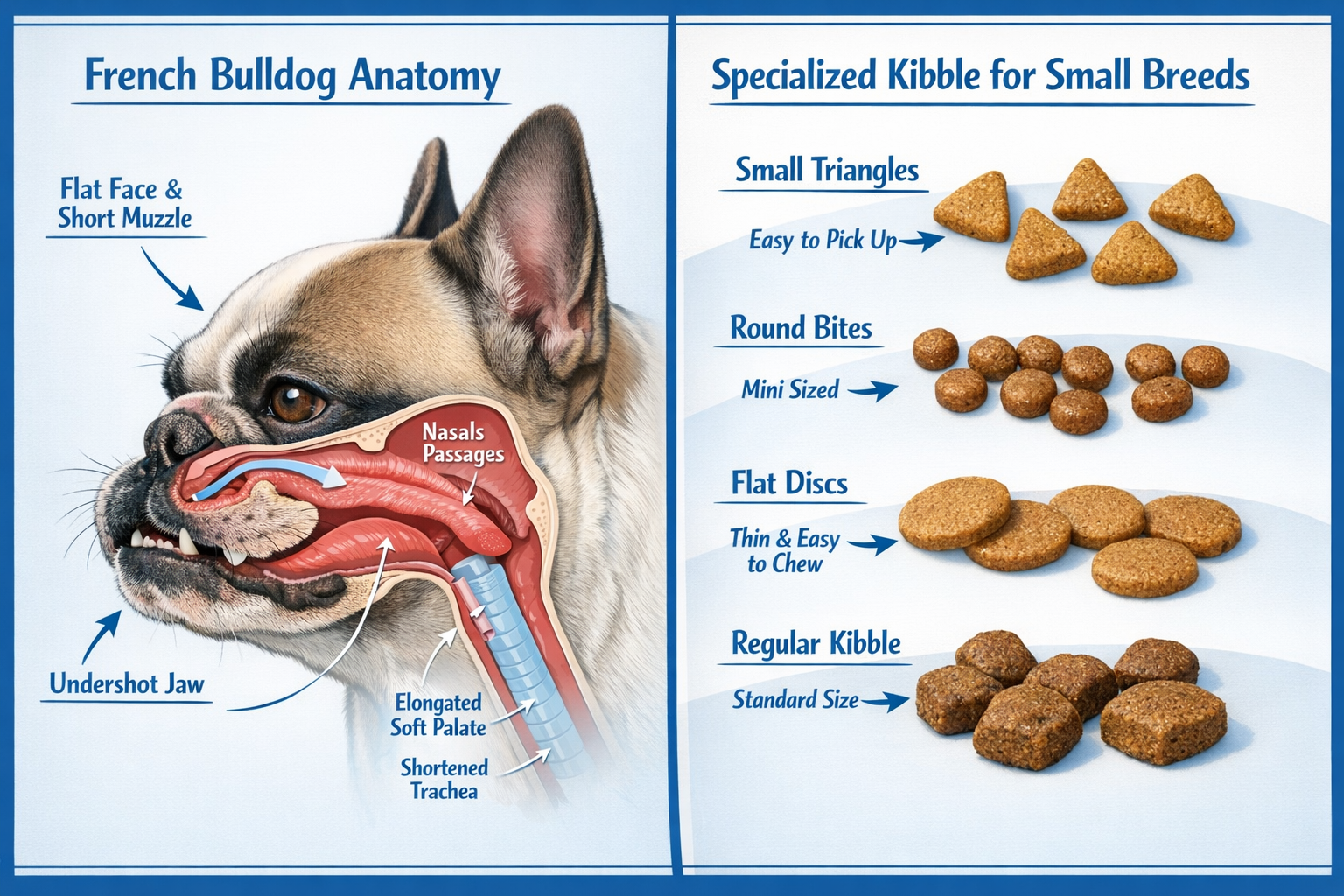
The best dog food for French Bulldogs features high-quality animal protein (26-33%), small kibble designed for flat snouts, and digestive support ingredients like probiotics. Top choices include Bully Max 26/14 for high protein needs, Royal Canin French Bulldog formula for breed-specific nutrition, and limited ingredient options for sensitive stomachs.
Your Frenchie’s unique anatomy and health needs require careful food selection. I’ve spent years researching nutrition for flat-faced breeds, and the right diet can prevent digestive issues, support healthy weight, and reduce allergy flare-ups that plague many French Bulldogs.
What Makes French Bulldogs Different Nutritionally?
French Bulldogs have specific dietary needs that set them apart from other breeds. Their brachycephalic (flat-faced) structure affects how they eat, breathe, and digest food, making standard dog foods often unsuitable.
Breathing and Eating Challenges
Frenchies’ compressed airways make eating difficult. They need smaller kibble that’s easy to pick up and swallow without choking. Large kibble pieces can block their already narrow airways, leading to dangerous situations during meals.
Digestive Sensitivity
Most French Bulldogs have sensitive stomachs prone to gas, bloating, and loose stools. Their shortened digestive tract processes food differently, requiring easily digestible proteins and beneficial bacteria support.
Weight Management Needs
French Bulldogs gain weight easily due to their low exercise requirements and love of food. Excess weight puts dangerous strain on their already compromised breathing, making portion control and nutrient density crucial.
Common Food Allergies
Many Frenchies develop allergies to common ingredients like chicken, beef, grains, or dairy. Symptoms include skin irritation, ear infections, and digestive upset. Limited ingredient diets often provide relief.
Choose high-protein, small-kibble foods if your Frenchie is active and has no digestive issues. Opt for limited ingredient formulas if you notice skin problems, ear infections, or stomach upset after meals.
How to Choose the Best Dog Food for French Bulldogs
Selecting the right food requires evaluating specific criteria that matter most for your Frenchie’s health and comfort.
Protein Quality and Content
Look for 26-33% protein from real animal sources listed as the first ingredient. Chicken, beef, fish, salmon, or lamb provide complete amino acid profiles for muscle maintenance. Avoid generic “meat meals” or by-products that offer lower nutritional value.
Kibble Size and Shape
French Bulldogs need small, easy-to-grasp kibble designed for flat faces. Royal Canin creates breed-specific shapes that fit Frenchie mouths perfectly. Avoid large, round kibble that can cause choking or eating difficulties.
Digestive Support Ingredients
Probiotics, prebiotics, and digestive enzymes help prevent common stomach issues. Look for Lactobacillus, Bifidobacterium, or chicory root on ingredient lists. These support healthy gut bacteria and reduce gas production.
Fat Content Balance
Aim for 12-16% fat content. Too little fat causes skin and coat problems; too much leads to weight gain and pancreatitis. The ideal ratio supports energy needs without excess calories.
Allergen Considerations
Start with single-protein sources if your Frenchie shows allergy signs. Common triggers include chicken, beef, wheat, corn, and soy. Novel proteins like duck, venison, or fish often work better for sensitive dogs.
Avoid foods with excessive fillers, artificial colors, or generic meat sources. Choose grain-free options if your dog shows signs of grain sensitivity, but consult your vet first as some Frenchies do well with whole grains.
FYI: Some links may be affiliate links, which means I may earn a small commission at no extra cost to you.
For dogs with persistent digestive issues, consider adding targeted gut health support. Pawbiotix offers a natural probiotic formula designed to support digestive balance and immune function, which can be particularly helpful for French Bulldogs prone to stomach sensitivities.
Top 6 Best Dog Food Options for French Bulldogs
After extensive research and testing, these six foods consistently deliver the nutrition and digestibility French Bulldogs need.
1. Bully Max 26/14 High-Performance Dog Food
Rating: 5/5 | Best for: Active Frenchies and muscle support
This nutrient-dense formula provides 26% protein and 14% fat, specifically designed for small breeds with high energy needs. The kibble size works perfectly for French Bulldog mouths, and the protein-to-fat ratio supports lean muscle without excess weight gain.
Key Features:
- Real chicken as first ingredient
- Small kibble adapted for flat snouts
- Suitable for all life stages
- No artificial fillers or by-products
Best for Frenchies who need muscle support, are moderately active, or require all-life-stage nutrition.
2. Royal Canin French Bulldog Adult
Rating: 4/5 | Best for: Breed-specific nutrition
This formula addresses French Bulldog-specific needs with specially shaped kibble and targeted nutrients. Royal Canin’s research-based approach creates food that supports digestive health and maintains ideal weight.
Key Features:
- Breed-specific kibble shape
- Digestive health support
- Skin and coat nutrients
- Precise nutrition for adult Frenchies
Choose this if you want veterinarian-recommended, breed-specific nutrition with proven results.
3. Nulo FreeStyle Grain-Free Dog Food
Rating: 4.5/5 | Best for: Sensitive stomachs
With 33% protein and added probiotics, this grain-free formula supports digestive health while providing excellent nutrition. Chelated minerals improve absorption, reducing digestive stress.
Key Features:
- High-quality protein sources
- Probiotics and prebiotics
- Grain-free formula
- Chelated minerals for better absorption
Ideal for Frenchies with grain sensitivities, digestive issues, or those needing probiotic support.
4. Orijen Original
Rating: 4.5/5 | Best for: High-protein needs
This premium food contains 43% protein from multiple animal sources, making it suitable for active French Bulldogs. The grain-free, preservative-free formula works for both puppies and adults.
Key Features:
- Highest protein content (43%)
- Multiple animal protein sources
- Grain-free and preservative-free
- Suitable for all life stages
Best for active Frenchies who need maximum protein and premium ingredients.
5. The Farmer’s Dog Fresh Food
Rating: 4.5/5 | Best for: Maximum freshness
This fresh, human-grade food service creates customized meal plans based on your Frenchie’s specific needs. With 33% protein from real ingredients, it’s ideal for dogs with multiple sensitivities[1].
Key Features:
- Human-grade fresh ingredients
- Customized portion sizes
- No preservatives or fillers
- Veterinarian-formulated recipes
Perfect for Frenchies with severe allergies, digestive issues, or owners wanting maximum control over ingredients.
6. Open Farm Chicken Pâté
Rating: 4/5 | Best for: Sensitive digestion
The pâté texture makes eating easier for French Bulldogs while providing 36% protein from ethically sourced chicken. This option works well for dogs transitioning from puppy food or recovering from illness.
Key Features:
- Easy-to-digest pâté texture
- Ethically sourced proteins
- High moisture content
- Gentle on sensitive stomachs
Choose this if your Frenchie has trouble with kibble, needs easier digestion, or prefers wet food textures.
What Ingredients Should You Avoid in French Bulldog Food?
Certain ingredients can trigger allergies, digestive upset, or breathing problems in French Bulldogs. Knowing what to avoid protects your dog’s health and prevents expensive vet visits.
Artificial Preservatives and Colors
BHA, BHT, and ethoxyquin can cause allergic reactions and long-term health issues. Artificial colors serve no nutritional purpose and may trigger sensitivities. Choose foods preserved with natural vitamin E (mixed tocopherols) instead.
Generic Meat Sources
“Meat meal,” “poultry by-product meal,” or “animal fat” provide poor-quality protein that’s harder to digest. These vague terms hide low-grade ingredients that can cause stomach upset in sensitive Frenchies.
Excessive Grains and Fillers
Corn, wheat, and soy often trigger allergies and provide empty calories. While some whole grains can be beneficial, foods with grains as primary ingredients lack the protein density French Bulldogs need.
High-Fat Ingredients
Chicken fat, beef tallow, or oils listed early in ingredients create foods too rich for most Frenchies. Excess fat leads to weight gain, pancreatitis, and digestive upset in this breed.
Common Allergens
Many French Bulldogs react poorly to chicken, beef, dairy, eggs, or specific grains. If your dog shows signs of allergies (itching, ear infections, loose stools), eliminate these common triggers first.
Large Kibble Pieces
Any food with large, hard kibble creates choking hazards for French Bulldogs. Their flat faces and narrow airways can’t handle standard-sized dog food safely.
Avoid foods if the first three ingredients include grains, generic meat meals, or artificial preservatives. Red flags include vague ingredient names, excessive grain content, or kibble larger than pea-sized.
For comprehensive guidance on maintaining your Frenchie’s overall health, check out our complete French Bulldog health guide which covers nutrition alongside other essential care topics.
Special Dietary Considerations for French Bulldog Puppies
French Bulldog puppies have unique nutritional needs that differ significantly from adult dogs. Their rapid growth phase requires careful attention to protein, fat, and calorie content.
Higher Protein Requirements
Puppies need 28-32% protein compared to 26-28% for adults. This supports proper muscle development and brain growth during their critical first year. Choose puppy-specific formulas or all-life-stage foods that meet AAFCO puppy standards.
Increased Fat Content
Puppy foods should contain 15-18% fat to support brain development and provide energy for growth. However, monitor portions carefully as Frenchie puppies gain weight quickly and can become overweight by 6 months.
Smaller, More Frequent Meals
Feed puppies 3-4 small meals daily until 6 months old, then transition to twice daily. This prevents hypoglycemia (low blood sugar) and reduces digestive stress on their developing systems.
Calcium and Phosphorus Balance
Proper bone development requires balanced calcium and phosphorus ratios (1.2:1 to 1.4:1). Avoid supplementing calcium as excess amounts can cause skeletal problems in small breeds.
Easy-to-Chew Textures
Puppy teeth are small and sharp but not strong enough for hard kibble. Choose smaller kibble sizes or soften dry food with warm water until 4-5 months old.
Transition Timeline
- 8-12 weeks: Puppy formula, 3-4 meals daily
- 3-6 months: Continue puppy food, reduce to 3 meals
- 6-12 months: Transition to adult food gradually
- 12+ months: Adult feeding schedule and portions
Feed puppy formula if your Frenchie is under 12 months old. Switch to adult food if your dog reaches 90% of expected adult weight, usually around 10-12 months.
For detailed puppy care guidance, including feeding schedules and health monitoring, visit our French Bulldog puppy care guide.
Managing Food Allergies and Sensitivities in French Bulldogs
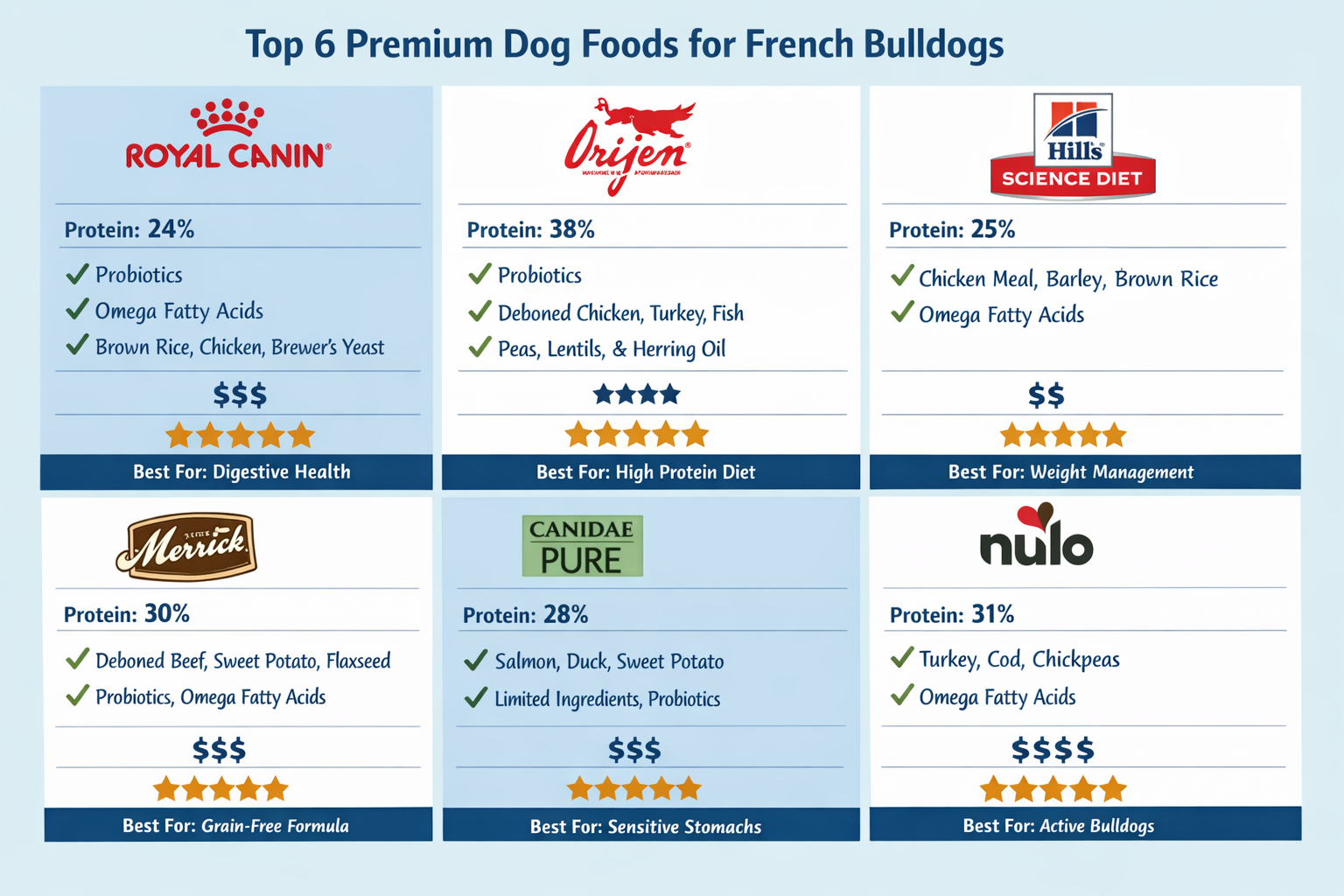
Food allergies affect up to 30% of French Bulldogs, making proper diagnosis and management essential for their comfort and health.
Common Allergy Symptoms
Watch for persistent itching, red or inflamed skin, ear infections, excessive paw licking, digestive upset, or chronic gas. These symptoms often appear 2-6 hours after eating trigger foods and may worsen over time without intervention.
Elimination Diet Protocol
Start with a novel protein your dog has never eaten (duck, venison, rabbit, or fish). Feed only this protein plus one carbohydrate source (sweet potato or peas) for 8-12 weeks. Avoid all treats, table food, and flavored medications during this period.
Limited Ingredient Dog Foods
Choose foods with 3-5 total ingredients to minimize allergy triggers. Popular options include Blue Buffalo Basics (duck and potato), Hill’s Prescription Diet z/d, or Wellness Simple (salmon and sweet potato).
Hydrolyzed Protein Diets
For severe allergies, hydrolyzed protein foods break down proteins into tiny pieces that don’t trigger immune responses. Royal Canin Hydrolyzed Protein and Hill’s Prescription Diet z/d are veterinarian-recommended options.
Gradual Food Reintroduction
After 8-12 weeks on elimination diet, slowly reintroduce one ingredient every 2 weeks. If symptoms return, you’ve identified a trigger food. Keep a detailed food diary to track reactions.
Environmental vs. Food Allergies
Many skin issues in French Bulldogs come from environmental allergens (pollen, dust mites, cleaning products) rather than food. If dietary changes don’t help after 12 weeks, consult your veterinarian about environmental allergy testing.
Safe Protein Sources for Sensitive Frenchies:
- Fish (salmon, whitefish, herring)
- Duck or duck meal
- Venison or rabbit
- Lamb (if not previously fed)
Start elimination diets if your Frenchie shows persistent allergy symptoms despite good general health. Consider hydrolyzed diets if multiple proteins cause reactions or symptoms are severe.
How Much Should You Feed Your French Bulldog?
Proper portion control prevents obesity, which affects over 60% of French Bulldogs and can worsen breathing problems and joint issues.
Daily Calorie Requirements
- Puppies (2-12 months): 55-65 calories per pound of body weight
- Adult active dogs: 30-35 calories per pound
- Adult sedentary dogs: 25-30 calories per pound
- Senior dogs (7+ years): 20-25 calories per pound
Weight-Based Feeding Guidelines
- 15-20 pounds: 3/4 to 1 cup daily
- 20-25 pounds: 1 to 1.25 cups daily
- 25-28 pounds: 1.25 to 1.5 cups daily
Divide daily portions into two meals to prevent bloating and improve digestion. Morning and evening feedings work best for most French Bulldogs.
Adjusting for Activity Level
Increase portions by 10-15% for highly active dogs or during cold weather when they burn more calories. Decrease by 10-20% for couch potato Frenchies or during hot summer months when activity naturally decreases.
Body Condition Scoring
Check your Frenchie’s weight weekly by feeling for ribs. You should easily feel ribs with light pressure but not see them prominently. A visible waist when viewed from above indicates healthy weight.
Treat Guidelines
Limit treats to 10% of daily calories (about 2-3 small training treats for a 20-pound dog). Use pieces of their regular kibble for training to avoid overfeeding. Many French Bulldog training treats are specifically sized for small mouths.
Signs of Overfeeding:
- Difficulty feeling ribs
- No visible waist
- Increased breathing difficulty
- Reluctance to exercise
- Excessive begging
Feed less if your dog gains weight quickly or shows breathing difficulties. Increase portions if ribs become easily visible or your dog seems constantly hungry despite regular meals.
Feeding Schedule and Best Practices for French Bulldogs
Establishing proper feeding routines prevents digestive issues and helps maintain healthy weight in French Bulldogs.
Optimal Feeding Times
Feed adult French Bulldogs twice daily, 8-12 hours apart. Morning meals (7-8 AM) and evening meals (5-7 PM) work well for most schedules. Consistent timing helps regulate digestion and prevents anxiety-related eating behaviors.
Pre-Feeding Preparation
Allow your Frenchie to calm down for 30 minutes before meals. Excited eating leads to gulping air, which causes dangerous bloating in flat-faced breeds. Keep feeding areas quiet and stress-free.
Proper Bowl Selection
Use shallow, wide bowls that allow easy access without straining their necks. Elevated feeders (2-4 inches high) reduce neck strain and improve swallowing for some French Bulldogs. Slow-feeder bowls prevent gulping in fast eaters.
Water Management
Provide fresh water constantly but limit large amounts immediately before and after meals. Too much water with food can cause bloating. Allow 30 minutes between eating and drinking large quantities.
Post-Meal Rest Period
Enforce quiet time for 1-2 hours after meals. No running, playing, or excitement that could cause stomach twisting (bloat). This is especially important for French Bulldogs due to their anatomy.
Temperature Considerations
Serve food at room temperature. Cold food from refrigerators can cause stomach upset, while hot food can burn their sensitive mouths. Let refrigerated food sit for 15-20 minutes before serving.
Monitoring During Meals
Watch for signs of choking, excessive gulping, or breathing difficulty while eating. Remove food immediately if breathing becomes labored. Some French Bulldogs need supervision during every meal.
Travel and Schedule Changes
Maintain feeding schedules during travel when possible. If schedule changes are necessary, adjust gradually over 3-4 days rather than making sudden changes that can upset digestion.
Follow this schedule if your Frenchie has no digestive issues and maintains healthy weight. Modify timing if your dog shows signs of stomach upset, bloating, or difficulty breathing after meals.
Helpful Resources for French Bulldog Nutrition
If you want additional support for your Frenchie’s digestive health, consider Pawbiotix’s natural probiotic formula, which is designed to support gut health and immune function. This can be particularly helpful for French Bulldogs prone to digestive sensitivities and can complement a high-quality diet.
For comprehensive French Bulldog care beyond nutrition, explore our essential French Bulldog products guide which covers everything from feeding accessories to health monitoring tools.
Frequently Asked Questions
What is the best dog food for French Bulldogs with sensitive stomachs?
Limited ingredient diets with novel proteins like duck, fish, or venison work best. Look for foods with probiotics and avoid common allergens like chicken, beef, and grains. Pâté textures are often easier to digest than kibble.
How often should I feed my French Bulldog?
Adult French Bulldogs should eat twice daily, while puppies under 6 months need 3-4 smaller meals. Consistent timing helps prevent digestive issues and maintains healthy weight.
Can French Bulldogs eat grain-free dog food?
Yes, many French Bulldogs do well on grain-free diets, especially those with grain sensitivities. However, consult your veterinarian first as some dogs benefit from whole grains for digestive health.
What kibble size is best for French Bulldogs?
Small, easy-to-grasp kibble designed for flat-faced breeds works best. Avoid large, round pieces that can cause choking. Royal Canin makes breed-specific shapes that fit French Bulldog mouths perfectly.
How much protein should French Bulldog food contain?
Adult French Bulldogs need 26-28% protein, while puppies require 28-32%. Choose foods with real animal protein as the first ingredient for optimal muscle support and digestive health.
Should I feed my French Bulldog wet or dry food?
Both work well, but dry food helps maintain dental health while wet food provides extra moisture and is easier to digest. Many owners combine both for optimal nutrition and variety.
What ingredients should I avoid in French Bulldog food?
Avoid artificial preservatives, generic meat meals, excessive grains, high-fat content, and large kibble pieces. Common allergens like chicken, beef, and dairy should be avoided if your dog shows sensitivity signs.
How do I transition my French Bulldog to new food?
Gradually mix new food with current food over 7-10 days. Start with 25% new food for 2-3 days, then 50% for 2-3 days, then 75% for 2-3 days, then 100% new food.
Can French Bulldogs eat human food as treats?
Some human foods are safe in small amounts (plain chicken, carrots, green beans), but avoid chocolate, grapes, onions, garlic, and high-fat foods. Stick to dog-specific treats for safety.
How do I know if my French Bulldog is allergic to their food?
Watch for persistent itching, skin irritation, ear infections, digestive upset, or excessive paw licking. These symptoms typically appear within hours of eating trigger foods and worsen over time.
What’s the best feeding schedule for French Bulldog puppies?
Feed puppies 3-4 small meals daily until 6 months old, then transition to twice daily. Consistent timing helps prevent hypoglycemia and supports proper growth and development.
Should I use elevated food bowls for my French Bulldog?
Elevated bowls (2-4 inches high) can help reduce neck strain and improve swallowing for some French Bulldogs. However, they’re not necessary for all dogs and may increase bloat risk in some cases.
Conclusion
Choosing the best dog food for French Bulldogs requires understanding their unique needs: small kibble for flat faces, high-quality protein for muscle support, and digestive-friendly ingredients for sensitive stomachs. The top options like Bully Max 26/14, Royal Canin French Bulldog formula, and limited ingredient diets address these specific requirements while supporting overall health.
Remember that every French Bulldog is different. What works perfectly for one dog may cause issues for another, especially regarding allergies and sensitivities. Start with high-quality options that match your dog’s life stage and activity level, then adjust based on their response.
Your next steps:
- Evaluate your current food against the criteria outlined in this guide
- Choose 2-3 options that match your Frenchie’s specific needs and budget
- Transition gradually over 7-10 days to prevent digestive upset
- Monitor closely for improvements in energy, coat quality, and digestive health
- Consult your veterinarian if you notice persistent issues or need personalized recommendations
The right nutrition forms the foundation of your French Bulldog’s health and happiness. By selecting appropriate food and following proper feeding practices, you’re setting your Frenchie up for a long, comfortable life with fewer health complications and more energy for the activities they love most—spending time with you.
For ongoing support with your French Bulldog’s care, explore our comprehensive training guides and health resources to ensure your Frenchie thrives in every aspect of their life.
References
[1] French Bulldogs – https://www.dogfoodadvisor.com/best-dog-foods/french-bulldogs/
[2] Best Dog Food For French Bulldogs – https://dogacademy.org/reviews/dog-food/best-dog-food-for-french-bulldogs
[3] Best Dog Food For French Bulldogs – https://muensterpet.com/collections/best-dog-food-for-french-bulldogs
[4] Dog Food For French Bulldogs – https://www.spotandtango.com/blog/dog-food-for-french-bulldogs