
Last updated: February 26, 2026
Key Takeaways
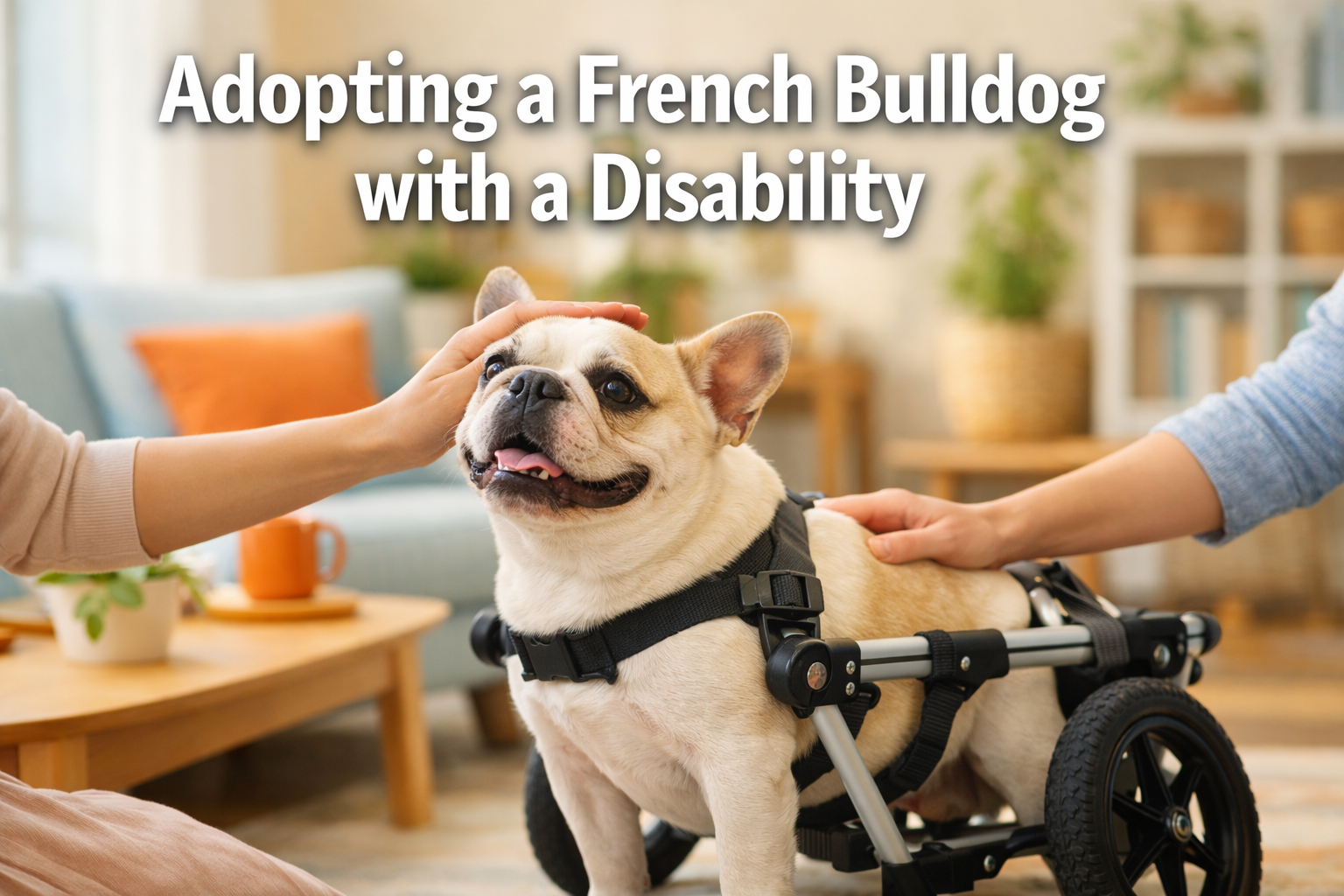
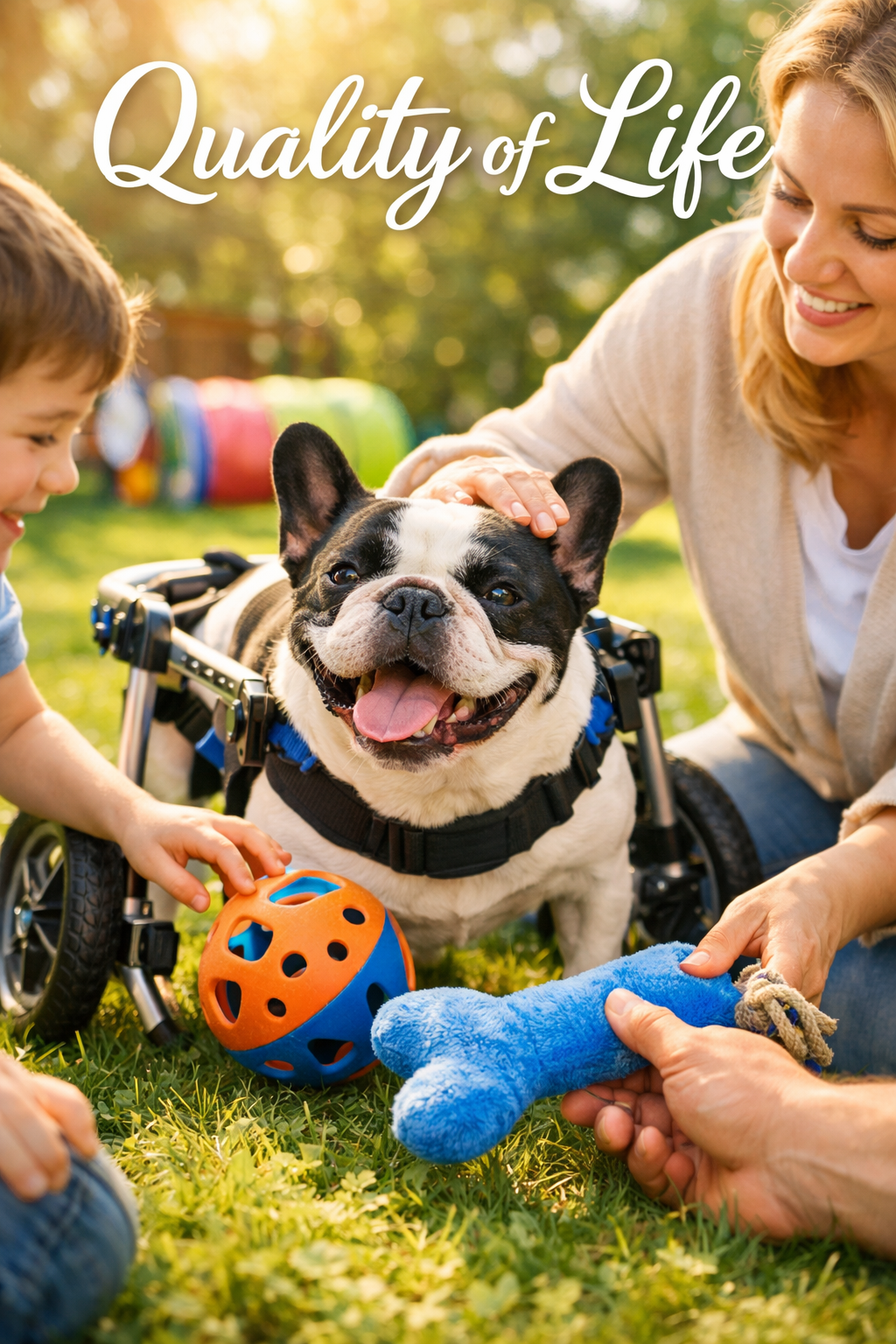
• French Bulldogs with disabilities can live full, happy lives with proper care and adaptive equipment
• Spinal injuries are increasingly common in French Bulldogs, with rescue organizations seeing more disabled dogs
• Budget $12,000-$15,000 for potential medical expenses and adaptive equipment for disabled Frenchies
• Breed-specific rescues provide thorough health screening and ongoing support for special needs adoptions
• Mobility aids like carts work exceptionally well for small French Bulldogs due to their portable size
• Disabled French Bulldogs often have shorter wait times for adoption as attitudes toward special needs pets improve
• Insurance coverage is crucial but may exclude pre-existing conditions in disabled rescue dogs
Quick Answer
Adopting a French Bulldog with a disability requires careful financial planning, specialized equipment, and ongoing veterinary care, but these dogs can live fulfilling lives as loving companions. Expect medical costs of $12,000+ and prepare your home with ramps, orthopedic bedding, and potentially mobility aids. Breed-specific rescues offer the best support and screening for special needs French Bulldogs.
What Types of Disabilities Affect French Bulldogs Available for Adoption?
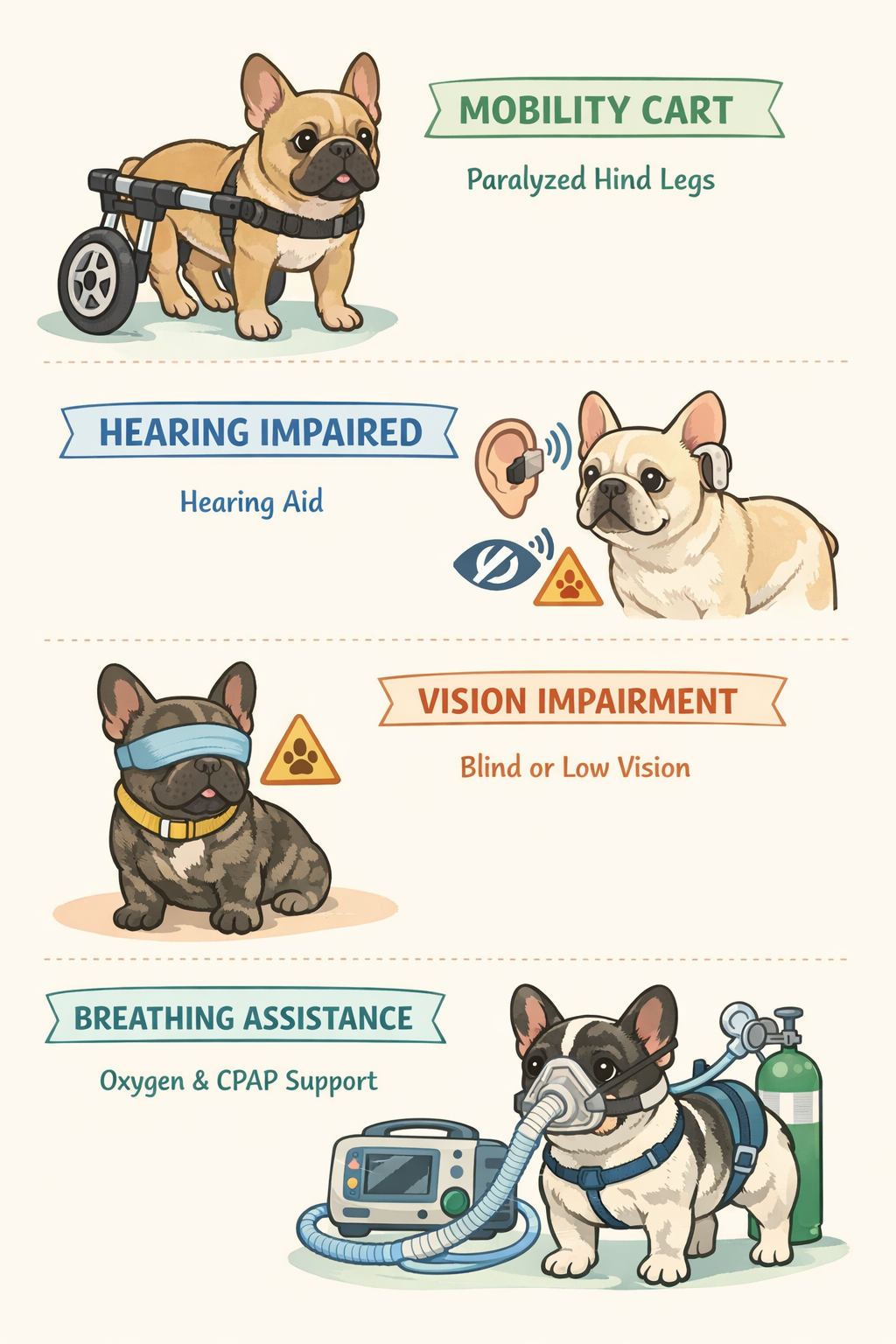
French Bulldogs in rescue situations commonly face spinal injuries, breathing difficulties, and mobility limitations due to their breed structure. The French Bulldog Rescue Network has reported a significant increase in spine-injured dogs on their adoption roster.
Common disabilities include:
• Spinal cord injuries – Often requiring mobility carts or supportive care
• Intervertebral disc disease (IVDD) – Causing partial or complete paralysis
• Severe breathing restrictions – From brachycephalic obstructive airway syndrome
• Hip dysplasia – Leading to mobility challenges
• Vision or hearing impairments – Though less common in rescue situations
• Chronic joint conditions – Requiring ongoing pain management
Choose adoption if you’re prepared for potential emergency surgeries costing $5,000-$10,000+ and have experience with special needs pets. Many disabled French Bulldogs adapt remarkably well to mobility aids, especially given their small, portable size.
The good news? Cultural attitudes have shifted significantly, with disabled dogs now spending less time waiting for adoption compared to previous years.
How Much Does It Cost to Care for a French Bulldog with a Disability?
Caring for a disabled French Bulldog requires substantial upfront and ongoing financial commitment. The French Bulldog Rescue Network recommends having $12,000 available or on credit for potential spinal surgery and emergency care.
Initial setup costs:
• Diagnostic MRI: $3,000-$5,000
• Spinal surgery: $5,000-$10,000+
• Mobility cart: $300-$800
• Home modifications (ramps, gates): $200-$500
• Orthopedic bedding and supplies: $150-$300
Monthly ongoing expenses:
• Specialized veterinary care: $200-$500
• Medications and supplements: $50-$150
• Physical therapy sessions: $100-$200
• Adaptive equipment maintenance: $25-$75
Budget for emergencies because disabled French Bulldogs may face complications requiring immediate intervention. Pet insurance for French Bulldogs becomes even more critical, though pre-existing conditions typically aren’t covered.
Common mistake: Underestimating the total cost of care and not having emergency funds readily available when urgent medical situations arise.
Where Should You Look When Adopting a French Bulldog with a Disability?
Breed-specific rescue organizations provide the best resources and screening for adopting disabled French Bulldogs. These organizations offer thorough health assessments, temperament evaluations, and post-adoption support that general shelters often can’t match.
Top adoption sources:
• French Bulldog Rescue Network (FBRN) – Comprehensive health screening and support
• Regional French Bulldog rescues – Local expertise and follow-up care
• Breed-specific sanctuaries – Often house dogs with complex medical needs
• Veterinary clinic partnerships – Sometimes have owner surrenders needing homes
What to expect from quality rescues:
• Complete medical history and current treatment plans
• Behavioral assessment and temperament notes
• Training on care techniques and equipment use
• Access to specialized veterinary networks
• Ongoing support and emergency guidance
Avoid general pet adoption websites without verified rescue backing, as they may lack proper medical documentation or support systems. When reviewing French Bulldog adoption processes, prioritize organizations that specialize in the breed’s unique needs.
FYI: Some links may be affiliate links, which means I may earn a small commission at no extra cost to you.
If your adopted French Bulldog struggles with behavioral issues like excessive barking or reactivity during walks, a structured training approach can help both of you adjust. While not required for all disabled dogs, some may benefit from calm, force-free training methods that work around their physical limitations.
How Do You Prepare Your Home for a French Bulldog with a Disability?
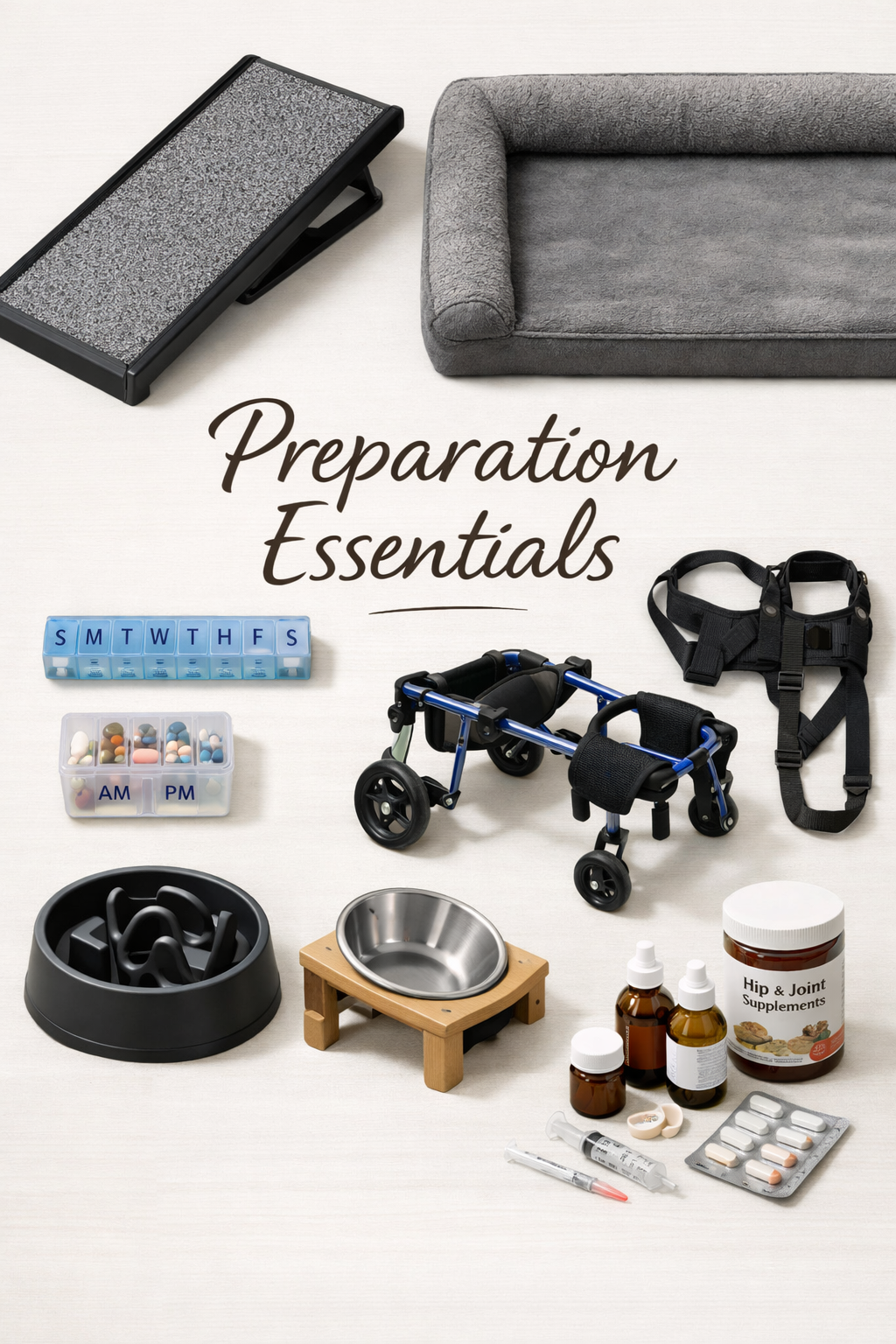
Home preparation focuses on accessibility, safety, and comfort modifications that accommodate your French Bulldog’s specific disability. Most adaptations are straightforward and relatively inexpensive compared to ongoing medical costs.
Essential home modifications:
• Install ramps or steps at entry points and furniture access areas
• Remove trip hazards like loose rugs, electrical cords, and small objects
• Create non-slip surfaces with yoga mats or specialized flooring in key areas
• Establish a ground-level care station with food, water, and bedding easily accessible
• Secure swimming pools or water features that pose drowning risks
• Set up medication and care supply organization in a central location
Mobility-specific preparations:
• Clear wide pathways for wheelchair or cart navigation
• Position food and water bowls at appropriate heights
• Install baby gates to prevent falls down stairs
• Create comfortable rest areas on each floor level
For breathing-impaired dogs:
• Maintain cool, well-ventilated spaces
• Remove aerosols, candles, and strong scents
• Keep emergency oxygen supplies if recommended by veterinarian
Edge case consideration: Some disabled French Bulldogs may need 24/7 monitoring initially, so prepare a comfortable space near your bedroom for nighttime care. Understanding what to expect with French Bulldog puppies can help with general care, though disabled adults have different needs.
What Daily Care Routines Do Disabled French Bulldogs Need?
Disabled French Bulldogs require structured daily routines that address their specific limitations while maintaining quality of life. Consistency in care timing helps both you and your dog adapt to new circumstances.
Morning routine essentials:
• Gentle awakening and mobility assistance
• Bathroom needs with lifting or cart assistance
• Medication administration at prescribed times
• Physical therapy exercises if recommended
• Comfortable positioning for meals
Throughout the day:
• Regular position changes to prevent pressure sores
• Hydration monitoring and assistance
• Short, adapted exercise sessions
• Mental stimulation through puzzle toys and training
• Bathroom breaks every 2-4 hours
Evening care:
• Wound or incision site cleaning if applicable
• Massage or gentle stretching as directed
• Secure, comfortable sleeping arrangements
• Emergency supply check and preparation
Weekly maintenance tasks:
• Equipment cleaning and inspection
• Weight monitoring for mobility aid adjustments
• Veterinary check-in calls or visits
• Supply restocking and organization
Choose professional help if you notice changes in appetite, behavior, or physical condition that might indicate complications. Many disabled French Bulldogs thrive with consistent routines, and learning about daily care routines for French Bulldogs provides additional guidance for general health maintenance.
Common mistake: Overprotecting disabled dogs to the point where they lose confidence and independence they could otherwise maintain with proper support.
What Equipment and Supplies Will You Need?
Specialized equipment makes the difference between a struggling disabled dog and one that maintains independence and quality of life. The specific gear depends on your French Bulldog’s type and severity of disability.
| Equipment Category | Essential Items | Cost Range |
|---|---|---|
| Mobility Support | Wheelchair/cart, harnesses, ramps | $300-$1,200 |
| Comfort & Recovery | Orthopedic beds, pressure relief pads | $100-$400 |
| Daily Care | Elevated bowls, non-slip mats, cleaning supplies | $75-$200 |
| Medical Support | Medication organizers, syringes, thermometer | $50-$150 |
Mobility equipment specifics:
• Custom-fitted carts work exceptionally well for French Bulldogs due to their compact, portable size
• Support harnesses with handles for lifting assistance
• Adjustable ramps for car access and home entry points
• Booties or paw protection for dogs dragging limbs
Comfort and health monitoring:
• Memory foam bedding to prevent pressure sores
• Waterproof covers for easy cleaning
• Digital thermometer for health monitoring
• Pill dispensers for complex medication schedules
Adaptive feeding solutions:
• Raised food and water bowls at appropriate heights
• Non-tip designs for dogs with coordination challenges
• Slow-feeder options if eating too quickly causes breathing issues
Budget tip: Start with essential items and add specialized equipment as you learn your dog’s specific needs. Many items can be found used through French Bulldog rescue networks or online communities.
How Do You Handle Medical Care and Veterinary Relationships?
Establishing strong veterinary relationships becomes crucial when adopting a French Bulldog with a disability. You’ll need both emergency care access and specialists familiar with your dog’s specific condition.
Build your veterinary team:
• Primary veterinarian experienced with French Bulldog health issues
• Specialist referrals for neurology, orthopedics, or respiratory care
• Emergency clinic with 24/7 availability and your dog’s records
• Physical therapy providers if recommended for mobility conditions
Essential medical management:
• Maintain complete medical records and treatment history
• Establish medication routines with clear dosing schedules
• Monitor for changes in condition or new symptoms
• Schedule regular check-ups more frequently than healthy dogs
• Keep emergency contact information easily accessible
Insurance considerations:
Pre-existing conditions typically aren’t covered by new policies, making French Bulldog insurance coverage planning essential before adoption if possible. However, coverage for new conditions or complications may still provide value.
Red flag symptoms requiring immediate care:
• Sudden breathing difficulties or color changes
• Loss of remaining mobility or sensation
• Refusal to eat or drink for more than 12 hours
• Signs of pain like whimpering, panting, or restlessness
• Fever above 103°F or below 99°F
Choose specialists who have specific experience with French Bulldog anatomy and common breed complications. Understanding common health issues in French Bulldogs helps you recognize when professional intervention is needed.
Helpful Resource
If your newly adopted French Bulldog shows signs of anxiety, reactivity, or behavioral challenges alongside their physical disability, structured training can make a significant difference in their adjustment and your relationship. A step-by-step reactivity training program focusing on calm, force-free methods can be particularly helpful for dogs dealing with the stress of disability and new environments.
👉 Click here to discover how calmer, happier walks with your Frenchie can start today.
This type of training works around physical limitations while building confidence and reducing stress-related behaviors that sometimes develop in disabled rescue dogs.
Frequently Asked Questions
How long do French Bulldogs with disabilities typically live?
Most disabled French Bulldogs can live normal lifespans of 10-12 years with proper care, though this depends on the specific disability and overall health management.
Can disabled French Bulldogs still be good apartment pets?
Yes, disabled French Bulldogs often adapt well to apartment living since they require less exercise and benefit from close proximity to their owners for care and monitoring.
Do disabled French Bulldogs require special training approaches?
Training focuses on adapting commands to physical limitations while maintaining mental stimulation. Positive reinforcement works well, with modifications for mobility restrictions.
How quickly do disabled French Bulldogs adapt to mobility aids?
Most French Bulldogs adapt to wheelchairs or carts within 1-2 weeks, though some may need up to a month to feel completely comfortable with new equipment.
Are there support groups for owners of disabled French Bulldogs?
Yes, many French Bulldog rescue organizations maintain online communities and support groups specifically for special needs dog owners.
What’s the biggest challenge in caring for a disabled French Bulldog?
The initial learning curve of medical care routines and equipment use, plus the emotional adjustment to seeing your dog struggle initially.
Can disabled French Bulldogs travel or go on vacations?
Many can travel with proper planning, portable equipment, and veterinary clearance, though trips require more preparation and shorter distances may be preferable.
Do disabled French Bulldogs get along with other pets?
Most maintain normal social behaviors, though introductions should be carefully managed to prevent injury and ensure the disabled dog isn’t overwhelmed.
How do you know if a disabled French Bulldog is in pain?
Watch for changes in appetite, sleep patterns, vocalization, or reluctance to move. Panting, restlessness, or withdrawal from interaction can also indicate discomfort.
What happens if you can no longer care for a disabled French Bulldog?
Contact the original rescue organization first, as most have policies for taking back dogs they’ve placed, especially those with special needs.
Are there financial assistance programs for disabled dog care?
Some rescue organizations offer ongoing medical support, and organizations like RedRover provide emergency financial assistance for pet medical care.
How do you maintain a disabled French Bulldog’s mental health?
Provide mental stimulation through puzzle toys, training sessions adapted to their abilities, social interaction, and maintaining as normal a routine as possible.
Conclusion
Adopting a French Bulldog with a disability requires significant preparation, financial resources, and commitment, but these special dogs can become incredibly rewarding companions. The key to success lies in thorough preparation, building strong veterinary relationships, and understanding that while the initial adjustment period may be challenging, most disabled French Bulldogs adapt well and maintain excellent quality of life.
Start by connecting with breed-specific rescue organizations that provide comprehensive support and medical histories. Budget at least $12,000 for initial medical expenses and equipment, and prepare your home with accessibility modifications before your dog arrives. Remember that disabled French Bulldogs often form exceptionally strong bonds with their families and can live full, happy lives with proper care.
Next steps:
- Contact French Bulldog rescue organizations in your area to discuss available dogs and requirements
- Consult with veterinarians experienced in French Bulldog care to understand ongoing needs
- Begin financial planning and consider insurance options for future care
- Connect with support communities of other special needs dog owners
- Prepare your home environment with necessary accessibility modifications
The growing acceptance of disabled dogs means these wonderful companions are finding homes faster than ever before. With proper preparation and commitment, you can provide a loving home where a disabled French Bulldog can thrive.
References
[1] French Bulldogs In Shelters – https://figopetinsurance.com/blog/french-bulldogs-in-shelters
[3] Disabled – http://frenchbulldogrescue.us/adoption-info/health-safety-your-frenchie/disabled/