
Last updated: February 25, 2026
When you need to know how to adopt a french bulldog puppy without his mother, you’re facing a situation that requires immediate preparation and round-the-clock care. Motherless puppies need specialized feeding, temperature regulation, and socialization support that normally comes from their mother.
Key Takeaways
• Minimum age matters: Puppies under 8 weeks need intensive care including bottle feeding every 2-3 hours
• Temperature control is critical: Newborn Frenchies can’t regulate body heat and need external warming
• Feeding requires puppy milk replacer: Never use cow’s milk – it can cause digestive issues
• Veterinary support is essential: Immediate health check and ongoing monitoring prevent complications
• Socialization becomes your responsibility: You’ll need to provide the behavioral lessons mom would teach
• Legal considerations apply: Some areas have laws about separating puppies from mothers too early
• Higher costs are expected: Hand-rearing requires more supplies, vet visits, and time investment
• Success depends on preparation: Having supplies ready before pickup dramatically improves outcomes
Quick Answer
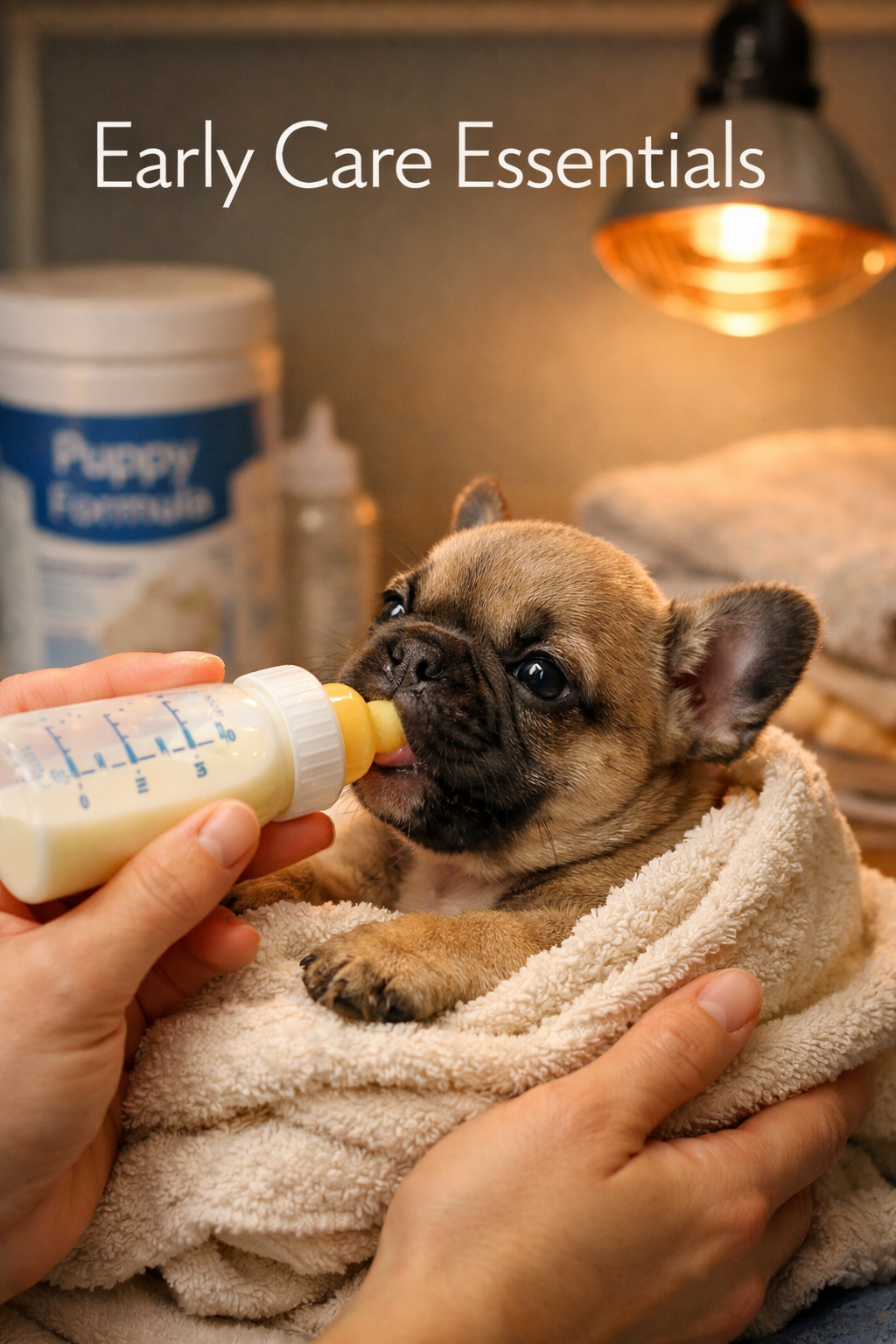
Adopting a French Bulldog puppy without his mother requires immediate preparation for intensive care, especially if the puppy is under 8 weeks old. You’ll need puppy milk replacer, feeding bottles, heating sources, and 24/7 availability for feeding every 2-3 hours. The younger the puppy, the more critical proper temperature control and nutrition become for survival.
Why French Bulldog Puppies Might Need Adoption Without Their Mother
French Bulldog puppies sometimes require adoption without their mother due to several urgent circumstances. The mother may have died during or after birth, rejected the litter, or become unable to care for her puppies due to illness or injury.
Common scenarios include:
- Mother dog complications during C-section delivery (common in French Bulldogs)
- Mastitis or other nursing-related health issues
- Abandonment by inexperienced first-time mothers
- Large litters where some puppies aren’t thriving
- Emergency situations requiring immediate rehoming
Choose immediate adoption if the puppy’s current situation poses health risks, but understand this creates significant care responsibilities for you. Puppies separated before 8 weeks miss crucial developmental milestones and require specialized attention.
Common mistake: Assuming any puppy can adapt quickly to bottle feeding. French Bulldogs have flat faces that make nursing more challenging, and stress from separation can worsen feeding difficulties.
What Age Is Safe When You Adopt a French Bulldog Puppy Without His Mother
The safest age to adopt a French Bulldog puppy without his mother is 8-12 weeks, but emergency situations may require earlier adoption. Puppies under 6 weeks have extremely high care requirements and mortality risks without professional support.
Age-based care requirements:
- 2-4 weeks: Requires feeding every 2 hours, cannot regulate body temperature, needs stimulation for elimination
- 4-6 weeks: Feeding every 3-4 hours, beginning to regulate temperature, starting to eat soft food
- 6-8 weeks: More independent feeding, better temperature control, crucial socialization period
- 8+ weeks: Ideal adoption age with weaning complete and basic social skills developed
Legal considerations: Many states prohibit selling puppies under 8 weeks old. Check local laws before proceeding with adoption, as some require veterinary certification for early separation .
Edge case: If adopting a puppy under 4 weeks, consider whether you can provide 24/7 care or if a professional foster situation might be more appropriate for the puppy’s survival.
Essential Supplies You Need Before You Adopt a French Bulldog Puppy Without His Mother
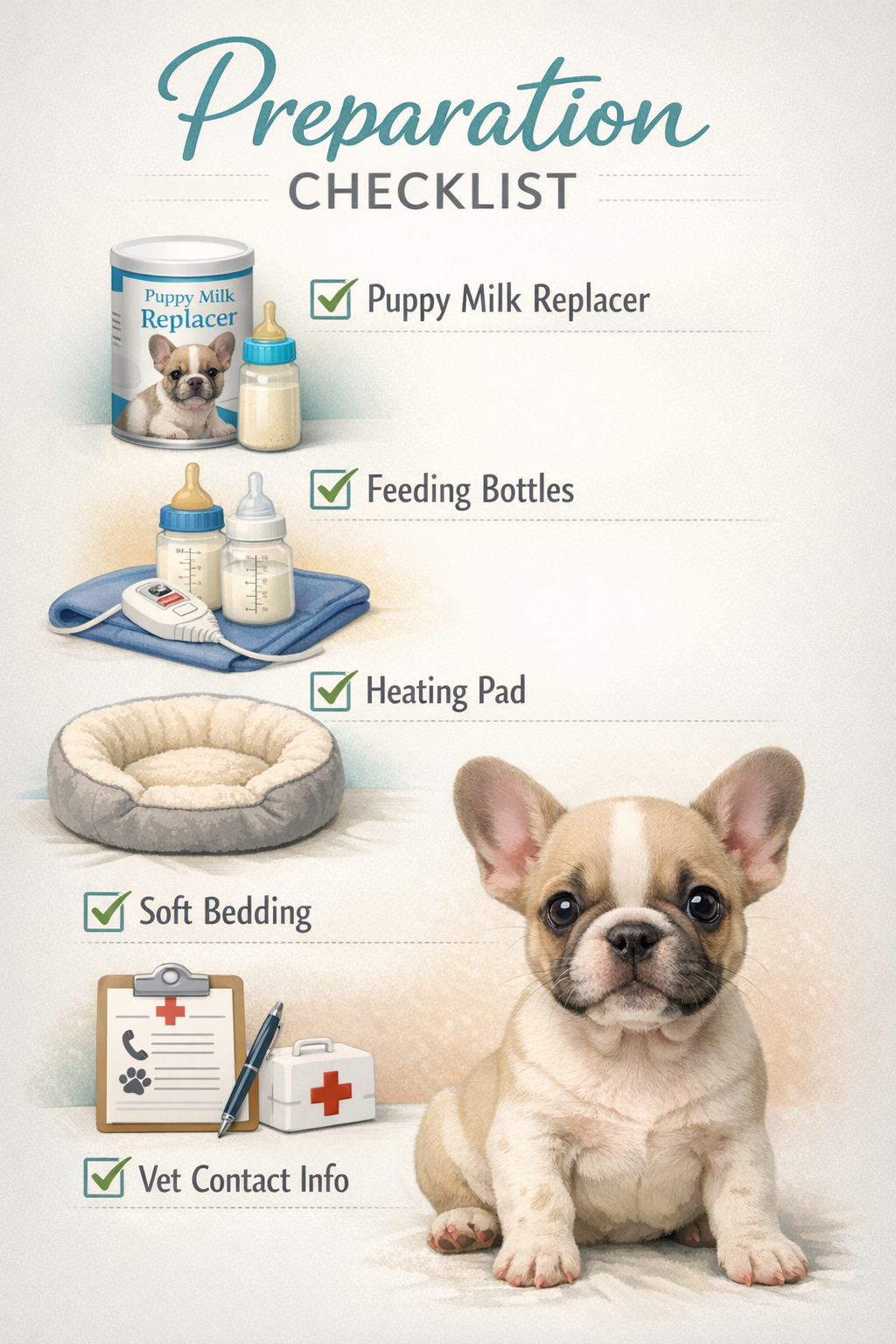
Preparation is crucial when you adopt a French Bulldog puppy without his mother, especially for puppies under 8 weeks. Having supplies ready prevents dangerous delays in feeding and warming.
Feeding Essentials
- Puppy milk replacer (never cow’s milk)
- Nursing bottles designed for puppies
- Feeding syringes for very young puppies
- Soft washcloths for cleaning after feeding
Temperature Control
- Heating pad with adjustable temperature
- Soft blankets and towels
- Digital thermometer
- Warm, draft-free space for sleeping
Health and Hygiene
- Puppy-safe wet wipes
- Digital scale for daily weight monitoring
- Emergency vet contact information
- Puppy pads for easy cleanup
Choose heated beds over heating lamps if you’re concerned about fire safety, but ensure the puppy can move away from heat sources to prevent overheating.
Common mistake: Buying adult dog supplies instead of puppy-specific items. Young French Bulldogs need smaller bottles, gentler formulas, and appropriately sized equipment.
For comprehensive preparation, check our guide on essential items every French Bulldog puppy needs.
How to Feed a French Bulldog Puppy Without His Mother
Feeding a motherless French Bulldog puppy requires strict schedules and proper technique. Young puppies need frequent meals with puppy milk replacer, transitioning gradually to solid food as they mature.
Feeding Schedule by Age
| Age | Frequency | Amount per feeding |
|---|---|---|
| 2-3 weeks | Every 2 hours | 1-3 ml per feeding |
| 3-4 weeks | Every 3 hours | 3-5 ml per feeding |
| 4-6 weeks | Every 4 hours | 5-10 ml per feeding |
| 6-8 weeks | 4-5 times daily | Begin mixing with puppy food |
Proper Feeding Technique
- Warm the formula to body temperature (test on your wrist)
- Hold puppy upright – never feed on his back to prevent aspiration
- Allow natural sucking pace – don’t force feeding
- Burp gently by patting back after feeding
- Stimulate elimination with warm, damp cloth on genital and anal areas
Choose bottle feeding over syringe feeding if the puppy shows strong sucking reflex, but use syringes for very weak or small puppies who can’t latch properly.
Common mistake: Feeding too quickly or in wrong position. French Bulldogs’ flat faces make them prone to aspiration pneumonia if formula enters their lungs.
For detailed feeding guidelines, see our complete French Bulldog puppy feeding guide.
Temperature and Comfort Care for Motherless French Bulldog Puppies
Temperature regulation is critical when you adopt a French Bulldog puppy without his mother, as puppies cannot maintain body heat independently until 4-5 weeks old. Proper warmth prevents hypothermia, which can be fatal in young puppies.
Ideal temperature ranges:
- Week 1-2: 85-90°F (29-32°C)
- Week 3-4: 80-85°F (27-29°C)
- Week 5-8: 75-80°F (24-27°C)
- 8+ weeks: Room temperature (68-75°F)
Safe Warming Methods
- Heating pads on lowest setting with towel barrier
- Warm (not hot) water bottles wrapped in blankets
- Snuggle-safe heat discs designed for pets
- Draft-free sleeping area away from air conditioning
Warning signs of temperature problems:
- Too cold: Lethargy, cool to touch, crying, difficulty feeding
- Too hot: Panting, restlessness, red tongue, seeking cooler spots
Choose adjustable heating sources if you’re caring for multiple puppies, as individual temperature needs may vary based on size and health status.
Edge case: Premature or very small French Bulldog puppies may need incubator-like conditions with humidity control – consult your vet for specialized equipment recommendations.
Health Monitoring and Veterinary Care for Adopted Motherless Puppies
Immediate veterinary assessment is essential when you adopt a French Bulldog puppy without his mother. Motherless puppies face higher health risks and need professional monitoring to catch problems early.
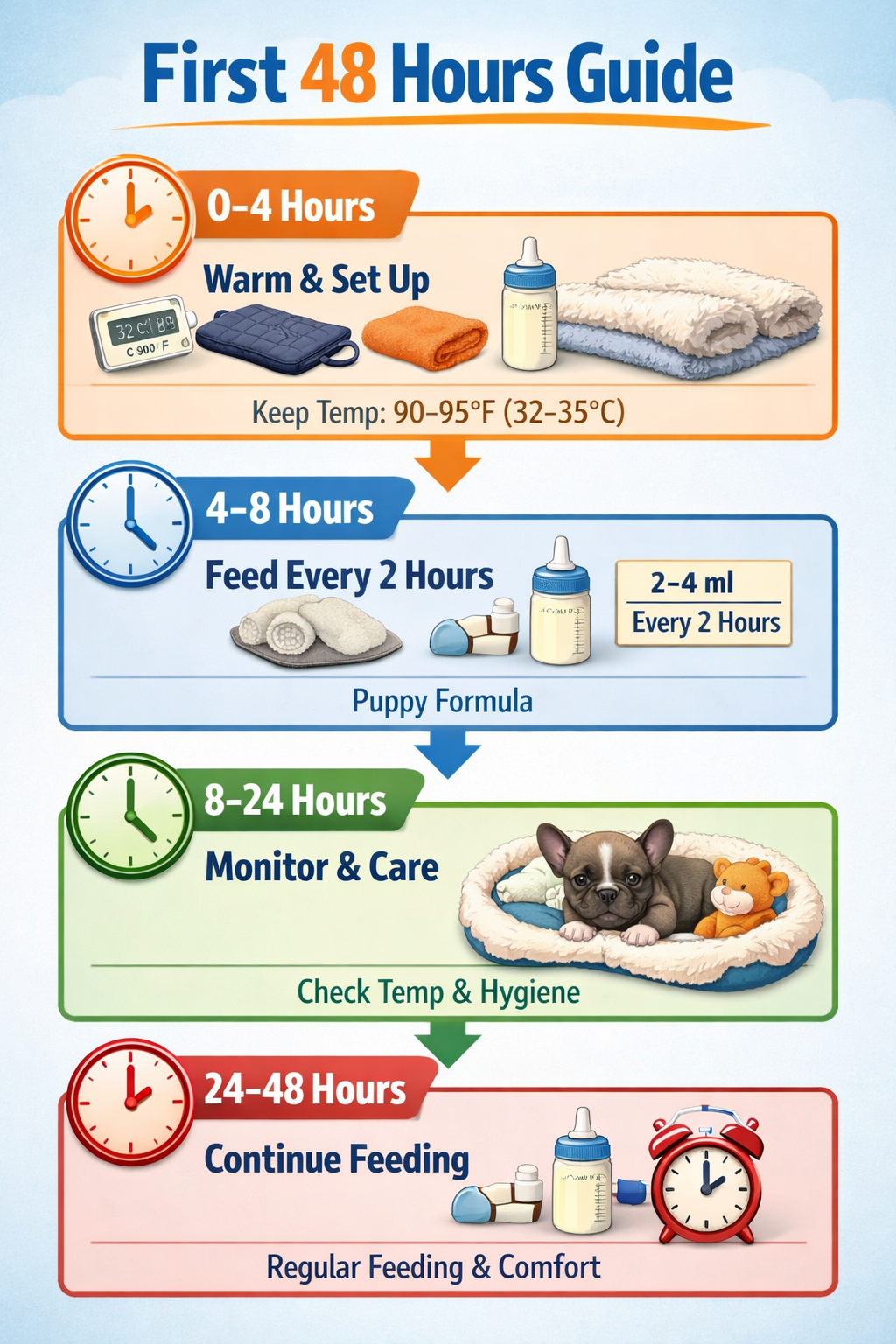
First 48 Hours Priority Checklist
- Veterinary examination within 24 hours of adoption
- Weight monitoring – weigh daily at same time
- Hydration assessment – check gum color and skin elasticity
- Temperature monitoring – normal range 101-102.5°F
- Feeding response – note appetite and sucking strength
Warning Signs Requiring Immediate Vet Care
- Refusing to eat for more than 6 hours
- Weight loss or failure to gain weight daily
- Lethargy or difficulty staying warm
- Diarrhea, vomiting, or bloated abdomen
- Difficulty breathing or blue-tinged gums
Choose emergency vet care over waiting if you notice multiple warning signs, as young puppies can deteriorate rapidly without intervention.
Common mistake: Assuming normal puppy behavior includes constant crying. While some vocalization is normal, persistent crying often indicates hunger, cold, or health issues.
FYI: Some links may be affiliate links, which means I may earn a small commission at no extra cost to you.
If your French bulldog struggles with behavioral issues as he grows, early training intervention makes a significant difference. A structured approach can help prevent common problems like excessive barking or leash pulling that often develop in puppies who missed early maternal guidance.
Learn more about our comprehensive puppy development guide for tracking healthy progress.
Socialization When You Adopt a French Bulldog Puppy Without His Mother
Socialization becomes your primary responsibility when you adopt a French Bulldog puppy without his mother, as puppies miss critical behavioral lessons normally taught by their mother and littermates. Proper socialization prevents fear, aggression, and anxiety issues later in life.
Age-Appropriate Socialization Timeline
- 3-5 weeks: Gentle handling, soft sounds, varied textures
- 5-7 weeks: Introduction to household noises, different people
- 7-12 weeks: Controlled exposure to new environments (post-vaccination)
- 12-16 weeks: Puppy classes, leash training, public spaces
Essential Socialization Activities
- Daily gentle handling of paws, ears, mouth for vet tolerance
- Positive exposure to household sounds (vacuum, TV, doorbell)
- Meeting different people of various ages and appearances
- Supervised interaction with vaccinated, gentle dogs
- Car rides to build travel confidence
Choose gradual exposure over overwhelming experiences if your puppy shows fear responses. French Bulldogs separated early may be more sensitive to new stimuli.
Common mistake: Waiting until all vaccinations are complete to begin socialization. The critical period ends around 16 weeks, so controlled, safe exposures should begin immediately.
Edge case: Puppies who experienced trauma before adoption may need professional behavioral support alongside basic socialization efforts.
For detailed socialization strategies, check our French Bulldog puppy socialization guide.
Legal and Ethical Considerations for Adopting Motherless Puppies
Understanding legal requirements protects both you and the puppy when you adopt a French Bulldog puppy without his mother. Many jurisdictions have specific laws about puppy sales and early separation from mothers.
Legal Requirements to Verify
- Minimum age laws – many states require 8+ weeks
- Health certificates from licensed veterinarians
- Vaccination records appropriate for puppy’s age
- Breeder licensing if adopting from commercial source
- Return policies if health issues develop
Ethical Red Flags to Avoid
- Sellers unwilling to provide mother’s information
- Multiple litters available simultaneously without mothers
- Puppies under 6 weeks offered for immediate pickup
- No veterinary records or health guarantees
- Pressure to buy quickly without asking questions
Choose reputable sources if possible – legitimate rescues and breeders will provide detailed information about why the puppy needs special care.
Documentation to request:
- Reason for early separation from mother
- Previous care provided (feeding schedule, medical care)
- Any known health issues or special needs
- Emergency contact information for previous caregiver
Learn about identifying ethical sources in our guide to avoiding red flags when buying French Bulldog puppies.
Common Challenges and Solutions for Motherless French Bulldog Puppies
Adopting a French Bulldog puppy without his mother presents predictable challenges that require specific solutions. Understanding these common issues helps you respond effectively and reduces stress for both you and your puppy.
Feeding Difficulties
Problem: Puppy refuses bottle or has weak sucking reflex
Solution: Try different nipple sizes, warm formula to proper temperature, or use feeding syringe for very weak puppies
Problem: Frequent regurgitation or vomiting after feeding
Solution: Feed smaller amounts more frequently, ensure proper feeding position, burp thoroughly after meals
Sleep and Comfort Issues
Problem: Constant crying, especially at night
Solution: Provide consistent warmth, soft heartbeat simulation toy, maintain feeding schedule
Problem: Difficulty settling or restless behavior
Solution: Create den-like environment with soft sides, ensure proper temperature, consider gentle music
Developmental Concerns
Problem: Delayed weight gain or growth
Solution: Increase feeding frequency, monitor daily weights, consult vet for nutritional supplements
Problem: Poor social skills or fearfulness
Solution: Gentle, consistent handling, gradual exposure to new experiences, positive reinforcement
Choose professional help if multiple problems persist despite consistent care efforts, as some motherless puppies need specialized veterinary or behavioral support.
Common mistake: Changing care routines frequently when problems arise. Consistency in feeding, sleeping, and handling schedules often resolves issues better than constant adjustments.
Helpful Resource for Training Success
If your French bulldog struggles with barking or lunging on walks as he develops, structured training makes a significant difference in creating a well-behaved companion. This is especially important for puppies who missed early maternal guidance on appropriate social behaviors.
👉 Discover how calmer, happier walks with your Frenchie can start today through force-free training methods designed specifically for French Bulldogs.
Not required, but this type of structured approach can be particularly helpful for motherless puppies who may develop behavioral challenges without proper early guidance.
FAQ
Q: Can a 4-week-old French Bulldog puppy survive without his mother?
A: Yes, but it requires intensive 24/7 care including feeding every 2-3 hours, temperature regulation, and stimulation for elimination. Success rates are much higher with veterinary support and experienced caregivers.
Q: What happens if I feed a motherless puppy regular milk?
A: Cow’s milk can cause severe diarrhea, dehydration, and digestive upset in puppies. Always use puppy milk replacer formulated specifically for dogs’ nutritional needs.
Q: How often should I weigh a motherless French Bulldog puppy?
A: Weigh daily at the same time for the first few weeks. Healthy puppies should gain weight consistently – contact your vet if weight loss occurs or growth stalls.
Q: When can a motherless puppy start eating solid food?
A: Begin introducing soft puppy food mixed with milk replacer around 4-5 weeks. Transition gradually over 2-3 weeks while maintaining bottle feeding as needed.
Q: Do motherless French Bulldog puppies have more health problems?
A: They face higher risks initially due to missing maternal antibodies and care, but with proper nutrition and veterinary monitoring, most develop normally into healthy adults.
Q: How do I know if the puppy is too cold?
A: Signs include lethargy, cool skin, crying, difficulty feeding, and seeking heat sources. Puppies should feel warm to touch and be active during wake periods.
Q: Can I leave a motherless puppy alone during the day?
A: Puppies under 6 weeks should not be left alone for more than 2-3 hours due to feeding requirements. Older puppies can gradually handle longer periods as they mature.
Q: What vaccinations does a motherless puppy need?
A: Follow standard puppy vaccination schedules, but your vet may recommend earlier or additional vaccines since motherless puppies lack maternal antibody protection.
Q: How do I teach bite inhibition to a motherless puppy?
A: Use gentle redirection, provide appropriate chew toys, and yelp softly when bitten to mimic littermate feedback. Consistent, patient training replaces lessons mom would teach.
Q: When should I start house training a motherless French Bulldog puppy?
A: Begin basic routine around 6-8 weeks, but expect slower progress initially. Focus on establishing feeding and elimination schedules before formal potty training.
Q: Is pet insurance more expensive for motherless puppies?
A: Insurance costs depend on the puppy’s current health status rather than early separation. However, document all early care to avoid pre-existing condition exclusions.
Q: How long before a motherless puppy acts like a normal dog?
A: Most behavioral differences resolve by 4-6 months with proper socialization and training. Some may retain slightly more dependent or attention-seeking behaviors throughout life.
Conclusion
Learning how to adopt a French Bulldog puppy without his mother requires immediate preparation for intensive care, especially for puppies under 8 weeks old. Success depends on proper feeding with puppy milk replacer every 2-3 hours, maintaining appropriate body temperature, and providing round-the-clock monitoring during the critical first weeks.
The key to successful adoption lies in preparation – having supplies ready, establishing veterinary care immediately, and understanding the significant time commitment required. While challenging, motherless puppies can thrive with dedicated care and develop into healthy, well-adjusted adult French Bulldogs.
Your next steps:
- Gather essential supplies before bringing your puppy home
- Schedule immediate veterinary examination within 24 hours
- Prepare for intensive care schedule including night feedings
- Begin gentle socialization appropriate for your puppy’s age
- Monitor weight and development daily during first weeks
Remember that adopting a motherless puppy is a significant commitment, but with proper care and attention, you can successfully raise a healthy, happy French Bulldog who will become a devoted companion for years to come.