
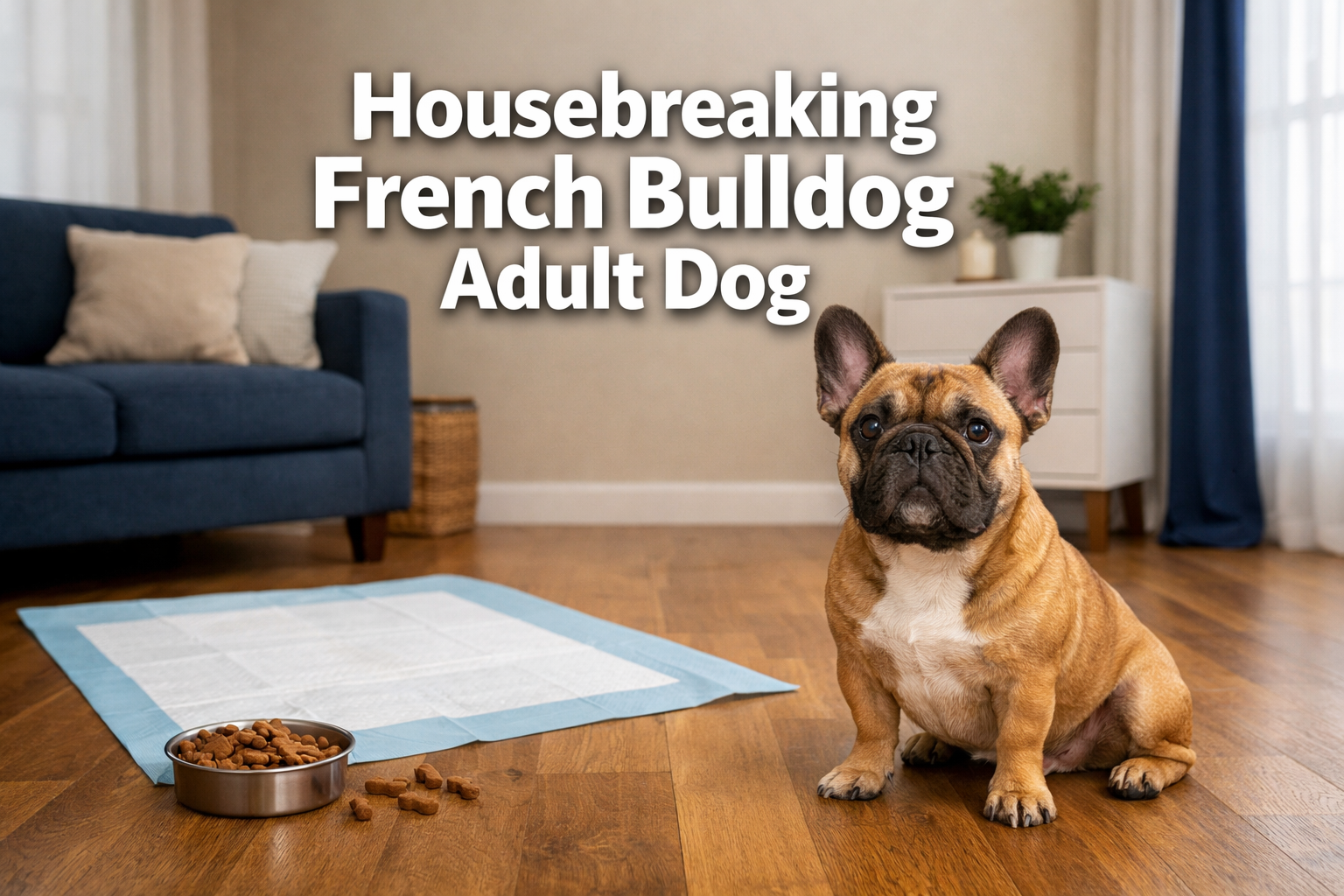
Last updated: February 24, 2026
Key Takeaways
• Adult French Bulldogs can be successfully housebroken with consistent routine and positive reinforcement, typically taking 4-8 weeks
• Establish a strict schedule with potty breaks every 2-3 hours, after meals, and before bedtime to build reliable habits
• Watch for behavioral cues like circling, sniffing, pacing, or heading toward the door to prevent accidents
• Use crate training strategically for 2-3 hours during the day to establish routine and provide a safe space
• Clean accidents thoroughly with enzymatic cleaners to remove odors that might encourage re-soiling
• Positive reinforcement works better than punishment – reward successful elimination immediately with treats and praise
• Medical issues can cause setbacks – consult your vet if a previously housebroken dog starts having frequent accidents
• Restrict indoor access when unsupervised using baby gates or confinement to prevent accidents in carpeted areas
Quick Answer
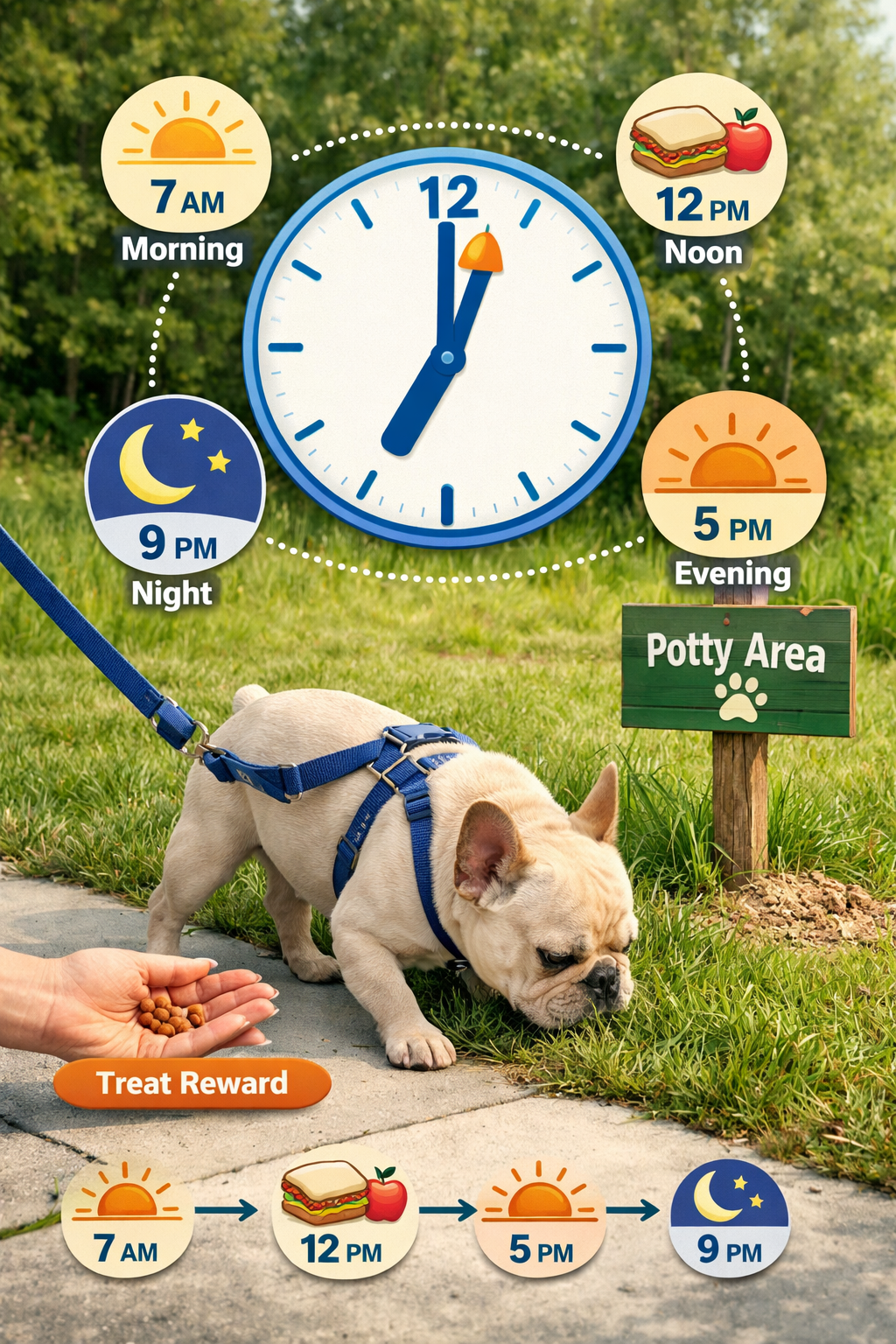
Housebreaking French Bulldog Adult Dog requires establishing a consistent routine with potty breaks every 2-3 hours, using positive reinforcement for successful elimination, and restricting access to prevent accidents. Most adult Frenchies can be fully housebroken within 4-8 weeks when you maintain strict schedules and watch for behavioral cues like circling or pacing.
Why Adult French Bulldogs Need Special Housebreaking Approaches
Adult French Bulldogs present unique housebreaking challenges that differ significantly from puppy training. Unlike puppies who are learning bathroom habits for the first time, adult Frenchies may have developed ingrained patterns or experienced inconsistent training in their previous homes.
The main reasons adult French Bulldogs struggle with housebreaking include:
• Previous inconsistent training that created confusion about appropriate elimination areas
• Stress from rehoming which can temporarily disrupt established bathroom habits
• Medical conditions like urinary tract infections or digestive issues that affect control
• Territorial marking behaviors that developed without proper correction
• Limited bladder capacity due to their compact size and brachycephalic anatomy
French Bulldogs are intelligent but can be stubborn, making consistency even more critical for success. Their people-pleasing nature works in your favor once they understand what you expect. The key is establishing clear, predictable routines that work with their natural tendencies rather than against them.
Choose a structured approach if you’re dealing with frequent accidents or regression. Adult dogs benefit from more intensive supervision initially, then gradual freedom as they prove reliability.
How Long Does Housebreaking French Bulldog Adult Dog Take
Most adult French Bulldogs can be successfully housebroken within 4-8 weeks when you follow a consistent training program. However, the timeline varies significantly based on the dog’s previous training, age, and your commitment to the routine.
Factors that affect training duration:
• Previous training history – Dogs with some housebreaking experience may succeed in 2-4 weeks
• Age and health status – Senior dogs or those with medical issues may need 8-12 weeks
• Consistency of routine – Strict schedules accelerate progress, while inconsistency extends training time
• Living situation – Apartment dwellers may face additional challenges compared to house owners with yards
• Owner availability – Working professionals who can’t maintain frequent breaks may see slower progress
Weekly progression milestones:
- Week 1-2: Establishing routine, frequent accidents expected
- Week 3-4: Noticeable reduction in accidents, better cue recognition
- Week 5-6: Reliable elimination in designated areas, occasional lapses
- Week 7-8: Consistent success with minimal supervision needed
If you’re not seeing improvement after 4 weeks of consistent training, consider consulting your veterinarian to rule out medical issues or working with a professional dog trainer for personalized strategies.
Essential Housebreaking Schedule for Adult French Bulldogs
A structured daily schedule forms the foundation of successful housebreaking for adult French Bulldogs. Consistency in timing helps your dog develop reliable bathroom habits and reduces accidents significantly.
Recommended daily potty schedule:
• 6:00-7:00 AM: First morning break immediately after waking
• 30 minutes after breakfast: Post-meal elimination opportunity
• 11:00 AM-12:00 PM: Mid-morning break
• 30 minutes after lunch: Second post-meal break
• 3:00-4:00 PM: Afternoon break
• 30 minutes after dinner: Evening post-meal break
• 8:00-9:00 PM: Pre-bedtime final break
Feeding schedule coordination is crucial for predictable elimination patterns. Feed your French Bulldog at the same times daily, typically 7 AM, 12 PM, and 5 PM, then provide potty opportunities 15-30 minutes afterward.
During the initial training phase, take your dog out every 2-3 hours regardless of the schedule above. Adult French Bulldogs can typically hold their bladder for 4-6 hours, but more frequent breaks during training prevent accidents and reinforce good habits.
Weekend consistency matters – maintain the same schedule even on your days off. Breaking routine confuses your dog and can undo progress made during the week.
For detailed guidance on establishing feeding routines that support housebreaking, check out our French Bulldog feeding schedule guide.
Recognizing French Bulldog Elimination Signals and Cues
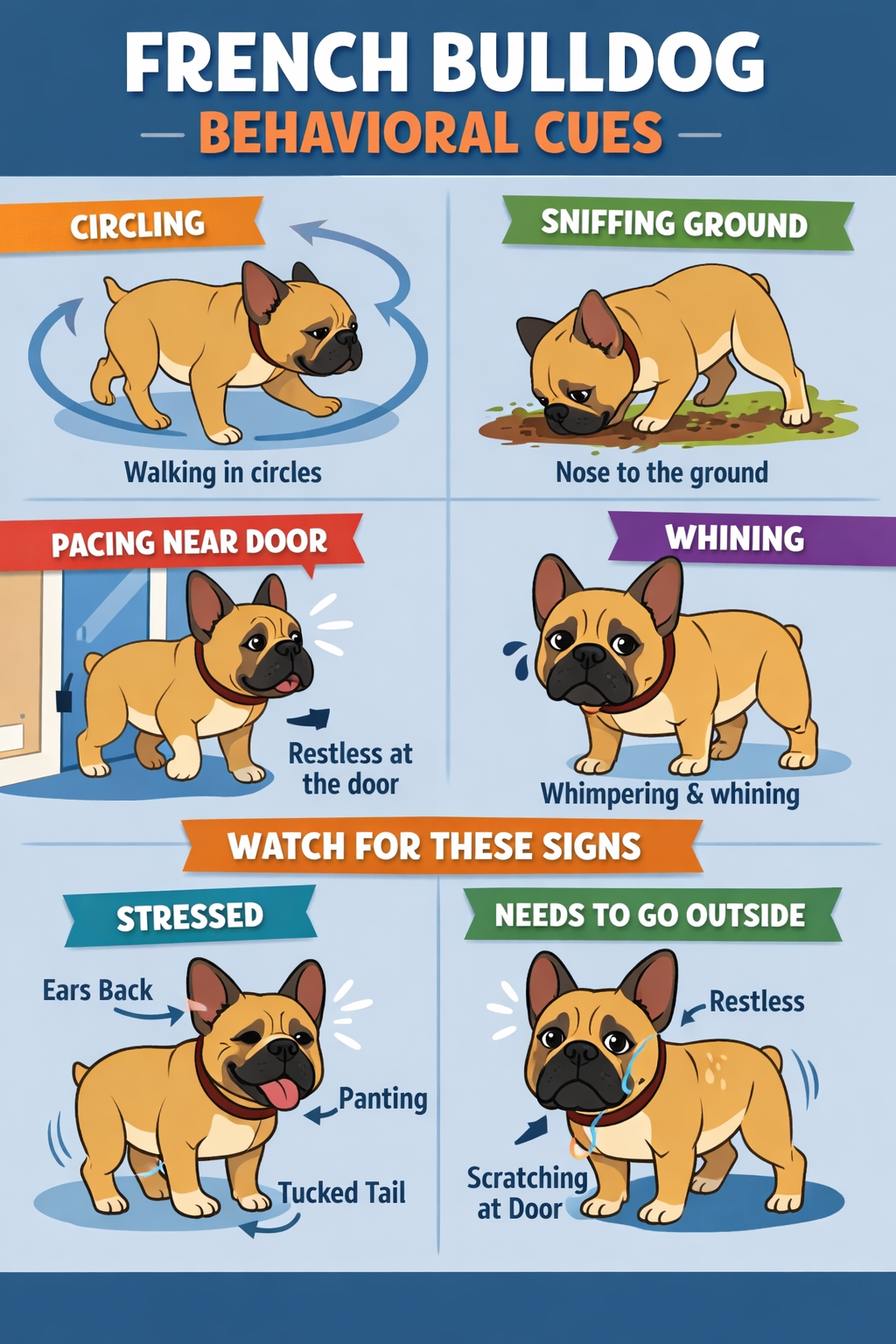
Learning to read your French Bulldog’s pre-elimination signals prevents accidents and builds trust between you and your dog. Adult Frenchies typically display consistent behavioral patterns before needing to eliminate.
Primary behavioral cues to watch for:
• Circling or spinning in small areas, especially near doors or previous accident spots
• Intense ground sniffing while walking in focused patterns
• Restless pacing back and forth, particularly toward exits
• Whining or soft barking while looking at you or the door
• Sudden alertness after periods of rest or play
• Heading directly toward the door or designated elimination area
Timing-based signals include:
- Immediately after waking from naps
- 15-30 minutes after eating or drinking
- During or after active play sessions
- When excited by visitors or stimulating activities
Subtle signs many owners miss:
- Standing by the door without obvious signals
- Breaking away from activities to sniff corners
- Slight anxiety or attention-seeking behaviors
- Changes in normal resting or play patterns
The key is responding immediately when you notice these cues. Even if it’s a false alarm, taking your dog outside reinforces the connection between their signals and the appropriate elimination location.
Common mistake: Waiting to see if the signal intensifies. By the time circling becomes urgent spinning, accidents often happen before you reach the door.
FYI: Some links may be affiliate links, which means I may earn a small commission at no extra cost to you.
If your French Bulldog shows signs of anxiety or reactivity during outdoor potty breaks, a structured training approach can help. Consider a step-by-step reactivity training program that focuses on calm, force-free methods to make outdoor time more comfortable for both of you.
Effective Crate Training Methods for Housebreaking French Bulldog Adult Dog
Crate training serves as a powerful tool for housebreaking adult French Bulldogs by utilizing their natural instinct to keep their sleeping area clean. When implemented correctly, crates provide structure and accelerate the housebreaking process.
Proper crate sizing and setup:
- Choose a crate just large enough for your Frenchie to stand, turn around, and lie down comfortably
- Too much space allows them to eliminate in one corner and sleep in another
- Include comfortable bedding and a water bowl for longer periods
- Position the crate in a quiet area away from high-traffic zones
Strategic crate training schedule:
• 2-3 hours maximum during daytime when you can’t supervise directly
• Overnight periods of 6-8 hours for adult dogs with established bladder control
• Immediate potty break every time you release them from the crate
• Gradual increase in crate time as reliability improves
Crate training steps:
- Introduction phase: Feed meals in the crate with door open for positive associations
- Short periods: Start with 15-30 minute intervals while you’re home
- Extend gradually: Increase duration by 15 minutes every few days
- Overnight transition: Move to nighttime crating once daytime success is consistent
Never use the crate as punishment – this creates negative associations and can increase anxiety. If your French Bulldog whines or barks in the crate, ensure they’ve had adequate exercise and potty opportunities before crating.
For comprehensive crate training strategies, see our French Bulldog crate training guide which covers common mistakes to avoid.
Positive Reinforcement Techniques That Work for French Bulldogs
Positive reinforcement dramatically improves housebreaking success rates compared to punishment-based methods. French Bulldogs respond exceptionally well to praise and food rewards when timed correctly.
Immediate reward protocol:
• Within 3 seconds of successful elimination, offer verbal praise and treats
• Use high-value treats like small pieces of cooked chicken or commercial training treats
• Enthusiastic verbal praise with phrases like “Good potty!” or “Yes, outside!”
• Brief celebration before returning inside to maintain focus on the behavior
Effective reward timing:
- During elimination: Begin quiet praise while they’re actively going
- Immediately after: Provide treats and enthusiastic praise within seconds
- Not after returning inside: The connection weakens if delayed until you’re back indoors
What NOT to do:
• Never punish accidents – this creates fear and may cause hiding behaviors
• Don’t rub their nose in mistakes – this is ineffective and damages trust
• Avoid delayed corrections – French Bulldogs won’t connect punishment to earlier accidents
• Don’t use intimidation – fear-based training often backfires with this sensitive breed
Building positive associations:
Make outdoor elimination the highlight of your dog’s day through consistent rewards. Some French Bulldogs become so motivated by the reward system that they’ll ask to go outside more frequently, which accelerates training progress.
Troubleshooting reward issues:
If your dog seems uninterested in treats outdoors, try higher-value rewards or reduce meal portions slightly to increase food motivation. Some Frenchies prefer praise and petting over food rewards.
Managing Accidents and Preventing Regression
Accidents are normal during adult dog housebreaking, but how you handle them determines whether they become recurring problems or learning opportunities. Proper cleanup and response strategies prevent regression and maintain training momentum.
Immediate accident response:
- Stay calm – emotional reactions confuse your dog and may increase anxiety
- Clean thoroughly with enzymatic cleaners that break down odor-causing bacteria
- Restrict access to the accident area until completely dry and odor-free
- Review your schedule to identify potential timing gaps or missed signals
Effective cleaning protocol:
• Blot liquid accidents with paper towels before applying cleaner
• Use enzymatic cleaners specifically designed for pet accidents, not general household cleaners
• Allow proper drying time – typically 24-48 hours for complete odor elimination
• Test clean areas by sniffing at dog-level to ensure no residual scent remains
Common regression triggers:
- Changes in daily routine or schedule
- Stress from household disruptions or new environments
- Medical issues like urinary tract infections or digestive problems
- Inconsistent responses to accidents or successful elimination
- Seasonal changes affecting outdoor access or comfort
Preventing future accidents:
Increase supervision and return to more frequent potty breaks if accidents increase. Many owners make the mistake of giving too much freedom too quickly after initial success.
When to consult professionals:
If accidents persist after 6-8 weeks of consistent training, or if a previously reliable dog suddenly starts having frequent accidents, schedule a veterinary examination to rule out medical causes.
For additional guidance on common training challenges, review our guide on French Bulldog training mistakes.
Helpful Resource for Comprehensive Training Support
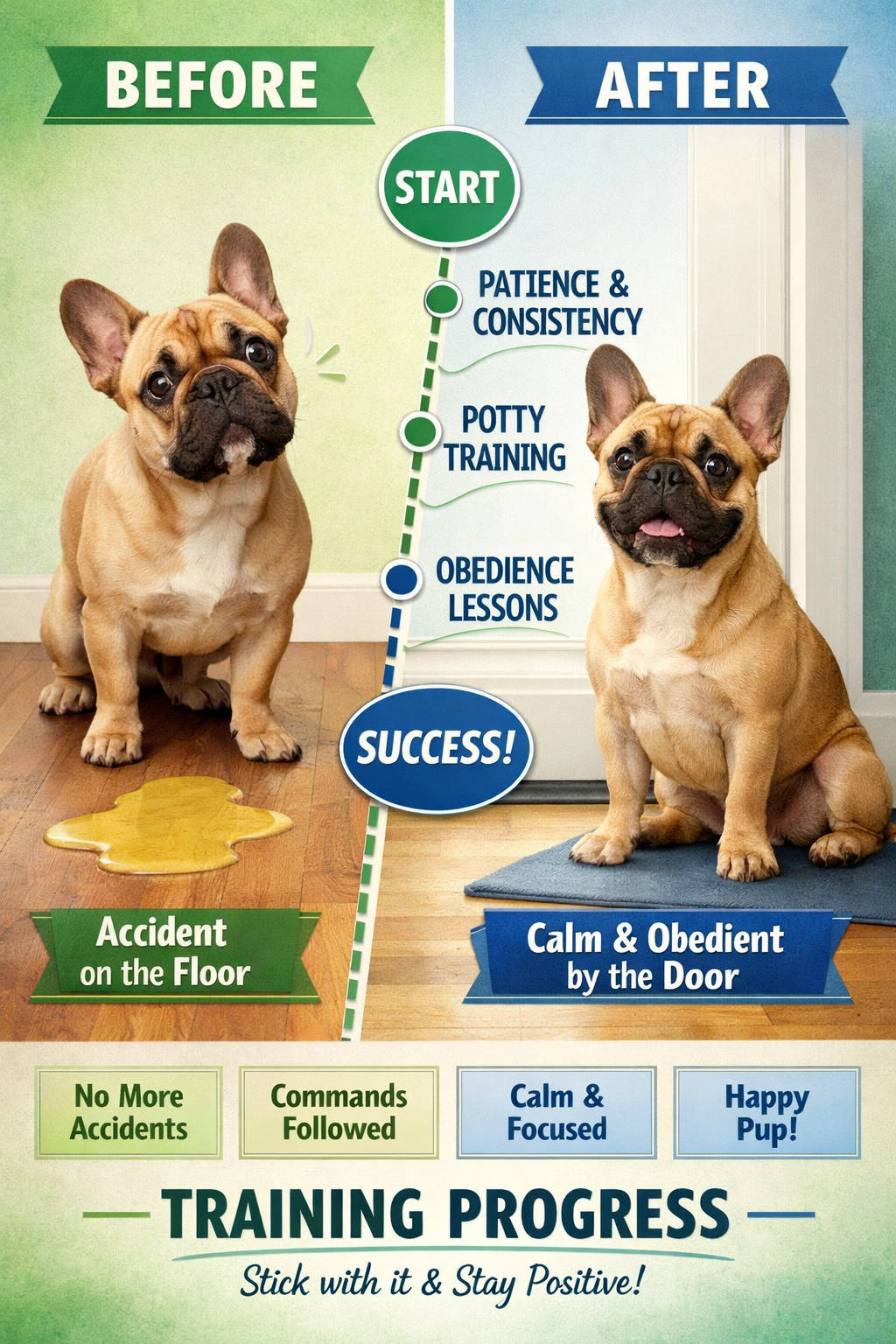
If you want something structured to address multiple behavioral challenges alongside housebreaking, a comprehensive training program can be invaluable. Many French Bulldog owners find that addressing reactivity, barking, or leash issues simultaneously with housebreaking creates better overall results.
👉 Discover how calmer, happier walks with your Frenchie can start today through structured, force-free training methods.
This type of program is particularly helpful if your French Bulldog shows anxiety during outdoor potty breaks or has developed fear-based behaviors that interfere with successful housebreaking.
Troubleshooting Common Housebreaking Challenges
Even with consistent training, adult French Bulldogs may face specific challenges that require targeted solutions. Understanding these common issues helps you adjust your approach for better results.
Frequent nighttime accidents:
- Reduce evening water access 2-3 hours before bedtime
- Add a late-night potty break around 11 PM or midnight
- Consider medical evaluation if accidents persist despite schedule adjustments
- Ensure complete bladder emptying during final evening break
Marking behaviors indoors:
• Interrupt marking attempts with a firm “no” and immediate redirection outside
• Clean marked areas thoroughly to remove scent triggers
• Supervise closely during the initial weeks, especially around furniture legs and corners
• Consider belly bands for male dogs as a temporary management tool
Weather-related resistance:
French Bulldogs may refuse to eliminate outdoors during extreme weather due to their temperature sensitivity. Solutions include:
- Covered outdoor areas like covered patios or dog runs
- Quick outdoor trips with immediate return to warmth
- Protective clothing for cold or rainy weather
- Indoor backup options like pee pads in designated areas for emergencies
Apartment-specific challenges:
• Elevator delays can cause accidents – practice “wait” commands and consider stairs when possible
• Limited outdoor access requires more frequent scheduled breaks
• Noise sensitivity from hallways or neighbors may create anxiety affecting elimination
Senior dog considerations:
Older French Bulldogs may need modified approaches including more frequent breaks, easier outdoor access, and patience with slower learning curves. Arthritis or mobility issues can affect their ability to signal needs effectively.
Frequently Asked Questions
How long can an adult French Bulldog hold their bladder?
Adult French Bulldogs can typically hold their bladder for 4-6 hours during the day and 6-8 hours overnight. However, during housebreaking training, more frequent breaks every 2-3 hours prevent accidents and reinforce good habits.
What if my French Bulldog was previously housebroken but started having accidents?
Sudden regression in a previously housebroken dog often indicates medical issues, stress, or routine changes. Schedule a veterinary exam to rule out urinary tract infections, digestive problems, or other health concerns before resuming intensive training.
Should I use pee pads during adult dog housebreaking?
Pee pads can confuse adult dogs about appropriate elimination locations and may slow outdoor training progress. Use them only as emergency backup options during extreme weather or when outdoor access is temporarily unavailable.
How do I know if my French Bulldog is fully housebroken?
Consider your dog fully housebroken when they consistently eliminate outdoors, signal when they need to go out, and have no accidents for at least 4-6 weeks with normal supervision and freedom in the house.
What treats work best for housebreaking rewards?
High-value, small treats like tiny pieces of cooked chicken, freeze-dried liver, or commercial training treats work best. The treat should be something your dog finds irresistible but can consume quickly without distraction from the training moment.
Can older French Bulldogs still be successfully housebroken?
Yes, older French Bulldogs can learn new bathroom habits, though it may take longer than younger adults. Senior dogs benefit from more frequent breaks, patience with slower learning, and medical evaluation to ensure no underlying health issues interfere with training.
What’s the biggest mistake owners make during housebreaking?
The most common mistake is inconsistency in schedule and responses. Giving too much freedom too quickly, inconsistent reward timing, or skipping scheduled potty breaks significantly slows progress and can cause regression.
How do I handle accidents when I catch my dog in the act?
Interrupt with a calm “no” and immediately take them outside to finish. If they complete elimination outdoors, reward normally. Never punish or show anger, as this creates fear and may cause hiding behaviors.
Should I wake my French Bulldog for nighttime potty breaks?
During initial training, one middle-of-the-night break around 2-3 AM can help prevent accidents. Gradually eliminate this break as your dog demonstrates reliable overnight control for several consecutive weeks.
What if my French Bulldog refuses to eliminate during scheduled breaks?
Stay outside for 5-10 minutes, then return inside and try again in 30 minutes. Don’t force it, but maintain supervision to catch signals for the next attempt. Some dogs need time to develop routine-based elimination patterns.
How do weather conditions affect housebreaking progress?
French Bulldogs are sensitive to extreme temperatures and may resist going outside in very hot, cold, or wet weather. Provide covered areas, protective clothing, or indoor alternatives during severe weather to maintain progress.
When should I contact a professional trainer for help?
Consider professional help if you see no improvement after 6-8 weeks of consistent training, if your dog shows fear or anxiety around elimination, or if you’re struggling to maintain consistency due to work or lifestyle factors.
Conclusion
Successfully housebreaking French Bulldog adult dogs requires patience, consistency, and understanding of their unique needs and temperament. While the process typically takes 4-8 weeks, your commitment to a structured routine with frequent potty breaks, positive reinforcement, and proper accident management will determine your success.
Remember that adult French Bulldogs can overcome previous inconsistent training or develop new habits regardless of their age. Focus on establishing clear schedules, recognizing their elimination signals, and responding appropriately to both successes and setbacks. The key is maintaining consistency in your approach while adapting to your dog’s individual learning pace.
Your next steps should include:
• Establishing a strict daily schedule with potty breaks every 2-3 hours
• Setting up a properly sized crate for routine and overnight management
• Stocking up on high-value treats and enzymatic cleaners
• Scheduling a veterinary checkup if accidents persist beyond 6-8 weeks
With dedication and the right approach, your French Bulldog will develop reliable bathroom habits that make them an even better companion for apartment living and family life. Stay patient, celebrate small victories, and remember that consistency in your routine creates the foundation for long-term success.
For additional support with your French Bulldog’s overall training and development, explore our complete guide to French Bulldog house training steps.
References
[1] Housebreaking Guide For French Bulldogs Tips And Strategies For Success – https://www.dogbizness.com.au/post/housebreaking-guide-for-french-bulldogs-tips-and-strategies-for-success
[2] House Train A French Bulldog – http://vincecincy.com/house-train-a-french-bulldog/
[3] Housetraining Adult Dog – https://www.dogspringtraining.com/tips/housetraining-adult-dog/
[5] How To House Train An Adult Dog – https://www.woofz.com/blog/how-to-house-train-an-adult-dog/
[7] Housetraining Adult Dogs – https://www.wihumane.org/housetraining-adult-dogs