
Crate Training Mistakes to Avoid with French Bulldogs

Last updated: February 21, 2026
Key Takeaways
• Remove collars and destructible items before crating to prevent choking and strangulation hazards
• Choose the right crate size—large enough for comfort but not so big that your Frenchie uses one end as a bathroom
• Never use the crate as punishment or force your dog inside, as this creates negative associations
• Progress gradually from short periods to longer durations, avoiding the temptation to rush the process
• Consider French Bulldog-specific needs like breathing issues and temperature sensitivity when crating
Quick Answer
The most critical crate training mistakes to avoid with French Bulldogs include using the wrong crate size, leaving collars on during crating, using the crate as punishment, and ignoring breed-specific health concerns like breathing difficulties. Success comes from gradual introduction, positive associations, and respecting your Frenchie’s unique physical and emotional needs.
What Makes French Bulldog Crate Training Different?
French Bulldogs require special consideration during crate training due to their unique physical characteristics and temperament. Unlike other breeds, Frenchies have brachycephalic (flat-faced) features that affect their breathing, making proper ventilation and temperature control essential during crating periods.
These companion dogs also form intense bonds with their owners, which means separation anxiety can develop more easily if crate training isn’t handled properly. Their stubborn yet sensitive nature requires a patient, positive approach that builds trust rather than forcing compliance.
Key differences for French Bulldogs:
- Breathing concerns: Require well-ventilated crates and climate control
- Attachment issues: More prone to separation anxiety than independent breeds
- Physical limitations: Delicate necks and joints need extra safety precautions
- Temperature sensitivity: Cannot regulate body temperature as effectively as other breeds
Understanding these breed-specific traits helps you avoid common mistakes that work for other dogs but can harm or traumatize French Bulldogs.
What Are the Most Dangerous Crate Training Mistakes to Avoid with French Bulldogs?
The most dangerous mistakes can cause physical injury or severe psychological trauma to your French Bulldog. These errors often stem from treating Frenchies like other breeds without considering their unique vulnerabilities.
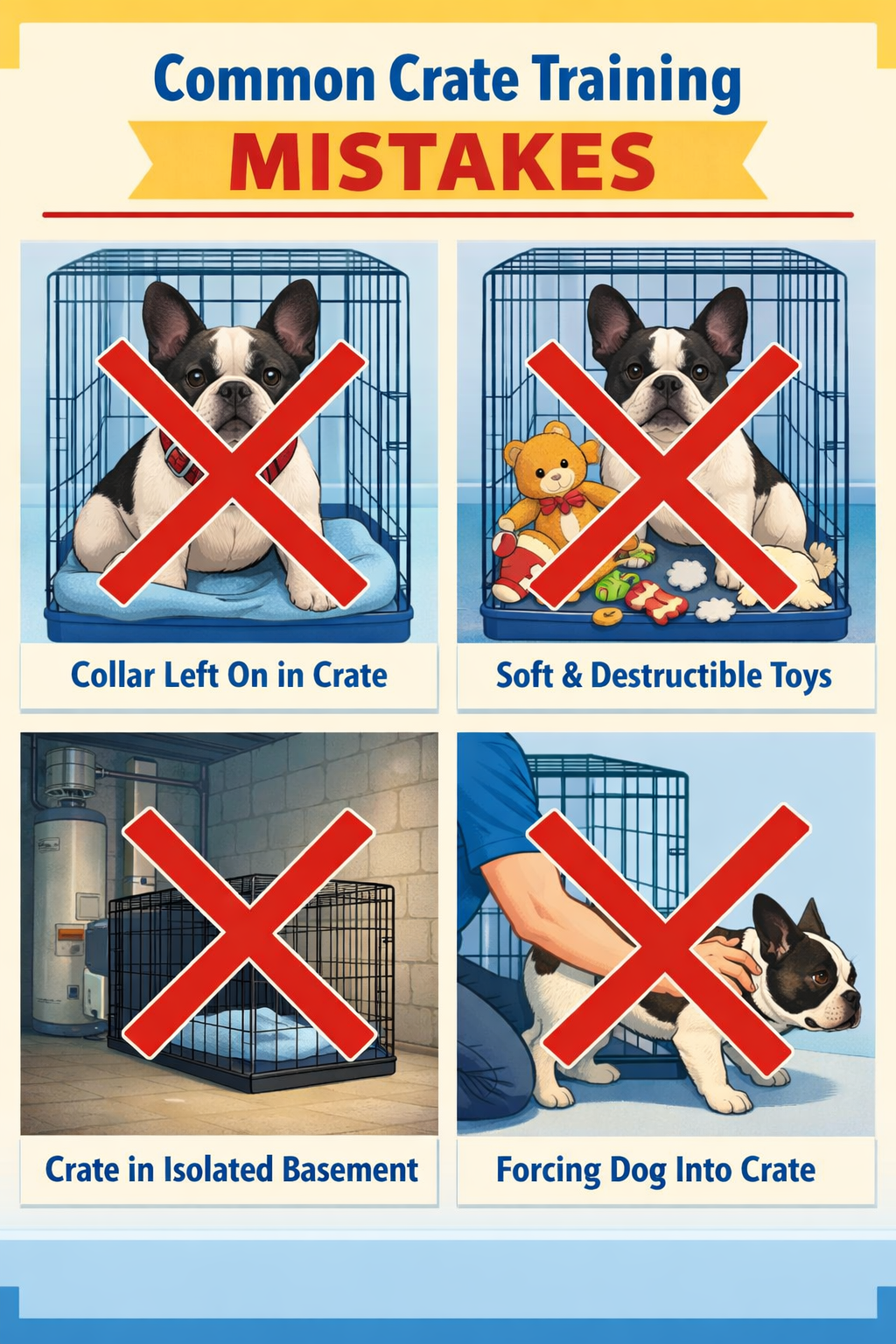
Never leave collars on during crating. This poses a serious strangulation risk if the collar catches on crate bars or accessories. French Bulldogs have particularly delicate necks, making this mistake potentially fatal.
Avoid destructible items in the crate. Blankets, towels, and soft toys can be torn apart and ingested, causing choking or intestinal blockages. Anxious dogs are especially likely to destroy bedding, creating dangerous debris.
Don’t force your dog into the crate by hand. Physical forcing creates fear and resistance, making future crating sessions traumatic. This is particularly harmful for sensitive French Bulldogs who rely on trust with their owners.
Never use the crate as punishment. This creates negative associations that can take months to reverse. French Bulldogs remember emotional experiences strongly, so punishment-based crating often leads to permanent crate aversion.
Safety checklist before crating:
- Remove collar and harness
- Clear crate of destructible items
- Check for sharp edges or loose parts
- Ensure proper ventilation
- Verify comfortable temperature
How Do You Choose the Right Crate Size for French Bulldogs?
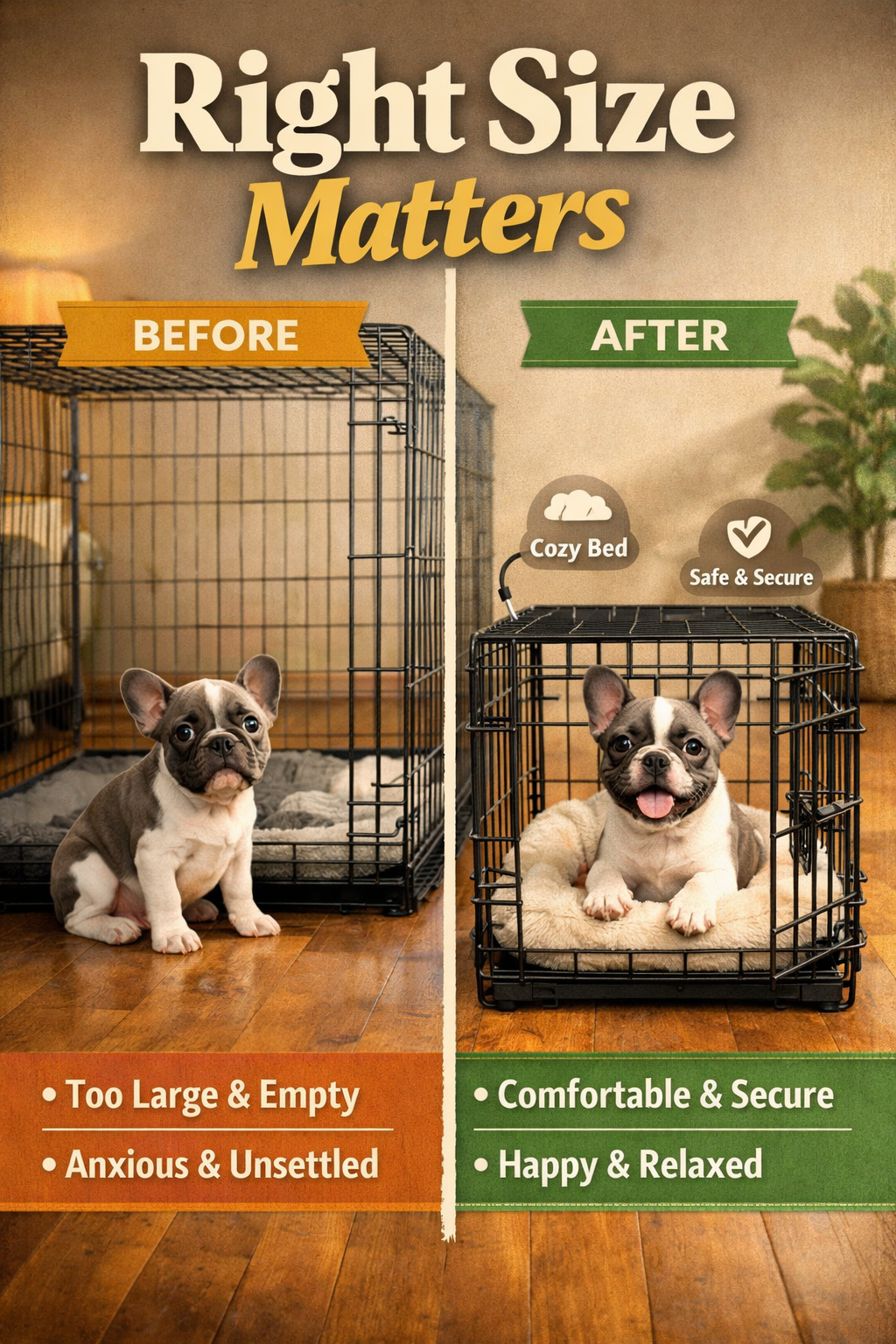
Choosing the wrong crate size is one of the most common crate training mistakes that undermines housebreaking and comfort. The crate should be large enough for your French Bulldog to stand, turn around, and lie down comfortably, but not so large that they can use one end as a bathroom.
Proper sizing guidelines:
- Length: Dog’s body length plus 2-4 inches
- Width: Dog’s shoulder width plus 2-4 inches
- Height: Dog’s standing height plus 2-4 inches
For French Bulldog puppies, choose a crate that fits their adult size (typically 24-30 inches long) and use dividers to adjust the space as they grow. This prevents having to buy multiple crates while maintaining proper sizing.
Common sizing mistakes:
- Too large: Dog eliminates in one corner and sleeps in another
- Too small: Causes discomfort and claustrophobia
- Wrong shape: Wire crates work better than plastic for Frenchies due to ventilation needs
Test the size by observing your dog’s behavior. If they’re eliminating in the crate despite proper housebreaking, the space is likely too large. If they seem cramped or reluctant to enter, it may be too small.
What Timing Mistakes Ruin French Bulldog Crate Training?
Poor timing is a critical factor that can sabotage even well-intentioned crate training efforts. French Bulldogs are particularly sensitive to rushed timelines and inconsistent schedules, making gradual progression essential for success.
Don’t start with long periods immediately. Beginning with hours-long crating sessions creates panic and negative associations. Start with just 5-10 minutes with the door open, gradually increasing duration over weeks.
Avoid closing and latching the door too quickly. This causes apprehension and resistance. Keep the door open during initial training sessions, then close it briefly before adding the latch.
Progressive timeline for French Bulldogs:
- Week 1: Feed meals in open crate, 5-10 minute stays
- Week 2: Close door for 15-30 minutes while home
- Week 3: Extend to 1-2 hours with brief departures
- Week 4+: Gradually increase to full work day periods
Don’t let whining tempt you to release immediately. Wait for a quiet moment before opening the door, or you’ll reinforce that whining gets them out. However, distinguish between attention-seeking whining and genuine distress signals.
FYI: Some links may be affiliate links, which means I may earn a small commission at no extra cost to you.
If your French Bulldog shows signs of severe anxiety or reactivity during crate training, you might benefit from a structured approach that addresses these behavioral challenges. A gentle, force-free training method can help reactive dogs become calmer and more focused, which often translates to better crate acceptance and overall training success.
How Do You Avoid Creating Negative Associations with the Crate?
Creating positive associations is crucial for French Bulldog crate training success, but many owners inadvertently build negative connections that last for years. These mistakes often stem from using human logic rather than understanding canine psychology.
Never use the crate for punishment or time-outs. This immediately transforms the crate from a safe haven into a prison in your dog’s mind. French Bulldogs are particularly sensitive to emotional context and will remember these negative experiences.
Don’t only crate when leaving home. If the crate becomes associated solely with your departure, your Frenchie will resist entering because they know you’re leaving. Use the crate for positive activities while you’re home too.
Avoid dramatic departures and arrivals. Making a big fuss when leaving or returning creates emotional intensity around crating. Keep departures calm and matter-of-fact.
Building positive associations:
- Feed special treats only in the crate
- Place favorite toys inside during open-door sessions
- Use calm, encouraging voice tones around the crate
- Practice crating during pleasant times, not just departures
- Reward calm behavior in and around the crate
Don’t praise excessively when releasing your dog. This makes leaving the crate the rewarding part rather than being inside it. Keep releases calm and neutral.
What Environmental Mistakes Make Crate Training Harder?
The crate’s location and setup significantly impact your French Bulldog’s acceptance and comfort level. Many owners place crates in convenient spots for humans rather than considering what works best for their dog’s needs.
Don’t isolate the crate in basements or spare rooms. French Bulldogs are social animals who want to be near their family. Isolation can increase anxiety and resistance to crating. Place the crate in a main living area where your dog can see and hear family activity.
Avoid high-traffic areas that prevent rest. While social connection is important, constant foot traffic and noise can make relaxation impossible. Choose a spot with family visibility but relative quiet.
Temperature control mistakes:
- Too hot: French Bulldogs overheat easily due to breathing restrictions
- Too cold: Can cause discomfort and reluctance to enter
- Poor ventilation: Essential for brachycephalic breeds
- Direct sunlight: Can create dangerous heat buildup
Optimal crate environment:
- Family room corner with good airflow
- Away from heating/cooling vents
- Comfortable room temperature (68-72°F)
- Minimal direct sunlight
- Easy access for cleaning
Consider your home’s daily rhythms. The crate should be in a space that’s active during the day but calms down for nighttime rest.
How Do French Bulldog Health Issues Affect Crate Training?
French Bulldogs have specific health vulnerabilities that require modified crate training approaches. Ignoring these breed-specific concerns can lead to serious health complications or training failures.
Breathing difficulties require special attention. Brachycephalic Obstructive Airway Syndrome (BOAS) affects most French Bulldogs, making proper ventilation critical during crating. Stress and overheating can quickly become life-threatening.
Delicate neck structure means no collars during crating. French Bulldogs have compressed airways and fragile neck anatomy. Use properly fitted harnesses for regular activities, but remove all gear before crating.
Temperature sensitivity considerations:
- Heat: Never crate during hot weather without air conditioning
- Cold: Provide appropriate bedding in cool conditions
- Humidity: High humidity worsens breathing problems
- Exercise timing: Don’t crate immediately after physical activity
Joint and spine concerns:
- Ensure easy entry/exit without jumping
- Provide supportive bedding for comfort
- Consider ramps for elevated crates
- Monitor for signs of discomfort or stiffness
Signs to stop crating immediately:
- Excessive panting or drooling
- Blue-tinged gums or tongue
- Vomiting or retching
- Extreme distress or panic
- Difficulty breathing
If your French Bulldog shows persistent anxiety or behavioral issues during crate training, consider working with a professional trainer who understands reactive dog behavior and can provide structured, gentle techniques to build confidence and calmness.
What Mistakes Do New French Bulldog Owners Make Most Often?
New French Bulldog owners often make predictable mistakes because they apply general dog training advice without considering breed-specific needs. Understanding these common errors helps you avoid setbacks and build successful crate training habits from the start.
Rushing the timeline due to work schedules. Many new owners need to return to work quickly and try to accelerate crate training. This pressure often leads to forcing longer periods before the dog is ready, creating lasting negative associations.
Comparing progress to other breeds. French Bulldogs often take longer to crate train than breeds with different temperaments. What works in a week for a Labrador might take a month for a Frenchie.
Inconsistent family rules. When family members have different approaches to crate training, the dog receives mixed signals that slow progress. Everyone must follow the same protocols.
Most common new owner mistakes:
- Using punishment when accidents happen in the crate
- Leaving the dog crated too long on the first attempts
- Not recognizing signs of overheating or breathing distress
- Expecting immediate acceptance of the crate
- Using the wrong type of bedding or accessories
Overlooking socialization needs. French Bulldogs need positive exposure to the crate during their critical socialization period (8-16 weeks). Missing this window can make crate acceptance much more difficult later.
Setting realistic expectations:
- Puppy: 3-6 months for reliable crate training
- Adult rescue: 2-4 months depending on background
- Senior dog: May take longer due to established habits
Remember that French Bulldogs are intelligent but can be stubborn. Patience and consistency always work better than force or frustration.
Helpful Resource for Reactive or Anxious French Bulldogs
If your French Bulldog shows signs of anxiety, reactivity, or extreme resistance during crate training, these behaviors often stem from deeper stress responses that need addressing. A structured, gentle training approach designed specifically for reactive dogs can help build the calm, focused mindset that makes crate training much more successful.
This step-by-step method uses force-free techniques that many French Bulldog owners have found helpful for creating more peaceful daily routines and reducing overall anxiety levels. While not specifically about crating, the calming techniques and confidence-building exercises often translate directly to better crate acceptance and less stressful training sessions.
FAQ
How long should I leave my French Bulldog in a crate?
Adult French Bulldogs shouldn’t be crated longer than 6-8 hours maximum due to their social needs and potential breathing issues. Puppies need much shorter periods—roughly one hour per month of age plus one hour.
Can I use blankets in my French Bulldog’s crate?
Avoid loose blankets and towels as they can be torn apart and ingested, especially by anxious dogs. Use fitted crate pads or mats designed specifically for dog crates that can’t be easily destroyed.
Should I cover my French Bulldog’s crate?
Light covering can help some dogs feel secure, but ensure adequate ventilation for French Bulldogs due to their breathing issues. Never fully enclose the crate—always leave at least two sides open for airflow.
What if my French Bulldog has accidents in the crate?
Accidents usually indicate the crate is too large, the dog was left too long, or they weren’t properly house-trained first. Clean thoroughly with enzymatic cleaner and reassess your timeline and crate size.
Is it normal for French Bulldogs to whine in the crate initially?
Some initial whining is normal as they adjust, but distinguish between attention-seeking behavior and genuine distress. Never let whining result in immediate release, but do respond to signs of real panic or breathing difficulties.
Can I crate train an older French Bulldog?
Yes, but it may take longer than with puppies. Adult dogs can have established preferences and fears that require patient, gradual conditioning. Focus on building positive associations before expecting extended crating periods.
What type of crate works best for French Bulldogs?
Wire crates with good ventilation work best due to breathing concerns. Avoid plastic airline crates unless necessary for travel, as they restrict airflow that French Bulldogs need.
Should I put food and water in the crate?
Only put food in the crate during training sessions to build positive associations. Remove water before extended crating to prevent accidents, but always provide access immediately upon release.
How do I know if the crate is the right temperature?
Monitor your French Bulldog for signs of overheating (excessive panting, drooling) or being too cold (shivering, reluctance to lie down). The crate area should feel comfortable to you as well.
What if my French Bulldog never seems to like the crate?
Some dogs take months to fully accept crating. Ensure you’re not rushing the process, using punishment, or ignoring health issues. Consider consulting a professional trainer familiar with French Bulldog temperament.
Can I use the crate for multiple French Bulldogs?
Each dog needs their own appropriately-sized crate. Sharing crates can create resource guarding issues and prevents proper individual training progress.
What’s the biggest mistake that ruins crate training?
Using the crate as punishment is the most damaging mistake, as it creates lasting negative associations that can take months or years to overcome. Always keep crate experiences positive or neutral.
Key Takeaways
• Safety first: Remove collars and destructible items to prevent choking, strangulation, and intestinal blockages during crating sessions
• Size matters: Choose a crate that allows standing, turning, and lying down comfortably, but isn’t so large that your Frenchie can eliminate in one corner
• Gradual progression: Start with short 5-10 minute sessions and slowly increase duration over weeks rather than rushing to full-day crating
• Positive associations only: Never use the crate for punishment, time-outs, or only when leaving home—build positive connections through treats, meals, and calm interactions
• Breed-specific considerations: Account for French Bulldog breathing issues, temperature sensitivity, and social needs when planning crate training approaches
• Environmental setup: Place the crate in a family area with good ventilation and comfortable temperature, avoiding isolation or high-traffic stress zones
• Health awareness: Monitor for signs of breathing distress, overheating, or anxiety, and adjust training immediately if health concerns arise
• Realistic timelines: Expect 3-6 months for complete crate training success with French Bulldogs, as they often need more time than other breeds
• Consistency across family: Ensure all household members follow the same crate training rules and approaches to avoid confusing mixed signals
• Professional help when needed: Consider expert guidance for dogs showing severe anxiety, reactivity, or persistent resistance to crate training efforts
Conclusion
Successful crate training with French Bulldogs requires understanding their unique physical and emotional needs while avoiding common mistakes that work for other breeds but can harm Frenchies. The key is patience, positive associations, and respecting their breathing limitations and social nature.
Start by choosing the right-sized crate and placing it in a family area with good ventilation. Remove all collars and destructible items before each crating session, and never use the crate as punishment. Progress gradually from short periods to longer durations, building positive associations through treats and calm interactions.
Remember that French Bulldogs often take longer to crate train than other breeds due to their sensitive temperament and strong attachment to their owners. Focus on creating a safe, comfortable environment rather than rushing the timeline.
If your Frenchie shows persistent anxiety or resistance, consider working with a professional trainer who understands reactive dog behavior. With the right approach and patience, most French Bulldogs can learn to see their crate as a secure, comfortable retreat rather than a source of stress.
Your next steps:
- Assess your current crate setup for safety and sizing issues
- Create a gradual training timeline appropriate for your dog’s current comfort level
- Focus on building positive associations before expecting extended crating periods
- Monitor for breed-specific health concerns during all training sessions
- Seek professional help if anxiety or resistance persists beyond normal adjustment periods
For additional guidance on French Bulldog training challenges, explore our complete guide to training French Bulldog puppies and common mistakes new owners make. You might also find our positive reinforcement training methods helpful for building the foundation of trust that makes crate training successful.
References
[1] Crate Training A Rescue Dog Guide – https://rockykanaka.com/crate-training-a-rescue-dog-guide/
[2] French Bulldog Puppy Training 101 Essential Tips – https://www.joiipetcare.com/blogs/advice/french-bulldog-puppy-training-101-essential-tips
[3] Are French Bulldogs Easy To Train – https://www.woofz.com/blog/are-french-bulldogs-easy-to-train/
[4] Crate Training Is Destroying Me Help – https://www.frenchbulldognews.com/threads/crate-training-is-destroying-me-help.4195/