
How to Train French Bulldog Not to Bark: A Complete Guide for Apartment Living
Last updated: February 21, 2026
Key Takeaways
• French Bulldogs respond best to positive reinforcement training with treats and praise rather than harsh corrections
• The “quiet” command is the most effective technique for stopping excessive barking when taught consistently
• Identifying and managing barking triggers like boredom, separation anxiety, and visual stimuli reduces unwanted behavior
• Short 5-10 minute training sessions work better than long sessions due to French Bulldogs’ limited attention spans
• Environmental management and mental stimulation are crucial for preventing boredom-related barking in apartment settings
Quick Answer

How to train French Bulldog not to bark involves using positive reinforcement to teach the “quiet” command, identifying specific barking triggers, and providing adequate mental stimulation. Start by rewarding silence immediately after your Frenchie stops barking, even for just a second, then gradually extend the quiet duration. Combine this with environmental management like blocking visual triggers and ensuring your dog gets enough physical and mental exercise to prevent boredom-related barking.
Why Do French Bulldogs Bark Excessively?
French Bulldogs bark for specific reasons that apartment dwellers need to understand before implementing training solutions. Boredom is the primary cause of excessive barking in Frenchies, especially when they’re left alone for extended periods without adequate mental stimulation[2]. These companion-focused dogs were bred to be with their families, making them prone to attention-seeking behaviors when ignored.
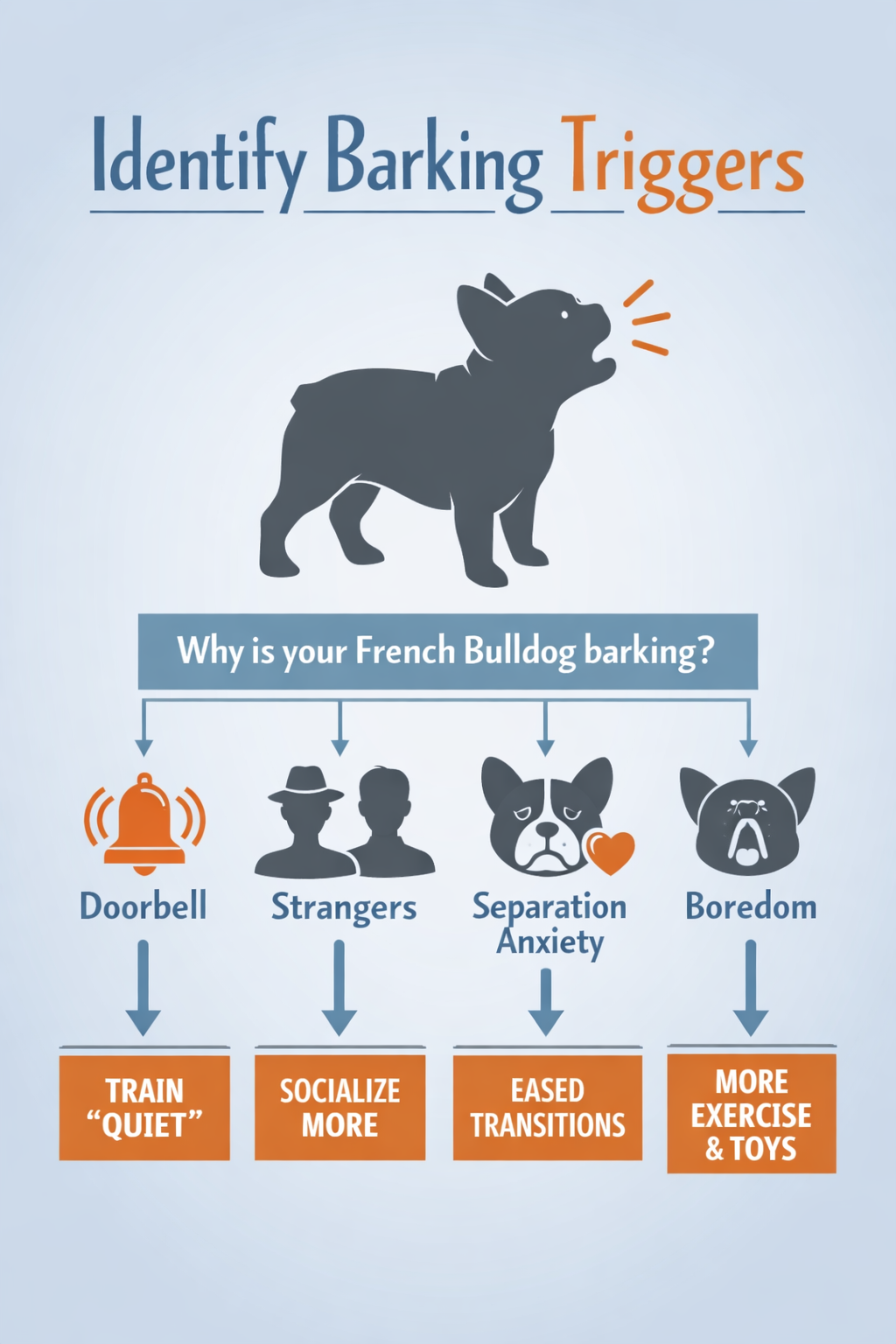
Common barking triggers include:
• Visual stimuli – people walking past windows, delivery trucks, other dogs
• Separation anxiety – distress when left alone, even briefly
• Attention-seeking – learned behavior that gets owner response
• Territorial behavior – protecting their space from perceived intruders
• Lack of exercise – insufficient physical and mental outlets
French Bulldogs are particularly sensitive to their owner’s emotional state and daily routines. If you’re stressed or anxious, your Frenchie often mirrors these emotions through increased barking. Additionally, their flat faces make them more prone to breathing difficulties, which can increase anxiety and trigger defensive barking when they feel overwhelmed.
Choose positive identification over punishment – instead of focusing on stopping the barking, identify what your dog is trying to communicate. A Frenchie barking at the window may need the visual trigger removed, while one barking when alone needs gradual desensitization to your departure routine.
How to Train French Bulldog Not to Bark Using Positive Reinforcement
Positive reinforcement is the most effective method for training French Bulldogs not to bark because these sensitive dogs respond poorly to harsh corrections or intimidation tactics. This approach builds trust while teaching your Frenchie that quiet behavior earns rewards.
Essential positive reinforcement techniques:
Reward silence immediately – The moment your dog stops barking, even for one second, mark it with “yes” or a clicker and give a high-value treat. Timing is critical – late rewards confuse your dog about what behavior you’re reinforcing.
Use high-value treats – Choose treats your Frenchie finds irresistible like small pieces of chicken, cheese, or commercial training treats. The reward must be more appealing than whatever triggered the barking.
Keep training sessions short – Limit sessions to 5-10 minutes maximum since French Bulldogs have short attention spans. Multiple brief sessions throughout the day are more effective than one long session.
Never reward barking with attention – Avoid yelling “quiet” or giving any attention when barking occurs. Even negative attention reinforces the behavior. Instead, completely ignore your dog until they’re silent, then immediately reward.
Practice during calm moments – Don’t wait for barking episodes to train. Practice the quiet command when your dog is already calm to build the foundation behavior before applying it during actual barking situations.
FYI: Some links may be affiliate links, which means I may earn a small commission at no extra cost to you.
If you want a more structured approach to reducing reactive behaviors like excessive barking, there’s a gentle training method designed specifically for dogs who struggle with overreacting to triggers. This step-by-step approach focuses on building calm, focused behaviors that many French Bulldog owners find helpful for creating more peaceful daily routines.
Teaching the “Quiet” Command Step-by-Step
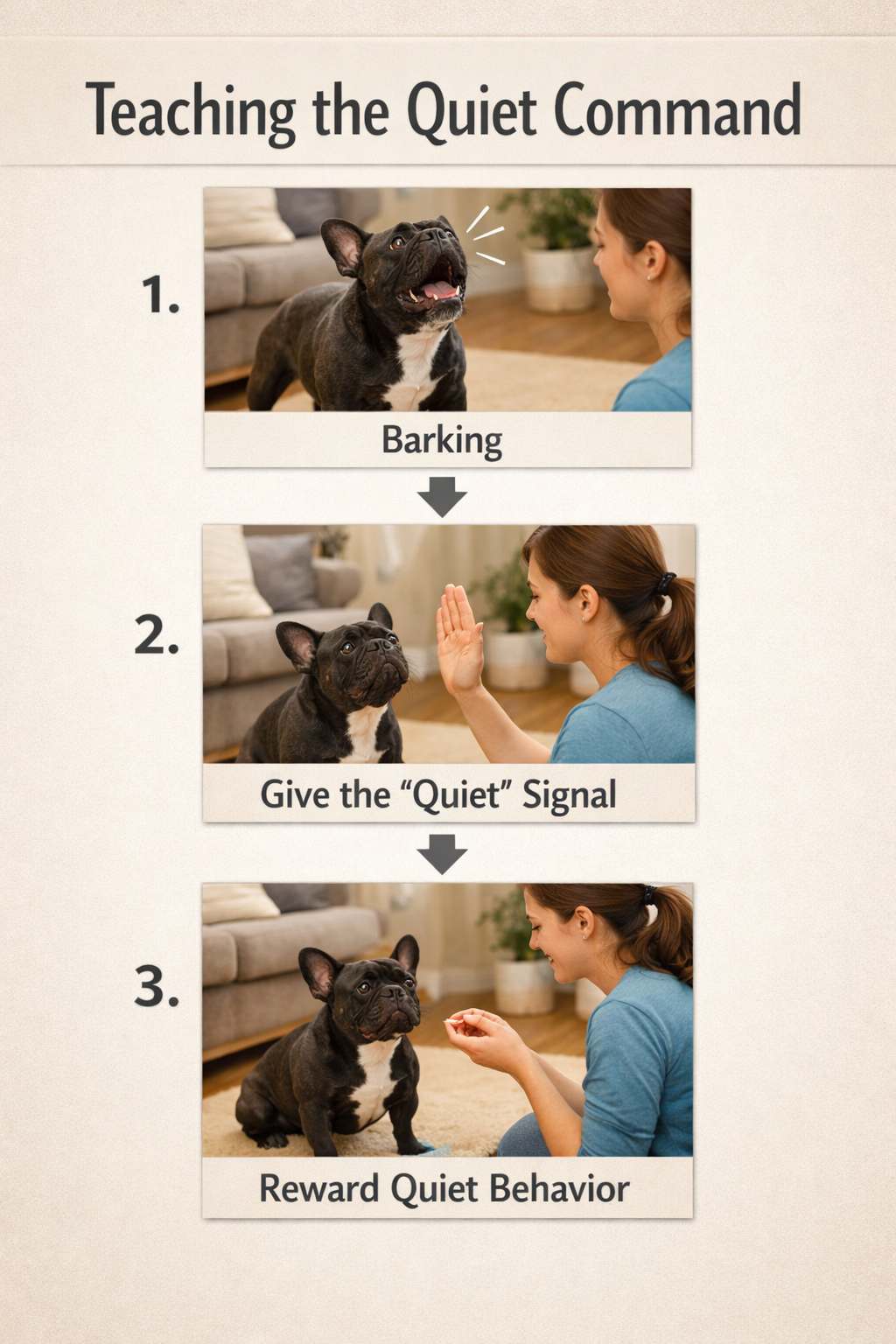
The “quiet” command is the cornerstone technique for how to train French Bulldog not to bark because it gives you a reliable way to interrupt and redirect barking behavior. This command works by teaching your dog that silence earns rewards while barking gets ignored.
Step-by-step quiet command training:
Step 1: Wait for natural barking
Don’t artificially trigger barking – wait for your Frenchie to bark naturally at a doorbell, window activity, or other stimulus. This ensures you’re working with real-world situations.
Step 2: Say “quiet” once
When barking starts, say “quiet” in a calm, firm voice. Don’t repeat the command multiple times or raise your voice. Your tone should be matter-of-fact, not emotional.
Step 3: Mark and reward silence
The instant your dog stops barking – even for just one second – immediately say “yes” or use a clicker, then give a treat. Speed is crucial here.
Step 4: Gradually increase duration
Once your dog consistently stops barking for one second, wait for two seconds of silence before rewarding. Gradually build up to 10-15 seconds of quiet time.
Step 5: Practice in different locations
Train the quiet command in various rooms and situations so your dog generalizes the behavior. Practice near windows, by the front door, and in your living area.
Common mistake to avoid: Don’t use the quiet command when your dog isn’t actually barking. This dilutes the meaning and makes the command less effective when you really need it.
For first-time French Bulldog owners, combining the quiet command with other basic training fundamentals creates a well-rounded training foundation that addresses multiple behavioral challenges simultaneously.
Managing Environmental Triggers That Cause Barking
Environmental management is often more effective than training alone for reducing French Bulldog barking, especially in apartment settings where triggers are constant and unavoidable. By controlling what your dog sees and hears, you prevent many barking episodes before they start.
Effective environmental modifications:
Block visual triggers – Install frosted window film or close blinds during peak activity hours when delivery trucks, pedestrians, and other dogs are most active. Many apartment-dwelling Frenchies bark primarily at window activity.
Create a designated quiet space – Set up a comfortable area away from windows and street noise where your dog can retreat when overwhelmed. Proper crate training makes this space feel safe rather than isolating.
Use white noise or calming music – Mask outside sounds that trigger barking with consistent background noise. Apps designed for dogs or classical music can help muffle doorbell sounds and hallway activity.
Manage departure routines – If your Frenchie barks when you leave, practice desensitization by picking up keys without leaving, putting on shoes and sitting back down, or stepping outside briefly and returning.
Control visitor interactions – Train guests to ignore your dog initially rather than immediately giving attention, which can trigger excited barking. Have visitors toss treats on the ground to redirect your dog’s focus downward.
Strategic furniture placement – Position your dog’s bed or favorite resting spot away from high-traffic viewing areas. If your Frenchie can’t easily see triggers, they’re less likely to react to them.
Choose management over confrontation – Instead of trying to train your dog to ignore every trigger, remove or reduce triggers when possible. This prevents your dog from practicing unwanted barking behaviors.
Providing Mental Stimulation to Reduce Boredom Barking
Boredom is the leading cause of excessive barking in apartment-dwelling French Bulldogs because these intelligent, companion-focused dogs need mental engagement throughout the day. Without adequate stimulation, Frenchies often develop attention-seeking behaviors including persistent barking.
Daily mental stimulation strategies:
Interactive feeding methods – Replace regular food bowls with puzzle feeders, snuffle mats, or treat-dispensing toys that make your dog work for their meals. This turns eating into a 15-20 minute mental exercise.
Training games throughout the day – Spend 10 minutes daily practicing commands like sit, stay, place, and leave it. These sessions provide mental exercise while reinforcing good behavior.
Rotating toy selection – Keep only 3-4 toys available at once, rotating others weekly to maintain novelty. Bored dogs often ignore familiar toys but engage enthusiastically with “new” items.
Scent work activities – Hide treats around your apartment for your Frenchie to find, or teach them to search for specific toys by name. This taps into their natural foraging instincts.
Structured social time – French Bulldogs need focused interaction with their owners, not just passive companionship. Engage in active play, training, or grooming sessions rather than simply being in the same room.
Physical exercise requirements – Provide 2-3 short walks daily plus indoor play sessions. While Frenchies don’t need extensive exercise, they do need regular movement to prevent restlessness.
Create a daily routine – Establish predictable feeding, walk, play, and quiet times. French Bulldogs thrive on routine and are less likely to bark from anxiety when they know what to expect.
Edge case consideration: Senior Frenchies or those with breathing issues may need modified mental stimulation that doesn’t require physical exertion. Focus more on puzzle feeders and gentle training games rather than active play.
Common Mistakes to Avoid When Training French Bulldogs
Many well-intentioned owners accidentally reinforce barking behavior through common training mistakes that seem logical but actually worsen the problem. Understanding these pitfalls helps you avoid setbacks in your training progress.
Critical mistakes that worsen barking:
Giving attention during barking episodes – Yelling “quiet,” touching, or even looking at your dog while they bark provides the attention they’re seeking. Even negative attention reinforces the behavior.
Using punishment-based methods – Shock collars, spray bottles, or harsh corrections can increase anxiety in sensitive French Bulldogs, often making barking worse rather than better.
Inconsistent responses – Sometimes ignoring barking and sometimes responding teaches your dog that persistence pays off. Every family member must respond the same way every time.
Training sessions that are too long – French Bulldogs lose focus after 5-10 minutes, making longer sessions counterproductive and frustrating for both dog and owner.
Expecting immediate results – Bark training typically takes 2-4 weeks of consistent practice to see significant improvement. Giving up after a few days prevents progress.
Not addressing underlying causes – Focusing only on stopping barking without addressing boredom, anxiety, or lack of exercise treats symptoms rather than root causes.
Training only during problem times – Waiting until your dog is already excited or anxious to practice commands sets both of you up for failure. Build skills during calm moments first.
Choose patience over quick fixes – French Bulldogs are sensitive to their owner’s emotional state, so frustration and impatience during training often increase their anxiety and barking. Consistent, calm training sessions produce better results than sporadic intensive efforts.
For owners dealing with multiple behavioral challenges, addressing jumping behaviors alongside barking creates a more comprehensive training approach that reinforces overall impulse control.
When to Seek Professional Help
Professional dog training becomes necessary when barking stems from severe anxiety, aggression, or when home training methods haven’t produced results after 6-8 weeks of consistent practice. Some barking issues require specialized intervention beyond basic owner training.
Signs you need professional assistance:
Separation anxiety symptoms – If your Frenchie shows destructive behavior, excessive drooling, pacing, or house soiling along with barking when left alone, this indicates anxiety requiring specialized treatment.
Aggressive barking behaviors – Barking accompanied by lunging, snapping, or other aggressive displays toward people or dogs needs immediate professional evaluation for safety reasons.
Medical-related barking – Sudden onset of excessive barking in previously quiet dogs may indicate pain, cognitive dysfunction, or other health issues requiring veterinary examination.
No improvement after consistent training – If you’ve followed positive reinforcement methods consistently for 6-8 weeks without seeing progress, a professional can identify overlooked issues.
Multiple behavioral problems – When barking occurs alongside resource guarding, severe leash pulling, or other complex behaviors, comprehensive professional training is more effective.
Types of professional help available:
• Certified dog trainers – For basic barking issues and obedience training
• Veterinary behaviorists – For anxiety, aggression, or medical-related behavioral problems
• Fear-free certified trainers – Specialists in anxiety-based behaviors using gentle methods
What to expect from professional training: Most trainers will assess your dog’s specific triggers, evaluate your current training methods, and create a customized plan that addresses both the barking and underlying causes. Sessions typically involve both dog training and owner education.
If you’re looking for a structured approach before seeking professional help, there’s a comprehensive training method that focuses specifically on reactive behaviors like excessive barking. This gentle, force-free approach helps dogs become calmer and more focused, which many owners find valuable for creating more peaceful daily routines with their French Bulldog.
Creating a Long-Term Training Plan
Successful bark training requires a structured, long-term approach rather than sporadic training sessions because French Bulldogs learn through consistent repetition and positive associations. A well-designed plan addresses immediate barking while building overall impulse control and calmness.
Essential components of your training plan:
Week 1-2: Foundation building
- Practice the quiet command during calm moments only
- Establish environmental management (window coverings, white noise)
- Begin basic impulse control exercises like “wait” before meals
- Document barking triggers in a training journal
Week 3-4: Active application
- Use quiet command during mild barking episodes
- Increase mental stimulation activities to 20-30 minutes daily
- Practice desensitization to common triggers at low intensity
- Maintain consistent responses from all family members
Week 5-8: Refinement and generalization
- Apply training in different locations and situations
- Gradually increase duration of quiet behavior before rewarding
- Reduce treat frequency while maintaining praise and attention rewards
- Address any remaining specific triggers
Daily training schedule:
- Morning: 5-minute training session before breakfast
- Midday: Mental stimulation activity (puzzle feeder, scent work)
- Evening: 5-minute practice session focusing on problem areas
- Ongoing: Consistent responses to barking throughout the day
Progress tracking methods:
- Count daily barking episodes and note triggers
- Record training session successes and challenges
- Track improvements in duration of quiet behavior
- Note changes in overall calmness and responsiveness
Adjust expectations based on individual factors – Young puppies may need 8-12 weeks to master bark control, while senior dogs often learn faster but may have physical limitations affecting their ability to respond quickly to commands.
FAQ
How long does it take to train a French Bulldog not to bark?
Most French Bulldogs show significant improvement in 4-6 weeks with consistent daily training, though complete mastery can take 8-12 weeks depending on the underlying causes and severity of barking.
Can you train an older French Bulldog to stop barking?
Yes, older French Bulldogs can learn bark control using the same positive reinforcement methods, though they may take slightly longer to break established habits compared to younger dogs.
Should I use a bark collar on my French Bulldog?
No, bark collars and other punishment-based tools can increase anxiety in sensitive French Bulldogs and often worsen barking behavior rather than improving it.
What treats work best for bark training?
High-value, small treats like tiny pieces of chicken, cheese, or commercial training treats work best because they can be given quickly without interrupting the training flow.
Is it normal for French Bulldogs to bark a lot?
French Bulldogs are not naturally excessive barkers, but they may bark more when bored, anxious, or inadequately exercised, especially in apartment settings with many triggers.
Can separation anxiety cause excessive barking?
Yes, separation anxiety is a common cause of barking in French Bulldogs and requires specific desensitization training combined with environmental management techniques.
How do I stop my French Bulldog from barking at other dogs?
Use the quiet command combined with distance management, gradually decreasing the distance to other dogs as your Frenchie learns to remain calm and quiet.
Should I ignore all barking or respond sometimes?
Ignore attention-seeking barking completely, but acknowledge alert barking briefly with “thank you” before redirecting to the quiet command to maintain your dog’s protective instincts.
What’s the difference between alert barking and problem barking?
Alert barking is brief (1-3 barks) to notify you of something, while problem barking is persistent, repetitive, and continues after the trigger is gone or acknowledged.
Can medical issues cause increased barking?
Yes, pain, cognitive dysfunction, hearing loss, or breathing difficulties can increase barking, so consult your veterinarian if barking behavior changes suddenly.
How much exercise prevents barking?
French Bulldogs typically need 2-3 short walks daily plus 20-30 minutes of mental stimulation to prevent boredom-related barking, though individual needs vary.
What should I do if my neighbor complains about barking?
Address the issue immediately with intensive training, environmental management, and possibly professional help, as excessive barking can lead to housing problems for apartment dwellers.
Key Takeaways
• Start with positive reinforcement training using the quiet command and high-value treats, avoiding punishment-based methods that can worsen anxiety-driven barking
• Identify and manage specific triggers through environmental modifications like window coverings, white noise, and strategic furniture placement to prevent barking episodes
• Provide adequate mental stimulation with puzzle feeders, training games, and interactive toys for 20-30 minutes daily to address boredom-related barking
• Keep training sessions short at 5-10 minutes maximum due to French Bulldogs’ limited attention spans, focusing on consistency rather than duration
• Practice the quiet command during calm moments first, then gradually apply it during mild barking episodes before addressing intense situations
• Use environmental management alongside training by blocking visual triggers and creating quiet spaces rather than relying solely on behavior modification
• Maintain consistent responses from all family members, never rewarding barking with attention even when the attention is intended to stop the behavior
• Track progress systematically over 6-8 weeks, documenting triggers and improvements to identify what methods work best for your specific dog
• Seek professional help if barking involves aggression, severe separation anxiety, or doesn’t improve after 6-8 weeks of consistent home training
Helpful Resource
If you want a comprehensive, structured approach to reducing reactive behaviors like excessive barking, consider exploring a gentle training method designed specifically for dogs who struggle with overreacting to environmental triggers. This step-by-step webinar focuses on building calm, focused behaviors using force-free techniques that many French Bulldog owners find helpful for creating more peaceful daily routines and enjoyable walks with their Frenchie.
Conclusion
Learning how to train French Bulldog not to bark requires patience, consistency, and understanding of your dog’s specific triggers and needs. The combination of positive reinforcement training, environmental management, and adequate mental stimulation provides the most effective approach for apartment-dwelling Frenchies and their owners.
Start implementing the quiet command today during calm moments, identify your dog’s primary barking triggers, and commit to 5-10 minute daily training sessions. Remember that most French Bulldogs show significant improvement within 4-6 weeks when training methods are applied consistently by all family members.
Your next steps should include setting up environmental modifications like window coverings or white noise, establishing a daily mental stimulation routine, and beginning quiet command practice. With dedication and the right approach, you can enjoy a calmer, quieter life with your French Bulldog while maintaining their natural alertness and personality.
References
[1] How To Train French Bulldogs – https://americannaturalpremium.com/breed-guide/how-to-train-french-bulldogs/
[2] How To Stop Your French Bulldog From Barking Too Much – https://frenchieboxes.com/blogs/news/how-to-stop-your-french-bulldog-from-barking-too-much
[3] Training French Bulldogs What Every Owner Needs To Know – https://www.thetrainingofdogs.com/post/training-french-bulldogs-what-every-owner-needs-to-know
[4] My Frenchie Wont Stop Barking Tips For Managing Excessive Barking – https://frenchiestore.com/blogs/frenchie-blog/my-frenchie-wont-stop-barking-tips-for-managing-excessive-barking
[5] Gentle Training Methods To Curb Excessive Barking – https://www.dogster.com/dog-behavior/gentle-training-methods-to-curb-excessive-barking