
French Bulldog Puppy Socialization Tips: Essential Guide for Raising a Well-Adjusted Frenchie
Last updated: February 21, 2026
Key Takeaways
• Start socialization between 8-12 weeks when your French Bulldog puppy is most receptive to new experiences
• Use positive reinforcement exclusively – Frenchies respond poorly to harsh corrections and thrive with treats and praise
• Introduce one or two new experiences per session to prevent overwhelming your sensitive puppy
• Focus on gentle handling and basic commands during the critical early weeks
• Keep training sessions short (5-10 minutes) to match your Frenchie’s attention span
Quick Answer
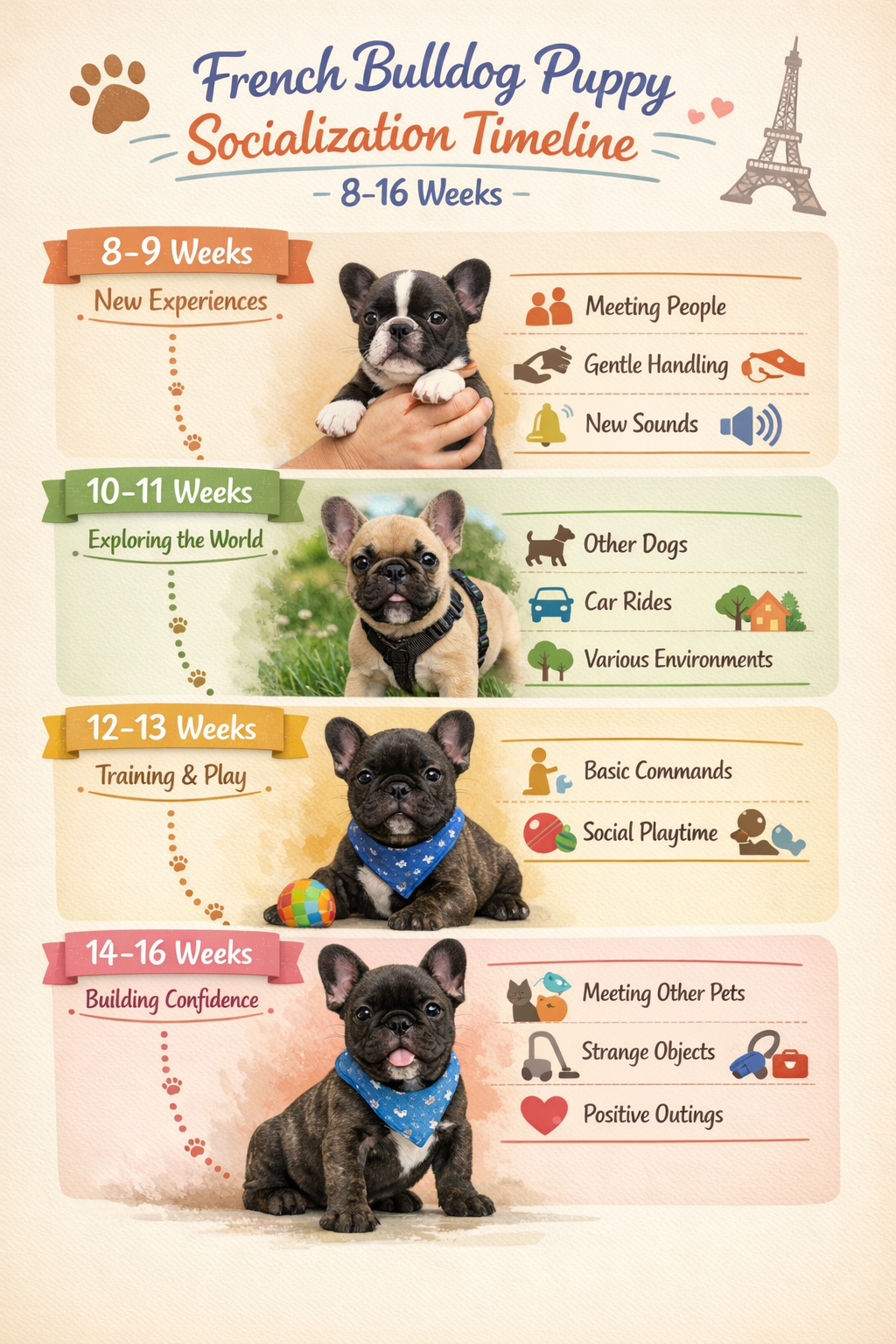
French Bulldog puppy socialization should begin immediately after bringing your puppy home, ideally between 8-12 weeks of age. Focus on positive experiences with people, gentle handling of ears and paws, basic commands like sit and stay, and gradual exposure to different surfaces and sounds. Keep sessions short and always use treats and praise rather than corrections, as Frenchies are sensitive dogs that shut down with harsh training methods.
When Should You Start French Bulldog Puppy Socialization?
The optimal time to begin socializing your French Bulldog puppy is between 8-12 weeks of age, when they function as “a sponge, soaking up the world around them”. This critical window represents your best opportunity to shape your Frenchie’s temperament and prevent behavioral issues later in life.
Why timing matters for French Bulldogs:
- Their sensitive nature makes early positive experiences crucial
- After 16 weeks, socialization becomes significantly more challenging
- French Bulldogs are naturally people-focused, making early socialization easier than with independent breeds
- Their calm temperament means they’re less likely to become overstimulated during proper socialization
Start immediately after bringing your puppy home, even if they haven’t completed all vaccinations. You can safely socialize in controlled environments like your home, friends’ homes with vaccinated dogs, and puppy socialization classes.
The best age to adopt a French Bulldog puppy is typically 8-10 weeks, which aligns perfectly with this critical socialization window.
Common mistake: Waiting until after all vaccinations are complete. This delays socialization until 16+ weeks, missing the most receptive learning period.
What Are the Most Important French Bulldog Puppy Socialization Tips?
The most effective socialization approach for French Bulldogs centers on positive reinforcement and gradual exposure. Research shows that 94% of French Bulldog owners emphasize positive reinforcement as essential to training success.
Essential socialization priorities:
People interaction:
- Introduce multiple family members during the first week
- Have visitors offer treats to create positive associations
- Include children, but teach them proper interaction rules
- Expose your puppy to people wearing hats, glasses, and different clothing
Handling preparation:
- Condition your puppy to tolerate ear and paw handling early for future veterinary visits
- Practice gentle mouth examinations
- Touch and reward to build positive associations
- Make handling a daily routine, not just for grooming
Basic commands during socialization:
- Begin basic commands (sit, stay, come) during weeks 8-12
- Use high-value treats specific to French Bulldogs
- Keep commands simple and consistent
- Practice in different locations once mastered at home
For comprehensive training guidance, see our French Bulldog training tips for beginners.
FYI: Some links may be affiliate links, which means I may earn a small commission at no extra cost to you.
If you’re dealing with any reactive behaviors during socialization (like excessive barking or lunging), a structured training approach can be incredibly helpful. This gentle, force-free method helps reactive dogs become calmer and more focused, which is particularly useful for French Bulldogs who can become overwhelmed during socialization.
Decision rule: Choose group socialization classes if your puppy is confident and calm. Opt for individual training if your Frenchie shows signs of stress or overwhelm.
How Do You Safely Introduce Your French Bulldog Puppy to New Experiences?
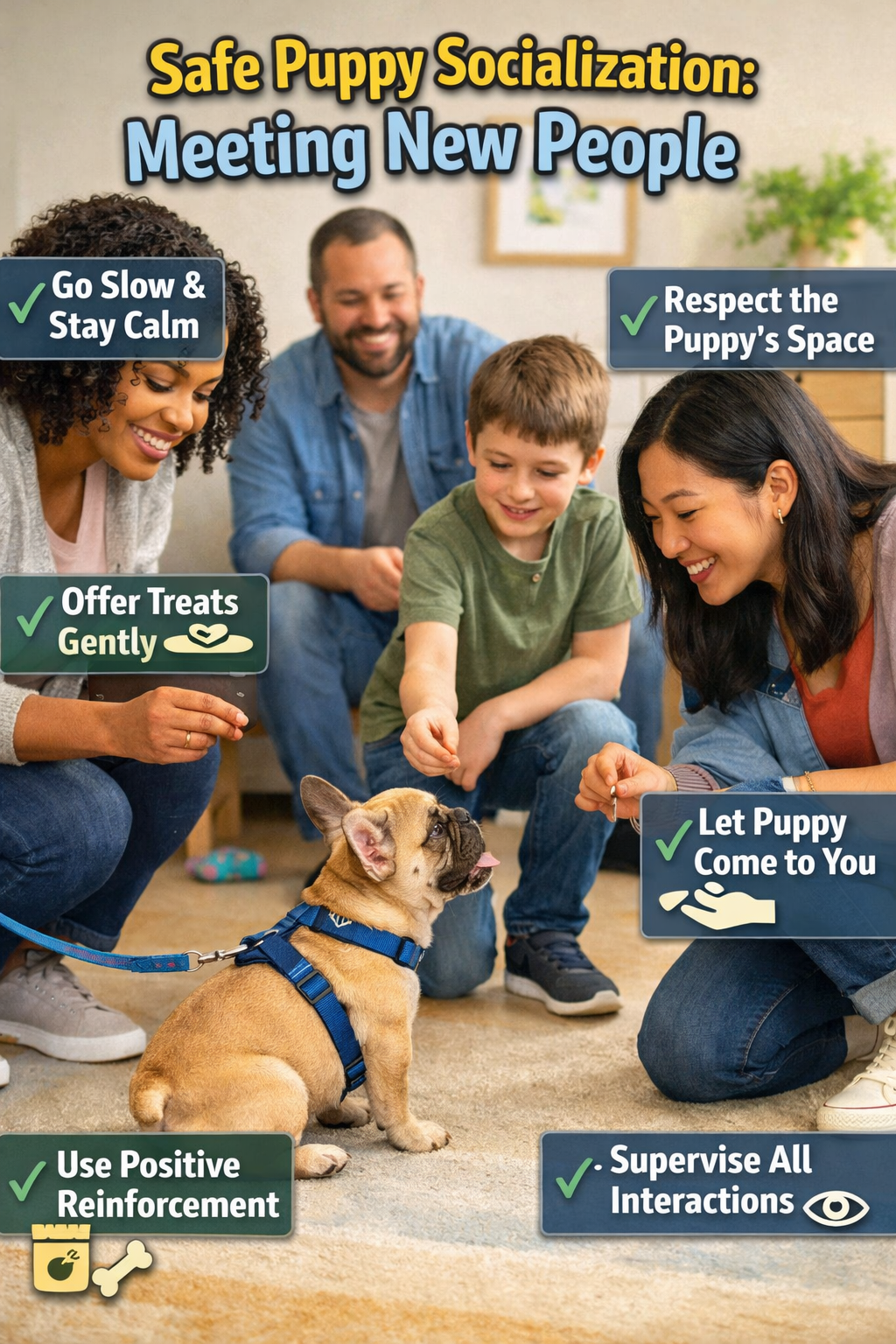
Safe introduction to new experiences requires controlled exposure and careful observation of your puppy’s stress signals. French Bulldogs can become overwhelmed more easily than high-energy breeds, making gradual introduction essential.
Step-by-step safe introduction process:
- Start with one new element per session
- Introduce only one or two new things at a time
- Allow 2-3 days between major new experiences
- Watch for stress signals: excessive panting, hiding, or refusal to engage
- Use the “observe and reward” method
- Let your puppy observe new experiences from a distance first
- Reward calm, curious behavior with treats
- Gradually decrease distance as comfort increases
- Surface exposure protocol
- Expose puppies to varied surfaces including grass, concrete, asphalt, carpet, and hardwood flooring[3]
- Start with comfortable surfaces like carpet
- Progress to more challenging textures over several weeks
- Always reward confident exploration
Environmental socialization checklist:
- Different floor textures and surfaces
- Household sounds (vacuum, doorbell, television)
- Car rides in proper restraint systems
- Outdoor sounds and urban environments
- Different weather conditions (supervised)
Understanding how to take care of a French Bulldog puppy provides additional context for creating safe socialization experiences.
Edge case: If your puppy shows extreme fear responses (cowering, trembling, loss of bladder control), consult a professional trainer immediately. These responses indicate the need for specialized desensitization protocols.
What Training Methods Work Best During French Bulldog Puppy Socialization?
French Bulldogs respond poorly to harsh corrections or loud methods and may shut down or push back; relationship-based training is far more effective. This makes positive reinforcement not just preferred, but essential for successful socialization.
Effective training methods for Frenchie socialization:
Positive reinforcement framework:
- Use high-value treats (small, soft pieces work best)
- Offer immediate praise for desired behaviors
- Create positive associations with new experiences
- Never punish fearful or uncertain behavior
Optimal session structure:
- Keep training sessions 5-10 minutes rather than one long session for optimal learning[2]
- Schedule 3-4 short sessions throughout the day
- End each session on a positive note
- Allow rest periods between sessions
Relationship-based approach:
- Focus on building trust and confidence
- Use your voice tone to communicate encouragement
- Physical affection as reward (if your puppy enjoys it)
- Consistency across all family members
Lead training integration:
- Introduce “heel” training for lead walking by teaching the puppy to stay by your side using treats and positive reinforcement
- Start indoors with short distances
- Practice in low-distraction environments first
- Gradually add outdoor elements
For detailed guidance on this crucial skill, check our French Bulldog leash training tips.
Common mistake: Using correction-based methods because “it worked with other breeds.” French Bulldogs are particularly sensitive and will often shut down completely with harsh training approaches.
How Long Should French Bulldog Puppy Socialization Sessions Last?
French Bulldog puppies have short attention spans and require brief, frequent sessions rather than extended training periods. The optimal session length is 5-10 minutes for focused socialization activities.
Session timing guidelines:
Daily schedule structure:
- 3-4 sessions of 5-10 minutes each
- Space sessions 2-3 hours apart
- Align with your puppy’s natural energy cycles
- Avoid sessions when puppy is tired or hungry
Age-based adjustments:
- 8-10 weeks: 5-minute sessions maximum
- 10-12 weeks: 7-8 minute sessions
- 12-16 weeks: Up to 10 minutes for confident puppies
- Always end before your puppy loses interest
Session content breakdown:
- 2-3 minutes: Warm-up with known commands
- 3-5 minutes: New experience introduction
- 1-2 minutes: Positive ending with treats and praise
Signs to end a session immediately:
- Excessive panting or drooling
- Loss of interest in treats
- Seeking to hide or escape
- Repetitive stress behaviors (spinning, excessive licking)
For comprehensive puppy care guidance, including scheduling, see our guide on how to train a French Bulldog puppy.
Decision rule: If your puppy remains engaged and responsive after 10 minutes, you can extend slightly, but never exceed 15 minutes for socialization activities.
What Mistakes Should You Avoid During French Bulldog Puppy Socialization?
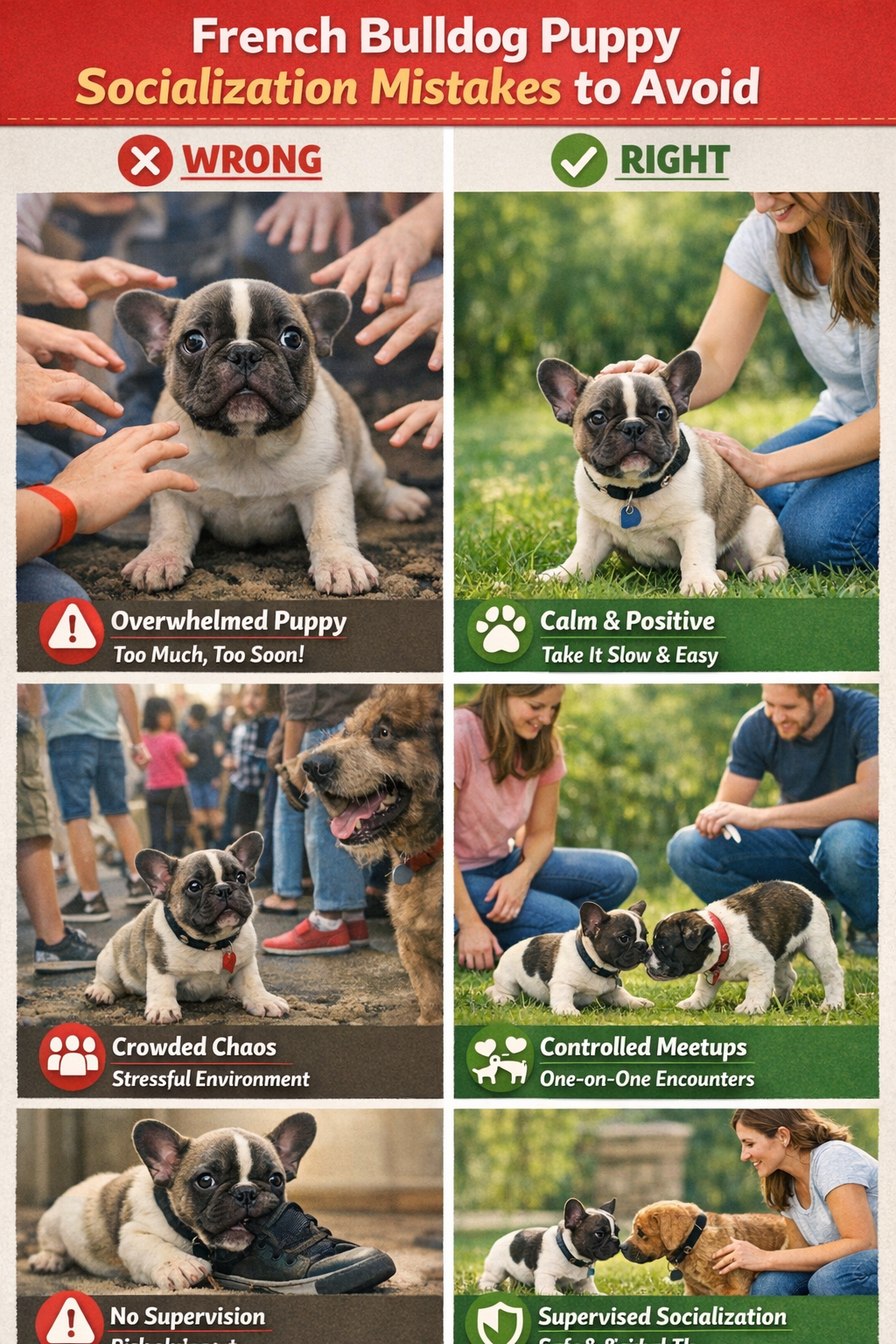
The most damaging mistakes during French Bulldog socialization involve overwhelming the puppy or using inappropriate training methods. French Bulldogs’ sensitive nature makes them particularly vulnerable to negative socialization experiences.
Critical mistakes to avoid:
Overwhelming exposure:
- Introducing too many new experiences simultaneously
- Forcing interaction when puppy shows stress signals
- Attending large, chaotic socialization events too early
- Ignoring your puppy’s individual comfort level
Inappropriate handling:
- Discourage children from touching a Frenchie’s ears, nose, or mouth, as these areas are stressful for puppies
- Allowing strangers to pick up your puppy without permission
- Forced exposure to feared stimuli
- Using the puppy as entertainment for visitors
Training method errors:
- Using correction-based training methods
- Raising your voice or showing frustration
- Punishment for fearful behavior
- Inconsistent rules between family members
Timing mistakes:
- Starting socialization too late (after 16 weeks)
- Sessions that are too long for the puppy’s attention span
- Socializing when puppy is tired, hungry, or unwell
- Rushing through the socialization process
Health and safety oversights:
- Exposure to unvaccinated dogs before immunity develops
- Socialization in areas with disease risk
- Ignoring signs of illness during socialization
- Inadequate supervision during interactions
For more detailed guidance on avoiding common pitfalls, read about mistakes new owners make with French Bulldog puppies.
Edge case: If your puppy has had a negative socialization experience, don’t avoid that stimulus permanently. Instead, work with a professional trainer to create positive counter-conditioning experiences.
Helpful Resource for Reactive Behavior
If you notice your French Bulldog puppy developing reactive behaviors during socialization—such as excessive barking, lunging, or becoming overly excited around other dogs—this can be addressed with the right approach. A gentle, structured training solution designed specifically for reactive dogs can help your Frenchie become calmer and more focused during walks and social interactions.
This step-by-step method uses force-free, practical techniques that many dog owners trust to create more peaceful, enjoyable daily experiences with their French Bulldog. The approach focuses on building better leash manners and confidence in distracting environments, which is particularly valuable during the socialization period.
👉 Discover the Calm, Reactivity-Free Training Method for Happier Walks With Your French Bulldog
Remember, addressing reactive behaviors early during the socialization period is much easier than correcting established patterns later.
FAQ
Q: Can I socialize my French Bulldog puppy before all vaccinations are complete?
A: Yes, you can safely socialize in controlled environments like your home, friends’ homes with vaccinated dogs, and puppy classes. Avoid high-risk areas like dog parks until fully vaccinated.
Q: How do I know if my French Bulldog puppy is overwhelmed during socialization?
A: Watch for excessive panting, hiding, refusal to take treats, trembling, or seeking to escape. End the session immediately if you see these signs and try again later with less intensity.
Q: Should I force my shy French Bulldog puppy to interact with new people?
A: Never force interaction. Allow your puppy to observe from a distance and reward calm, curious behavior. Let them approach new people at their own pace while maintaining positive associations.
Q: How many new people should my French Bulldog puppy meet each week?
A: Aim for 2-3 new people per week during the critical socialization period. Quality of interaction matters more than quantity – focus on positive experiences rather than meeting as many people as possible.
Q: What treats work best for French Bulldog puppy socialization?
A: Use small, soft, high-value treats that your puppy can eat quickly. Freeze-dried liver, small training treats, or tiny pieces of cooked chicken work well. Avoid hard treats that take time to chew.
Q: Can I take my French Bulldog puppy to dog parks for socialization?
A: Wait until your puppy is fully vaccinated and has mastered basic commands. Dog parks can be overwhelming for young Frenchies. Start with controlled play dates with known, vaccinated dogs instead.
Q: How do I socialize my French Bulldog puppy with children safely?
A: Supervise all interactions and teach children proper behavior. No touching ears, nose, or mouth. Have children sit calmly and offer treats rather than chasing or grabbing the puppy.
Q: What should I do if my French Bulldog puppy has a bad socialization experience?
A: Don’t avoid that situation permanently. Work on counter-conditioning by creating positive associations with similar experiences at a distance, gradually building confidence over time.
Q: Is it too late to socialize my 6-month-old French Bulldog?
A: It’s more challenging but not impossible. Work with a professional trainer to develop a gradual socialization plan. Progress will be slower but can still be effective with patience and consistency.
Q: How do I socialize my French Bulldog puppy with other dogs safely?
A: Start with calm, well-socialized adult dogs in controlled environments. Avoid puppy free-for-alls. Ensure all dogs are healthy and vaccinated, and supervise all interactions closely.
Q: Should French Bulldog puppies attend group socialization classes?
A: Yes, if the class focuses on positive reinforcement and has size/age-appropriate groups. Avoid classes that use correction methods or allow overwhelming play sessions.
Q: What household sounds should I expose my French Bulldog puppy to?
A: Gradually introduce vacuum cleaners, doorbells, television, kitchen appliances, and phone ringtones. Start at low volumes and reward calm behavior, gradually increasing intensity as your puppy becomes comfortable.
Key Takeaways
• Begin socialization immediately between 8-12 weeks when your French Bulldog puppy is most receptive to new experiences and learning
• Use exclusively positive reinforcement methods with treats, praise, and patience – harsh corrections will cause your sensitive Frenchie to shut down
• Keep sessions short and sweet at 5-10 minutes each, with 3-4 sessions daily to match your puppy’s attention span and energy levels
• Introduce one new experience at a time to prevent overwhelming your puppy and ensure positive associations with new situations
• Focus on essential handling skills including ear, paw, and mouth touching to prepare for veterinary visits and grooming throughout life
• Prioritize people socialization with multiple family members and controlled introductions to visitors, especially important for this people-focused breed
• Practice basic commands during socialization including sit, stay, and come, integrating training with social experiences for maximum effectiveness
• Watch for stress signals like excessive panting, hiding, or treat refusal, and end sessions immediately if your puppy shows overwhelm
• Avoid common mistakes including forced interactions, touching sensitive areas like ears and nose, and using correction-based training methods
• Address reactive behaviors early with professional guidance or structured training programs designed for sensitive, reactive dogs
Here is a gentle, structured training solution designed to help reactive dogs become calmer and more focused on walks—from reducing barking and lunging to building better leash manners and confidence in distracting environments. This step-by-step webinar uses force-free, practical techniques trusted by many dog owners to create more peaceful, enjoyable daily walks with their Frenchie.
👉 Discover the Calm, Reactivity-Free Training Method for Happier Walks With Your French Bulldog
References
[1] French Bulldog Puppy Care Guide – https://www.furrytailedfriends.com/french-bulldog-puppy-care-guide/
[2] French Bulldog Puppy Training 101 Essential Tips – https://www.joiipetcare.com/blogs/advice/french-bulldog-puppy-training-101-essential-tips
[3] How To Socialize A Puppy – https://www.frenchiebulldog.com/blogs/frenchie-bulldog-pet-supply/how-to-socialize-a-puppy
[4] Meet The French Bulldog Genuine Tips From 9000 Owners – https://www.sniffspot.com/blog/dog-breeds/meet-the-french-bulldog-genuine-tips-from-9000-owners
[5] Training French Bulldogs What Every Owner Needs To Know – https://www.thetrainingofdogs.com/post/training-french-bulldogs-what-every-owner-needs-to-know