
French Bulldog Feeding Schedule: Complete Guide for Healthy Meals
Last updated: January 15, 2026
Picture this: your adorable French Bulldog giving you those irresistible puppy eyes at dinner time, and you’re wondering if you’re feeding them correctly. A proper French Bulldog feeding schedule isn’t just about keeping your Frenchie happy—it’s the foundation of their long-term health, weight management, and digestive wellness.
Key Takeaways
- Adult French Bulldogs need 2 meals daily spaced 8-12 hours apart with 1.0-1.5 cups of high-quality food total
- Puppies require 3-4 smaller meals until 6 months old, then transition to adult schedule
- Portion control is critical for this breed due to their high obesity risk and slower metabolism
- Consistent meal times support better digestion and reduce behavioral issues
- Never free-feed French Bulldogs—offer meals for 15-20 minutes, then remove the bowl
Quick Answer
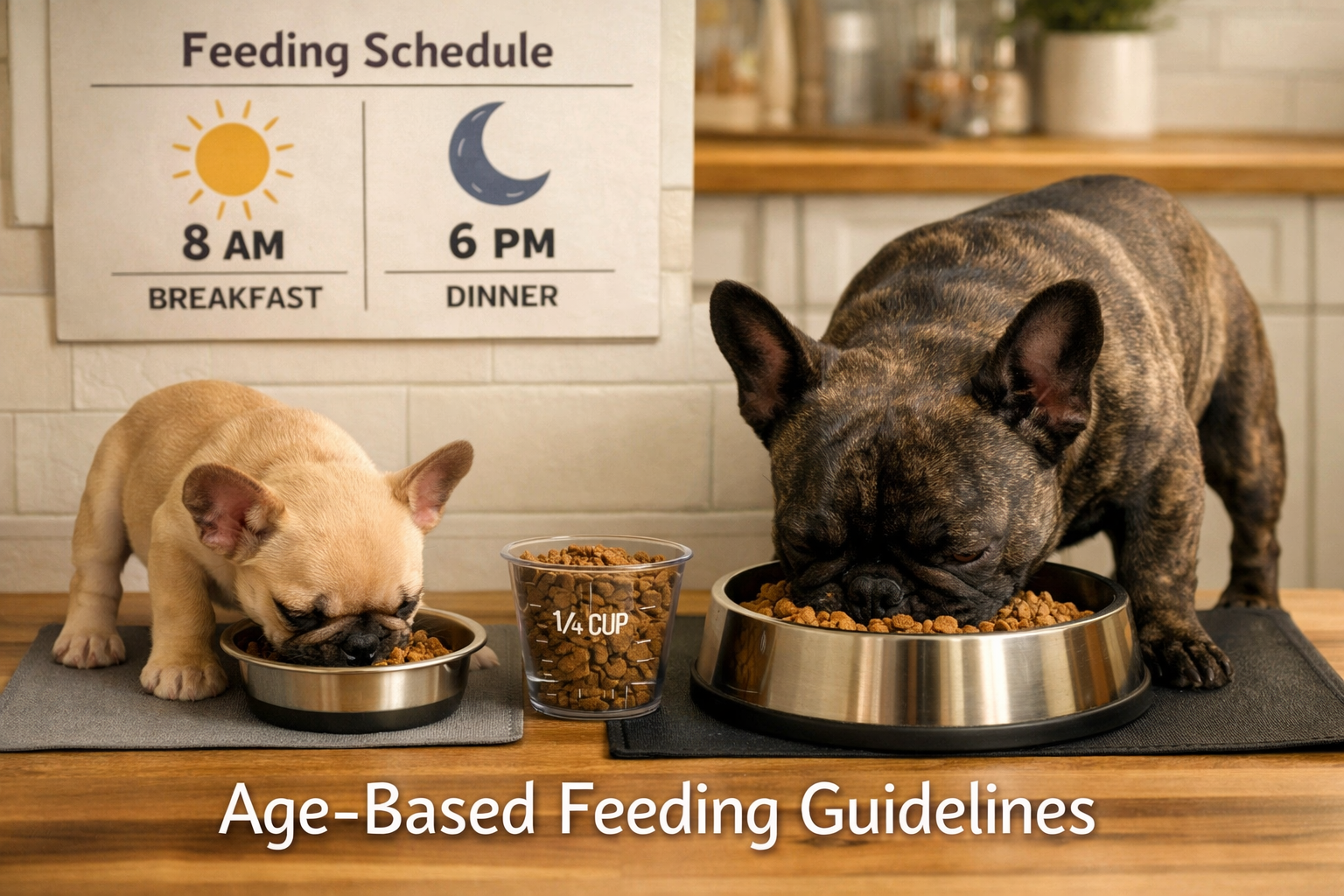
French Bulldogs thrive on a structured feeding schedule with two meals daily for adults (morning and evening) and three to four meals for puppies under 6 months. Adult Frenchies need 1.0-1.5 cups of high-quality food daily, divided between meals and measured precisely to prevent obesity—a common health issue in this breed.
How Often Should You Feed Your French Bulldog?
Adult French Bulldogs aged 1-7 years should eat two meals per day, spaced approximately 8-12 hours apart. This schedule supports steady blood sugar levels, prevents overeating, and reduces the risk of bloat—a serious condition that can affect deep-chested dogs.
The twice-daily feeding routine works best because:
- Prevents hypoglycemia: Regular meals maintain stable blood sugar
- Supports digestion: French Bulldogs have sensitive stomachs that benefit from smaller, frequent meals
- Reduces begging behavior: Consistent timing teaches your Frenchie when to expect food
- Enables portion control: Dividing daily food into two servings prevents overeating
Choose morning and evening meals if your Frenchie is an adult with a regular schedule. Opt for three meals if your dog is a senior (7+ years) with slower digestion or if recommended by your veterinarian for specific health conditions.
Common mistake: Many owners assume smaller dogs need constant access to food. French Bulldogs actually do better with structured meal times rather than free-feeding, which can lead to overeating and weight gain.
What’s the Right French Bulldog Feeding Schedule for Puppies?
Puppies under 6 months old require 3-4 small meals daily to support their rapid growth and higher metabolic needs. The exact number depends on your puppy’s age and development stage.
Puppy feeding schedule by age:
- 8-12 weeks: 4 meals daily (every 3-4 hours)
- 3-4 months: 3-4 meals daily (every 4-5 hours)
- 4-6 months: 3 meals daily (morning, afternoon, evening)
- 6-12 months: Transition to 2 meals daily
Sample puppy schedule for 3-month-old Frenchie:
- 7:00 AM – Breakfast (1/4 cup)
- 12:00 PM – Lunch (1/4 cup)
- 5:00 PM – Dinner (1/4 cup)
- 9:00 PM – Evening snack (small portion)
The transition from puppy to adult feeding happens gradually around 6-12 months of age. Start by eliminating the smallest meal first, then adjust portion sizes to maintain proper nutrition.
Edge case: If your puppy shows signs of low blood sugar (lethargy, weakness), consult your vet about maintaining more frequent meals longer than typical.
For detailed puppy feeding guidelines, check out our complete guide on how often to feed French Bulldog puppies.
How Much Food Should French Bulldogs Eat Daily?
Adult French Bulldogs typically need 1.0-1.5 cups of high-quality dog food per day, divided between two meals. However, the exact amount depends on your dog’s weight, activity level, and metabolism.
Daily food requirements by weight:
- 16-20 lbs: 1.0-1.25 cups daily
- 20-25 lbs: 1.25-1.5 cups daily
- 25-28 lbs: 1.5-1.75 cups daily (if not overweight)
Caloric needs: French Bulldogs require approximately 25-35 calories per pound of body weight daily. For a 22-pound Frenchie, that’s roughly 550-770 calories per day.
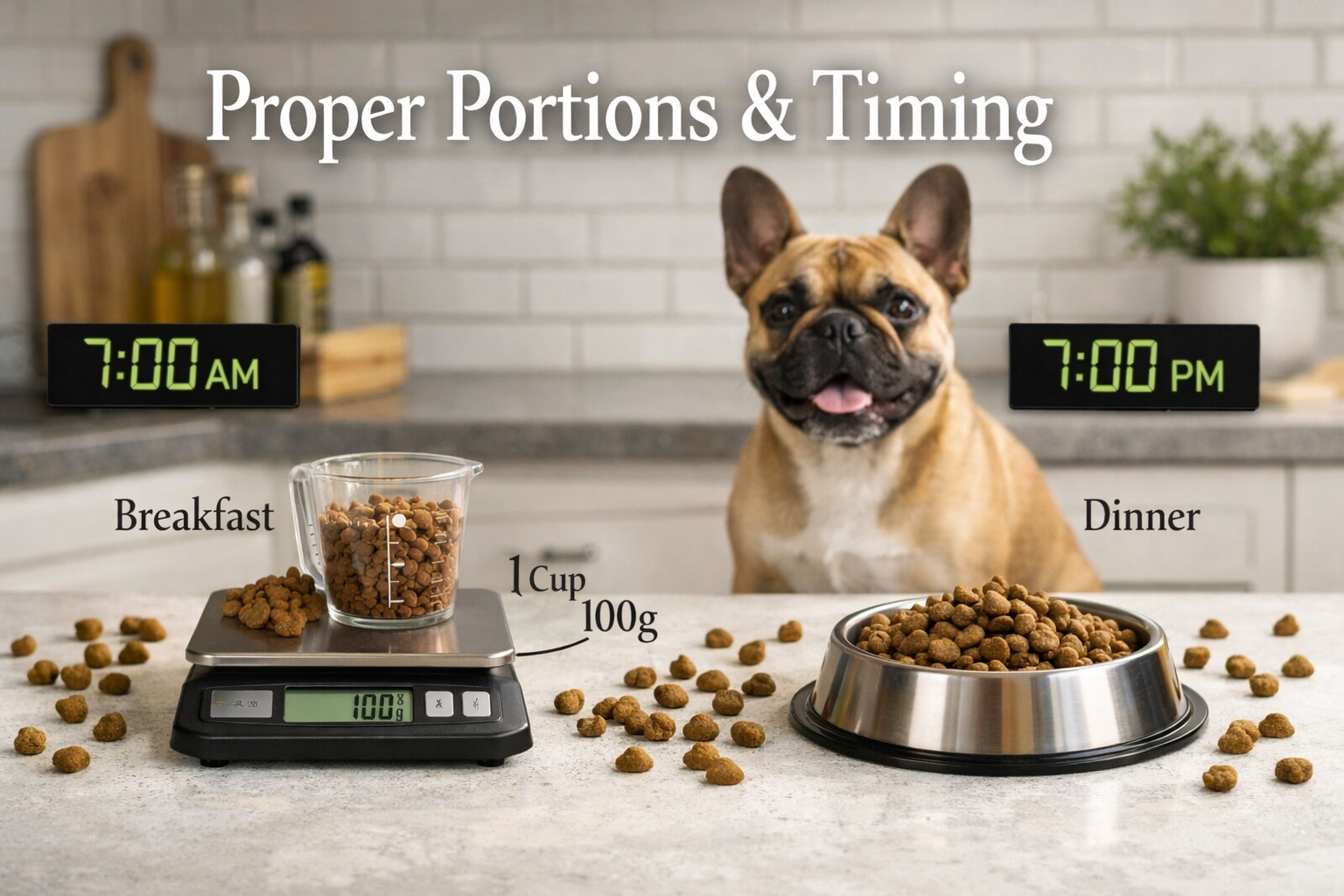
Measuring is essential: Always use a measuring cup or food scale rather than estimating portions. Even small overfeeding can lead to significant weight gain in French Bulldogs due to their slower metabolism and lower exercise needs.
Choose smaller portions if your Frenchie is less active, spayed/neutered, or shows signs of weight gain. Increase portions slightly if your dog is very active, underweight, or still growing (with vet approval).
The best approach is monitoring your dog’s body condition score—you should be able to feel their ribs with gentle pressure but not see them prominently.
Creating the Perfect French Bulldog Feeding Schedule
A consistent daily routine helps your French Bulldog develop healthy eating habits and supports their digestive system. Here’s how to establish an effective feeding schedule:
Ideal adult feeding times:
- Morning meal: 7:00-8:00 AM (0.5-0.75 cups)
- Evening meal: 6:00-7:00 PM (0.5-0.75 cups)
Key scheduling principles:
- Maintain 8-12 hour gaps between meals for optimal digestion
- Feed at the same times daily to establish routine and prevent begging
- Offer meals for 15-20 minutes only, then remove the bowl[3]
- Provide fresh water constantly but consider removing it 2 hours before bedtime
Sample daily schedule:
- 7:00 AM – Morning meal + potty break
- 7:30 AM – Remove food bowl
- 12:00 PM – Midday potty break (no food)
- 6:00 PM – Evening meal + potty break
- 6:30 PM – Remove food bowl
- 9:00 PM – Final potty break
Common mistake: Leaving food available all day (free-feeding) can lead to overeating, food guarding, and difficulty with house training since you can’t predict when your dog will need to eliminate.
If you work long hours, consider asking a dog walker or pet sitter to maintain the schedule, or use an automatic feeder with portion control for consistency.
FYI: Some links may be affiliate links, which means I may earn a small commission at no extra cost to you.
Proper nutrition goes hand-in-hand with good digestive health. If your Frenchie experiences frequent stomach upset or digestive issues, a natural probiotic supplement can help support their gut health and improve nutrient absorption. See how Pawbiotix can help your dog thrive with better digestion and overall vitality.
Special Considerations for Senior French Bulldogs
Senior French Bulldogs (7+ years) often need adjustments to their feeding schedule and portions to accommodate slower metabolism and potential health changes.
Senior feeding modifications:
- Reduce total daily food to 0.75-1.25 cups to prevent weight gain
- Consider 2-3 smaller meals if digestion becomes sensitive
- Choose senior-specific formulas with joint support and easier-to-digest proteins
- Monitor for dental issues that might require softer food textures
Health-based schedule changes:
| Condition | Feeding Adjustment |
|---|---|
| Arthritis/Joint Pain | Add omega-3 rich foods, consider joint supplements |
| Kidney Disease | Reduce protein, increase meal frequency |
| Diabetes | Consistent timing with medication, high-fiber foods |
| Dental Problems | Softer kibble or wet food, smaller pieces |
Signs your senior needs schedule changes:
- Difficulty finishing meals
- Increased begging or hunger
- Weight gain despite same portions
- Digestive upset after eating
- Changes in bathroom habits
Choose more frequent, smaller meals if your senior Frenchie shows signs of sensitive digestion. Maintain the two-meal schedule if they’re healthy and maintaining good weight.
For comprehensive health monitoring, consider reviewing our guide on signs your French Bulldog might be unhealthy to catch issues early.
Common French Bulldog Feeding Schedule Mistakes
Even well-intentioned owners can make feeding errors that impact their Frenchie’s health and behavior. Here are the most frequent mistakes and how to avoid them:
1. Free-feeding (leaving food available all day)
- Problem: Leads to overeating, food guarding, and unpredictable potty schedules
- Solution: Offer meals for 15-20 minutes, then remove the bowl regardless of how much was eaten
2. Inconsistent meal times
- Problem: Creates anxiety, begging behavior, and digestive issues
- Solution: Feed at the same times daily, even on weekends
3. Eyeballing portions instead of measuring
- Problem: Gradual weight gain that’s hard to notice day-to-day
- Solution: Use a measuring cup or digital scale for every meal
4. Feeding table scraps or too many treats
- Problem: Unbalanced nutrition and rapid weight gain
- Solution: Limit treats to 10% of daily calories, avoid human food
5. Changing food brands too quickly
- Problem: Digestive upset, diarrhea, and food aversion
- Solution: Transition new foods gradually over 7-10 days
6. Feeding immediately before or after exercise
- Problem: Increased risk of bloat and digestive discomfort
- Solution: Wait 30 minutes after eating before exercise, 1 hour before feeding after exercise
Red flag: If your Frenchie suddenly stops eating, eats significantly more/less than usual, or shows signs of digestive distress, consult your veterinarian promptly.
The key to success is consistency, portion control, and paying attention to your individual dog’s needs and responses to their feeding schedule.
What Food Works Best with Your French Bulldog Feeding Schedule?
The quality and type of food you choose significantly impacts how well your French Bulldog responds to their feeding schedule. French Bulldogs have specific nutritional needs due to their brachycephalic (flat-faced) structure and tendency toward food sensitivities.
Essential food characteristics:
- High-quality animal protein as the first ingredient (chicken, fish, lamb)
- Moderate fat content (12-16%) to prevent weight gain
- Limited ingredients to reduce allergy risks
- Small kibble size for easier eating with their flat faces
- Added probiotics for digestive support[5]
Foods to avoid:
- Corn, wheat, and soy (common allergens)
- Artificial colors and preservatives
- High-fat content (over 18%)
- Large kibble that’s difficult to chew
- Foods with excessive fillers
Feeding format options:
| Food Type | Pros | Cons | Best For |
|---|---|---|---|
| Dry Kibble | Convenient, dental benefits, cost-effective | May be hard for flat faces | Most adult Frenchies |
| Wet Food | Easy to eat, higher moisture | More expensive, spoils quickly | Seniors, picky eaters |
| Raw Diet | Natural, high protein | Requires careful planning, safety concerns | Experienced owners |
| Freeze-Dried | Convenient, nutritious | Expensive | Travel, special occasions |
Choose dry kibble if your Frenchie has no eating difficulties and you want convenience. Opt for wet food if your dog has dental issues or needs to increase water intake.
For detailed food recommendations, explore our complete guide to the best dog food for French Bulldogs and discover 12 best foods for French Bulldog health.
Helpful Resources for French Bulldog Feeding Success
Managing your French Bulldog’s feeding schedule becomes much easier with the right tools and knowledge. Here are some resources that can help ensure your Frenchie stays healthy and well-fed:
Essential feeding tools:
- Digital food scale for precise portion measurement
- Stainless steel or ceramic bowls (avoid plastic due to bacteria buildup)
- Slow-feeder bowls if your Frenchie eats too quickly
- Elevated feeding station to reduce neck strain
- Food storage containers to maintain freshness
Monitoring your Frenchie’s progress:
- Weekly weigh-ins to track weight changes
- Body condition score assessments monthly
- Regular vet checkups to adjust feeding as needed
- Food diary to identify any sensitivities or preferences
When to seek professional help:
- Sudden appetite changes lasting more than 24 hours
- Persistent digestive issues despite schedule consistency
- Difficulty maintaining healthy weight
- Signs of food allergies or intolerances
If your French Bulldog experiences ongoing digestive challenges or you want to optimize their gut health alongside a proper feeding schedule, consider exploring natural digestive support options. A quality probiotic can help improve nutrient absorption and support overall digestive wellness, making your feeding routine even more effective.
For training support around mealtime behavior, check out our guides on French Bulldog training tips for beginners and positive reinforcement training techniques.
Remember, every French Bulldog is unique, and what works perfectly for one dog might need adjustments for another. The key is starting with these proven guidelines and fine-tuning based on your individual Frenchie’s response, activity level, and health status.
Frequently Asked Questions
Q: Can I feed my French Bulldog once a day instead of twice?
A: No, feeding once daily isn’t recommended for French Bulldogs. Single large meals can cause bloat, digestive upset, and blood sugar fluctuations. Two meals daily provide better nutrition absorption and digestive health.
Q: What time should I stop feeding my French Bulldog at night?
A: Feed the final meal 3-4 hours before bedtime, typically around 6-7 PM. This allows time for digestion and prevents nighttime bathroom accidents.
Q: How do I know if I’m feeding my French Bulldog too much?
A: Signs of overfeeding include weight gain, difficulty feeling ribs, reduced activity, and breathing difficulties. Weigh your Frenchie monthly and adjust portions if needed.
Q: Should I leave water available all day with scheduled feeding?
A: Yes, fresh water should be available constantly. However, you can remove water 2 hours before bedtime to reduce nighttime bathroom needs.
Q: Can French Bulldogs eat human food as part of their feeding schedule?
A: Limit human food to occasional safe treats like plain chicken or carrots. Human food should never exceed 10% of daily calories and shouldn’t replace balanced dog food.
Q: How long does it take for a French Bulldog to adjust to a new feeding schedule?
A: Most French Bulldogs adapt to schedule changes within 3-7 days. Maintain consistency and avoid giving in to begging during the transition period.
Q: What should I do if my French Bulldog won’t eat at scheduled times?
A: Offer the meal for 15-20 minutes, then remove it. Don’t offer food again until the next scheduled meal. Most healthy dogs will adapt quickly to the routine.
Q: Is it normal for French Bulldogs to eat slowly?
A: Yes, many French Bulldogs eat slowly due to their flat faces and breathing structure. This is actually beneficial for digestion. Only worry if eating becomes extremely difficult or stops entirely.
Q: Should senior French Bulldogs have a different feeding schedule?
A: Senior Frenchies may benefit from smaller, more frequent meals (2-3 times daily) and reduced portions to accommodate slower metabolism and potential health issues.
Q: Can I use automatic feeders for my French Bulldog’s feeding schedule?
A: Automatic feeders can work for maintaining consistent timing, but ensure they dispense proper portions and don’t encourage food guarding. Monitor your dog’s response carefully.
Q: How do I transition my French Bulldog puppy to an adult feeding schedule?
A: Gradually reduce from 3-4 puppy meals to 2 adult meals between 6-12 months of age. Start by eliminating the smallest meal and redistributing portions to remaining meals.
Q: What should I do if my French Bulldog vomits after eating?
A: If vomiting occurs regularly, try feeding smaller portions more slowly, using a slow-feeder bowl, or elevating food bowls. Consult your vet if vomiting persists.
Key Takeaways
- Establish consistent meal times with 2 daily meals for adults spaced 8-12 hours apart
- Measure portions precisely using 1.0-1.5 cups of high-quality food daily for most adult French Bulldogs
- Transition puppies gradually from 3-4 meals daily to adult schedule around 6-12 months of age
- Remove food after 15-20 minutes to prevent free-feeding and establish healthy eating habits
- Monitor body condition monthly and adjust portions based on weight, activity level, and age
- Choose high-quality food with animal protein as first ingredient and appropriate kibble size
- Avoid common mistakes like free-feeding, inconsistent timing, and eyeballing portions
- Adjust schedules for seniors with smaller portions and potentially more frequent meals
- Seek veterinary guidance for persistent appetite changes or digestive issues
- Use proper tools like measuring cups, appropriate bowls, and food scales for success
Conclusion
Creating and maintaining a proper French Bulldog feeding schedule is one of the most important things you can do for your Frenchie’s long-term health and happiness. The structured approach of two daily meals for adults, precise portion control, and consistent timing will help prevent obesity, support healthy digestion, and create a calm, predictable routine your dog can rely on.
Remember that every French Bulldog is unique, and you may need to adjust these guidelines based on your dog’s individual needs, activity level, and health status. Start with the proven framework of measured portions at consistent times, monitor your Frenchie’s response, and don’t hesitate to consult with your veterinarian for personalized guidance.
Your next steps:
- Establish consistent meal times starting tomorrow morning
- Measure your dog’s current portions and adjust if needed
- Remove food bowls after 15-20 minutes to eliminate free-feeding
- Track your Frenchie’s weight and body condition weekly for the first month
- Schedule a vet checkup if you notice any concerning changes in appetite or digestion
With patience, consistency, and attention to your French Bulldog’s individual needs, you’ll create a feeding routine that supports their health, happiness, and longevity for years to come.
References
[1] French Bulldog Nutrition Guide Feeding Your Pup For A Long Happy Life – https://www.ispyfrenchies.com/french-bulldog-nutrition-guide-feeding-your-pup-for-a-long-happy-life/
[2] How Much And How Often Should A French Bulldog Be Fed Ultimate Guide – https://www.frenchie.shop/blogs/frenchie-shop-blog/how-much-and-how-often-should-a-french-bulldog-be-fed-ultimate-guide
[3] French Bulldog Feeding Schedule – https://rabbiosisfrenchbulldogs.com/french-bulldog-feeding-schedule/
[4] petcarerx – https://www.petcarerx.com/article/how-to-feed-a-french-bulldog/487
[5] French Bulldog Nutrition Guide – https://phillyfrenchy.com/french-bulldog-nutrition-guide/
[6] Feeding Your Frenchie The Complete Guide – https://frenchiestore.com/blogs/frenchie-blog/feeding-your-frenchie-the-complete-guide