
Common Health Problems in French Bulldogs: Complete Owner’s Guide
Last updated: January 15, 2026
Key Takeaways
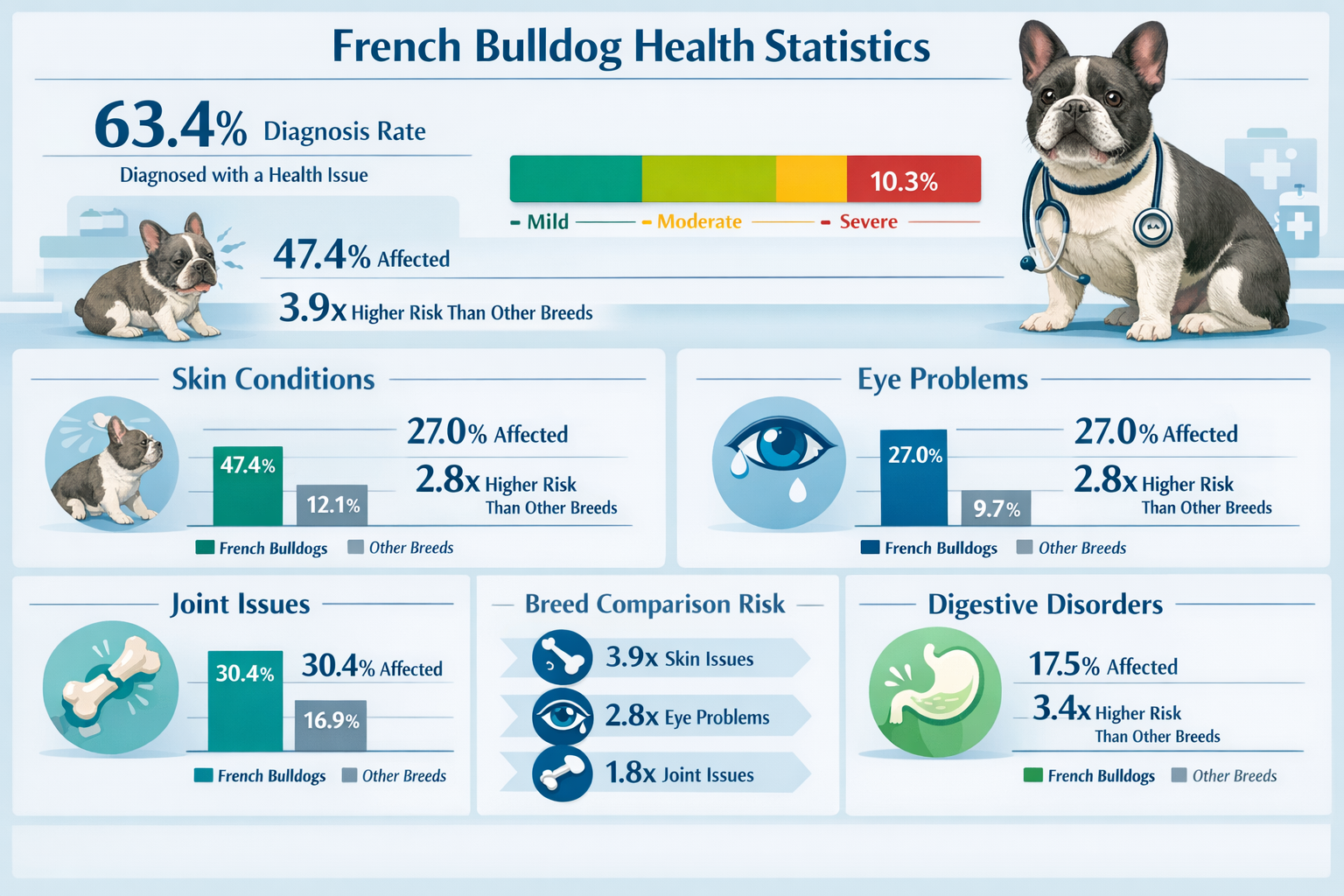
- French Bulldogs face significantly higher health risks than most breeds, with 63.4% diagnosed with at least one disorder
- Breathing problems are the most serious concern, with Frenchies being 42 times more likely to have narrowed nostrils
- Early detection and preventive care can dramatically improve quality of life and reduce treatment costs
- Pet insurance is essential for French Bulldog owners due to breed-specific health predispositions
- Choosing a reputable breeder with health testing can prevent many genetic conditions
Quick Answer
French Bulldogs are prone to numerous health issues due to their brachycephalic (flat-faced) structure and genetic predispositions. The most common problems include breathing difficulties, skin fold dermatitis, eye conditions, joint problems, and digestive issues. Research shows that over 63% of French Bulldogs will be diagnosed with at least one health condition during their lifetime, making preventive care and early intervention crucial for owners.
What Are the Most Serious Common Health Problems in French Bulldogs?
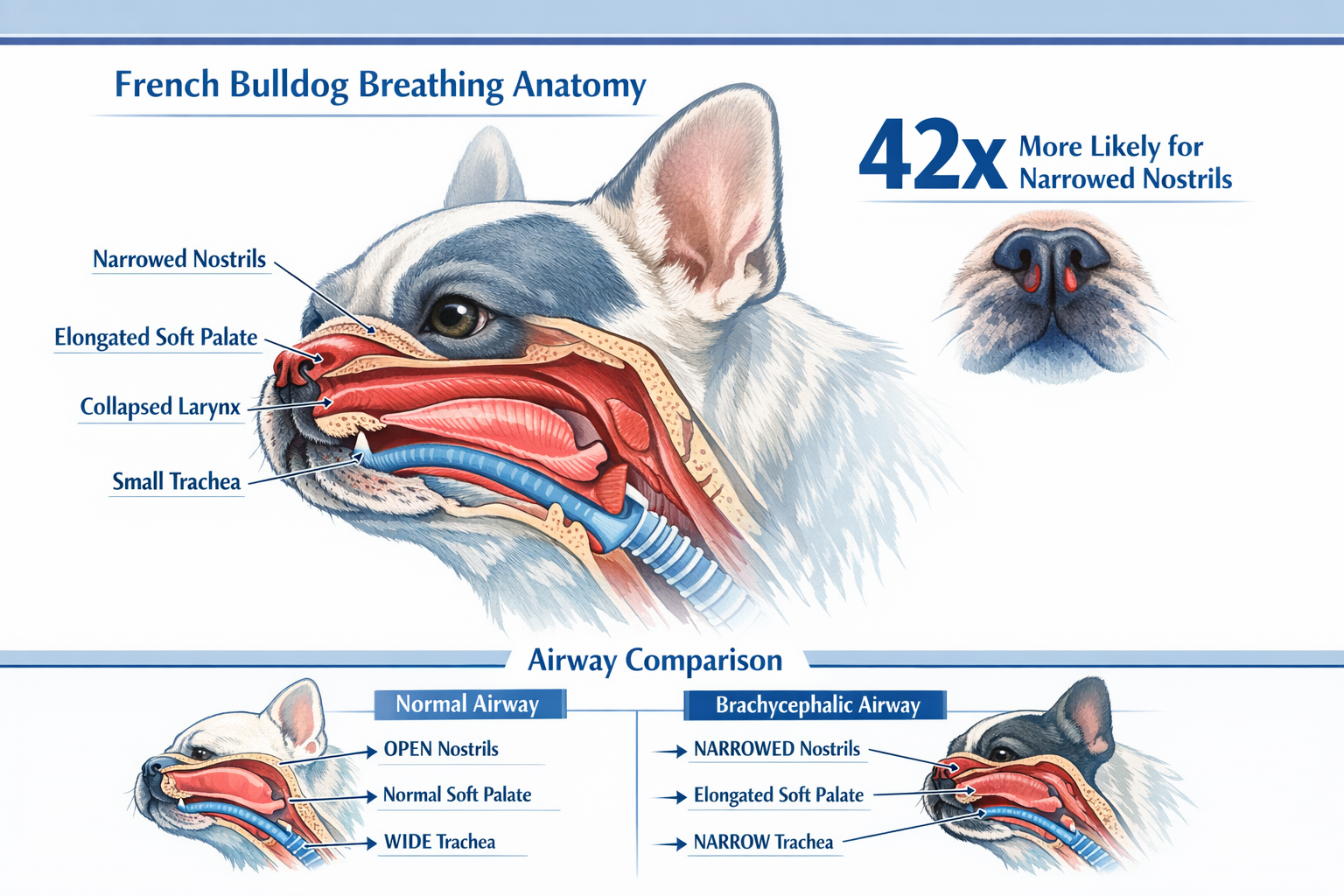
Breathing disorders top the list of serious health concerns for French Bulldogs. These dogs are 42 times more likely to suffer from narrowed nostrils and 31 times more at risk for brachycephalic obstructive airway syndrome (BOAS) compared to other breeds. This condition can be life-threatening and significantly impacts their quality of life.
The severity stems from their flat-faced anatomy, which creates multiple airway obstructions:
- Narrowed nostrils (stenotic nares) – restrict airflow during breathing
- Elongated soft palate – blocks the airway opening
- Collapsed trachea – weakened windpipe structure
- Everted laryngeal saccules – tissue protrusions that further obstruct breathing
Choose immediate veterinary care if your Frenchie shows blue gums, excessive panting at rest, or fainting episodes. These indicate severe respiratory distress requiring emergency treatment.
Common mistake: Many owners assume loud snoring is normal for French Bulldogs. While some snoring is expected, labored breathing, especially during mild activity, signals a problem requiring veterinary evaluation.
For detailed information about breathing issues, see our complete guide to French Bulldog breathing problems.
How Common Are Skin and Coat Issues in French Bulldogs?
Skin problems affect a significant portion of French Bulldogs, with skin fold dermatitis occurring in approximately 3% of the breed. However, this number likely underrepresents the true prevalence since many cases go undiagnosed or are managed at home.
Primary skin conditions include:
- Skin fold dermatitis – bacterial and fungal infections in facial wrinkles
- Allergic dermatitis – food and environmental allergies causing itching and inflammation
- Interdigital cysts – painful bumps between toes
- Hot spots – acute moist dermatitis from excessive licking or scratching
Risk factors that increase skin problems:
- Humidity and warm weather
- Poor grooming habits
- Food allergies (common proteins: chicken, beef, dairy)
- Contact with allergens (pollen, dust mites, cleaning products)
Choose daily cleaning if you notice any odor, redness, or moisture in your Frenchie’s wrinkles. Prevention is much easier than treating established infections.
Edge case: Some French Bulldogs develop skin allergies that only appear seasonally. Track symptoms with photos and dates to help your vet identify triggers and develop targeted treatment plans.
For comprehensive information about managing skin conditions, check our guide to French Bulldog skin allergies symptoms.
What Eye Problems Should French Bulldog Owners Watch For?
Eye conditions are significantly more prevalent in French Bulldogs, with the breed showing 467% higher risk of ocular disease compared to non-brachycephalic dogs. Conjunctivitis affects 3.2% of French Bulldogs, while cherry eye impacts 2.6% of the breed.
Most common eye conditions:
- Cherry eye – prolapsed third eyelid gland creating a red, fleshy appearance
- Corneal ulcers – scratches or injuries to the eye surface
- Dry eye (keratoconjunctivitis sicca) – insufficient tear production
- Entropion – eyelids rolling inward, causing lashes to irritate the eye
Early warning signs to monitor:
- Excessive tearing or eye discharge
- Squinting or pawing at eyes
- Red, swollen, or cloudy eyes
- Visible third eyelid or pink tissue in corner of eye
Choose immediate veterinary attention if you notice sudden vision changes, severe pain (indicated by reluctance to open eyes), or any trauma to the eye area. Eye injuries can worsen rapidly without proper treatment.
Common mistake: Using human eye drops or home remedies. French Bulldog eyes are particularly sensitive, and inappropriate treatments can cause permanent damage.
Learn more about recognizing early symptoms in our French Bulldog eye discharge causes guide.
How Do Joint and Mobility Issues Affect French Bulldogs?
Joint problems significantly impact French Bulldog mobility and comfort, particularly as they age. The breed’s compact build and genetic predisposition create multiple orthopedic challenges that can develop early in life.
Primary joint conditions:
- Hip dysplasia – malformed hip joints causing pain and arthritis
- Luxating patella – kneecap dislocation, common in small breeds
- Intervertebral disc disease (IVDD) – spinal disc problems causing pain and paralysis risk
- Elbow dysplasia – abnormal elbow joint development
Early detection signs:
- Reluctance to climb stairs or jump
- Stiffness after rest periods
- Limping or favoring one leg
- Decreased activity or playfulness
- Difficulty rising from lying position
Choose joint supplements and weight management if your Frenchie shows early mobility changes. Maintaining ideal body weight reduces joint stress by up to 40%.
Prevention strategies:
- Avoid high-impact activities (jumping from furniture, excessive stair climbing)
- Provide orthopedic bedding for joint support
- Maintain healthy weight through proper diet and moderate exercise
- Consider glucosamine and chondroitin supplements after consulting your vet
Edge case: Some French Bulldogs develop IVDD as young as 2-3 years old. This condition requires immediate veterinary attention if you notice back pain, weakness, or coordination problems.
For detailed information about recognizing joint problems early, see our French Bulldog joint pain signs detection guide.
What Digestive Problems Are Common in French Bulldogs?
Digestive issues frequently affect French Bulldogs, with diarrhea occurring in 7.5% of the breed. Their sensitive stomachs and tendency toward food allergies make gastrointestinal problems a recurring concern for many owners.
Frequent digestive conditions:
- Food allergies and intolerances – reactions to specific proteins or ingredients
- Inflammatory bowel disease – chronic intestinal inflammation
- Gastroesophageal reflux – stomach acid backing up into the esophagus
- Bloat (gastric dilatation-volvulus) – life-threatening stomach twisting
French Bulldogs show 265% higher risk of esophageal disease compared to other breeds, often related to their brachycephalic anatomy affecting swallowing and digestion.
Dietary management strategies:
- Feed smaller, more frequent meals (3-4 times daily)
- Use elevated food bowls to reduce air swallowing
- Choose limited ingredient diets for sensitive stomachs
- Avoid common allergens (chicken, beef, wheat, corn, soy)
Choose immediate veterinary care if your Frenchie shows persistent vomiting, bloody diarrhea, or signs of bloat (distended abdomen, unsuccessful attempts to vomit, restlessness).
FYI: Some links may be affiliate links, which means I may earn a small commission at no extra cost to you.
For dogs with recurring digestive issues, a natural probiotic formula can help support gut health and improve digestion. If you’re looking for a simple daily solution to help balance your Frenchie’s beneficial bacteria and support overall digestive wellness, this probiotic blend is trusted by many French Bulldog owners for maintaining healthier gut function and improved nutrient absorption.
For comprehensive information about digestive problems, check our French Bulldog diarrhea causes health guide.
How Can Owners Prevent Common Health Problems in French Bulldogs?
Prevention strategies can significantly reduce the risk and severity of many French Bulldog health issues. While genetic predispositions can’t be eliminated, proper care and early intervention make a substantial difference in your dog’s quality of life.
Essential prevention measures:
Daily care routines:
- Clean facial wrinkles with pet-safe wipes to prevent skin fold dermatitis
- Monitor breathing patterns and avoid overexertion
- Maintain ideal body weight through portion control and appropriate exercise
- Check eyes daily for discharge, redness, or irritation
Environmental management:
- Keep your home cool and well-ventilated to prevent overheating
- Use air purifiers to reduce allergens
- Provide orthopedic bedding for joint support
- Avoid exposure to cigarette smoke and strong chemicals
Veterinary care schedule:
- Bi-annual wellness exams for early problem detection
- Annual dental cleanings to prevent periodontal disease
- Regular weight monitoring and body condition scoring
- Prompt treatment of minor issues before they become serious
Choose a reputable breeder if you’re getting a puppy. Health testing for genetic disorders has reduced occurrence from 24% to less than 2% among responsible breeders[6].
Common mistake: Waiting until problems become severe before seeking veterinary care. Early intervention is almost always less expensive and more effective than treating advanced conditions.
To learn about selecting healthy puppies, read our guide on 7 signs of healthy French Bulldog puppies.
When Should You Seek Veterinary Care for Your French Bulldog?
Recognizing when your French Bulldog needs professional medical attention can be life-saving. Some conditions require immediate emergency care, while others benefit from prompt but non-urgent veterinary evaluation.
Emergency situations requiring immediate care:
- Breathing distress – blue gums, excessive panting at rest, fainting
- Bloat symptoms – distended abdomen, unsuccessful vomiting attempts, restlessness
- Eye injuries – trauma, sudden vision loss, severe pain
- Seizures – first-time episodes or prolonged seizure activity
- Heat stroke – excessive panting, drooling, weakness, collapse
Schedule veterinary appointments within 24-48 hours for:
- Persistent vomiting or diarrhea (more than 24 hours)
- Limping or mobility changes
- Skin infections with odor or discharge
- Changes in appetite lasting more than 2 days
- Behavioral changes or lethargy
Monitor at home but discuss at next visit:
- Mild snoring increases
- Occasional loose stools
- Minor skin irritation in wrinkles
- Slight changes in activity level
Choose your veterinarian based on their experience with brachycephalic breeds. French Bulldogs have unique anesthetic and surgical risks that require specialized knowledge.
Edge case: Some French Bulldogs are “silent sufferers” who don’t show obvious pain signs. Watch for subtle changes like decreased appetite, reluctance to play, or sleeping more than usual.
For guidance on recognizing health problems, see our comprehensive guide on 9 signs your French Bulldog is unhealthy.
What Are the Financial Costs of Common Health Problems in French Bulldogs?
The financial impact of French Bulldog health problems can be substantial, with some conditions requiring thousands of dollars in treatment. Understanding potential costs helps owners budget appropriately and make informed decisions about pet insurance.
Typical treatment costs for common conditions:
| Condition | Diagnosis Cost | Treatment Range |
|---|---|---|
| BOAS Surgery | $300-500 | $2,000-6,000 |
| Cherry Eye Repair | $150-300 | $800-2,500 |
| Hip Dysplasia | $500-1,500 | $3,000-8,000 |
| Skin Allergies | $200-600 | $500-2,000/year |
| IVDD Treatment | $1,000-3,000 | $3,000-15,000 |
Insurance considerations:
Most pet insurance companies now cover French Bulldogs, but many exclude pre-existing conditions. The average annual premium ranges from $600-1,200 depending on coverage level and location.
Choose comprehensive coverage if you’re getting a puppy. Pre-existing condition exclusions make early enrollment crucial for French Bulldogs.
Budget-friendly alternatives:
- Pet savings accounts with automatic monthly deposits
- Care credit for veterinary expenses
- Wellness plans offered by veterinary clinics
- Preventive care to avoid more expensive treatments
Common mistake: Assuming pet insurance isn’t worth the cost. For French Bulldogs, insurance often pays for itself with just one major health episode.
Helpful Resources for French Bulldog Health Management
If you want comprehensive protection for your French Bulldog’s health, pet insurance specifically designed for brachycephalic breeds can provide peace of mind and financial security. These reputable pet insurance providers offer coverage for breed-specific conditions like breathing disorders, skin allergies, and joint problems that commonly affect French Bulldogs.
Additional management tools:
- Health tracking apps to monitor symptoms and treatments
- Local French Bulldog breed clubs for support and resources
- Veterinary specialists familiar with brachycephalic breeds
- Online communities for sharing experiences and advice
For reactive or anxious French Bulldogs who become stressed during vet visits, structured training techniques can help create calmer, more manageable veterinary experiences using force-free methods that reduce anxiety and improve cooperation during medical examinations.
Frequently Asked Questions
Q: Are French Bulldogs really that unhealthy compared to other breeds?
A: Yes, research shows 63.4% of French Bulldogs are diagnosed with at least one disorder, significantly higher than most breeds. However, many conditions are manageable with proper care and early intervention.
Q: What’s the most expensive health problem French Bulldogs face?
A: BOAS (breathing) surgery and IVDD (spinal) treatments are typically the most costly, ranging from $3,000-15,000 depending on severity and required procedures.
Q: Can I prevent my French Bulldog from developing health problems?
A: While you can’t prevent genetic conditions, proper breeding selection, preventive care, weight management, and environmental controls significantly reduce risk and severity of many problems.
Q: At what age do French Bulldogs typically start having health issues?
A: Some conditions like breathing problems and skin fold dermatitis can appear in puppyhood, while joint issues often develop around 2-4 years of age. Regular veterinary monitoring from puppyhood is essential.
Q: Is pet insurance worth it for French Bulldogs?
A: Given the breed’s high health risk profile, pet insurance typically provides excellent value for French Bulldog owners, often paying for itself with just one major health episode.
Q: How can I find a veterinarian experienced with French Bulldogs?
A: Look for vets with brachycephalic breed experience, ask about their anesthesia protocols for flat-faced dogs, and seek recommendations from local French Bulldog breed clubs or reputable breeders.
Q: What’s the difference between normal French Bulldog breathing and concerning symptoms?
A: Normal includes some snoring and mild panting. Concerning signs include blue gums, excessive panting at rest, fainting, or severe difficulty breathing during mild activity.
Q: Can French Bulldogs live normal, healthy lives despite their health risks?
A: Absolutely. With proper preventive care, appropriate management of conditions, and attentive ownership, many French Bulldogs live happy, comfortable lives well into their teens.
Q: Should I avoid getting a French Bulldog because of health problems?
A: Consider your ability to provide proper veterinary care, budget for potential health costs, and commit to daily preventive care. Responsible ownership can significantly improve outcomes for these dogs.
Q: How often should French Bulldogs see a veterinarian?
A: Bi-annual wellness exams are recommended for French Bulldogs due to their higher health risk profile, with additional visits as needed for specific concerns or conditions.
Conclusion
Understanding the common health problems in French Bulldogs empowers you to provide the best possible care for your companion. While this breed faces significant health challenges, with proper prevention, early detection, and appropriate veterinary care, many French Bulldogs live full, happy lives despite their predispositions.
Take these actionable steps today:
- Schedule a comprehensive health evaluation with a veterinarian experienced in brachycephalic breeds
- Establish daily preventive care routines including wrinkle cleaning, weight monitoring, and breathing assessment
- Research pet insurance options before health problems develop to ensure coverage for breed-specific conditions
- Connect with reputable resources including breed clubs, experienced veterinarians, and educational materials
- Create an emergency plan with contact information for after-hours veterinary care and emergency clinics
Remember, being proactive about your French Bulldog’s health isn’t just about preventing problems—it’s about ensuring your beloved companion enjoys the highest quality of life possible. The investment in preventive care and early intervention almost always pays dividends in your dog’s comfort, longevity, and your peace of mind.
For ongoing support and detailed guidance, explore our comprehensive resources on French Bulldog care and health management to help you navigate the rewarding journey of French Bulldog ownership.
References
[1] French Bulldogs Breed Poor Health Frenchies Study Uk – https://www.cbsnews.com/news/french-bulldogs-breed-poor-health-frenchies-study-uk/
[2] 2021 12 French Bulldogs Higher Common Health – https://phys.org/news/2021-12-french-bulldogs-higher-common-health.html
[3] The Most Common Health Problems In French Bulldogs – https://www.dvm360.com/view/the-most-common-health-problems-in-french-bulldogs
[4] French Bulldogs 1 Dog Breed In America At Higher Risk Of Health Concerns – https://www.gradyvet.com/blog/french-bulldogs-1-dog-breed-in-america-at-higher-risk-of-health-concerns/
[5] The Lifespan And Health Conditions Of – https://www.companionanimalpsychology.com/2019/07/the-lifespan-and-health-conditions-of.html
[6] Health – https://frenchbulldogclub.org/health/