
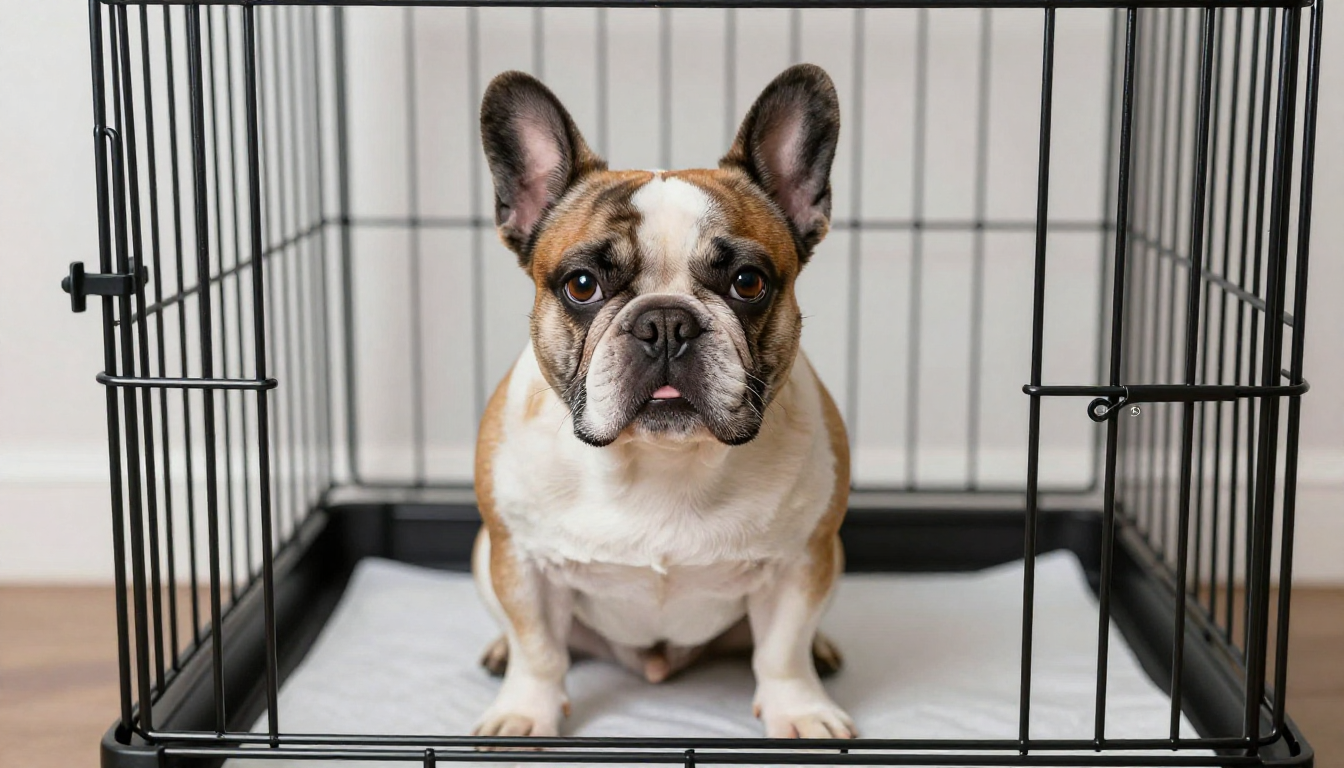
French Bulldog Crate Training Guide
Why a crate helps your Frenchie
A crate can be a safe den for your French Bulldog. It keeps your pup out of trouble when you cannot watch. It speeds up house training. It also helps with calm rest and travel. With the right plan, the crate feels cozy, not scary. Your goal is trust, not force.
Pick the right crate
Size and fit
French Bulldogs have compact bodies and wide chests. Choose a size that lets your dog stand up, turn around, and lie flat. Too big can slow potty training. Use a divider panel if you buy a larger crate for growth.
| Dog stage | Weight | Suggested crate (L x W x H) | Notes |
|---|---|---|---|
| Puppy (8–16 weeks) | 6–14 lb | 24″ x 18″ x 19″ | Use divider; room for a bed and a toy |
| Young (4–9 months) | 14–22 lb | 24–30″ length | Adjust divider as your pup grows |
| Adult French Bulldog | 20–30 lb | 30″ x 21″ x 24″ | Most adults fit well in a 30-inch wire crate |
Type and safety
- Wire crate: great airflow for a brachycephalic breed; good for visibility.
- Plastic crate: cozy feel; useful for travel if approved.
- Soft crate: only for calm, crate-trained adults.
- Always remove collars in the crate to avoid snagging.
Set up the space
- Place the crate in a quiet room near family life, not in a hot spot.
- Add a flat mat or thin bed. Frenchies overheat fast; skip thick fluff at first.
- Use a safe chew like a stuffed Kong or a lick mat to create calm.
- Keep water close by. For longer naps, use a no-spill bowl clip.
- Consider white noise to mask outside sounds.
Step-by-step plan
Phase 1: open-door fun (1–2 days)
- Prop the door open.
- Toss treats inside. Let your pup explore and exit freely.
- Feed meals just inside the doorway.
Phase 2: short closes (2–3 days)
- Move the bowl to the back of the crate.
- Close the door while your dog eats. Open as soon as the bowl is empty.
- Pair a cue like “Crate” or “Bed.” Mark with “Yes” and reward.
Phase 3: build duration (3–7 days)
- Give a long-lasting chew. Close the door for 1–2 minutes. Open before fuss starts.
- Repeat and add time: 3, 5, 8, 12 minutes. Keep sessions short and sweet.
- Step a few feet away. Sit, then leave the room for seconds at a time.
Phase 4: relax while you move (1 week)
- Crate your dog with a chew while you do simple chores.
- Vary your exits so they feel normal, not a big event.
- Return calmly. Use a release word like “Free.” No big party at the door.
Phase 5: bedtime and real-life use
- Place the crate by your bed the first nights. Your scent soothes your pup.
- Take a potty break right before lights out and first thing in the morning.
- Move the crate to its final spot over a few nights if you wish.
Daily rhythm that works
Frenchies do well with a steady schedule. Short sprints of fun. Short naps. Clear potty breaks. Use the rule of thumb for bladder time: months of age plus one hour, up to four hours by day. At night, many pups can go longer.
| Time | Activity | Crate notes |
|---|---|---|
| 7:00 am | Outside potty, short walk | Open crate on wake-up |
| 7:30 am | Breakfast in the crate | Door closed until bowl is empty |
| 8:00 am | Play and training | Practice “Crate” cue 2–3 reps |
| 9:00 am | Nap | Chew in crate, 45–90 minutes |
| 12:00 pm | Potty, lunch (if puppy) | Short crate rest after |
| Afternoon | Training, sniff walk | Open rest or short crate break |
| Evening | Dinner, calm play | Light chew in crate before bed |
Potty training with the crate
- Take your dog out right after waking, after play, after eating, and after crate time.
- Stand in one spot. Say nothing. Praise and treat the moment they finish.
- If there is an accident, clean it with an enzyme cleaner. Do not scold.
- At night, set one alarm for a quick, quiet potty break for young pups.
Reduce whining, barking, or stress
- Do not open the door while your dog barks. Wait for one second of quiet, then release.
- Cover only three sides to lower visual stress. Keep airflow high for this breed.
- Give a worn T-shirt with your scent for comfort.
- Use a food puzzle so the crate predicts good things.
- Practice micro-exits: step out for 5–30 seconds, many times, to build confidence.
Special care for this breed
- Watch heat. French Bulldogs can overheat fast. Keep the area cool and airy.
- A fan across the room helps circulate air. Do not aim it right at the dog.
- Keep sessions short after heavy play. Let breathing return to normal.
- Skip thick collars or tags inside the crate to prevent snagging.
Advance the training
Teach “Go to bed”
- Toss a treat into the crate. Say “Bed.”
- When paws go in, mark “Yes” and reward on the mat.
- Add a sit or down for extra calm.
Fade the food
- Switch to a variable reward: sometimes food, sometimes praise, sometimes a chew.
- Keep the crate door open for chill time while you read or watch TV.
Travel and vet visits
- Buckle a plastic or crash-tested crate in the car.
- Do driveway practice: sit in the car, treat, go back inside. Build up to short drives.
- Bring the same mat to the vet so the smell feels safe.
Common mistakes to avoid
- Using the crate as punishment. It should be a happy, calm place.
- Going too fast. If your dog whines, drop back a step and make it easier.
- Leaving a puppy too long. Plan help for mid-day breaks.
- Skipping exercise. A bored Frenchie will fuss. Use sniff walks and short training games.
- Forgetting airflow. This breed needs cool air and space to breathe.
Quick answers
How long can an adult stay crated?
By day, aim for 3–4 hours max. At night, many adults sleep 6–8 hours with a potty break if needed.
What if my dog hates the crate?
Go back to open-door feeding. Reward any step toward the crate. Keep doors open for a few days. Try a different location in the home.
What toys are safe inside?
Use sturdy rubber chews and lick mats. Avoid plush toys for heavy chewers without supervision.
When can I stop using it?
When your Frenchie is house-trained, calm, and not chewing things. Start with short, supervised free time. If all is well for a week, add more freedom.
Your simple checklist
- Right crate size with a divider
- Cool spot, comfy mat, safe chew
- Clear cue and calm release word
- Short sessions, then longer rests
- Set potty schedule and stick to it
- Watch heat and breathing every time
You can do this. With a smart setup and steady steps, your French Bulldog will see the crate as a calm den. Keep sessions short, make it sweet, and progress will come fast.
Choosing the Right Crate Size and Type for French Bulldogs
You want a crate that fits your Frenchie just right. The right pick helps with potty training, keeps your dog safe, and gives your pup a calm den. This French Bulldog Crate Training Guide explains how to choose the best size and type, so you set your dog up for success from day one.
Why fit matters for a short-nosed breed
French Bulldogs have wide chests and short noses. They need great airflow and space to sit up without hitting their ears on the top. A crate that is too big can slow potty training. A crate that is too small can stress your dog and make breathing harder. Aim for cozy, not cramped.
How to measure your Frenchie
Length
Measure from the nose to the base of the tail. Do not include the tail.
Height
Have your dog sit. Measure from the floor to the top of the ears. Frenchies have tall ears, so include them.
Add space
Add 2–4 inches to both length and height. This gives room to stand, turn, and lie flat.
Turn-around test
Your dog should turn in a full circle without crouching. If your dog can do that, the size is likely right.
Typical crate sizes that work well
Many French Bulldogs do well in a 24-inch crate. Some taller or longer dogs do better in a 30-inch crate. Use your measurements to decide. When in doubt, choose the smaller size and use a divider while your puppy grows.
| Dog stage or size | Dog length (nose to tail base) | Dog height (sitting to ear tip) | Suggested crate (L x W x H) | Notes |
|---|---|---|---|---|
| Puppy (8–12 weeks) | 11–14 in | 12–14 in | 24 x 18 x 19 in | Use a divider to shrink space for potty training. |
| Teen (4–8 months) | 13–16 in | 13–15 in | 24 x 18 x 19 in | Keep the divider and open space as your dog grows. |
| Adult, compact build | 14–17 in | 14–16 in | 24 x 18 x 19–21 in | Most adults fit here; ensure headroom for ears. |
| Adult, tall/long build | 16–19 in | 15–17 in | 30 x 19–21 x 21–22 in | Choose if your Frenchie seems cramped in 24 in. |
| Travel hard kennel | Follow airline chart | Follow airline chart | Small/Medium (varies) | Check airline rules; short-nosed breeds have extra rules. |
Crate types compared
Pick a crate type that matches your dog’s needs and your space. Airflow is key for a short-nosed breed.
| Type | Best for | Pros | Watch-outs |
|---|---|---|---|
| Wire | Home use, hot rooms | Great airflow, good visibility, divider-friendly, easy to clean | Can be drafty; add cover on two sides for calm |
| Plastic (hard) | Car travel, cozy den feel | Sturdy, more private, easy to wipe down | Less airflow; add vented sides; avoid heat |
| Soft-sided | Calm adult dogs, light travel | Lightweight, folds flat, quiet | Not for chewers; poor for heavy use; airflow varies |
| Heavy-duty metal | Escape artists | Very strong, secure latches | Heavy, pricey; ensure rounded edges |
| Furniture-style | Small spaces, living room | Looks nice, doubles as table | Check ventilation; wood may swell if soiled |
Must-have features for comfort and safety
- Two doors: easier entry in tight rooms and safer exits.
- Divider panel: grows with a puppy and boosts potty training.
- Non-slip, removable tray: fast cleanups; no sharp edges.
- Secure latches: no thin hooks; choose slam-latch or dual locks.
- Rounded corners: protect paws and avoid snags.
- Rust-resistant finish: zinc-free, chew-safe coating.
- Quiet build: fewer rattles help anxious dogs relax.
Set up the crate the smart way
- Location: pick a quiet corner of the main room. Avoid direct sun and heat vents.
- Airflow: keep sides clear. Do not drape the top fully in warm weather.
- Bedding: use a firm mat that supports the back. Add a washable cover.
- Cooling help: a breathable pad or cool mat helps short-nosed dogs.
- Water: use a no-spill bowl or crate bottle for longer rests.
- Toys: one safe chew only. Skip stuffed toys for heavy chewers.
French Bulldog Crate Training Guide: quick start steps
- Make it happy. Toss treats into the crate. Feed a few meals at the door, then inside.
- Add a cue. Say a short word like “kennel.” Reward when your dog steps in.
- Close for seconds. Shut the door for 10–30 seconds. Open before your dog whines. Reward calm.
- Build time. Add 1–2 minutes per session. Vary the length so it feels normal.
- Use a schedule. Short-nosed dogs do best with short naps. Puppies can hold it about 1 hour per month of age, up to 3–4 hours. Adults: aim for 4–6 hours max during the day.
- Keep it positive. Never use the crate for punishment.
How to match size and type to your daily life
- Small apartment: a 24-inch wire crate with two doors fits well and folds for storage.
- Hot climate: choose wire with a breathable mat and a fan nearby (not blowing into the crate).
- Travel often: a plastic crate for the car and a wire crate at home makes life easy.
- Anxious dog: pick a more private crate (plastic or covered wire) but keep airflow strong.
- Strong chewer: skip soft-sided. Use heavy-duty wire or metal.
Troubleshooting fit and comfort
If your dog pushes the sides or looks hunched
Go up one size. Check height first. Ears should not brush the roof when sitting.
🐾 Top French Bulldog Resources I Trust
🐶 Here are my go-to tools for raising a happy, healthy Frenchie—from managing breed-specific health risks to unlocking that famously “stubborn” personality with patience and understanding. These vetted partners have helped me (and thousands of Frenchie parents) save money, reduce stress, and build a joyful bond with our wrinkly companions!
If your French bulldog struggles with barking or lunging on walks, a structured training program can make a big difference. One popular option is a step-by-step reactivity training webinar that focuses on calm, force-free methods.
👉 Click here to discover how calmer, happier walks with your Frenchie can start today.
Best Pet Insurance
Frenchies face costly breed-specific risks like breathing issues, IVDD, and skin fold infections. Compare vet-trusted insurers offering guaranteed lowest rates + fastest claims—so you’re never forced to choose between your wallet and your pup’s wellbeing.
👉 Get a Free Frenchie Insurance Quote
Disclosure: This page contains affiliate links. As an affiliate, I may earn a small commission from qualifying purchases at no extra cost to you. I only recommend programs I’ve researched thoroughly and believe will genuinely help French Bulldog owners.
If your dog has potty accidents
Reduce space with a divider. Take your dog out more often. Reward every outdoor potty.
If your dog pants in the crate
Improve airflow. Remove heavy covers. Move the crate to a cooler spot and offer water.
If your dog barks or whines
Shorten crate sessions. Add a stuffed chew (vet-safe). Practice calm entries and exits.
Fast checklist before you buy
- Measured length and height, added 2–4 inches.
- Chose type with strong airflow for a short-nosed dog.
- Picked a size: most need 24 in; taller dogs may need 30 in.
- Got a divider, secure latches, and a removable tray.
- Planned a cool, quiet spot away from heat and sun.
- Set a kind, steady crate routine from day one.
With the right size and type, your Frenchie will love the crate. Use this French Bulldog Crate Training Guide to measure, compare, and set up with care. A good fit today makes training easier and keeps your best friend safe and calm for years.
Step-by-Step Crate Training Schedule for Puppies and Adults
French Bulldog Crate Training Guide for Real-Life Routines
You want a calm, safe dog. A crate can help. It gives your Frenchie a quiet den. It keeps training clear and kind. This French Bulldog Crate Training Guide shows you simple steps and a daily schedule for puppies and adults.
French Bulldogs are sweet and smart. They also have short noses. So, plan short sessions and steady breaks. Keep the crate cool. Keep the tone upbeat. You will see progress fast.
Pick and Set Up the Crate
Size and type
- Choose a crate where your Frenchie can stand, turn, and lie down.
- Use a wire crate with a divider for growth. A plastic crate works for travel.
- Avoid soft crates until chewing is under control.
Comfort and safety
- Add a flat mat or vet-bed. Skip fluffy beds if your pup chews.
- Place the crate in a quiet spot near the family.
- Remove the collar before crating. Keep water nearby. Use a no-spill bowl if needed.
Step-by-Step: The First Three Days
Day 1: Make the crate a great place
- Keep the door open. Toss a treat in. Let your dog go in and out.
- Feed meals at the crate door. Then move the bowl inside.
- Add a safe chew for 3–5 minutes inside. Door still open.
- Close the door for 10–30 seconds. Open before whining starts. Treat and release.
- Do 5 short rounds, spread out over the day.
Day 2: Add short, calm door time
- Crate after potty and play. Start with 2–5 minutes, then 10 minutes.
- Give a stuffed chew (like a frozen Kong with soft food).
- Stay in the room at first. Then step out for 30–60 seconds.
- Return before fuss starts. Quiet praise. Short walk outside to potty.
Day 3: Small naps and simple exits
- Build one nap to 20–45 minutes for puppies, 45–90 minutes for adults.
- Keep a clean potty routine: out, praise, crate, nap, out again.
- If whining starts, wait for one second of quiet. Then open.
Puppy Schedule (8–16 Weeks)
Young pups need many breaks. A simple rule: months of age = hours they can hold it (max), with 1 extra hour overnight. Watch your puppy and adjust.
| Time | Activity | Crate? | Notes |
|---|---|---|---|
| 6:30 am | Potty outside | No | Go to the same spot. Praise. |
| 6:40 am | Breakfast + water | No | Use part of the meal for training. |
| 6:50 am | Play and training | No | Light play. Short sits and name games. |
| 7:15 am | Crate nap | Yes | 30–60 min with a safe chew. |
| 8:15 am | Potty break | No | Go out right away after crate. |
| 8:25 am | Play, chew, calm time | No | Short leash walk if cool outside. |
| 9:00 am | Crate nap | Yes | 45–60 min. Cover the back for quiet. |
| 10:00 am | Potty + snack | No | Tiny training treats only. |
| 10:15 am | Play and handling | No | Touch paws, ears, then treat. |
| 10:45 am | Crate nap | Yes | 45–60 min. |
| 12:00 pm | Potty + lunch (if needed) | No | Some pups still eat lunch. |
| 12:30 pm | Crate nap | Yes | 60–90 min. Use a frozen chew. |
| 2:00 pm | Potty + play | No | Small training, gentle games. |
| 2:30 pm | Crate nap | Yes | 45–60 min. |
| 3:30 pm | Potty + water | No | Watch for cues: circling, sniffing. |
| 5:30 pm | Dinner | No | Feed in the crate to build a good link. |
| 6:00 pm | Potty + family time | No | Calm play. Short walk if cool. |
| 7:00 pm | Crate rest | Yes | 30–45 min while you cook or eat. |
| 9:00 pm | Last water, then remove bowl | No | Helps the night go smooth. |
| 9:30 pm | Last potty | No | Go right to bed after. |
| Night | Sleep in crate | Yes | One quick potty trip if needed. |
Adult French Bulldog Schedule (12+ Months)
Adults can rest longer, but still need breaks. Keep the house cool. Offer safe chews and puzzle toys.
🐾 Top French Bulldog Resources I Trust
🐶 Here are my go-to tools for raising a happy, healthy Frenchie—from managing breed-specific health risks to unlocking that famously “stubborn” personality with patience and understanding. These vetted partners have helped me (and thousands of Frenchie parents) save money, reduce stress, and build a joyful bond with our wrinkly companions!
If your French bulldog struggles with barking or lunging on walks, a structured training program can make a big difference. One popular option is a step-by-step reactivity training webinar that focuses on calm, force-free methods.
👉 Click here to discover how calmer, happier walks with your Frenchie can start today.
Best Pet Insurance
Frenchies face costly breed-specific risks like breathing issues, IVDD, and skin fold infections. Compare vet-trusted insurers offering guaranteed lowest rates + fastest claims—so you’re never forced to choose between your wallet and your pup’s wellbeing.
👉 Get a Free Frenchie Insurance Quote
Disclosure: This page contains affiliate links. As an affiliate, I may earn a small commission from qualifying purchases at no extra cost to you. I only recommend programs I’ve researched thoroughly and believe will genuinely help French Bulldog owners.
| Time | Activity | Crate? | Notes |
|---|---|---|---|
| 6:30–7:00 am | Potty + breakfast | No | Short walk if the weather is safe. |
| 7:30 am | Calm time | Yes | 60–120 min with a chew. |
| Midday | Potty break | No | Hire help if you work long hours. |
| Afternoon | Crate rest | Yes | 60–120 min. Add a frozen puzzle. |
| Evening | Training + family time | No | Short, fun drills. Sniff walk. |
| Night | Sleep | Yes or No | Crate or bed, your choice. Keep a routine. |
Potty Timing Tips
- Out after waking, eating, playing, and crating.
- Pick one door and path. Go to the same spot.
- Praise right after the pee or poop ends.
- Accident inside? Clean with enzyme spray. No scolding.
Teaching Calm Exits
- Hand on the latch. Wait for stillness.
- Open one inch. If your dog rushes, close gently.
- Open when calm. Cue “Okay.” Send to potty.
Fixing Common Crate Problems
- Whining at first: release during a quiet second. Next time, crate for a shorter time.
- Shredding bedding: switch to flat mats. Give a frozen chew at crate time.
- No interest in going in: feed meals in the crate. Toss treats inside many times a day.
- Accidents in crate: the crate may be too big. Use a divider and add more potty trips.
- Panting or overheating: move the crate to a cooler room. Use a fan. Keep sessions short.
Safety Notes for French Bulldogs
- Keep the crate away from heat. This breed runs warm.
- Skip hard exercise in hot or humid weather.
- Remove collars in the crate to prevent snags.
- Do not use the crate as punishment.
- If panic signs show (drool, clawing, escape tries), call a trainer or vet.
Simple Progress Tracker
| Date | Max Calm Crate Time | Notes |
|---|---|---|
| Week 1 | 20–45 min | Meal in crate, 1–2 short naps daily. |
| Week 2 | 45–90 min | Longer nap with frozen chew. |
| Week 3 | 90–120 min | Short exits from the room, calm returns. |
Quick Rewards That Work
- Tiny soft treats for going in the crate.
- A stuffed Kong for longer naps.
- Praise and a potty trip after calm crate time.
This French Bulldog Crate Training Guide keeps steps simple and kind. Stay steady. Keep sessions short. Celebrate small wins. Your Frenchie will learn to love the crate, and your days will run smooth.
Troubleshooting Common Crate Training Problems (Whining, Accidents, Refusal)
French Bulldog Crate Training Guide: Real-World Fixes That Work
You want a calm, clean, and safe crate. Your Frenchie wants the same thing. This French Bulldog Crate Training Guide shows you how to fix the most common roadblocks fast. You will learn why the problem happens and what to do right now. Every step is kind, simple, and built for a French Bulldog’s body and mood.
First, run these setup checks
- Crate size: big enough to stand, turn, and lie flat; not big enough to potty in one corner and sleep in the other. Use a divider if needed.
- Location: quiet but not isolated. Place the crate in a lived-in room so your dog feels part of the family.
- Air and heat: French Bulldogs overheat. Keep airflow clear. Avoid direct sun and stuffy rooms.
- Bedding: washable pad or mat. Skip plush beds if your dog chews or has accidents.
- Safe chew: a vet-approved chew or a frozen food toy inside the crate only.
- Door safety: smooth latch. No sharp edges. Attach a water cup for longer rests.
French Bulldog Crate Training Guide: Quiet Nights and Calm Rest
Whining can mean many things. Your dog may need to potty, may be hot, may be bored, or may have learned that noise gets you to return. Frenchies are smart and social. They speak up when the crate feels strange or when habits are unclear.
What to do right now
- Fix basic needs: take a brief potty trip. Cool the room. Offer a short drink if it is hot.
- Use a clear routine: potty, calm walk-in, chew in crate, short quiet time, then out.
- Reward quiet: drop a treat in the crate when your dog is silent, even for two seconds. Build up slowly.
- Ignore “demand” noise: if you know potty needs are met, wait for one second of silence, then open the door. Do not open while your dog cries.
- Soothing aids: white noise, a light cover over three sides, your worn T-shirt for scent.
- Short reps: many short calm sessions beat one long hard one. End on quiet.
Advanced calm training
- Silence cue: say “hush” softly the moment your dog is quiet, then treat. Pair the word with silence only.
- Interval game: close door for 3 seconds of quiet, treat; then 5, 8, 12, 18 seconds. If whining starts, go back a step.
- Departure sounds: practice keys, coat, door jiggle. Do tiny “fake leaves” that end before whining starts. Reward calm each time.
- Enrich the crate: use a stuffed food toy that lasts 10–15 minutes. Remove it when the session ends so it stays special.
French Bulldog Crate Training Guide: Dry Crate Habits
Crate accidents happen when time windows are too long, the crate is too big, or your Frenchie does not yet link “outside” with “potty.” Health can also play a part. Small bladders need breaks. A UTI or GI upset needs a vet check.
Fix fast with simple steps
- Right size: install a divider to limit space until habits stick.
- Potty first: go outside before each crate session. Praise the instant your dog finishes.
- Simple order: Outside → Crate → Short Calm Rest → Out Again. Keep play for after success.
- No pads in crate: pads can blur the rule. Use them only in an emergency zone outside the crate.
- Clean fully: use an enzymatic cleaner so smell does not draw repeat accidents.
- Night plan: set an alarm for a quick, quiet potty trip for young pups.
- Water guide: offer water but remove bowls 90 minutes before bedtime unless your vet says otherwise.
- See your vet: if accidents start after success, check for UTI or other issues.
Time limits guide
| Age/Stage | Max Daytime in Crate (hours) | Notes for French Bulldogs |
|---|---|---|
| 8–10 weeks | 1–2 | Frequent potty trips; watch heat closely. |
| 3 months | 2–3 | Short sessions, more naps outside the crate too. |
| 4–5 months | 3–4 | Hold time grows; keep the routine steady. |
| Adult (daytime) | 4–5 | Plan a midday break. Add mental play. |
| Overnight | 6–7 | Many need a quiet midnight potty early on. |
These are general guides. Your dog’s health, size, and heat tolerance matter. When in doubt, add a break.
French Bulldog Crate Training Guide: Happy Entry and Willing Stay
Some dogs refuse to go in. They may fear being left. They may think the crate ends the fun. A kind plan makes the crate a “yes” space again.
Build a strong “go in” routine
- Feed meals in the crate with the door open. Let your dog choose to step in.
- Toss one treat inside. Say “free” to invite out. Repeat until your dog targets the crate fast.
- Add a cue: say “crate” as your dog steps in. Mark with “yes.” Treat low between the paws.
- Close, treat, open: close the door for 2 seconds, treat, open. Add time slowly.
- Use a crate-only chew your dog loves. Keep it special.
- Place the crate near you. Add a cooling mat if your Frenchie runs hot.
- Never push your dog inside. Choice builds trust.
Daily plan that keeps progress steady
| Time | Action | Goal |
|---|---|---|
| 7:00 | Outside potty, brief sniff walk | Empty bladder before crating |
| 7:20 | Breakfast in crate + chew | Happy entry, quiet eating |
| 8:00 | Out for potty, short play | Reinforce “outside, then fun” |
| 12:00 | Midday potty break, light training | Break up crate time |
| 15:30 | Crate with puzzle toy (10–15 min) | Calm rest, mental work |
| 18:30 | Dinner in crate | Strong crate cue link |
| 22:00 | Final potty, cool room, lights down | Quiet night setup |
Quick troubleshooting checklist
- Whining: meet needs, reward quiet, tiny intervals, calm exits and entries.
- Accidents: shorten crate time, tighten the potty routine, clean well, size the crate right.
- Refusal: make entry a game, feed in crate, add a special chew, never force.
- Heat care: cool room, airflow, water access on longer rests.
- Consistency: same cue, same steps, same calm tone.
- Progress pace: end each session on success. Go slower if noise or mess returns.
When to get extra help
Ask your vet if you see sudden accidents, heavy drool, loud panic, or nonstop pacing. These can signal pain or true separation anxiety. A certified trainer can set a custom step plan and watch stress signals so your Frenchie stays safe and calm.
Helpful gear for French Bulldog crate success
- Wire crate with divider for airflow and size control.
- Light crate cover to block sight lines while keeping air moving.
- Cooling mat or fan placed safely outside the crate.
- Camera or baby monitor to spot early stress.
- Food puzzle toys and safe chews cleared by your vet.
- Enzymatic cleaner for complete odor removal.
With this French Bulldog Crate Training Guide, you can turn stress into steady wins. Keep sessions short. Celebrate calm. Protect your dog from heat. Use clear steps. Your Frenchie will learn that the crate means comfort, safety, and good things every day.
Safety, Comfort, and Enrichment Tips for Crated French Bulldogs
French Bulldog Crate Training Guide: Build a Safe, Cozy, Enriching Den
You want your Frenchie to love the crate. With the right plan, the crate becomes a calm, safe spot. This French Bulldog Crate Training Guide shows you how to set up safety, add comfort, and boost enrichment. The steps are simple and kind. You can start today and see steady progress.
Pick the Right Crate for Your Dog
Size and Type
Your dog should stand up, turn around, and stretch out without hitting the sides. Too big can slow potty training. Too small can cause stress and joint strain. Many Frenchies do well in a small-to-medium crate with solid airflow.
| Frenchie Size (Adult) | Suggested Crate Dimensions | Notes |
|---|---|---|
| 16–22 lb | 24″ L x 18″ W x 19″ H | Good for most compact adults |
| 22–28 lb | 24–30″ L x 19–21″ W x 21″ H | Choose 30″ if your dog likes to sprawl |
| Puppy | 24″ with divider | Use divider to adjust space as your pup grows |
Placement and Airflow
- Set the crate in a quiet, draft-free corner near family life.
- Keep it out of direct sun, and away from heaters and strong A/C.
- Short-nosed dogs run hot. Pick a crate with great ventilation.
- Bar spacing should prevent paws or teeth from getting stuck.
Safety Essentials Inside the Crate
What to Put In
- Flat, chew-resistant mat or thin bed that fits snug.
- One tough chew (rubber or nylon) sized for your dog.
- Water via a no-spill clip bowl for longer stays or warm days.
- ID on a breakaway collar only if needed. Many dogs rest safer with no collar on.
What to Skip
- Rope toys, rawhide, and plush toys when unsupervised.
- Long bully sticks that can lodge in the mouth.
- Loose blankets for heavy chewers or dogs that overheat.
- Heavy covers over the whole crate. You still need airflow.
| Item | Safe for Alone Time? | Why |
|---|---|---|
| Rubber food toy (e.g., stuffed and frozen) | Yes | Durable, slows chewing, offers calm licking |
| Nylon chew (size-appropriate) | Yes | Hard to shred, keeps mouth busy |
| Rope or plush toy | No | Strings and fluff can be swallowed |
| Rawhide | No | Choking and blockage risk |
| Loose long bully stick | No | Can wedge in the teeth or throat |
Comfort That Builds Positive Feelings
Bedding and Temperature
- Start with a flat mat. Add more padding later if your dog does not chew.
- Use a light cover on one or two sides to dim light, not block air.
- Place a small fan near (not on) the crate to move air on warm days.
- Check for panting, drool, or restlessness. These are heat stress signs.
Calm Cues
- Play soft white noise to mask outside sounds.
- Teach a cue like “Bed.” Say it once, guide in, and reward.
- Give a safe chew as soon as your dog lies down.
Daily Rhythm
Short-nosed dogs tire fast but also heat fast. Keep crate time fair and planned. Use potty breaks and play between rests.
| Age/Stage | Max Awake Crate Time | Overnight Guide | Potty Breaks |
|---|---|---|---|
| 8–12 weeks | 30–60 minutes | 2–4 hour stretches | Every 1–2 hours when awake |
| 3–6 months | 1–2 hours | 4–6 hour stretches | Every 2–3 hours when awake |
| Adult | Up to 3–4 hours (not daily) | 6–8 hours if well-exercised | Every 3–4 hours when awake |
These are general guides. Your dog may need more breaks. When in doubt, go shorter.
Enrichment That Works in Small Spaces
Chew, Lick, and Sniff Ideas
- Frozen rubber toy stuffed with soaked kibble and a little xylitol-free yogurt.
- Scatter a few pieces of kibble in a snuffle-style mat only if your dog does not shred fabric.
- Nylon bone with rounded edges to reduce tooth wear.
- Rotate two or three items to keep interest fresh.
Keep it simple. One safe item is better than a pile of risky items.
Step-by-Step Plan to Build Crate Love
7-Day Starter Plan
- Day 1: Feed all meals in the crate with the door open. Toss treats in and let your dog come out at will.
- Day 2: Close the door for 1–2 minutes after the meal. Open while your dog is calm.
- Day 3: Add a safe chew. Close the door for 3–5 minutes. Stay nearby and relaxed.
- Day 4: Do 3–4 short sessions (5–8 minutes). Vary your spot in the room.
- Day 5: Step out of sight for 30–60 seconds during one session. Return before whining starts.
- Day 6: Add a 10–15 minute session with a frozen toy. Keep exits low-key.
- Day 7: Mix easy and harder reps. One longer rest (20–30 minutes) if your dog stays calm.
Go slower if you see stress: heavy panting, barking, pawing, or drool. End on a win, then try a smaller step next time.
Fix Common Crate Problems
Whining or Barking
- Wait for one second of quiet, then return and reward calm.
- Lower the bar. Use shorter sessions and a better chew.
- Don’t yell or bang the crate. That adds stress.
Accidents
- Use a divider so the space is not too big.
- Give a potty break, then 10 minutes of calm play, then try again.
- Clean with an enzyme cleaner to remove odor.
Overheating
- Move the crate to a cooler room.
- Use a breathable mat. Skip thick beds in warm weather.
- If panting is heavy or gums look bright red, call your vet.
Separation Stress
- Pair alone time with a high-value chew every time.
- Use very short out-of-sight breaks and build up seconds at a time.
- Ask a trainer or vet if panic signs persist.
Safe Travel and Rest
Car Rides
- Place the crate flat on the back seat or cargo area.
- Secure it with seat belts or anchors so it does not slide.
- Crack windows for air, but never leave your dog in a hot car.
Vet-Ordered Rest
- Use a low, firm bed to support joints.
- Offer gentle enrichment like a stuffed toy instead of active play.
- Follow all activity limits from your vet.
Quick Safety Checklist
- Crate fits well and has smooth edges and secure latches.
- Great airflow; not in sun or near heat.
- One safe chew; no risky toys when alone.
- Short, planned sessions; steady routine.
- Frequent potty breaks; clean accidents well.
- Watch for heat signs and adjust fast.
Why This Approach Works
This French Bulldog Crate Training Guide centers on three things: safety, comfort, and enrichment. Your dog feels secure when the space is set up right. Your dog learns fast when you reward calm. Your dog rests well when needs are met before and after crate time. Keep steps easy, be consistent, and celebrate small wins. With care and a clear plan, the crate becomes a happy den your Frenchie chooses, not a jail your dog fears.
Conclusion
You now have a clear plan to crate train your French Bulldog with confidence. You know how to pick the right crate size and type. You can set a simple crate training schedule for puppies and adults. You can spot why whining, accidents, or refusal happen and fix them fast. You also know how to make the crate safe, comfy, and fun with the right bedding, chew toys, and calm routines.
Keep sessions short and positive. Reward quiet and calm. Open the door before your dog worries. Stick to the potty schedule. Move at your dog’s pace. If your Frenchie stalls, step back, lower the time inside, and build up again. A steady plan beats speed every time.
Use this French Bulldog Crate Training Guide as your daily checklist:
- Fit the crate so your dog can stand, turn, and lie down.
- Choose a sturdy wire or hard-sided crate with good airflow.
- Follow your morning and evening routine every day.
- Troubleshoot whining and accidents with more breaks and better timing.
- Add comfort and enrichment, and keep the crate a safe place.
Crate training should feel kind and simple. Done right, it lowers stress, protects your home, and helps your Frenchie rest well. Start today, track small wins, and celebrate progress. A calm, crate-wise French Bulldog is within reach—and you’ve got the tools to get there.
🐾 Top French Bulldog Resources I Trust
🐶 Here are my go-to tools for raising a happy, healthy Frenchie—from managing breed-specific health risks to unlocking that famously “stubborn” personality with patience and understanding. These vetted partners have helped me (and thousands of Frenchie parents) save money, reduce stress, and build a joyful bond with our wrinkly companions!
If your French bulldog struggles with barking or lunging on walks, a structured training program can make a big difference. One popular option is a step-by-step reactivity training webinar that focuses on calm, force-free methods.
👉 Click here to discover how calmer, happier walks with your Frenchie can start today.
Best Pet Insurance
Frenchies face costly breed-specific risks like breathing issues, IVDD, and skin fold infections. Compare vet-trusted insurers offering guaranteed lowest rates + fastest claims—so you’re never forced to choose between your wallet and your pup’s wellbeing.
👉 Get a Free Frenchie Insurance Quote
Disclosure: This page contains affiliate links. As an affiliate, I may earn a small commission from qualifying purchases at no extra cost to you. I only recommend programs I’ve researched thoroughly and believe will genuinely help French Bulldog owners.