
Last updated: February 23, 2026
Your French Bulldog’s adorable flat face and compact build make them perfect apartment companions, but these same traits put them at serious risk when temperatures rise. Understanding the 6 reasons French Bulldogs overheat easily can help you protect your Frenchie from dangerous heat-related emergencies that affect this breed six times more often than other dogs.
Key Takeaways
• Flat faces reduce cooling efficiency – Shortened airways provide 60% less surface area for heat dissipation through panting
• Weight matters significantly – Even moderately overweight Frenchies have 1.5x higher heat stroke risk
• Narrow airways compound problems – BOAS and other breathing conditions make temperature regulation nearly impossible
• Exercise tolerance is limited – 15-20 minutes of activity in 75°F+ weather can trigger overheating
• Age affects vulnerability – Puppies under 2 years and seniors over 7 years struggle most with heat regulation
• Dark coat colors absorb more heat – Brindle and darker Frenchies need extra protection from direct sunlight
Quick Answer
French Bulldogs overheat easily due to their brachycephalic (flat-faced) anatomy, which reduces cooling efficiency by up to 60% compared to longer-muzzled breeds. Their shortened airways, tendency toward weight gain, limited exercise tolerance, age-related vulnerabilities, and coat characteristics all contribute to making them approximately six times more likely to develop heat stroke than standard dog breeds.
Why Do French Bulldogs Have Such Poor Heat Tolerance?
French Bulldogs struggle with heat regulation because their breeding prioritized appearance over function. Their compressed facial structure, while endearing, creates multiple physiological challenges that make cooling nearly impossible when temperatures rise above 75°F.
The combination of anatomical limitations and breed-specific traits creates a perfect storm for overheating. Unlike breeds with natural cooling advantages, Frenchies must rely on external help to stay safe in warm weather.
Choose indoor activities if: Your Frenchie shows any signs of labored breathing, excessive drooling, or reluctance to move on warm days.
Reason 1: Brachycephalic Anatomy Limits Cooling Efficiency
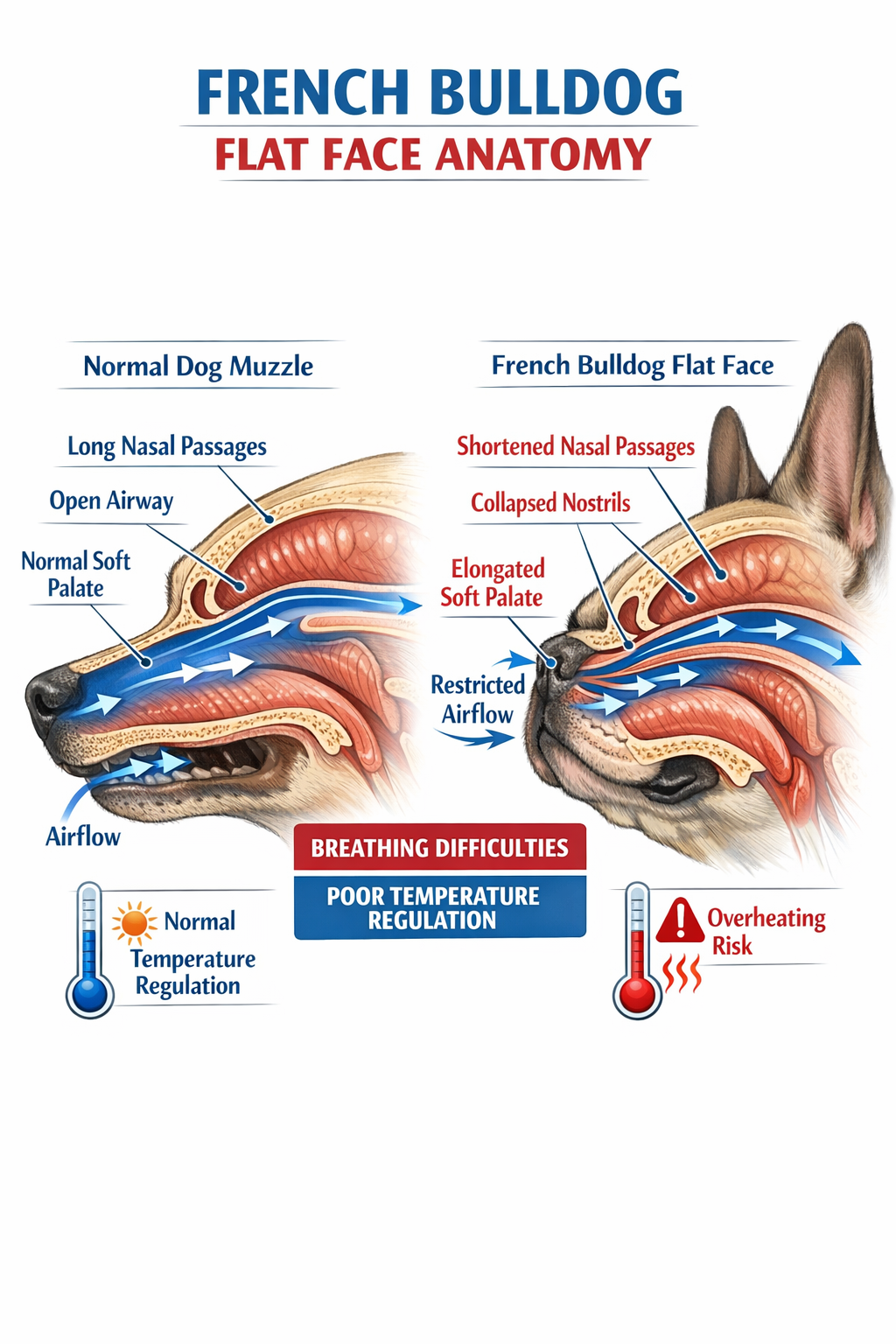
French Bulldogs’ flat faces provide significantly less surface area for effective panting compared to dogs with longer muzzles. Research shows that brachycephalic dogs may actually generate more heat from the effort of breathing than they lose through cooling.
Normal dogs cool themselves by moving air rapidly over their tongue and through their nasal passages. This process relies on:
• Large tongue surface area for moisture evaporation
• Long nasal passages that create airflow turbulence
• Efficient air exchange through unobstructed breathing
French Bulldogs have compressed versions of these cooling mechanisms:
- Shortened tongue space reduces evaporation area by approximately 40%
- Flattened nasal passages create less effective air circulation
- Soft palate elongation often blocks airflow during stress
When your Frenchie pants heavily, they’re working harder but achieving less cooling than other breeds. This inefficiency becomes dangerous quickly when ambient temperatures exceed their limited cooling capacity.
Common mistake: Assuming heavy panting means your Frenchie is cooling down effectively. In reality, excessive panting in flat-faced dogs often signals they’re already overheating and need immediate intervention.
Reason 2: Excess Weight Acts as Dangerous Insulation
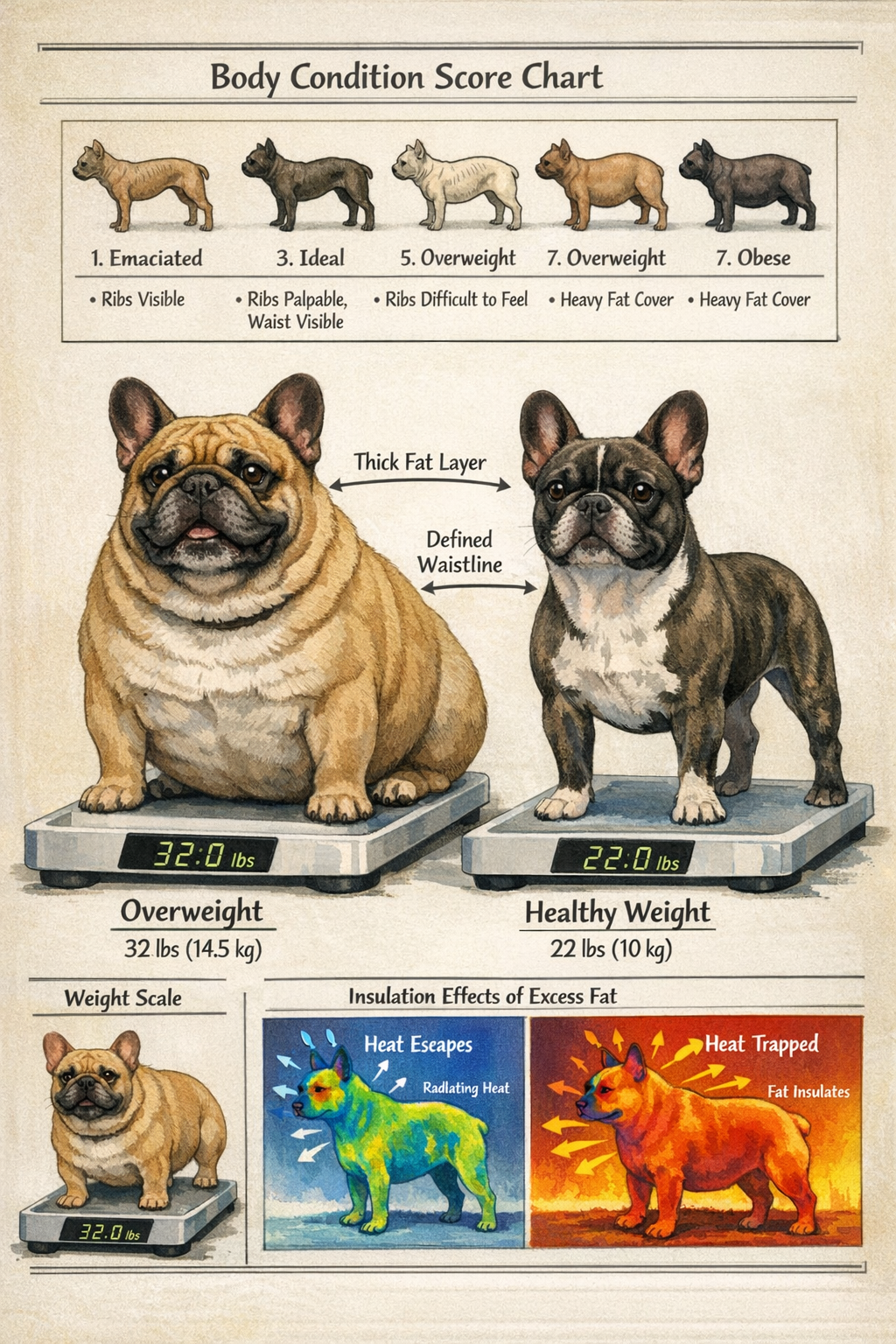
Dogs weighing above their breed standard have almost 1.5 times the risk of heat stroke, while significantly overweight dogs face 3.5 times higher odds of dangerous overheating. Extra body fat creates insulation that prevents heat from escaping your Frenchie’s core.
French Bulldogs are naturally prone to weight gain due to:
• Lower exercise requirements leading to reduced calorie burning
• Food-motivated personalities that encourage overeating
• Slower metabolisms compared to more active breeds
• Joint issues that further limit physical activity
Even five pounds over ideal weight significantly impacts your Frenchie’s ability to regulate temperature. Fat tissue acts like a winter coat that can’t be removed, trapping body heat and making cooling through panting even less effective.
Weight management strategies:
- Monitor daily food portions using a measuring cup
- Choose high-protein, lower-calorie foods designed for less active breeds
- Provide mental stimulation instead of food rewards when possible
- Schedule regular weight checks with your veterinarian
Choose weight management if: Your Frenchie’s ribs aren’t easily felt with light pressure or if they show reluctance to exercise in mild temperatures.
For comprehensive guidance on maintaining your Frenchie’s health, check out our complete guide to French Bulldog health issues.
Reason 3: Narrow Airways Create Breathing Complications
Beyond their flat faces, French Bulldogs often have narrower-than-normal airways that further impair cooling ability, especially when combined with BOAS (brachycephalic obstructive airway syndrome). These structural limitations make every breath more difficult and less effective for temperature control.
Common airway problems in French Bulldogs include:
• Stenotic nares (pinched nostrils) that restrict air intake
• Elongated soft palate that partially blocks the airway
• Hypoplastic trachea (undersized windpipe) limiting airflow volume
• Everted laryngeal saccules that create additional obstructions
When temperatures rise, these conditions worsen dramatically. The increased breathing effort required for cooling actually generates more internal heat, creating a dangerous cycle where harder breathing leads to more overheating.
Warning signs of airway complications:
- Loud, raspy breathing even at rest
- Blue or purple gums during mild exertion
- Frequent gagging or retching sounds
- Collapse or fainting after minimal activity
Edge case consideration: Some French Bulldogs with severe BOAS may need surgical intervention to improve breathing before they can safely handle any warm weather exposure.
If your Frenchie shows signs of breathing difficulties, our French Bulldog breathing problems guide provides detailed information about symptoms and treatment options.
Reason 4: Limited Exercise Tolerance in Heat
French Bulldogs can only safely exercise for 15-20 minutes in temperatures above 75°F before risking dangerous overheating. Their combination of breathing limitations and heat sensitivity makes even moderate activity potentially hazardous on warm days.
Unlike breeds that can regulate temperature during extended activity, Frenchies reach their cooling limits quickly:
• First 5 minutes: Normal panting and activity levels
• 5-15 minutes: Increased panting, possible slowing down
• 15+ minutes: Risk of overheating, potential emergency situation
Safe exercise guidelines for warm weather:
- Schedule walks before 8 AM or after 7 PM when temperatures are coolest
- Choose shaded routes with frequent rest opportunities
- Bring water for both drinking and emergency cooling
- Watch for early warning signs like excessive drooling or stumbling
Activity modifications:
- Replace outdoor walks with indoor play sessions
- Use puzzle toys and training games for mental stimulation
- Consider swimming (with supervision) as a low-impact, cooling exercise
- Focus on short, frequent activities rather than extended sessions
Choose indoor alternatives if: Outside temperatures exceed 75°F, humidity is high, or your Frenchie shows any reluctance to go outside.
FYI: Some links may be affiliate links, which means I may earn a small commission at no extra cost to you.
For structured training that keeps your Frenchie mentally stimulated indoors, a step-by-step training program can provide excellent exercise alternatives. If your French Bulldog struggles with indoor behavior or needs engaging activities during hot weather, a structured training program focusing on calm, mental stimulation can make a big difference.
Reason 5: Age-Related Vulnerabilities Increase Risk
Puppies under 2 years and senior French Bulldogs over 7 years face significantly higher overheating risks due to immature or declining temperature regulation systems. Age affects every aspect of your Frenchie’s ability to cope with heat stress.
Puppy-specific vulnerabilities:
• Underdeveloped cooling mechanisms that aren’t fully mature until 18-24 months
• Higher metabolic rates that generate more internal heat
• Poor judgment about activity limits and rest needs
• Smaller body mass that heats up more rapidly
Senior dog complications:
- Decreased heart efficiency reducing circulation for cooling
- Medication side effects that may impair temperature regulation
- Reduced mobility limiting their ability to seek cooler areas
- Underlying health conditions like heart disease or diabetes
Age-appropriate precautions:
For puppies: Limit outdoor time to 10-minute intervals, provide constant water access, and watch for signs of fatigue or excessive panting.
For seniors: Schedule veterinary checkups before summer, review medications for heat sensitivity, and create multiple cool resting areas throughout your home.
Common mistake: Assuming that because your senior Frenchie “used to handle heat fine,” they can still tolerate the same conditions. Age-related changes happen gradually and may not be immediately obvious.
Reason 6: Coat Color and Density Affect Heat Absorption
Darker-colored French Bulldogs, particularly brindle and solid dark varieties, absorb significantly more heat from direct sunlight than lighter-colored dogs. While coat color doesn’t affect internal cooling mechanisms, it dramatically impacts how quickly your Frenchie heats up outdoors.
Heat absorption by coat color:
• Cream and fawn: Reflect most sunlight, stay coolest
• Pied patterns: Moderate heat absorption depending on dark markings
• Brindle: Higher heat absorption due to dark stripe patterns
• Solid dark colors: Maximum heat absorption, highest risk
Coat density considerations:
French Bulldogs have double coats that provide insulation year-round. During summer months, this natural “sweater” prevents heat from escaping while trapping warm air close to their skin.
Protection strategies by coat type:
- All colors: Avoid direct sunlight during peak hours (10 AM – 4 PM)
- Dark coats: Use cooling vests or wet towels for outdoor bathroom breaks
- Dense coats: Consider professional grooming to remove excess undercoat
- Light colors: Still require shade and limited exposure despite lower absorption
Grooming considerations:
Never shave your French Bulldog completely, as their coat also provides protection from sunburn. Instead, focus on regular brushing to remove loose undercoat and improve air circulation.
For detailed grooming techniques that help with temperature regulation, see our complete French Bulldog grooming guide.
Emergency Signs Your French Bulldog Is Overheating
Recognizing heat stroke symptoms early can save your Frenchie’s life. With approximately 1 in 7 dogs dying from heat stroke complications, immediate action is critical when warning signs appear.
Early warning signs:
• Excessive panting with difficulty breathing
• Bright red or purple gums and tongue
• Thick, sticky saliva or excessive drooling
• Vomiting or diarrhea
• Lethargy or unwillingness to move
Emergency symptoms requiring immediate veterinary care:
- Loss of coordination or stumbling
- Collapse or loss of consciousness
- Seizures or trembling
- Body temperature above 104°F (40°C)
- Pale gums or blue-tinged tongue
Immediate cooling steps:
- Move your Frenchie to air conditioning or shade immediately
- Apply cool (not cold) water to paw pads and belly
- Offer small amounts of cool water if they’re conscious
- Contact your veterinarian or emergency clinic
- Continue cooling during transport but avoid overcooling
What NOT to do:
- Don’t use ice water or ice packs (can cause shock)
- Don’t force water if your dog is unconscious
- Don’t assume they’re “fine” if symptoms seem to improve
Prevention Strategies for Hot Weather
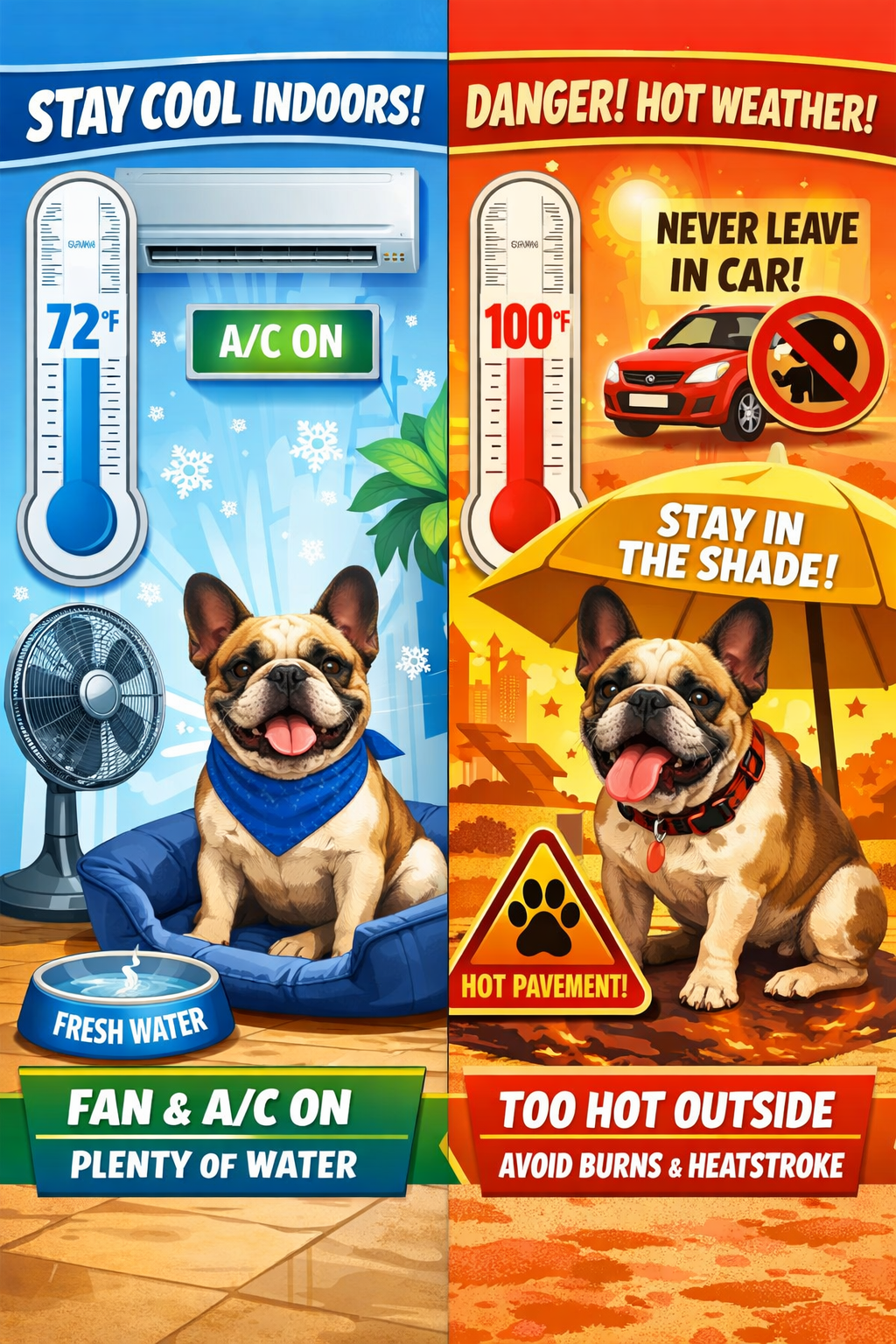
Keep French Bulldogs indoors with air conditioning when temperatures exceed 75°F[6]. Prevention is always safer and more effective than treating heat stroke after it occurs.
Home cooling setup:
• Multiple water stations throughout your home with fresh, cool water
• Elevated beds that allow air circulation underneath
• Cooling mats designed for dogs (avoid ice packs)
• Fans positioned to create air movement without direct drafts
Outdoor safety measures:
- Paw protection: Test pavement temperature with your hand (if it’s too hot for 5 seconds, it’s too hot for paws)
- Portable shade: Umbrella or pop-up tent for necessary outdoor time
- Cooling accessories: Wet bandanas or cooling vests for brief outings
- Emergency kit: Portable water, collapsible bowl, and thermometer
Travel considerations:
Never leave your French Bulldog in a parked car, even with windows cracked. Car temperatures can increase by 20°F in just 10 minutes and over 40°F in one hour.
Seasonal preparation:
- Spring conditioning: Gradually increase outdoor time as weather warms
- Summer routine: Shift to early morning and late evening activities
- Air conditioning maintenance: Service units before peak summer heat
- Emergency planning: Know location of nearest 24-hour veterinary clinic
When to Consult Your Veterinarian
Schedule a pre-summer consultation if your French Bulldog has any underlying health conditions that could worsen heat sensitivity. Certain medications and medical conditions significantly increase overheating risks.
Conditions requiring extra caution:
• Heart disease or murmurs
• Respiratory conditions beyond normal brachycephalic issues
• Diabetes or endocrine disorders
• Obesity or joint problems limiting mobility
• Recent surgery affecting breathing or circulation
Medication considerations:
Some common medications can impair temperature regulation or increase heat sensitivity. Discuss summer safety with your veterinarian if your Frenchie takes:
- Seizure medications
- Heart medications
- Steroids or anti-inflammatory drugs
- Sedatives or anxiety medications
Surgical options:
For French Bulldogs with severe BOAS, surgical correction may improve breathing efficiency and heat tolerance. Procedures like soft palate resection or nostril widening can make a significant difference in quality of life.
Helpful Resource for French Bulldog Owners
Frenchies face costly breed-specific risks like breathing issues, IVDD, and heat-related emergencies. Compare vet-trusted insurers offering guaranteed lowest rates + fastest claims—so you’re never forced to choose between your wallet and your pup’s wellbeing during a heat stroke emergency.
👉 Get a Free Frenchie Insurance Quote
Frequently Asked Questions
What temperature is too hot for French Bulldogs?
French Bulldogs should stay indoors when temperatures exceed 75°F. Even at 70-75°F, limit outdoor activity to 15-20 minutes and provide constant shade and water access.
Can French Bulldogs swim to cool down?
Swimming can help cool French Bulldogs, but they require constant supervision due to their heavy heads and breathing difficulties. Never leave a Frenchie unattended near water, and consider a life jacket for safety.
How long does it take for a French Bulldog to overheat?
French Bulldogs can overheat in as little as 15-20 minutes of activity in 75°F+ weather. In direct sunlight or higher temperatures, overheating can occur in just 5-10 minutes.
Do French Bulldogs need special cooling products?
Cooling mats, elevated beds, and wet bandanas can help, but air conditioning is the most effective cooling method. Avoid ice packs or very cold water, which can cause shock.
What’s the difference between normal panting and overheating in French Bulldogs?
Normal panting involves steady breathing with a pink tongue. Overheating causes rapid, labored breathing with a bright red or purple tongue, thick saliva, and possible stumbling or weakness.
Can French Bulldogs build tolerance to heat over time?
French Bulldogs cannot significantly improve their heat tolerance due to their fixed anatomical limitations. While gradual conditioning may help slightly, their fundamental cooling restrictions remain unchanged.
Should I shave my French Bulldog in summer?
Never shave a French Bulldog completely, as their coat protects against sunburn. Light trimming and regular brushing to remove excess undercoat can help with air circulation.
What should I do if my French Bulldog collapses from heat?
Move them to air conditioning immediately, apply cool water to paw pads and belly, and contact your veterinarian or emergency clinic. Continue cooling during transport to the vet.
Are certain French Bulldog colors more sensitive to heat?
Darker colors like brindle and solid dark coats absorb more heat from sunlight, making these dogs more vulnerable to overheating in direct sun exposure.
How can I exercise my French Bulldog safely in summer?
Exercise indoors with air conditioning, use early morning or late evening hours for brief outdoor activities, focus on mental stimulation games, and always provide water and shade.
Can medications make French Bulldogs more sensitive to heat?
Yes, certain medications including seizure drugs, heart medications, and steroids can impair temperature regulation. Discuss summer precautions with your veterinarian if your Frenchie takes any medications.
What’s the survival rate for French Bulldogs with heat stroke?
Approximately 1 in 7 dogs with heat stroke die from complications, making prevention and early intervention critical for French Bulldogs’ safety and survival.
Conclusion
Understanding the 6 reasons French Bulldogs overheat easily empowers you to protect your beloved companion from dangerous heat-related emergencies. Their flat faces, weight tendencies, narrow airways, limited exercise tolerance, age vulnerabilities, and coat characteristics all contribute to making them six times more likely to suffer heat stroke than other breeds.
The key to keeping your Frenchie safe lies in prevention rather than treatment. Maintain indoor temperatures below 75°F, limit outdoor activities during warm weather, monitor their weight carefully, and always watch for early warning signs of overheating.
Your next steps:
- Assess your home’s cooling setup and ensure adequate air conditioning coverage
- Schedule a veterinary consultation to discuss your Frenchie’s individual risk factors
- Create an emergency plan including your nearest 24-hour veterinary clinic location
- Invest in appropriate cooling accessories like elevated beds and cooling mats
- Consider pet insurance to cover potential heat-related emergency treatments
Remember that your French Bulldog’s adorable flat face and compact build make them wonderful companions, but these same traits require your vigilance during warm weather. With proper precautions and awareness of their limitations, you can help your Frenchie enjoy a safe, comfortable life year-round.
For more essential French Bulldog care information, explore our comprehensive health and training guides to ensure your Frenchie stays healthy and happy.
References
[1] Flat Faced Dogs Such As Bulldogs, French Bulldogs And Pugs Most At Risk Of Heat Stroke, Study Shows – https://www.ntu.ac.uk/about-us/news/news-articles/2020/06/flat-faced-dogs-such-as-bulldogs,-french-bulldogs-and-pugs-most-at-risk-of-heat-stroke,-study-shows
[2] French Bulldogs 1 Dog Breed In America At Higher Risk Of Health Concerns – https://www.gradyvet.com/blog/french-bulldogs-1-dog-breed-in-america-at-higher-risk-of-health-concerns/
[3] Heatstroke In Dogs – https://www.royalkennelclub.com/health-and-dog-care/health-dog-care/health/health-and-care/a-z-of-health-and-care-issues/heatstroke-in-dogs/
[4] Dog Overheating – https://toegrips.com/dog-overheating/
[5] Breathing Impaired Dogs At Risk Amid Heat Waves – https://www.peta.org/news/breathing-impaired-dogs-at-risk-amid-heat-waves/
[6] French Bulldog Health Problems 2026 – https://www.pawvortex.com/blogs/dog-care/french-bulldog-health-problems-2026